Valencia is the capital of the Province of Valencia. Founded by the Romans, the city became famous in the 15th century for its silk weaving and its silk stock exchange. At that time, the city had already 75,000 inhabitants and it created numerous Gothic city palaces.
After our arrival in Valencia, we first visited the beach, Playa de las Arenas.
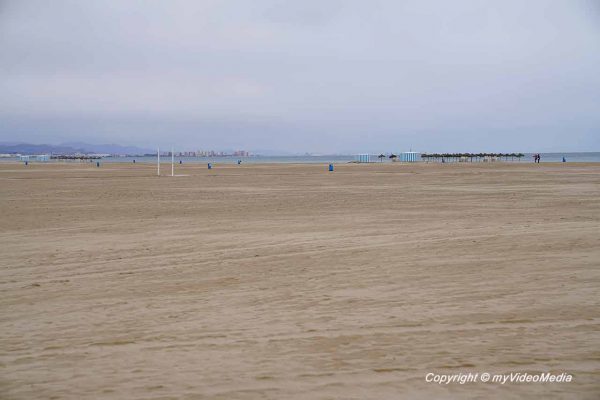
A miles long sandy beach, up to 400 m wide, invites you to linger in the summer. During our visit in April, the weather is not so great yet, so that there is hardly anyone here. But the beach offers more.
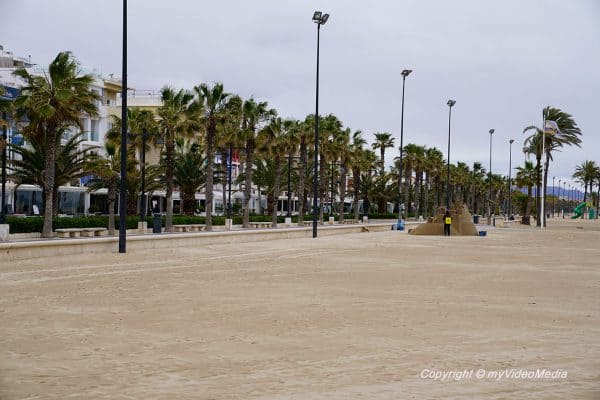
A wide beach promenade allows long walks and offers various entertainment possibilities. Coffee and restaurants but also shopping possibilities.
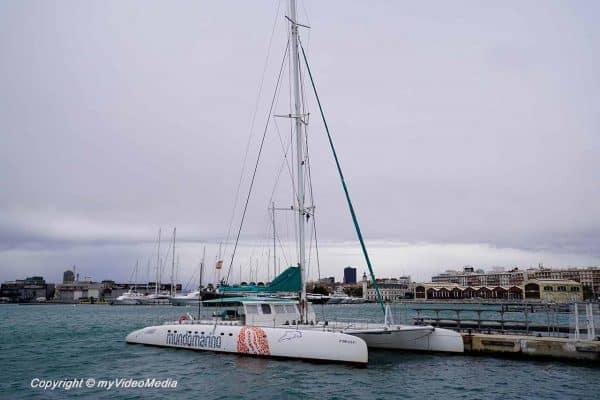
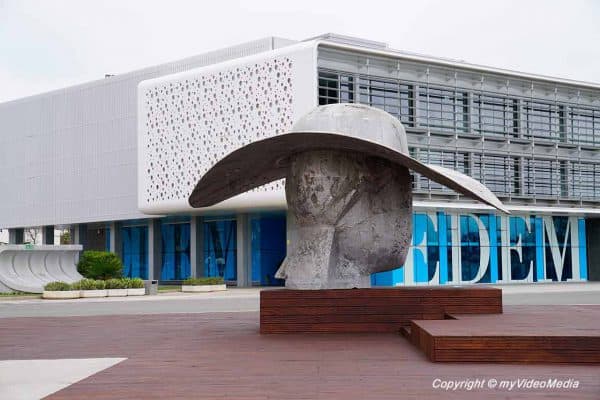
Then we take a short tour around the sports harbor and look at a few yards and boats.
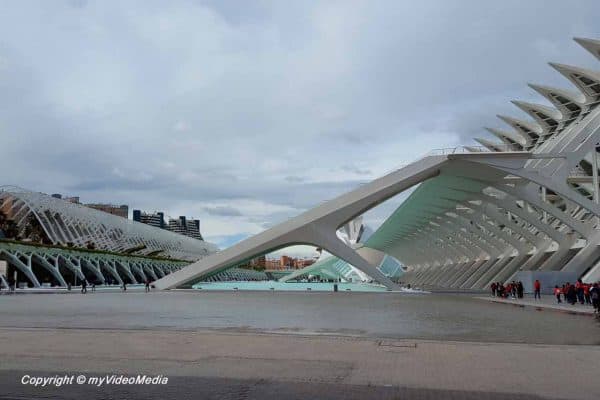
Afterward, we drive to the Ciutat de les Arts i les Ciències, the city of arts and sciences. Today it is the main attraction of Valencia.
Please watch the 4K UHD video
You are currently viewing a placeholder content from YouTube. To access the actual content, click the button below. Please note that doing so will share data with third-party providers.
More InformationIn the 1950s, catastrophic floodwaters raged throughout the city. As a result, one drained the Rio Turia in the city area and directed the river south of the city in a new artificial riverbed to the sea.
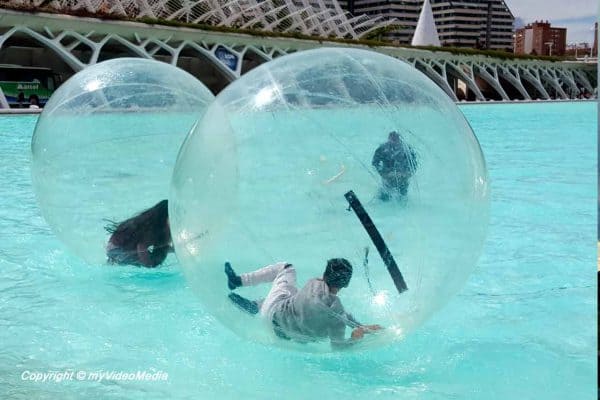
The City of Arts and Sciences, consisting of an IMAX cinema, a natural science museum, a botanical garden, the largest aquarium in Europe, an opera house and music palace, a cable-stayed bridge, and an event space, was created in the dry riverbed.
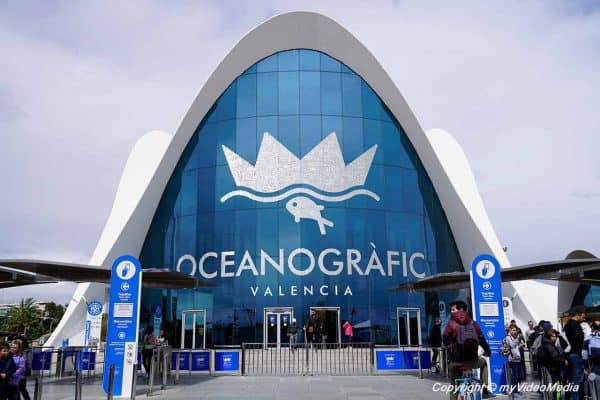
The futuristic buildings of star architect Santiago Calatrava leave us astonished. They represent a very successful ensemble that attracts many visitors.
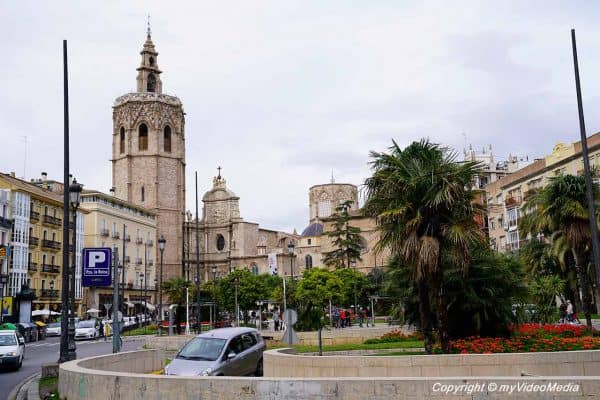
After getting a rough overview, we continue to the center of the old town. In front of the famous cathedral, we find a parking lot in an underground car park.

We walk to another highlight, the silk stock exchange. It is the most important secular Gothic building in Europe. It has been a UNESCO World Heritage Site since 1996.

Directly opposite is the central market of the city. It is the largest fresh market in Europe. Unfortunately, the Art Nouveau building is already closed at this time.
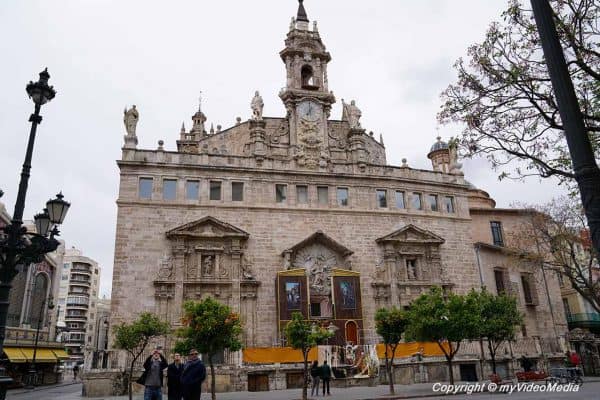
The magnificent baroque church Església de Sant Joan del Mercat completes the Placa del Mercat.
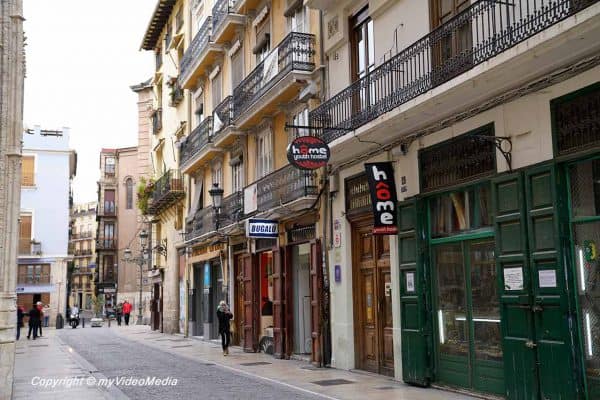
Through narrow streets, we return to the car and start the return journey to Murcia. We want to arrive there before dark.
We cross the Plaza del Ayuntamiento with the town hall of the city administration and the post office opposite and pass the main station.
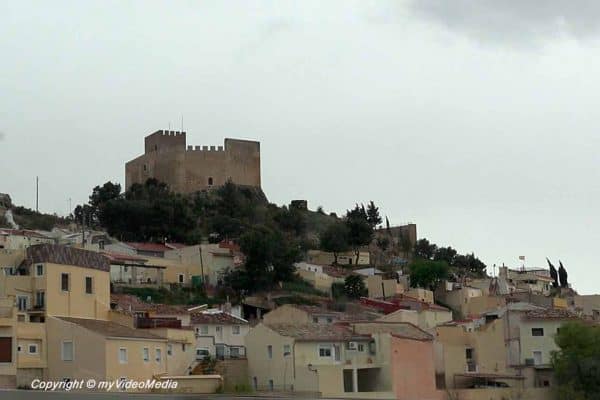
On the return journey, we come along many little towns like Caudete, Villena, Sax, Petrer (in the picture), which stand out due to national defense premises from the Moorish time.
Pin it for later
Text, photos and video: Copyright © myVideoMedia
Soundtracks in video:
- https://www.youtube.com/user/PhlexOffOfficial
Caitlin Gare: https://soundcloud.com/caitlingare https://twitter.com/caitlin_gare https://www.youtube.com/user/caitling999
Music provided by RFM: https://youtu.be/f7J4BSUoYR8 - https://soundcloud.com/dj-meizong https://www.facebook.com/MeizongOfficial https://twitter.com/MrMeizong https://www.youtube.com/user/MrMeizonMusic
https://creativecommons.org/licenses/by/3.0/
Music provided by RFM: https://youtu.be/B1nUfuCk638