Ehrenbreitstein Fortress lies on the right bank of the Rhine on a 180 m high hill whose rock faces drop steeply towards the Rhine.

The first documented settlements existed as early as 4000 BC. Chr. A fortification existed here in the Bronze Age. The Romans built a citadel, and afterward, by the year 1000, a castle was built here.
Around 1020, the archbishop of Trier purchased the castle. Later, one kept some relics from the city of Trier here. In the 16th century, one converted the castle into a fortress, which then had several owners. The French troops, the archbishops of Trier, as well as the imperial troops, conquered the region and the fortress.
At the end of the 18th century, the French conquered the fortress after a one-year siege. By the Peace of Lunéville in 1801, the French had to vacate the right bank of the Rhine, and with it the Ehrenbreitstein Fortress.

Upon withdraw, they blew up the fortress and also destroyed the Philippsburg Castle at the foot of the ridge. In 1815, the property passed to the Kingdom of Prussia through the Congress of Vienna. The Prussian military then built the citadel as we know it today.
Tour of Ehrenbreitstein Fortress
We use the cable car to cross the Rhine and reach Ehrenbreitstein fortress.
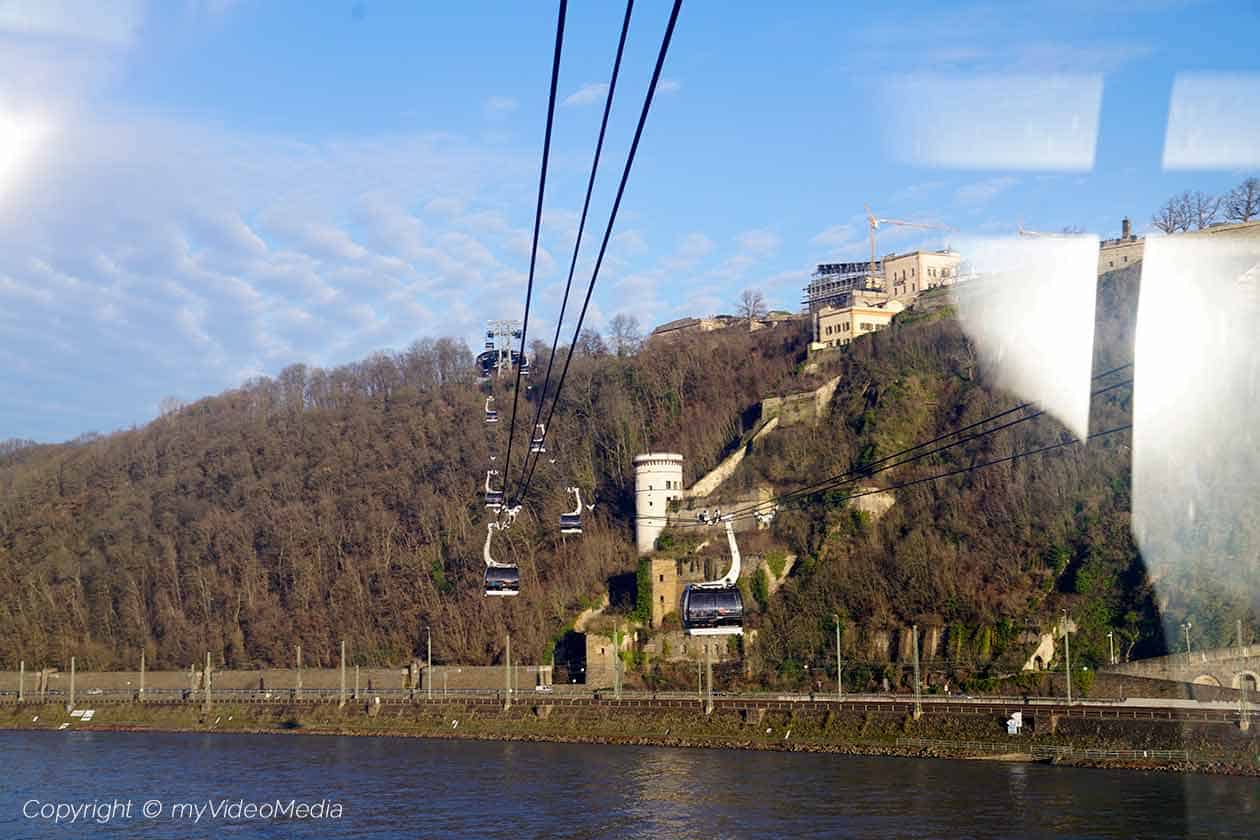
At the top, there is a spacious meadow, laid out for defense purposes. In 2011, it was the centerpiece of the Federal Garden Show.
There is also an inclined lift on the eastern side of the castle. However, it can only be reached in the valley by car, bus, or on foot.
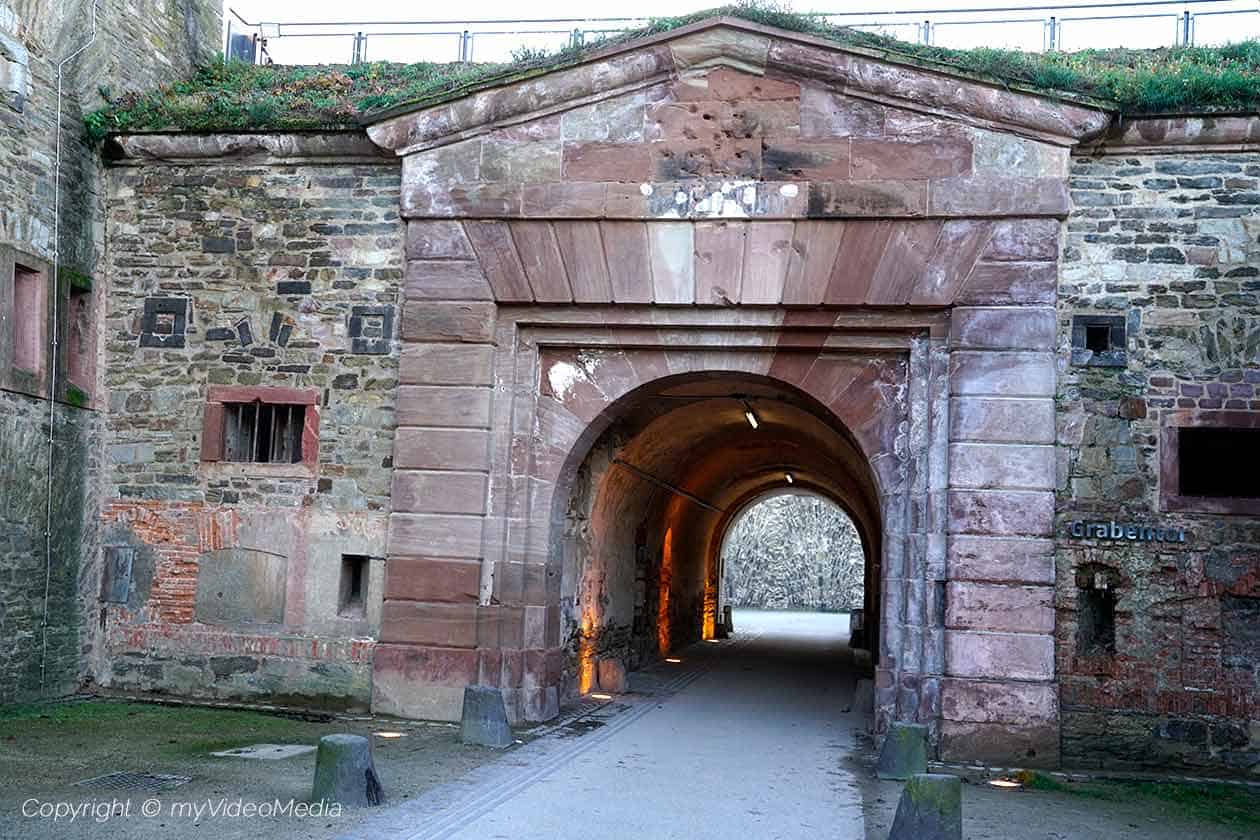
Through the main entrance, the field gate, we enter the complex and find ourselves directly opposite massive walls.
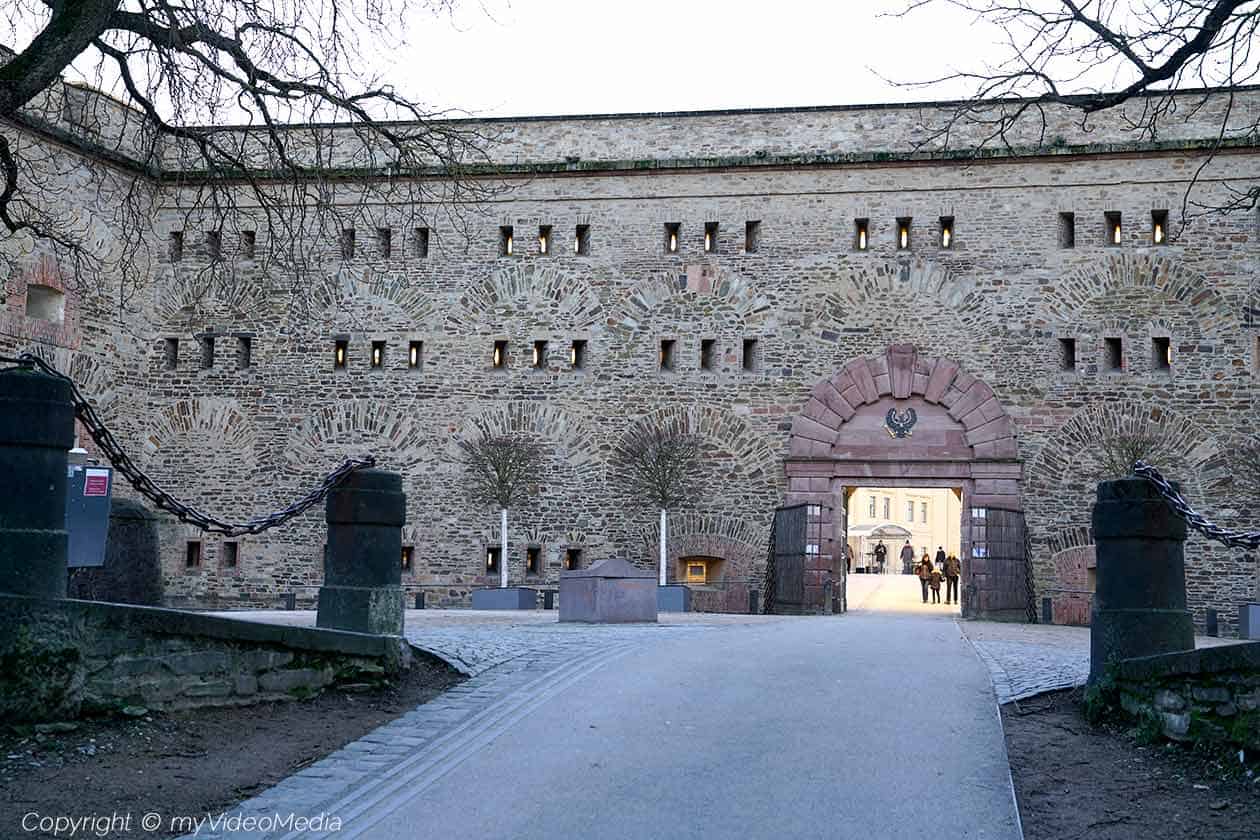
By various courtyards, through gates and passage, we reach the upper courtyard of the castle, a large square.
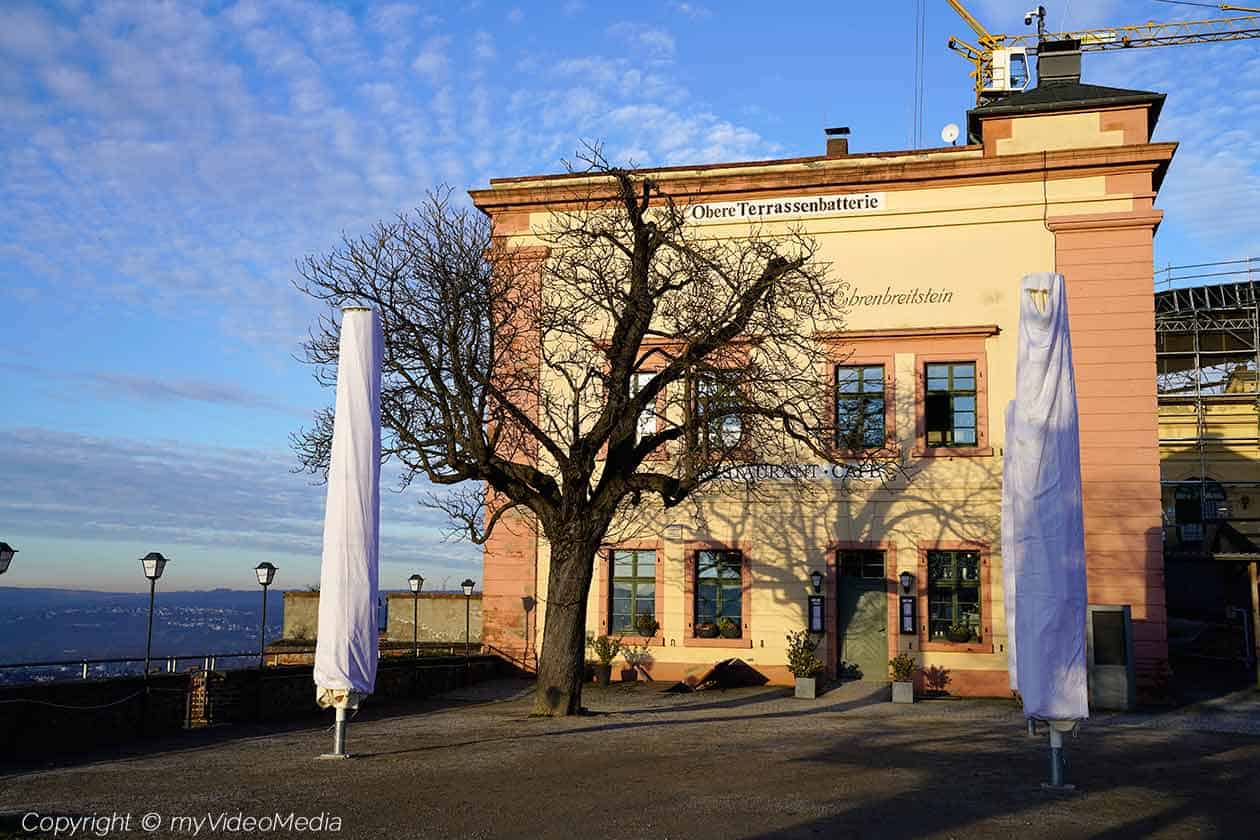
From its eastern edge, one has a beautiful view of the city of Koblenz and the Rhine.
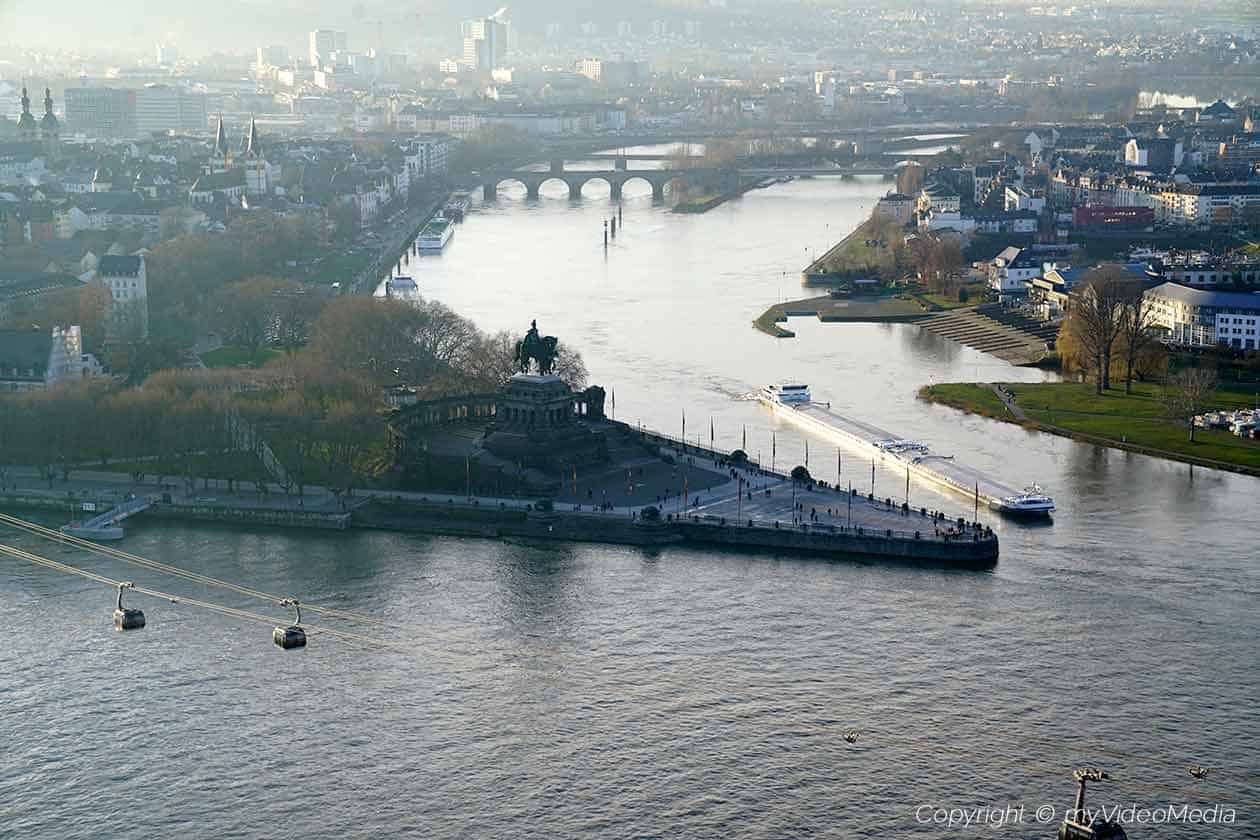
Directly on the opposite side is the German Corner, where the Moselle flows into the Rhine, with the equestrian statue of Emperor Wilhelm I.
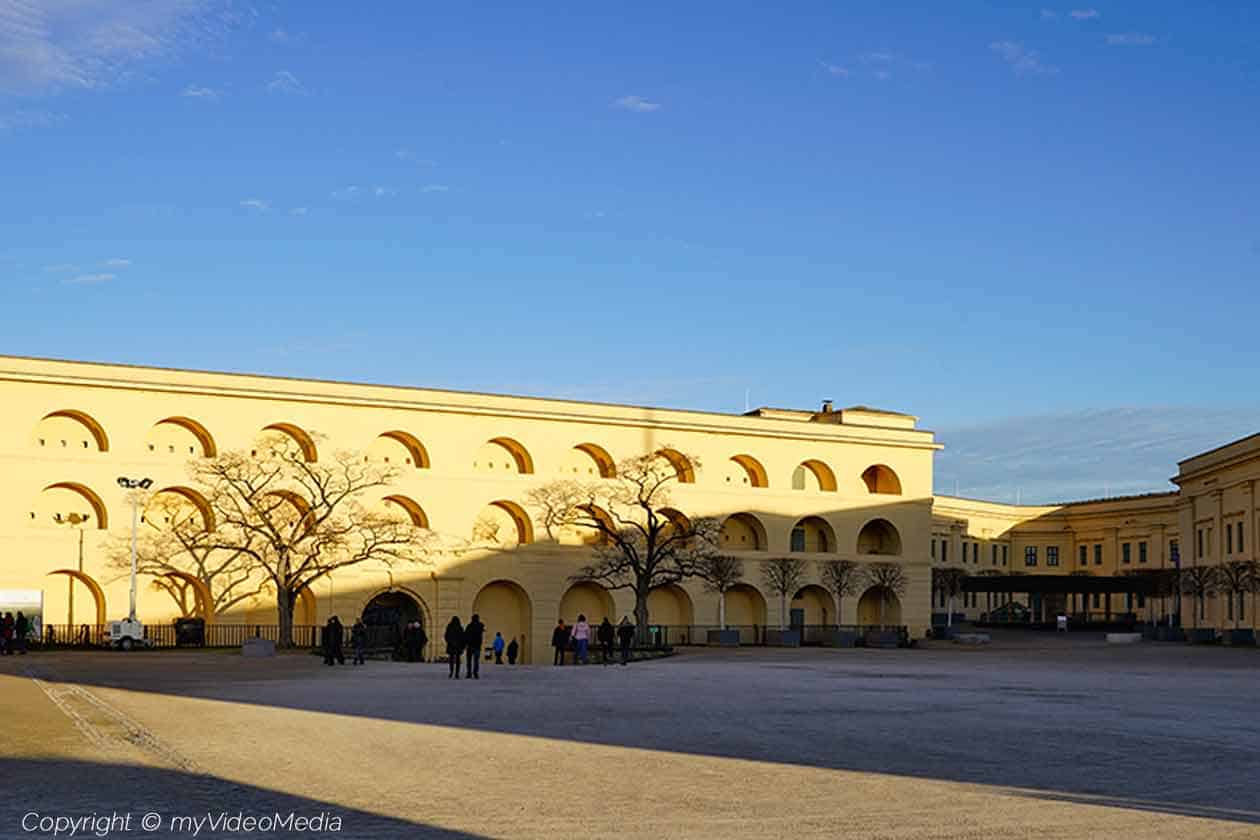
Today the premises house a youth hostel and the Koblenz State Museum.
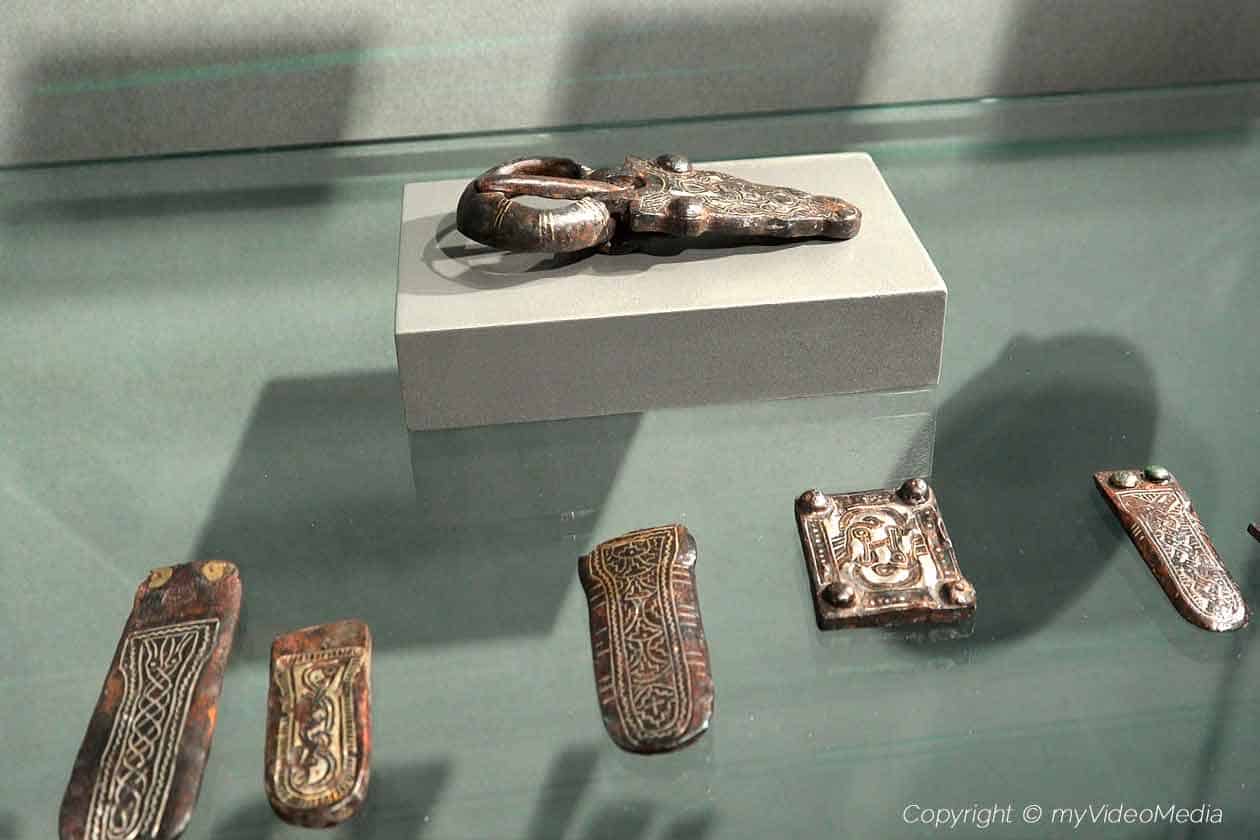
Various exhibitions show weapons and military technology, but also many archaeological finds from the region.
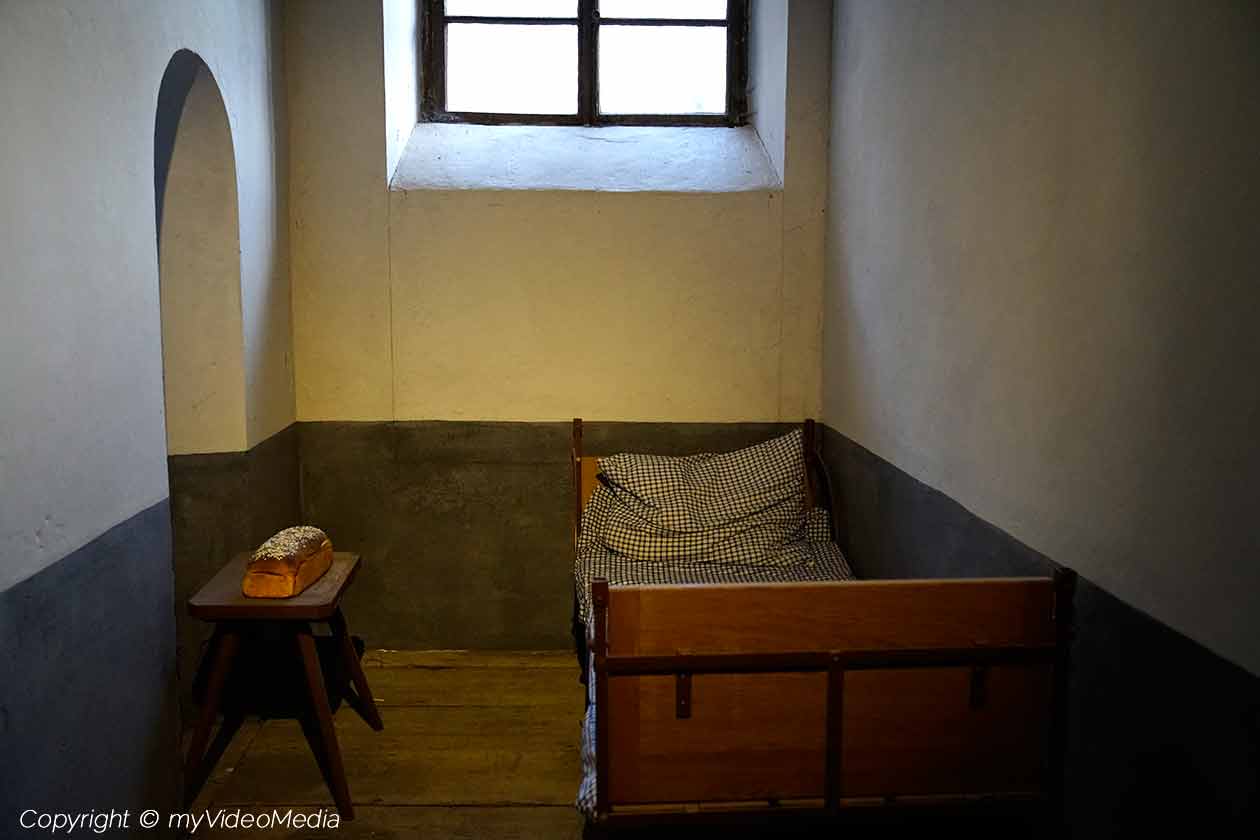
The detention cells, as well as the description of the conditions of detention, are also remarkable.

The biggest cannon, called Greif, was cast in Frankfurt in 1524. It weighs 9 tons and is over 5 m long. With 40 kg of black powder, it can shoot 80 kg balls.
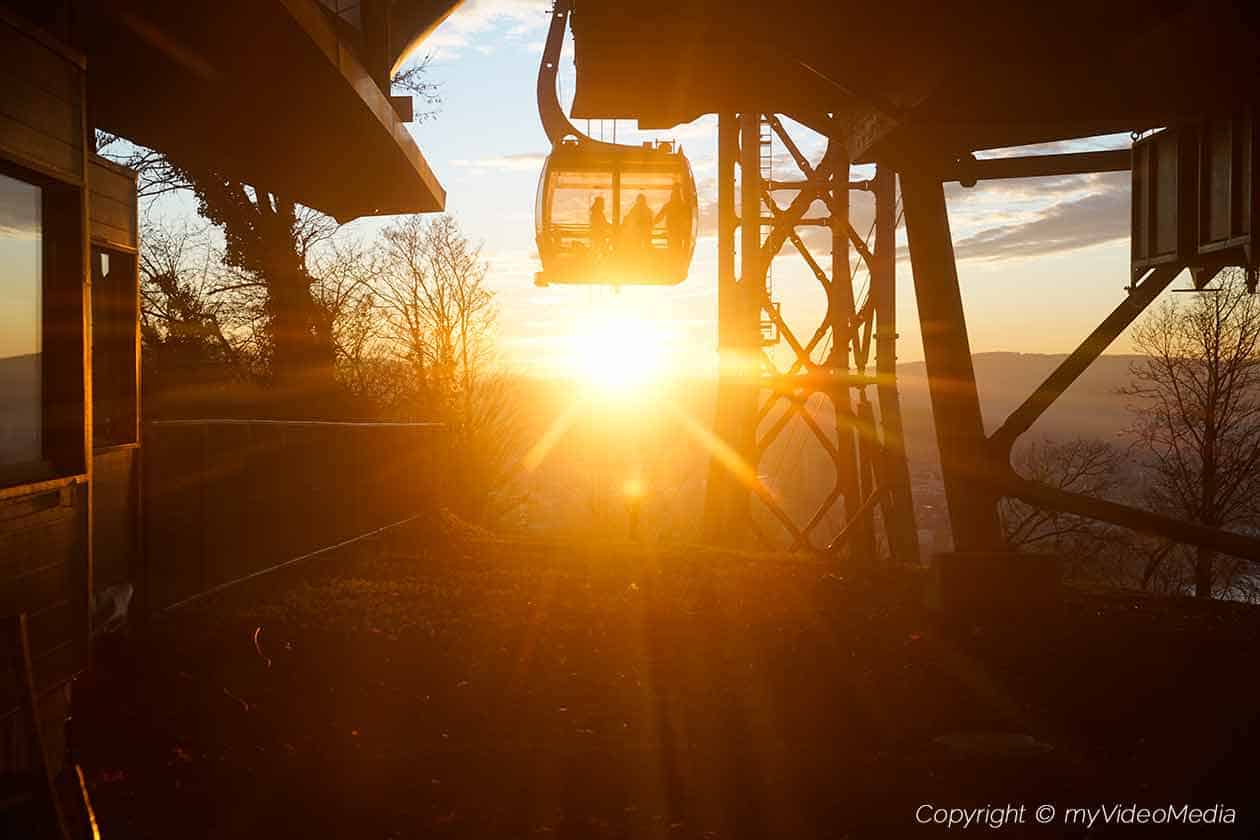
The day is drawing to a close, and we take the cable car towards the sunset.
Please watch the 4K UHD video
You are currently viewing a placeholder content from YouTube. To access the actual content, click the button below. Please note that doing so will share data with third-party providers.
More InformationDinner at Restaurant Hanoi
For dinner, we reserved a table in the restaurant Hanoi. Besides good wine, we enjoy the recommendation of the house, a 3-course menu.
For starter, we have Hanoi’s spring rolls with sweet and sour sauce. As the main dish, one serves a delicious grilled duck on wok vegetables along with 3 different sauces and fragrant rice.
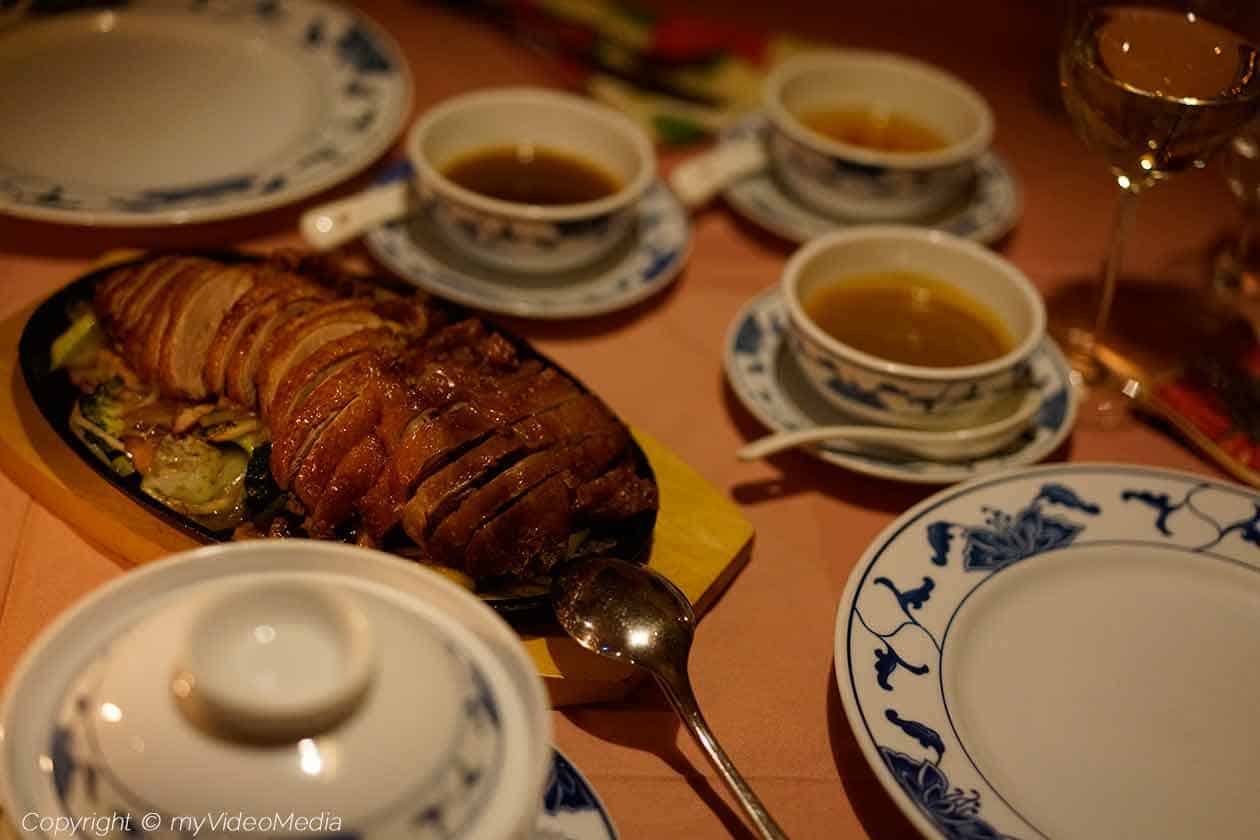
The meal ends with a vanilla ice cream with almond brittle and honey.
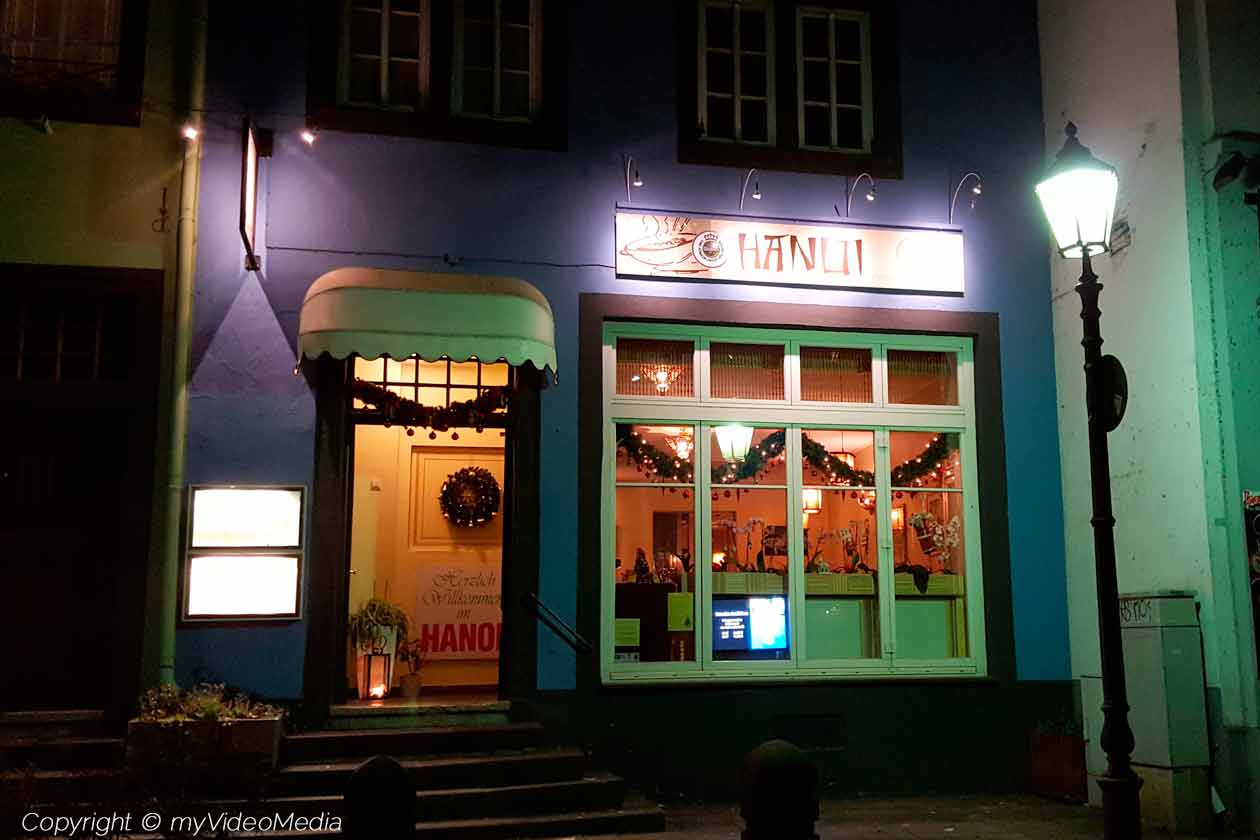
At the same time, we can talk with the friendly hosts about Vietnam and Hanoi. It was a nice evening in a pleasant atmosphere.
Please read on > Self-guided walk in the old town of Koblenz
Pin it for later
Text, photos and video: Copyright © myVideoMedia
Soundtracks in video:
- Castles in the Air by Vidian (c) copyright 2007
Licensed under a Creative Commons Attribution (3.0) license. http://dig.ccmixter.org/files/Vidian/10752 Ft: Narva9,Ian P - The Chaos Of Battle ft. CDK, Speck & Jaspertine by coruscate (c) copyright 2014
Licensed under a Creative Commons Attribution (3.0) license. http://dig.ccmixter.org/files/Coruscate/46241