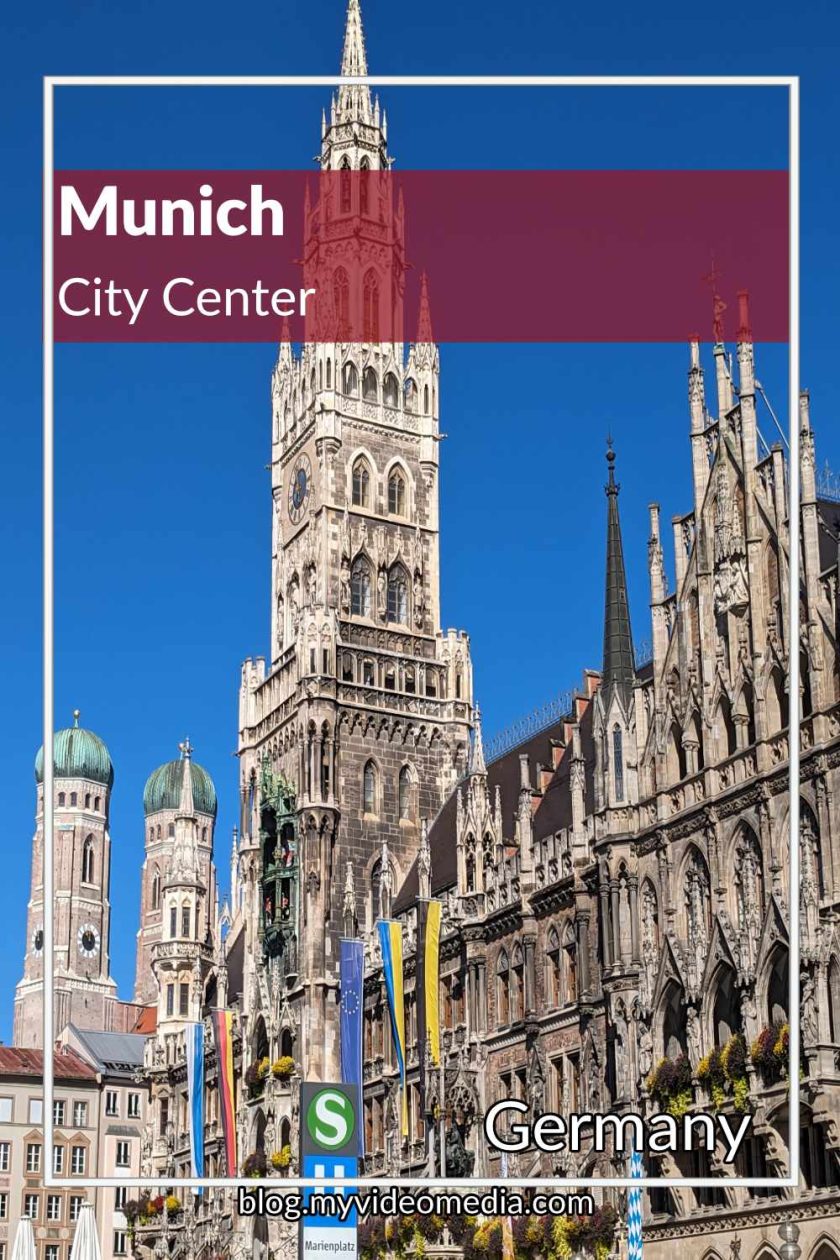
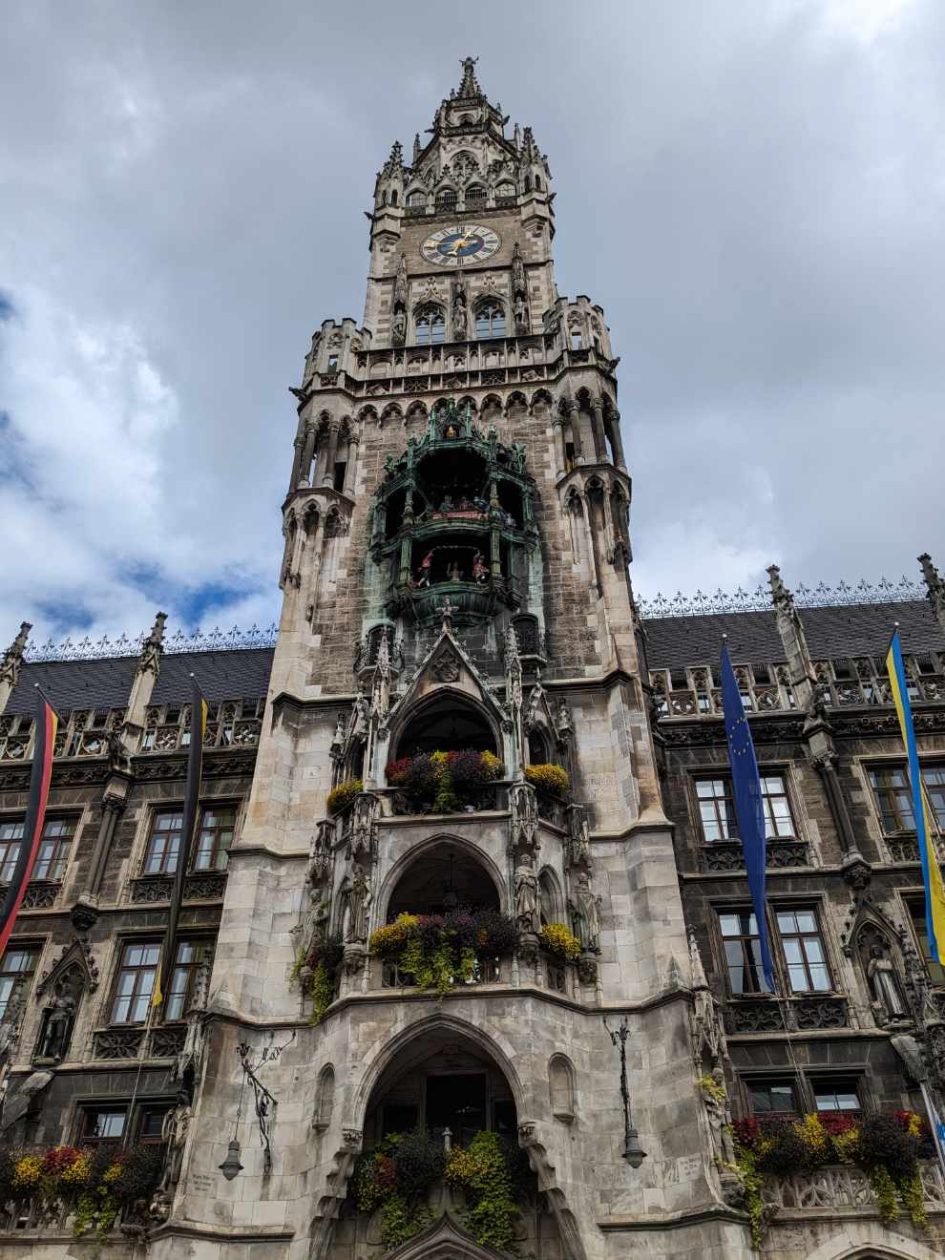
Our tour of Munich’s city center begins at Marienplatz, directly in front of the town hall. Numerous people have already gathered to see the Munich Glockenspiel (carillon).
The Munich Glockenspiel depicts two events in Munich’s history. Firstly, the knights’ games on the occasion of the wedding of Duke Wilhelm V to Renate of Lorraine in 1568, and then the Schäffler dance, which was performed by the barrel makers after the end of the plague epidemic, presumably in 1517, to cheer up the population and give them the courage to go out onto the streets again.
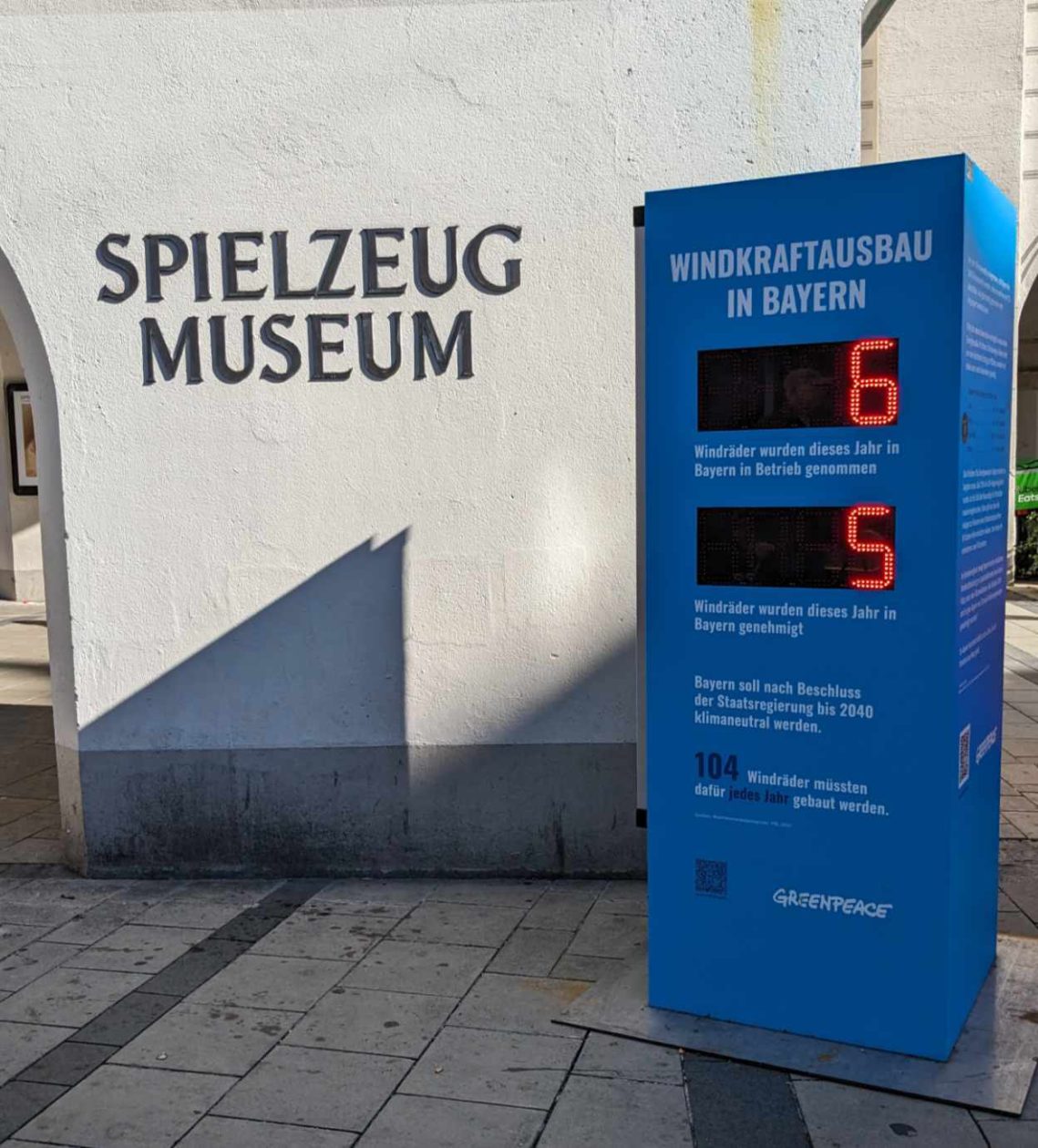
On the way to the ‘Alter Hof”, we noticed an electronic display in front of the Toy Museum showing the number of wind turbines built, approved, and required per year to achieve the climate targets. It is probably no coincidence that these figures are displayed in front of the Toy Museum.
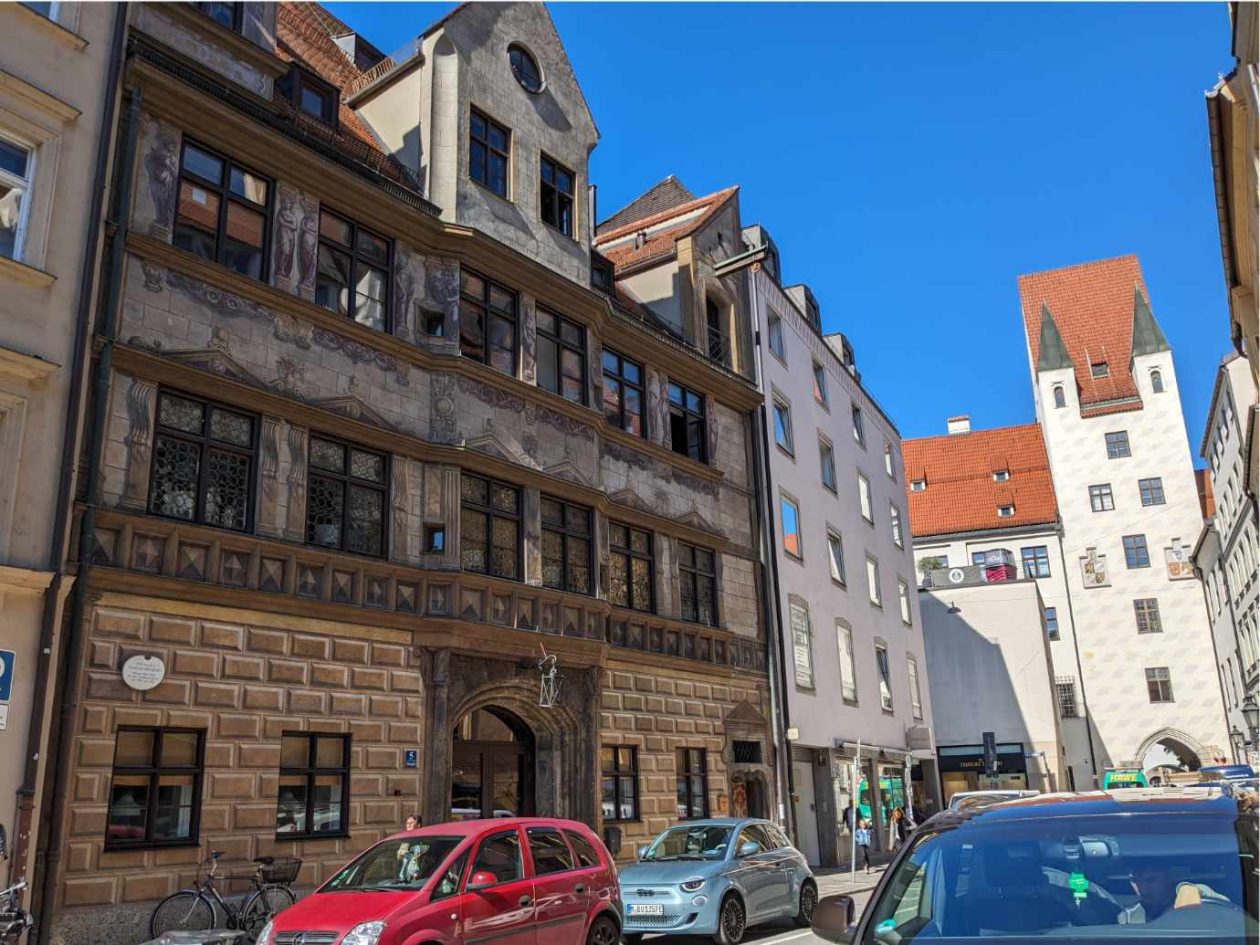
On Burgstrasse, we pass the ‘ehemalige Stadtschreiberei” ( former municipal clerk’s office). The historic façade features architectural and illusion paintings typical of Bavaria.
The Alter Hof (Old Court) was the residence of the Dukes of Upper Bavaria from around 1255 and later of Bavaria. In between, it served Ludwig the Bavarian as an imperial residence.
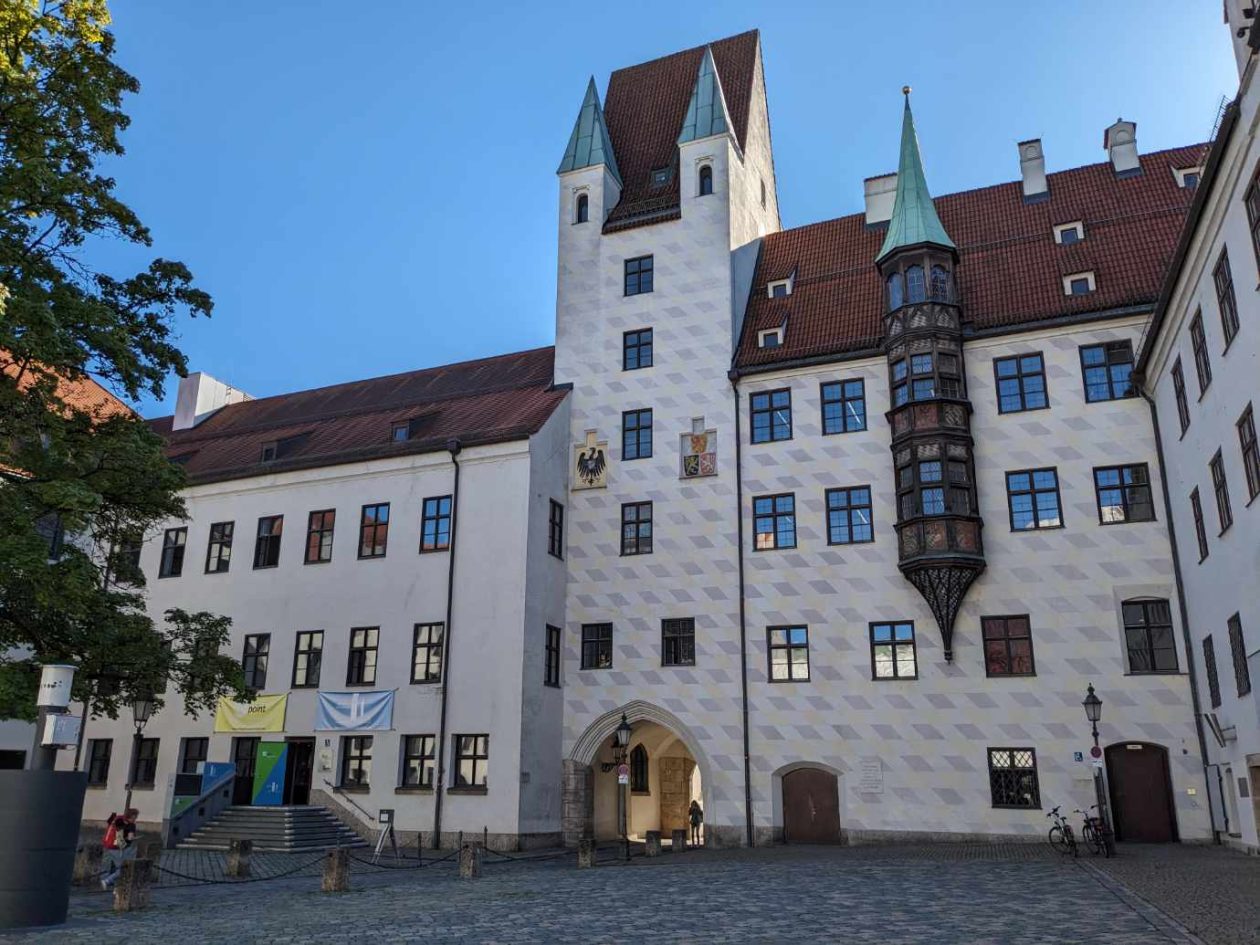
In 1314, there was dual rule in the Roman-German Empire with the Wittelsbach Ludwig and the Habsburg Frederick, as both were elected kings. After losing a battle, Frederick was taken prisoner. However, due to claims to power in Italy, Louis was asked by Pope John XXII to return his royal title. When this did not happen after a deadline, Ludwig was excommunicated.
Both kings now ruled more or less side by side. Frederick, however, concentrated more on expanding the Habsburg Empire with Vienna as his seat of power. Louis was elected emperor in 1328. Due to his ecclesiastical ban, however, he was only referred to by the Pope as Louis the Bavarian. Frederick died in 1330, and Louis in 1347. Until 1424, the Wittelsbachs and the Luxembourger shared power in the Roman-German Empire.
It was not until 1440 that the Habsburgs took power with Frederick III. The Wittelsbachs were able to secure power in Bavaria until the 20th century.
Please watch the 4K UHD video here
You are currently viewing a placeholder content from YouTube. To access the actual content, click the button below. Please note that doing so will share data with third-party providers.
More Information
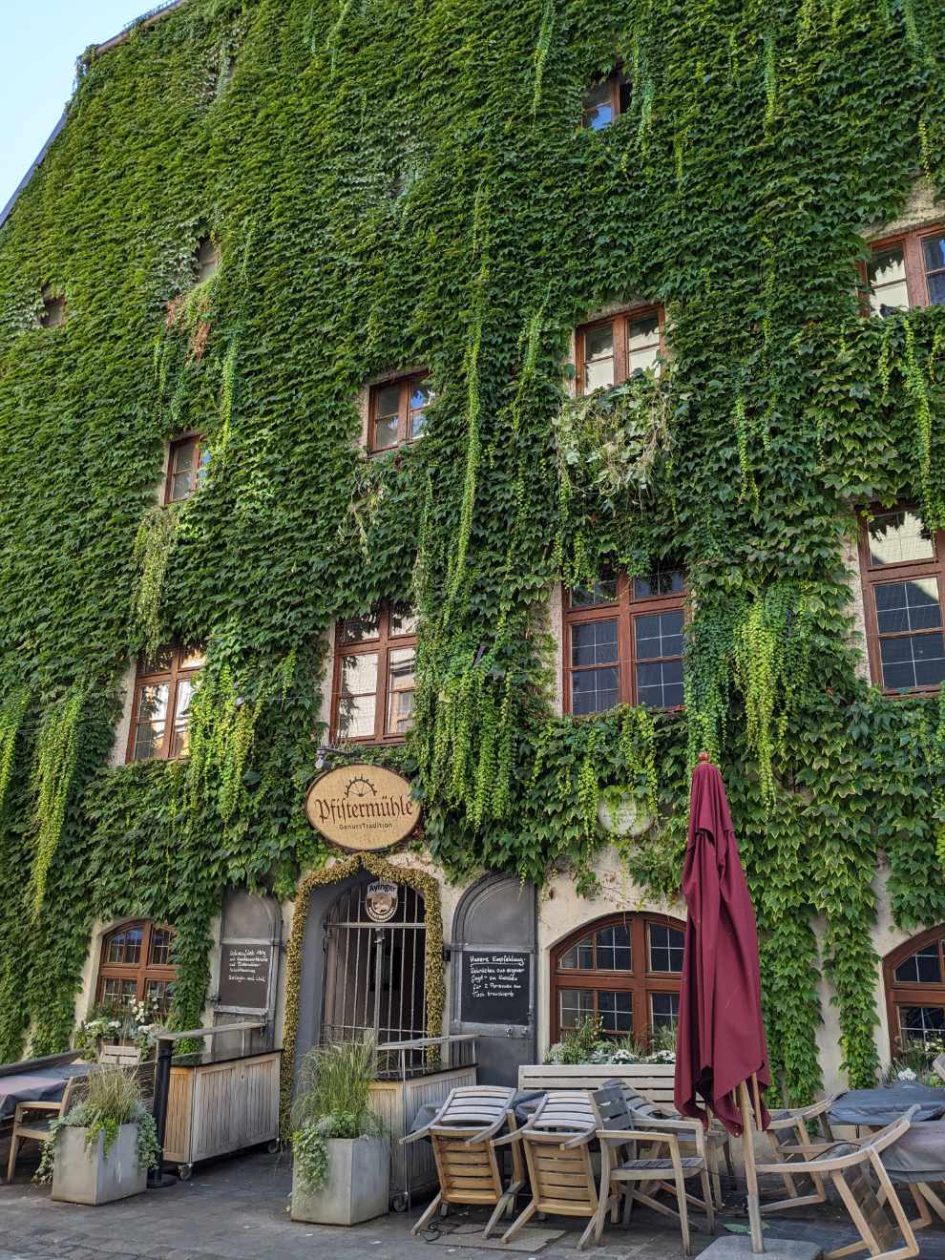
Not far from Alter Hof is the Pfistermühle. The Pfistermühle was rebuilt in 1578 after a fire at the Hofmühle. Today, the building houses a gourmet restaurant. The Hofpfisterei is very popular in Munich and is represented by many branches. We also regularly order “Pfister Spezial” via the Internet.
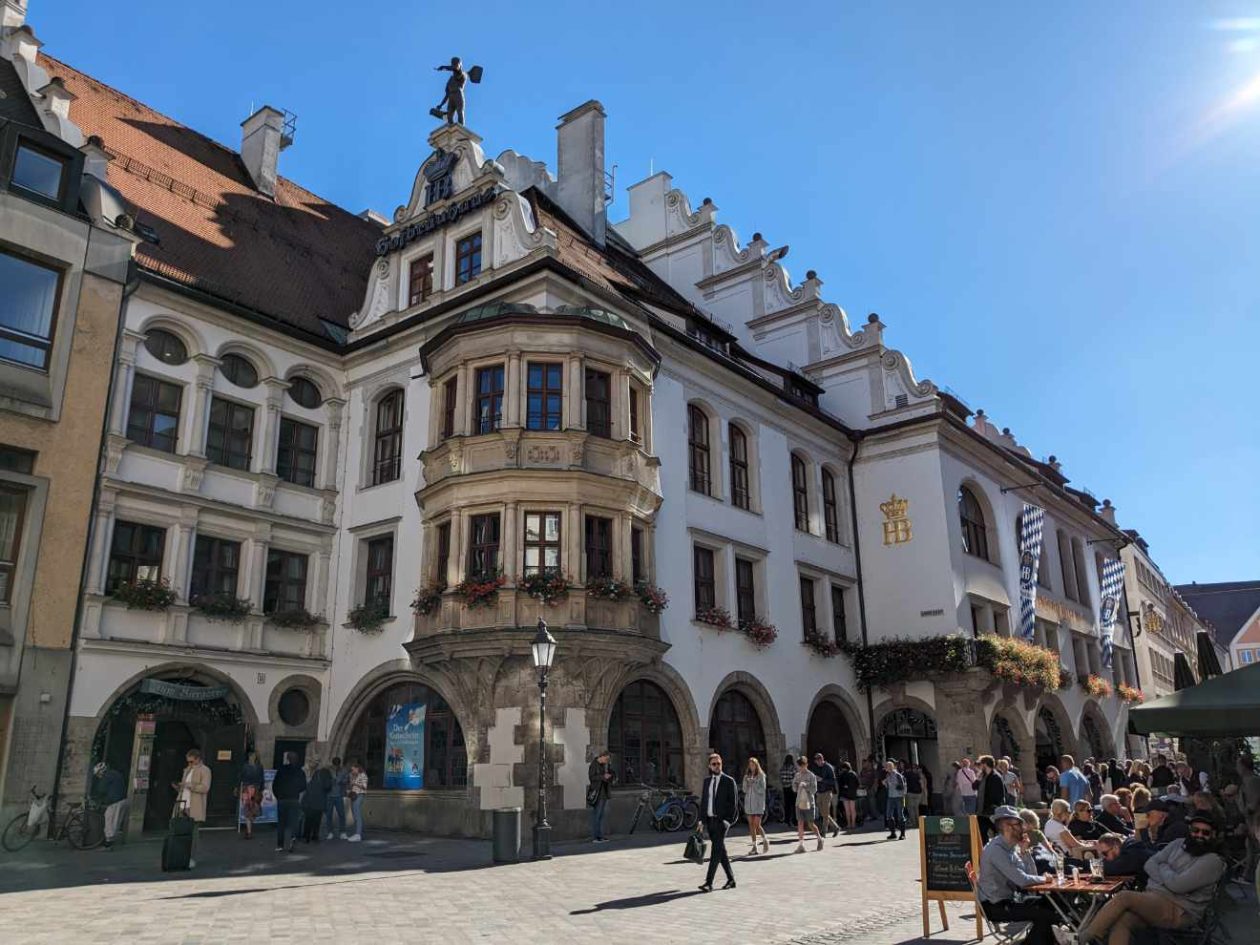
Through Pfisterstrasse, we reach the Platzl, the square in front of the Hofbräuhaus. Beer was brewed here from 1607. Today, it only serves as a restaurant.
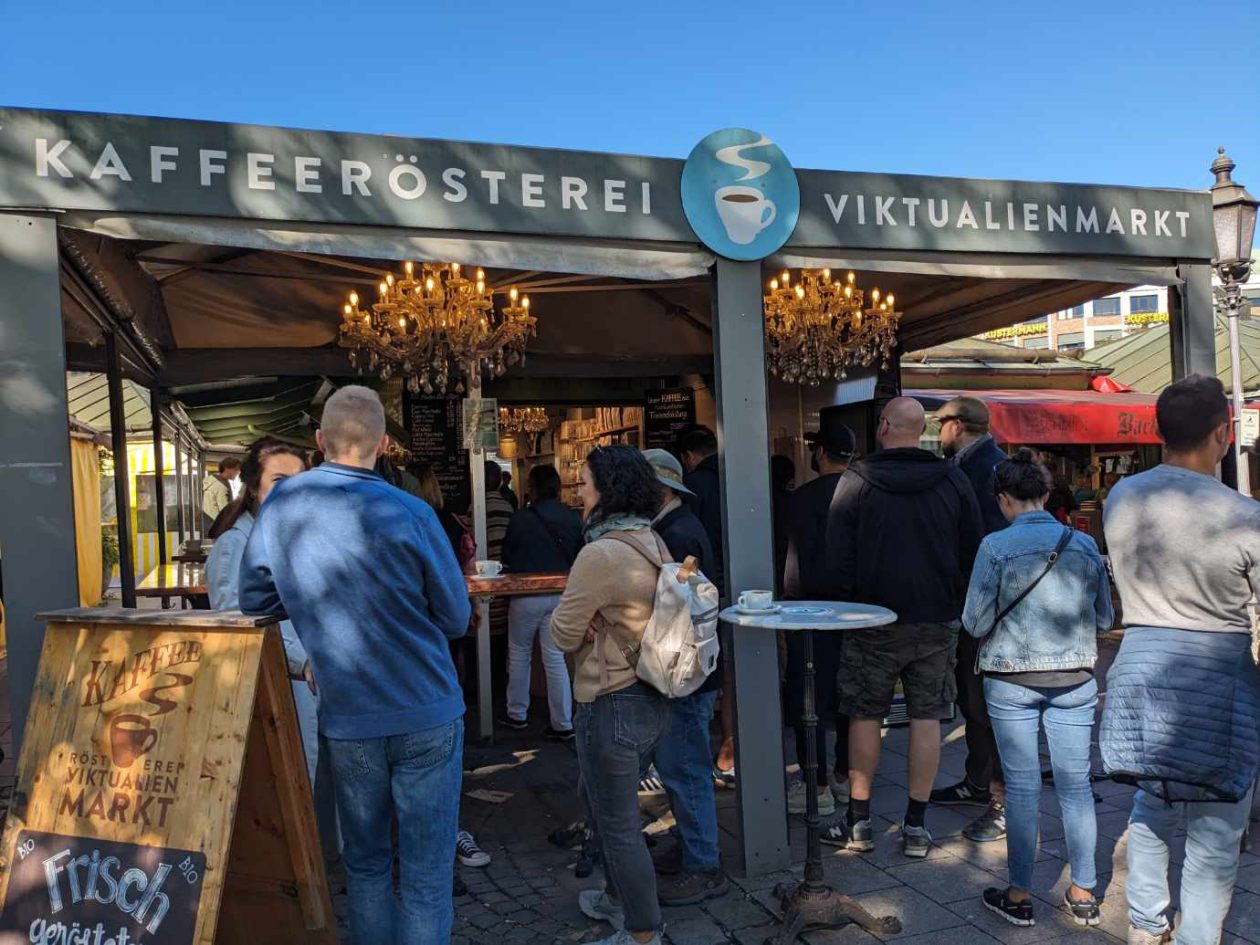
We move on to the Viktualienmarkt. Here, we find familiar surroundings again. It is always interesting to walk between the market stalls.
The Schrannenhalle was only rebuilt when we had already left Munich. We were expecting a row of small stores and cafés. In fact, the Schrannenhalle is firmly in Italian hands. It is rented by the Italian delicatessen chain Eataly. Only at the end of the hall, in the direction of Viktualienmarkt, is a Bavarian pub run by the Hacker-Pschorr brewery.
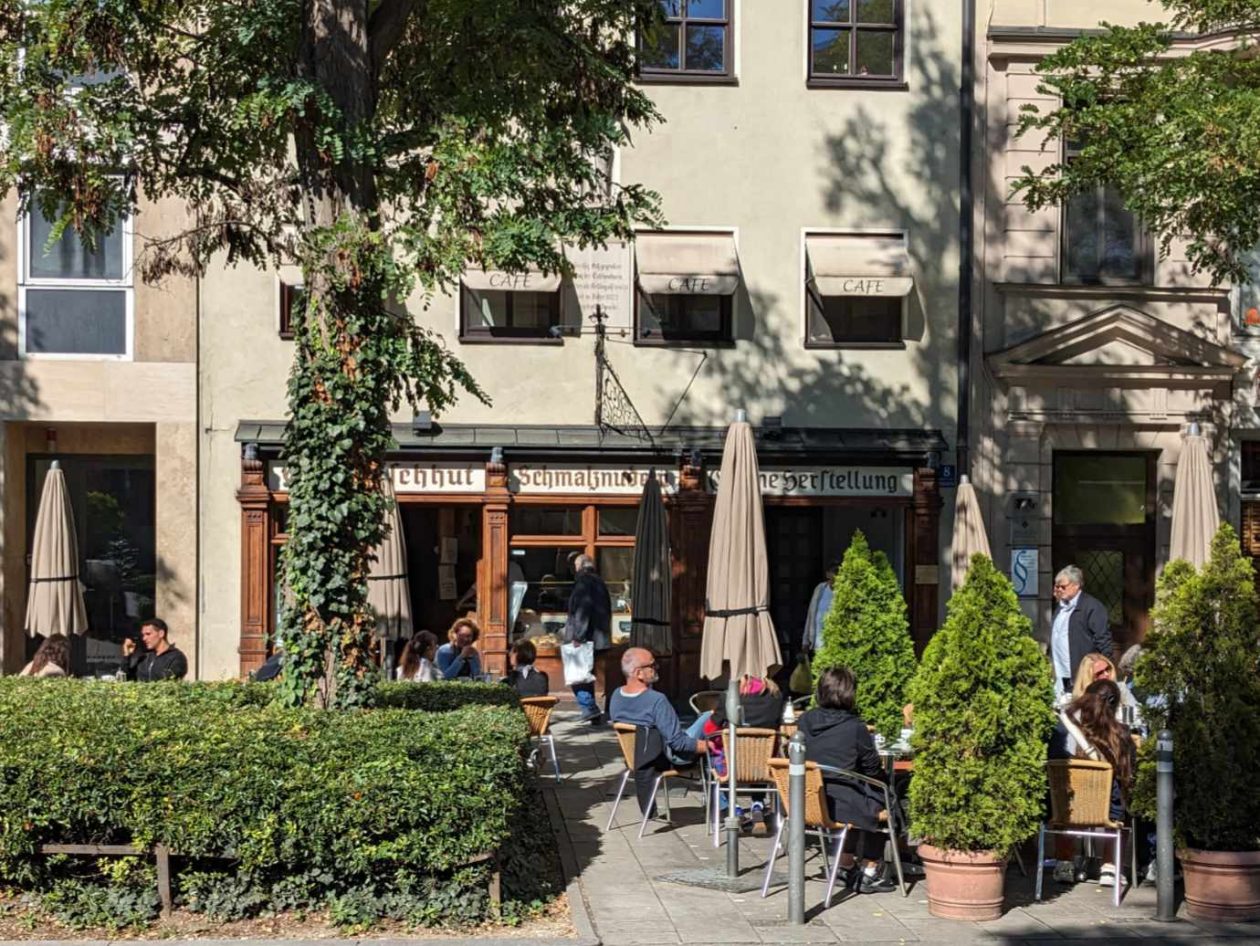
Opposite the hall is the Café Frischhut. It is famous for its nostalgic atmosphere and its lard pastries. These are prepared in an open kitchen. Incidentally, the café’s nickname is Schmalznudel. In addition to the famous Schmalznudeln, known as Auszogne in Bavarian, you can enjoy delicious Rohrnudeln, Striezerl, and Krapfen.
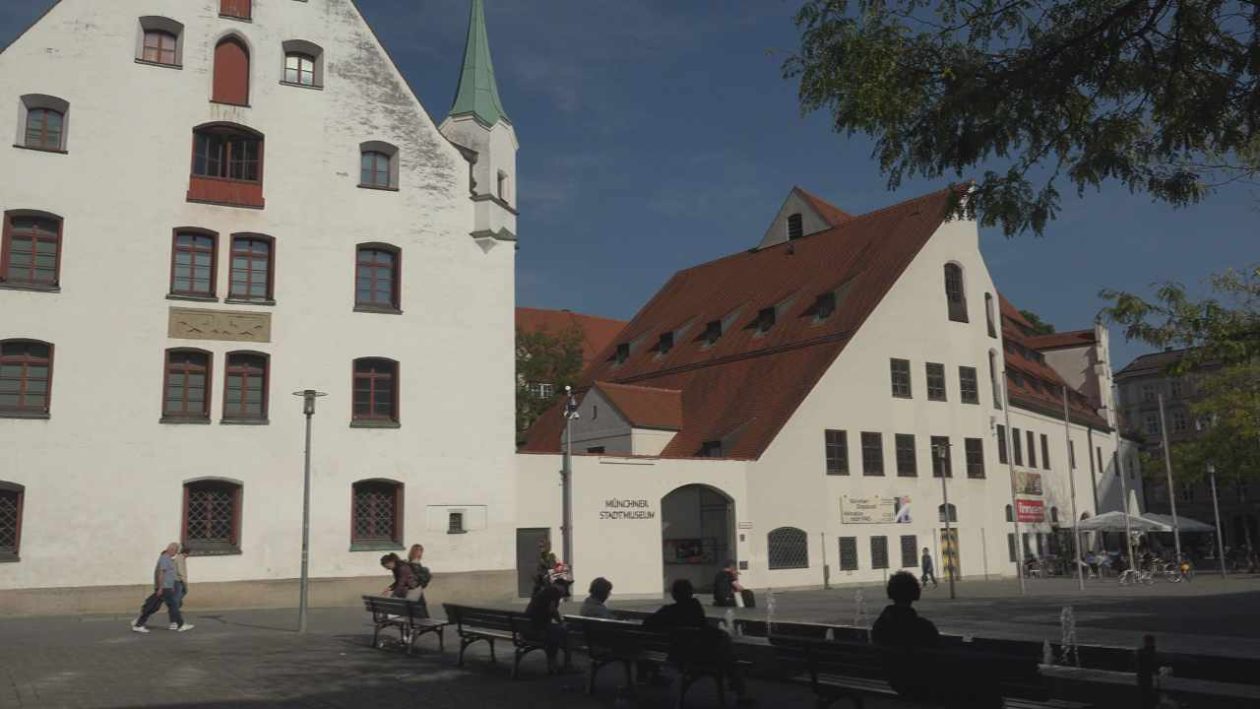
St. Jakobs Platz is home to the Munich City Museum and several associated smaller museums, such as the Film Museum and the German Brewery Museum.
Also on St. Jakobs Platz is the Jewish Center with its synagogue and the Jewish Museum.
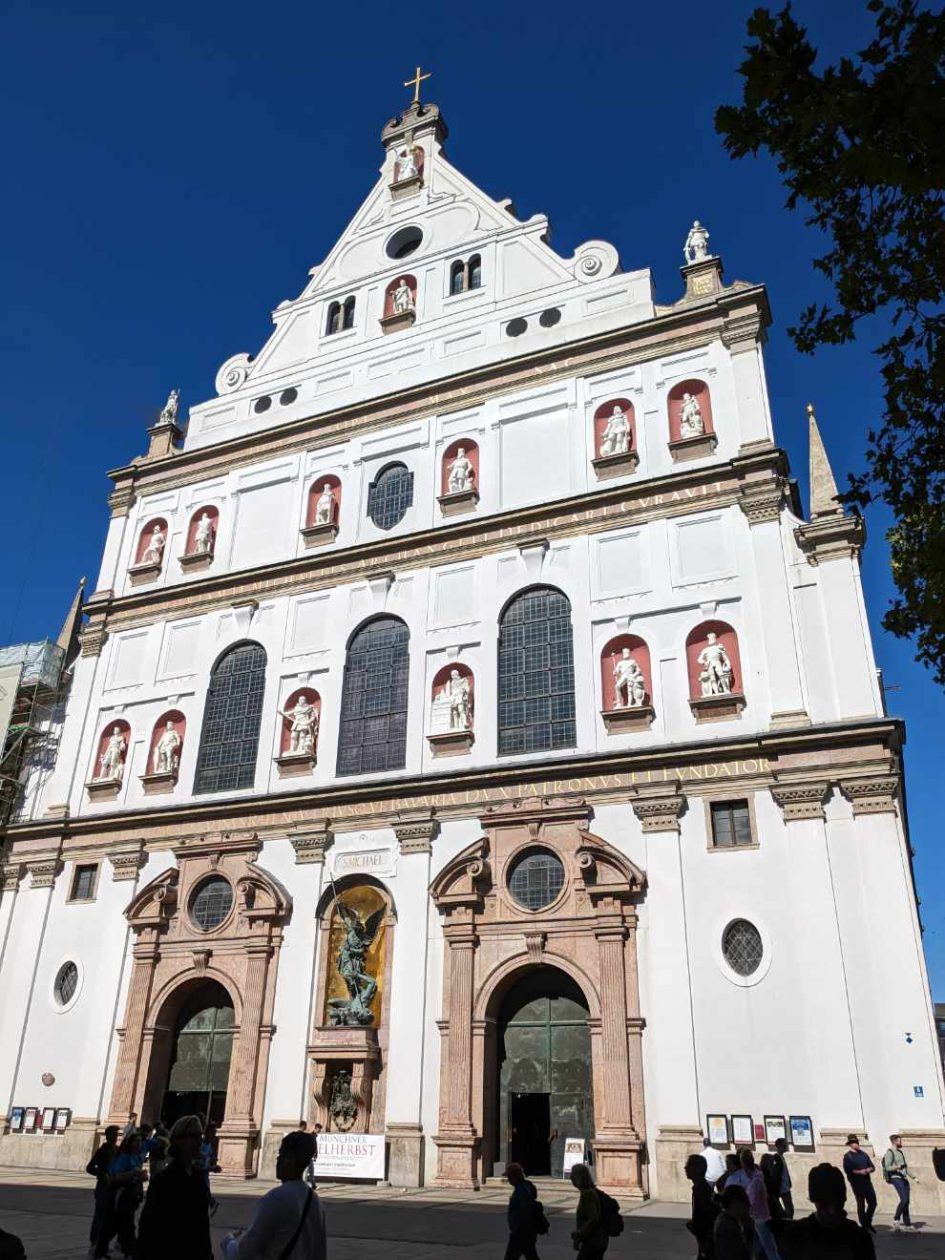
Via Oberanger we reach Sendlinger Straße. One of the things worth seeing here is the Asamkirche, both the façade and the magnificent interior.
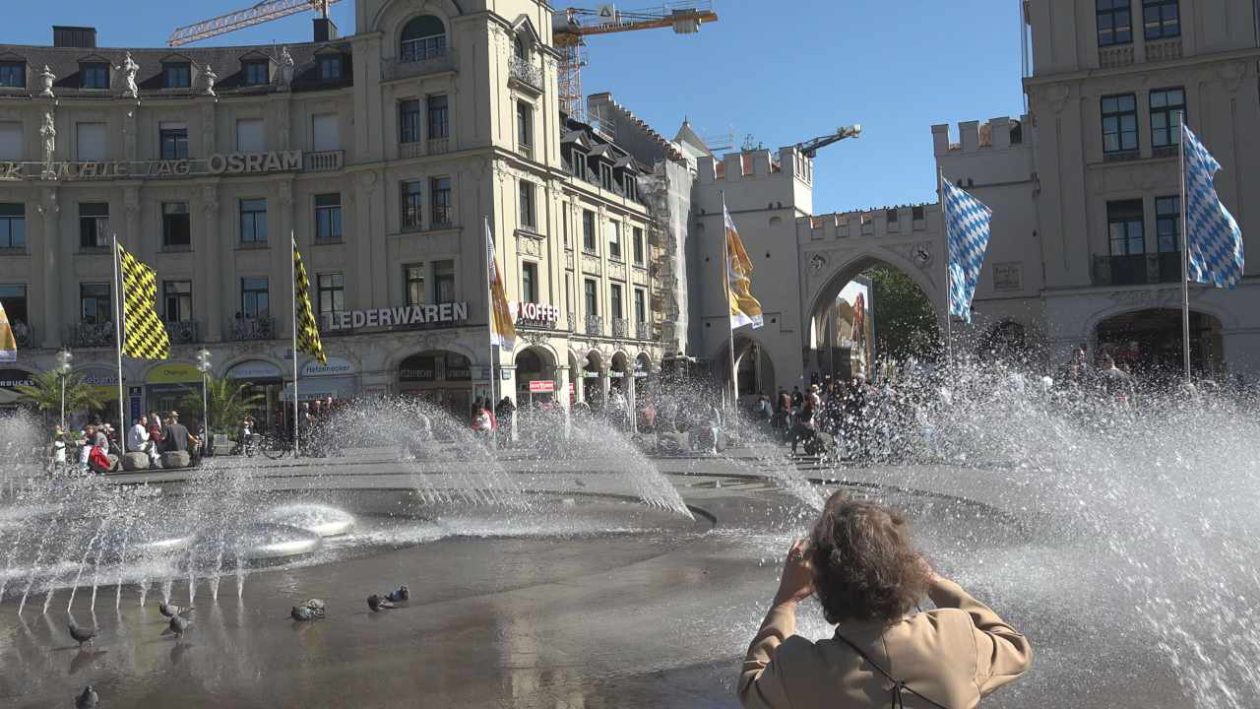
From here, the route continues to Sonnenstraße and Karlsplatz (Stachus).
Via Neuhauser Straße and Ettstraße (known from the TV series “Münchner Tatort”), we come to Kaufingerstraße and back to the Rindermarkt.
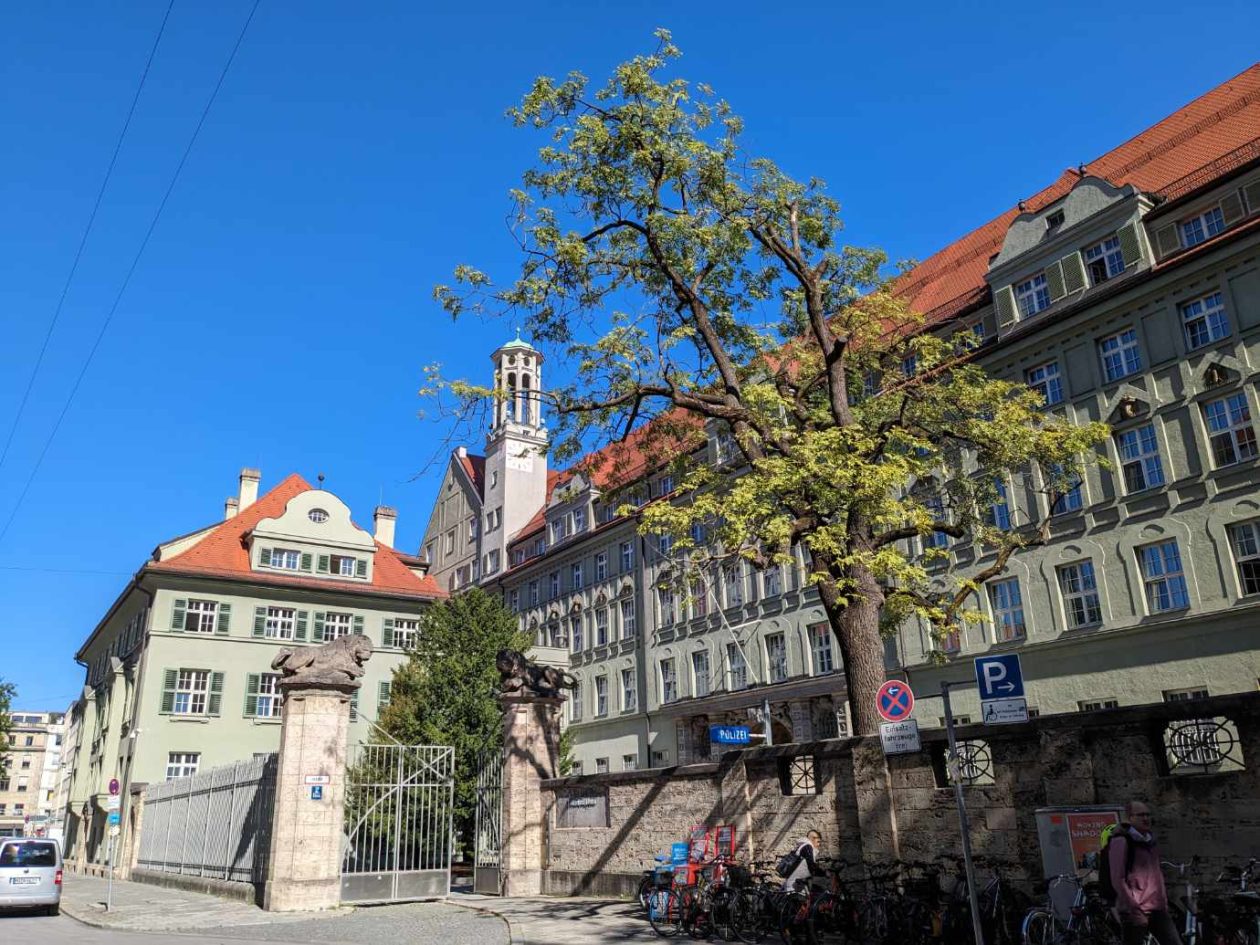
The Rindermarkt, one of Munich’s oldest streets, was once home to the cattle market. The Rindermarkt fountain with the sitting shepherd watching over three cattle is a reminder of this.
On the south-eastern side of the Rindermarkt is the so-called Löwenturm, a water tower from the 15th century. Another impressive building is the so-called Ruffinihaus, a group of three richly decorated houses from 1905.
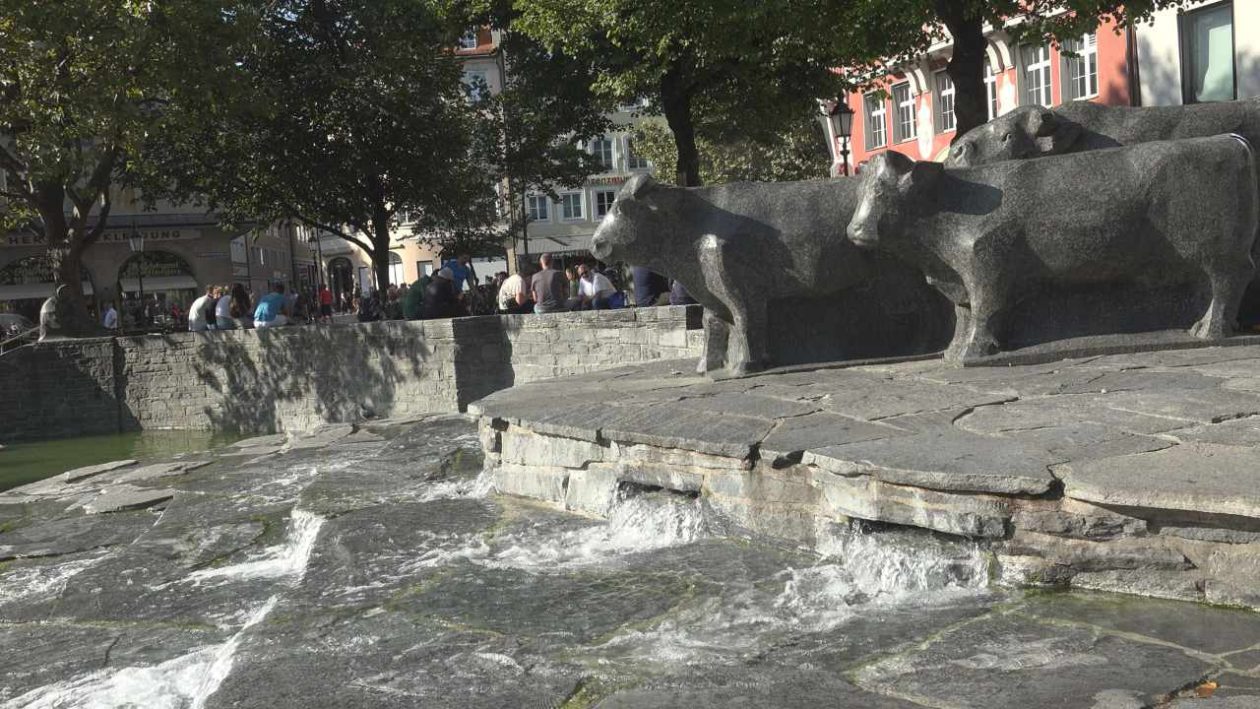
Today, the Rindermarkt is a popular meeting place in the city center.
You might also be interested in -> Culture in the Munich Schlachthofviertel district
Pin it for later