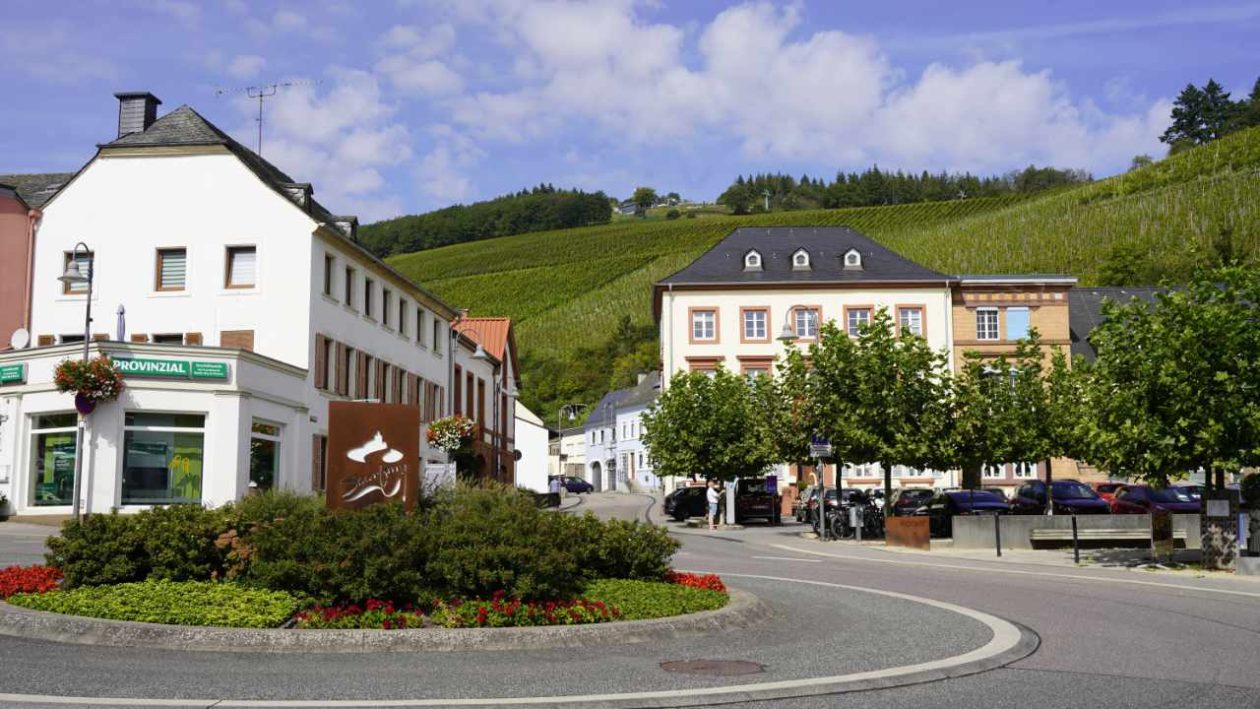
On a sunny late summer day, we decided to take a day trip to Saarburg. The town is located around 20 km south of Trier in Rhineland-Palatinate.
Saarburg is known for its castle and picturesque town center, which impresses with its medieval architecture. In the surrounding vineyards grows the famous Saar wine with its 2000-year-old tradition.
The area was probably already settled in prehistoric and Roman times. Saarburg, together with the towns of Wittlich, Bernkastel, Welschbillig, Montabaur, and Mayen, was granted town privileges by King Rudolf of Habsburg in 1291. Rule over the area changed hands several times between the Habsburgs, the Electorate of Trier, France, and Prussia. In 1946, Saarburg was separated from the French occupation zone. In 1947, Saarburg was assigned to Rhineland-Palatinate, newly formed in 1946.
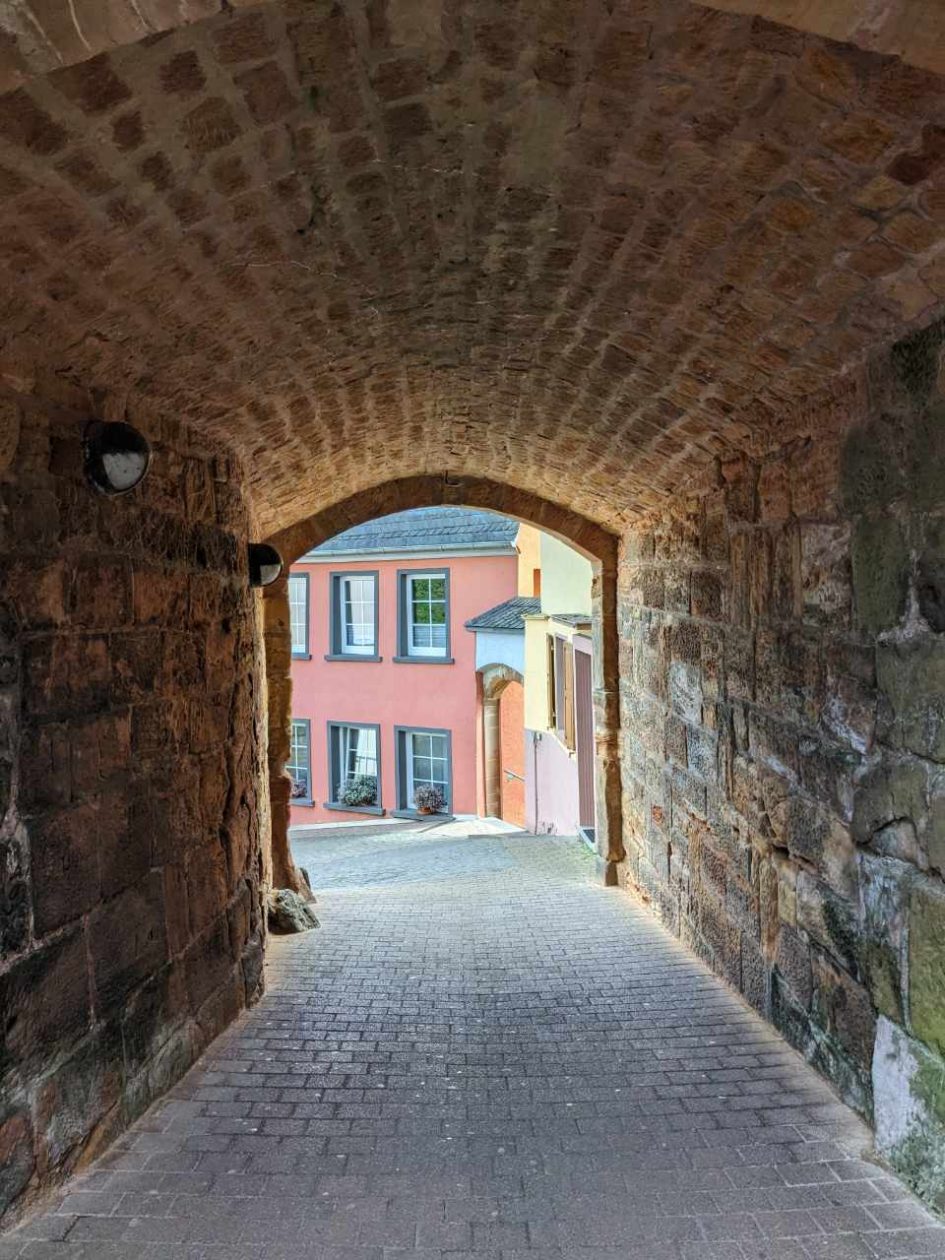
From the train station, we explore the town on foot. After a few minutes, we have a magnificent view of the Saar, the castle, and the old town. The first excursion boats are moored on the banks of the Saar, waiting for tourists.
Please watch the 4K UHD video here
You are currently viewing a placeholder content from YouTube. To access the actual content, click the button below. Please note that doing so will share data with third-party providers.
More Information
After crossing the bridge over the Saar, we turn right into Staden, a road parallel to the Saar. This is the lower town of Saarburg. After approx. 250 m, we come to Haus Mabilon, the home of the Mabilon family, who ran a bell foundry in the buildings behind it from 1770 to 2002. The business was then closed down. Today, it serves as a museum.
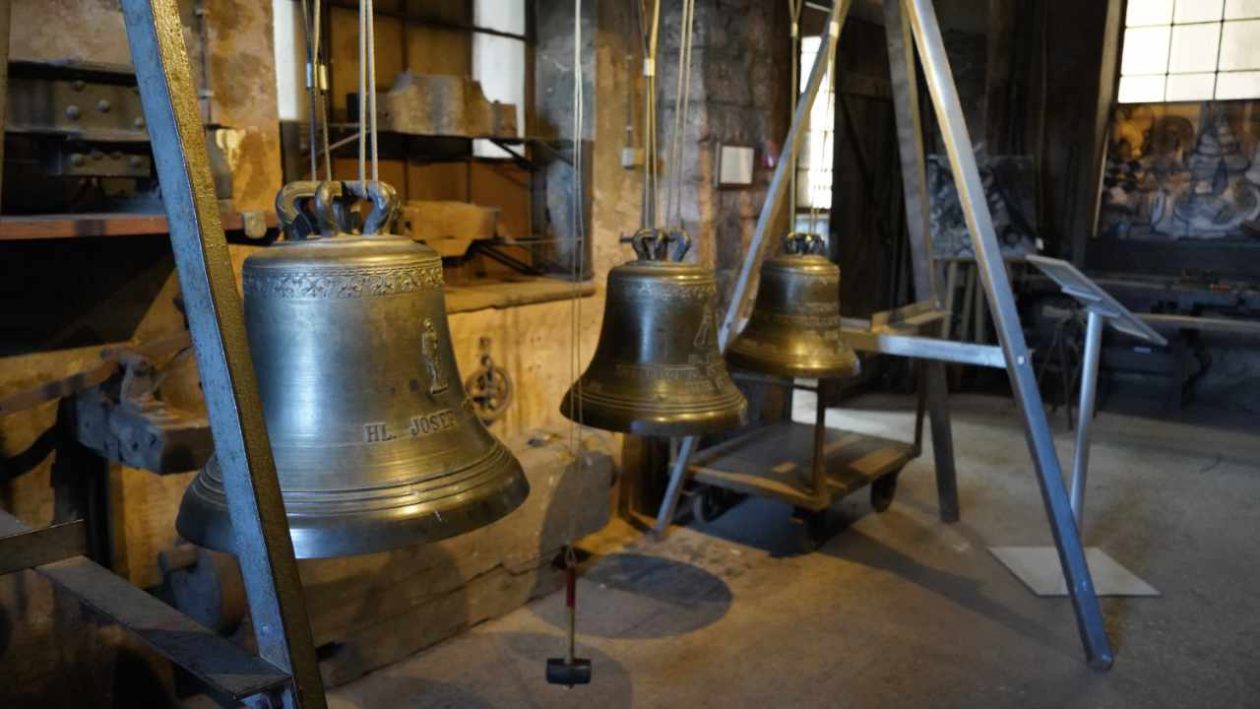
It is practically preserved in its original state. However, art seminars are sometimes held here, and occasional works of art are exhibited. A steampunk Christmas market is held here every December.
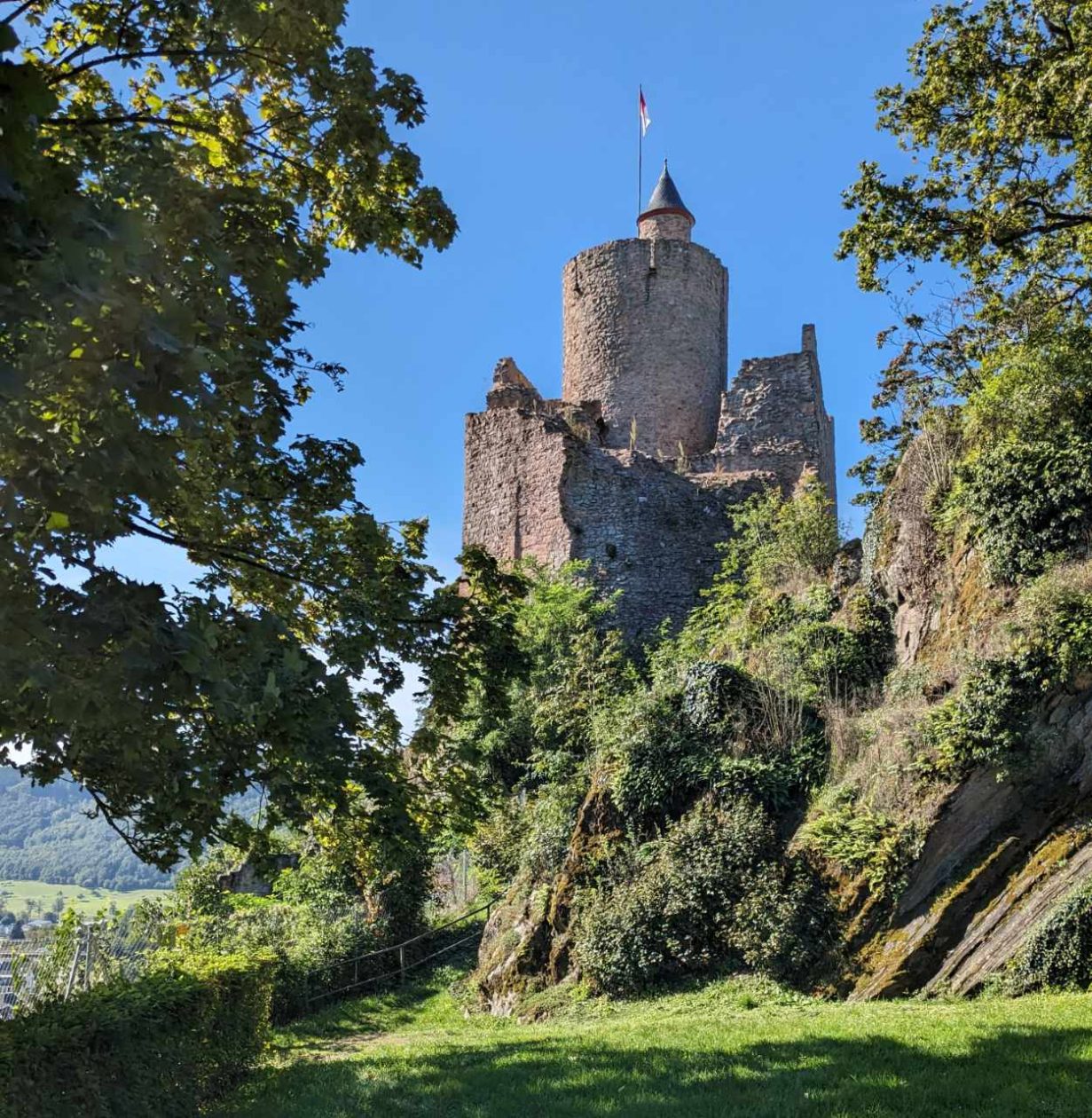
We reached the castle from the north-east via a somewhat hidden path. Later, we found out that this used to be the main entrance. A rock could only be bypassed to the right or left and served as an additional defensive post in the event of an attack. Inside the castle is a well that once secured the drinking water supply. We then climb the 120 steps to the top of the tower, from where we have a magnificent panoramic view in all directions.
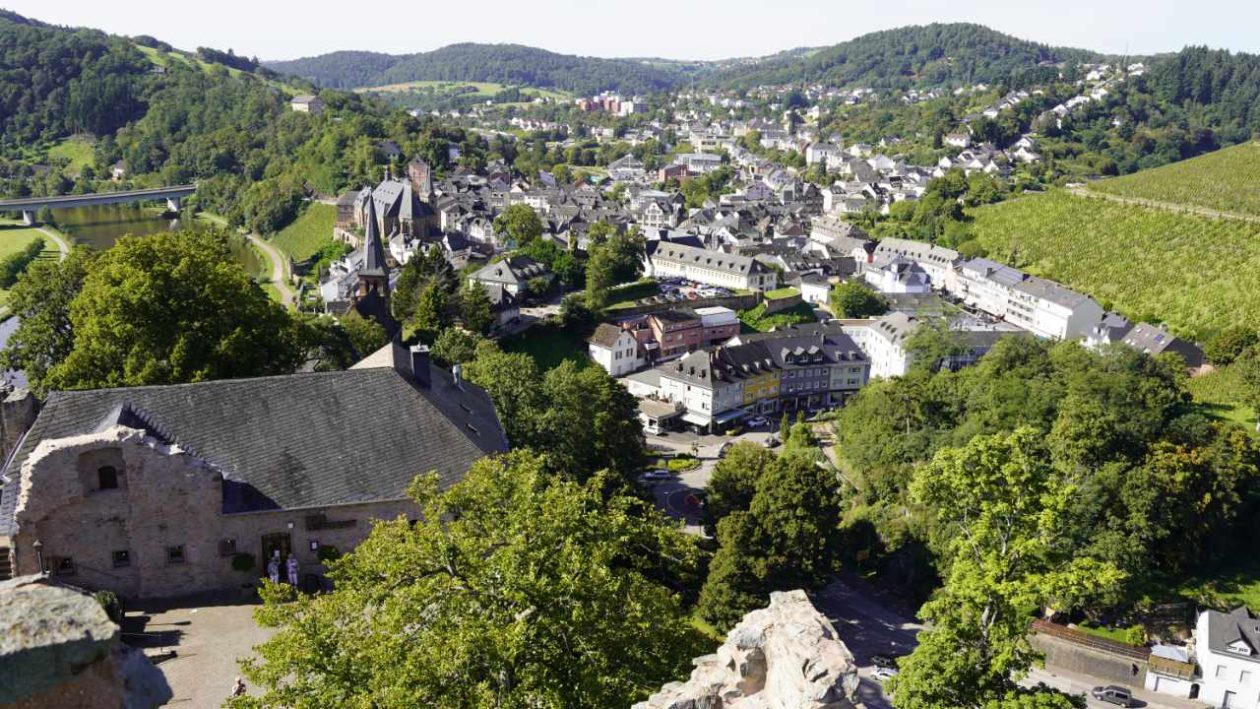
The descent to the old town leads past the Protestant church to the Schlossberg. The former castle now serves as the seat of various municipal administrative units.
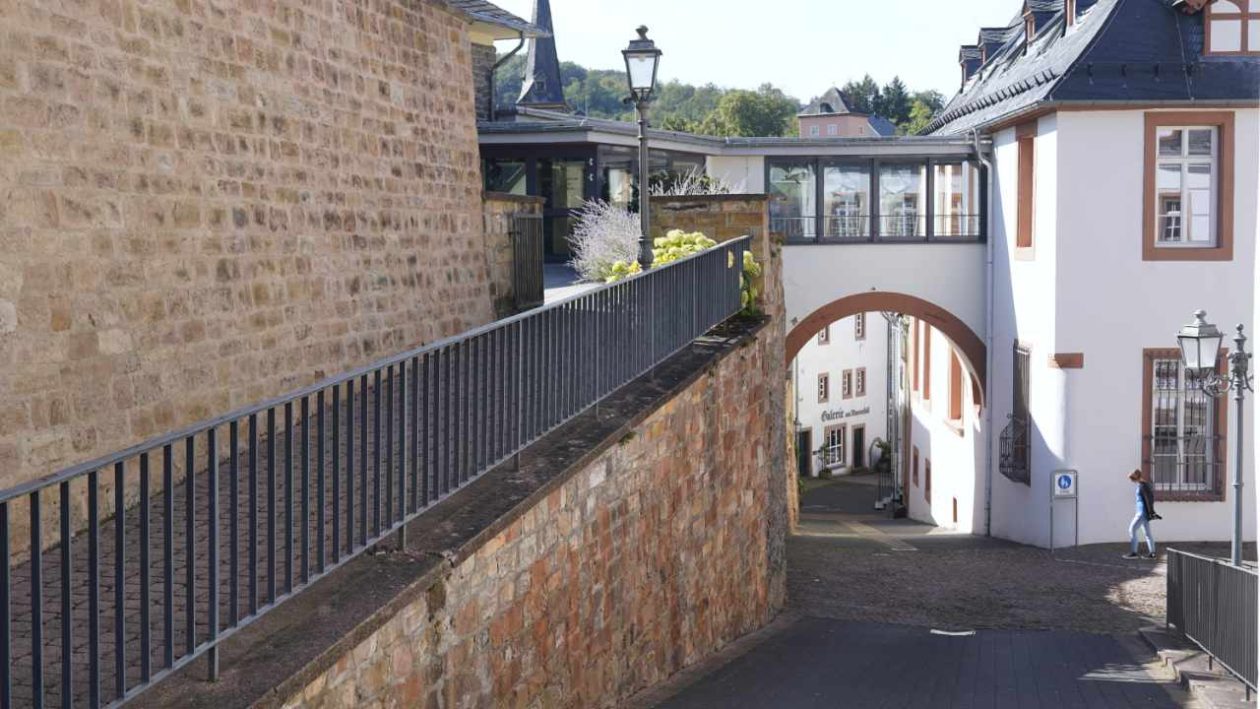
We now reach one of the viewing platforms with a view of the impressive waterfall in the middle of the old town. The various restaurants and cafes make the market a popular meeting place for locals and tourists. We also treat ourselves to a sumptuous snack.
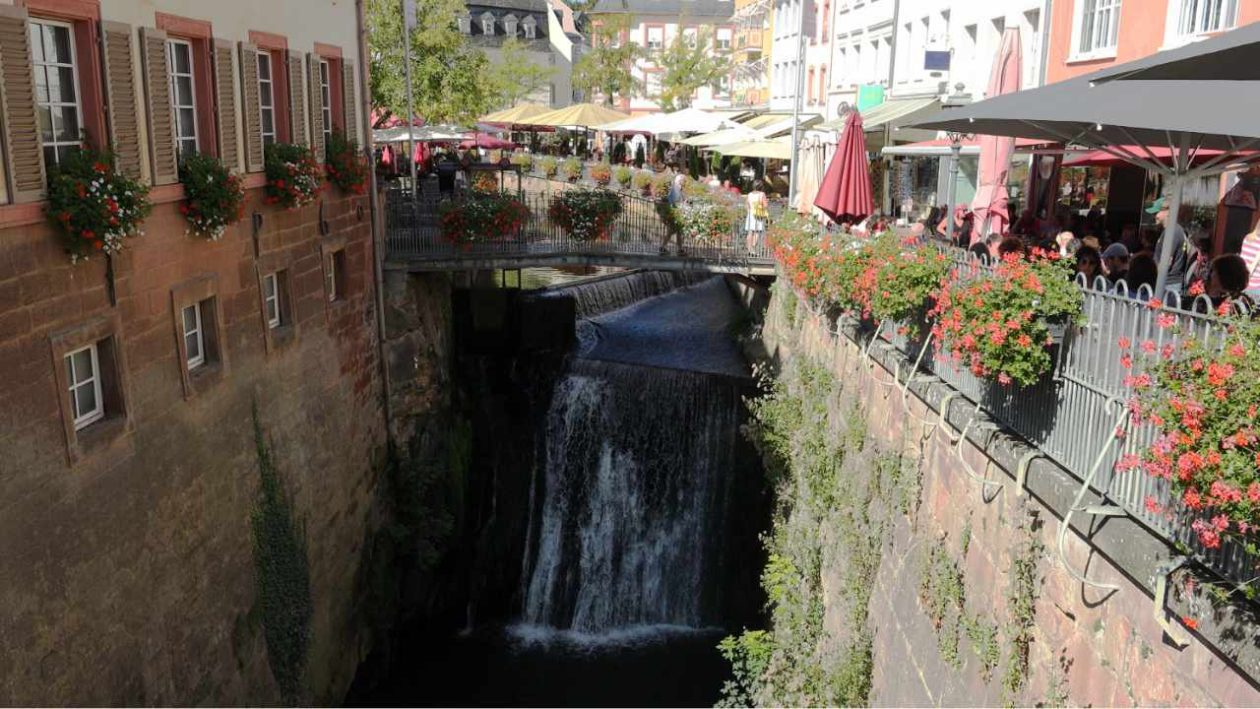
Strengthened, we continued our tour to the town hall. We then cross to the other side of the Leuk to the horse market. A metal fountain over 100 years old was once used as a horse trough.
Past magnificent medieval facades, we reach the Amüseum. The former electoral mill now serves as a museum to present traditional crafts and offers space for art and culture.
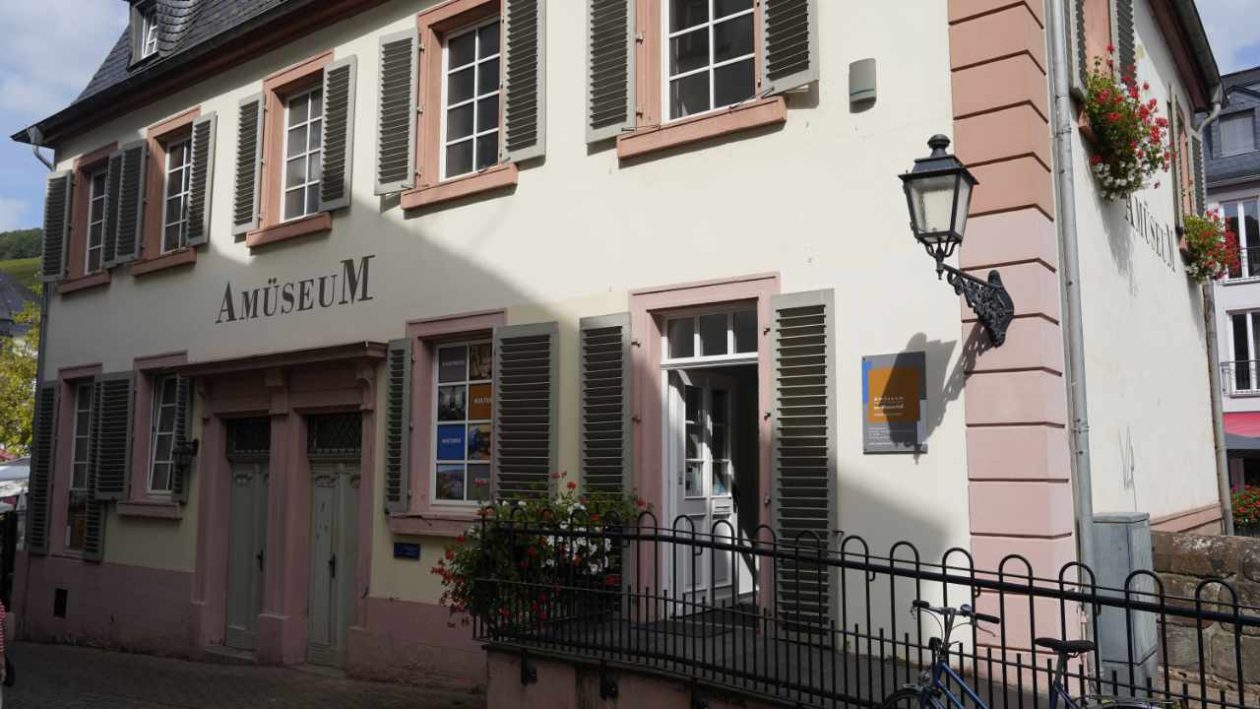
Right next to it is another viewing point that offers a view of the waterfall and the three mills, today grouped together in the mill museum.
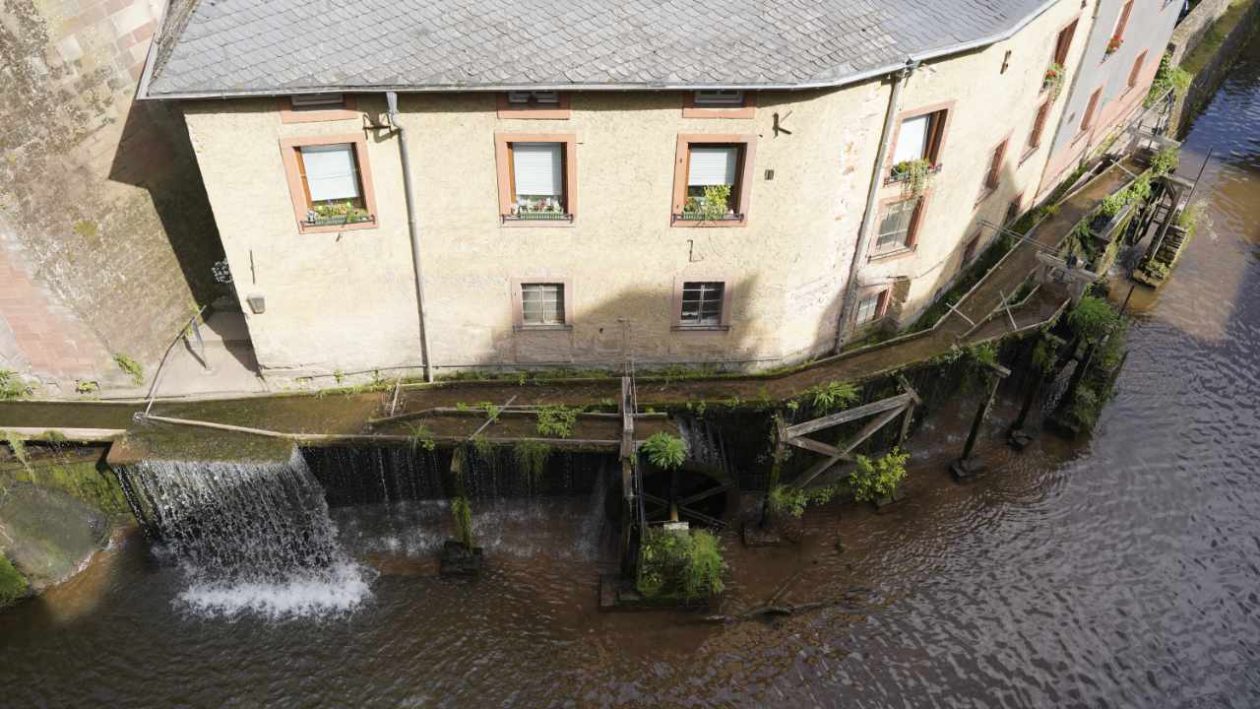
The first mill, built in 1520-1528, was a tan mill built by the guild of tanners and lurkers. The bark of oak trees was ground up and was an important raw material for tanning animal skins.
The second mill, built in 1753, was a fulling mill for the weavers’ and spinners’ guild.
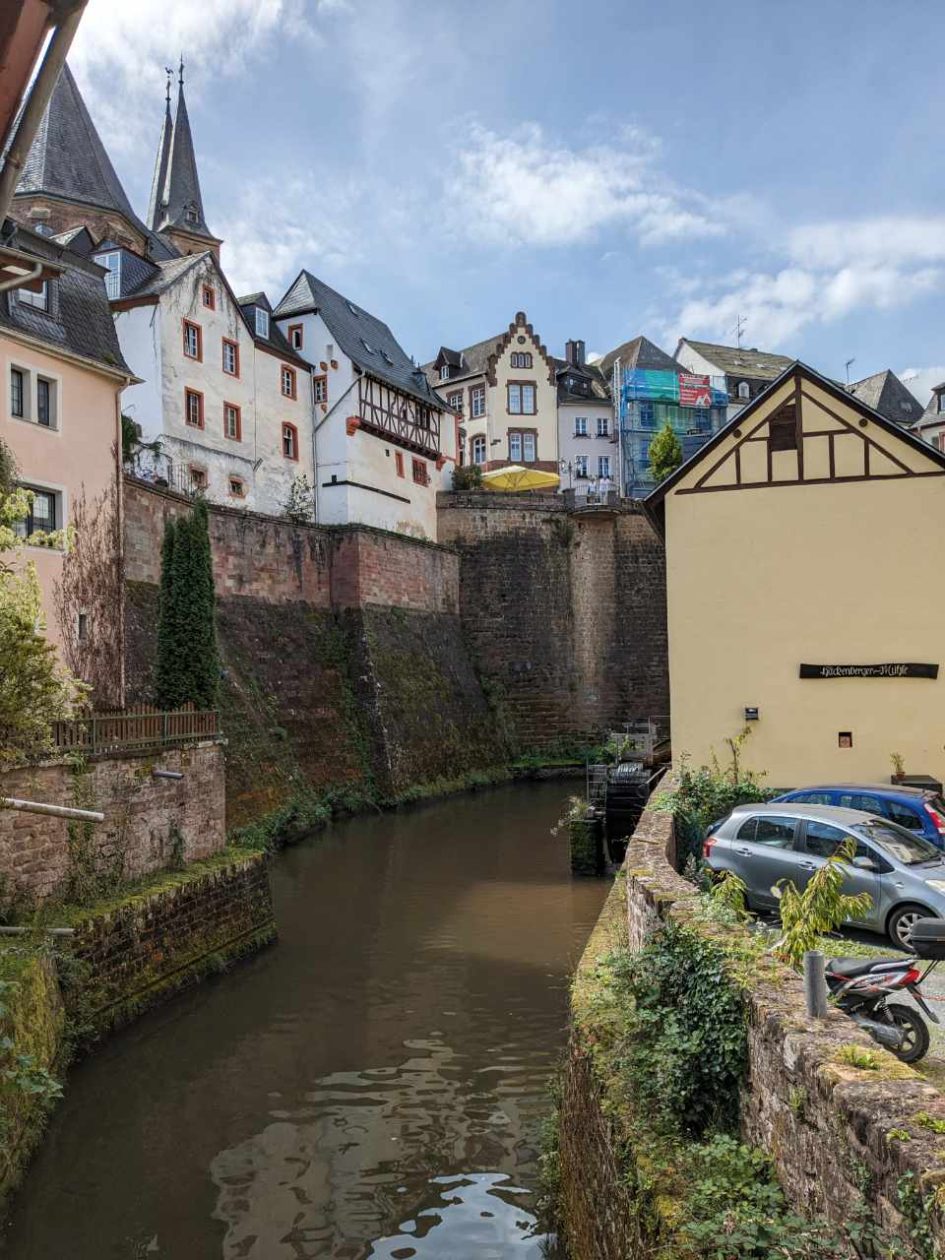
The third mill, built in 1755, was an oil mill for beating rapeseed, linseed, or sunflowers into oil, used for lamp and food grade oil. In 1884, the Hakenberger family bought the property apart from the oil mill. After a flood in 1974 destroyed the mill’s drive, operations were stopped. The town has run a mill museum here since 1995.
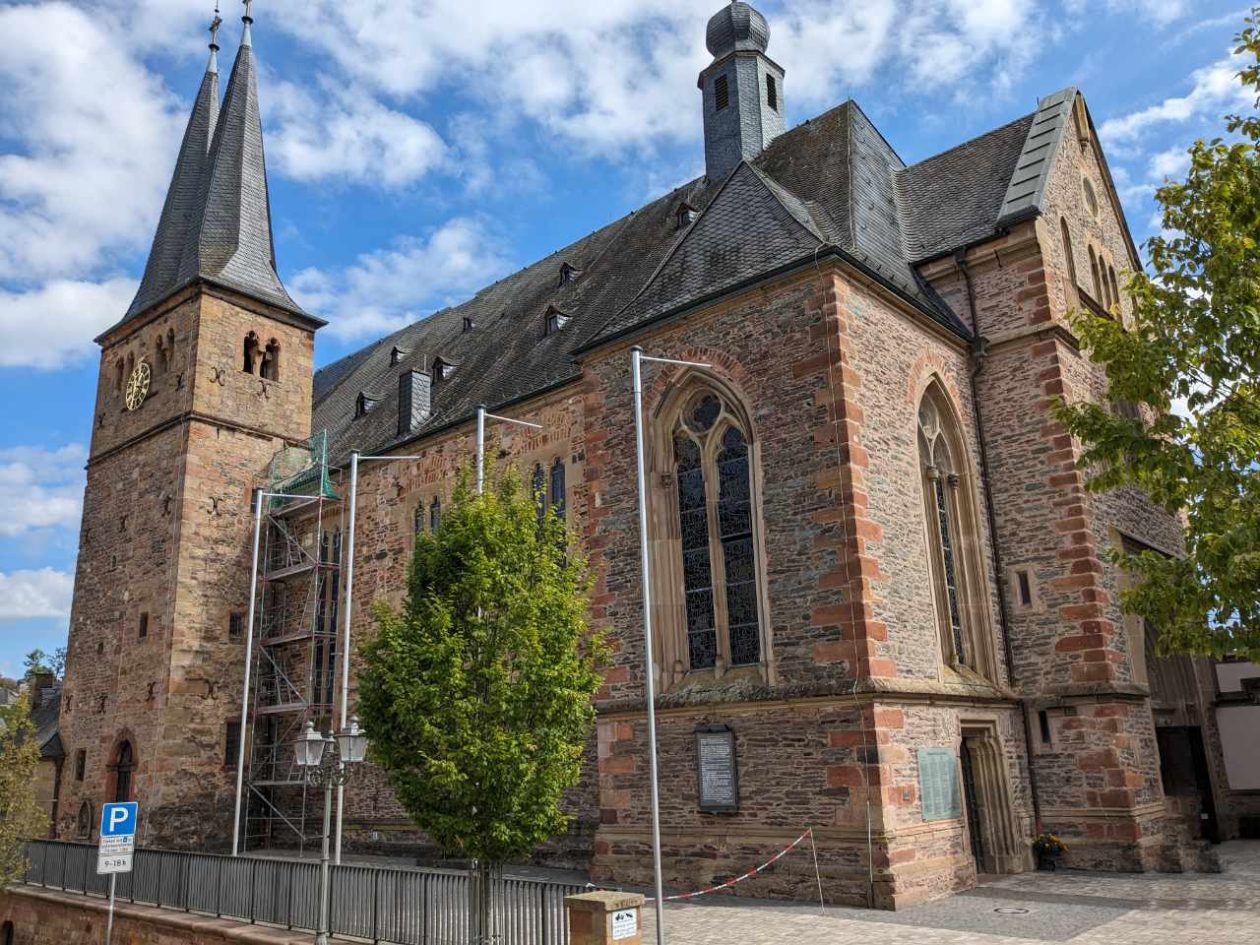
Next door is the Catholic St Laurent’s Parish Church. In front of it stands a larger-than-life statue of Saint Laurent, a Roman deacon. The grate in his hand documents that he died as a martyr because he was burned on the grate. The statue originally stood above the main portal. It fell to earth due to an aerial bomb during World War II. However, the statue was only slightly damaged. Behind the church, you have another nice panoramic view of the Saar and the castle.
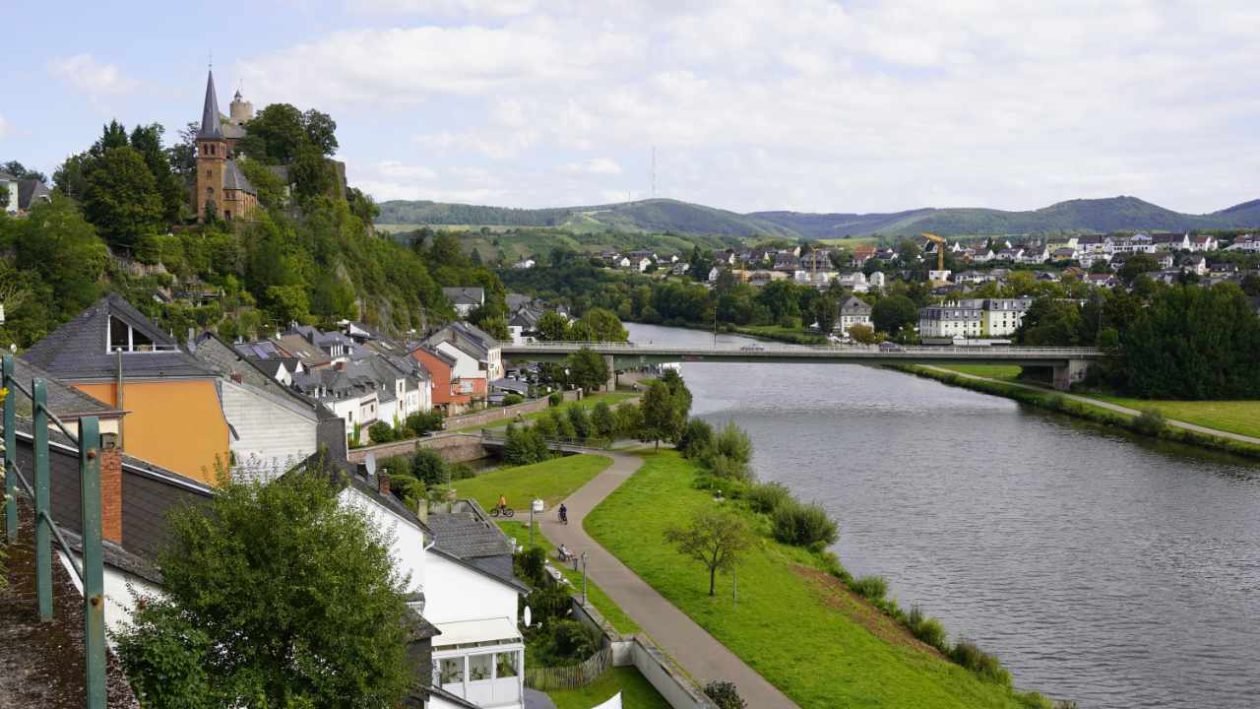
We walk through the Torhaus over the steep Laurentiusberg into the lower town and reach the southern part of the Staden.
We switch back to the eastern side of the Saar and visit the Dr. Wagner winery near the train station. This winery is currently in its fifth generation. The family was the first sparkling wine producer on the Saar.
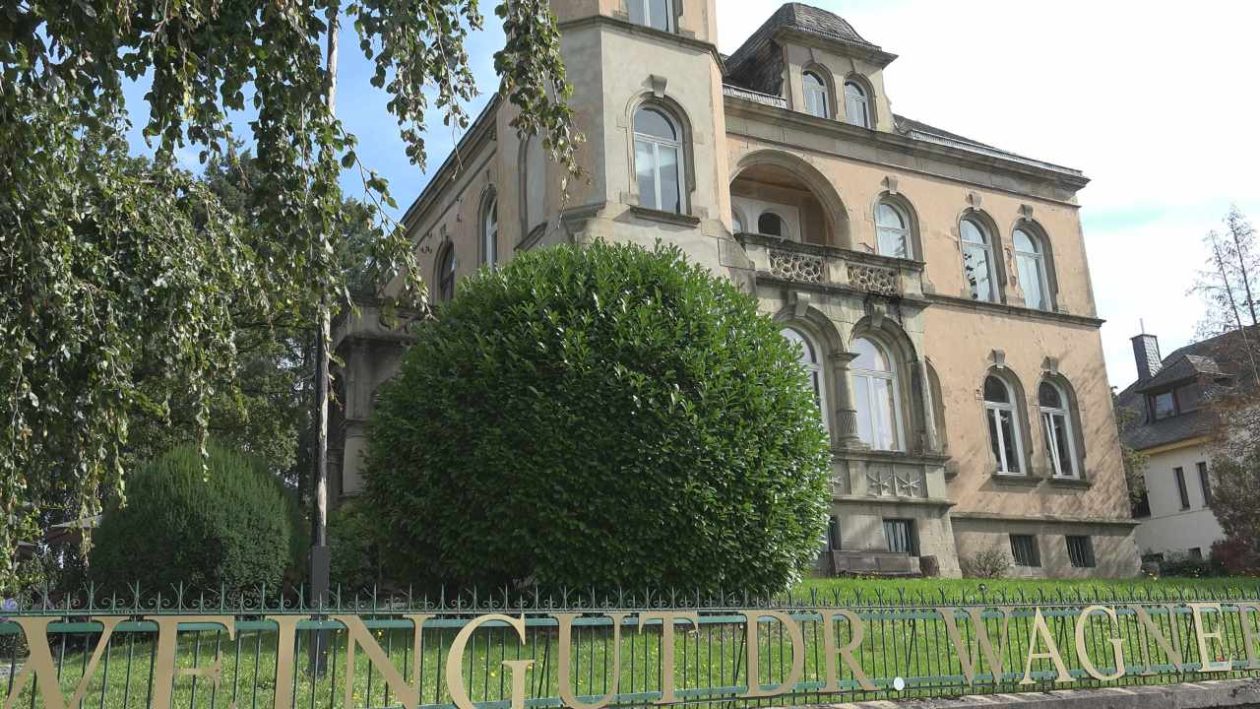
During our visit, Ms. Christiane Wagner, the current manager of the house, explained her wines and the house’s philosophy to a group of visitors in the guest garden. She is currently converting wine production to sustainable, organic cultivation and production. We have to try this wine straight away. It tastes first-class. The winery is one of the leading wineries on the Saar.
Our visit ends, even if we haven’t seen everything yet. Among other things, there is a chairlift to the Warsberg. On Warsberg is a summer toboggan run and a holiday park with a playground. But we’ll come back to Saarburg again sometime.