After our short visit to Cartagena, we want to drive along the coast towards Alicante.
The first obstacle on our way is La Manga del Mar Menor. La Manga is a seaside spit that separates the Mar Menor from the Mediterranean. 4 natural canals connect the Mar Menor with the Mediterranean and provide an exchange of the water. This makes the Mar Menor the largest saline inland water in Europe.
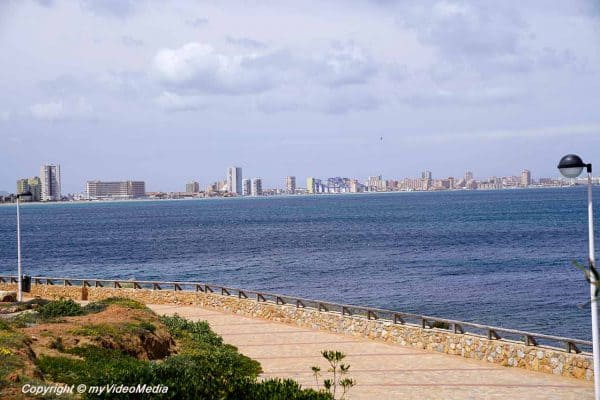
The headland La Manga is 22 km long and between 100 and 1200 m wide. It developed into a recreation and holiday area. 320 sunny days a year attract thousands of vacationists. The majority comes in the months from June to September. Here, you find a wide range of water-sport activities.
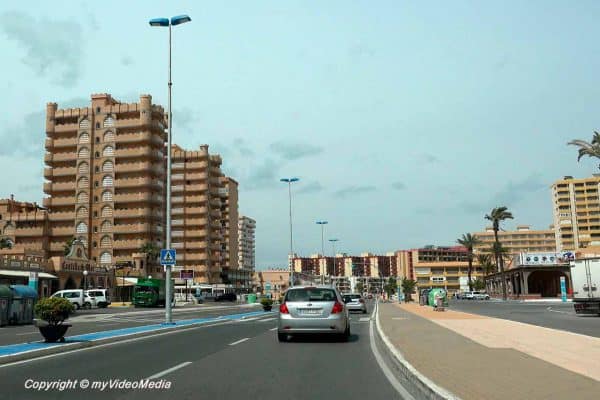
The rest of the year, the densely built hotel landscapes resemble ghost towns. Even if some tourists recover here during the winter months. Also, some restaurants and supermarkets are open all year round so that nobody must starve.
The Mar Menor is 24 km long and max 7 m deep. Due to the high salt content, a unique fauna and animal world has established itself. Among other things, you can find flamingos here. The United Nations declared the lagoon a Specially Protected Areas of Mediterranean Importance (SPAMI).
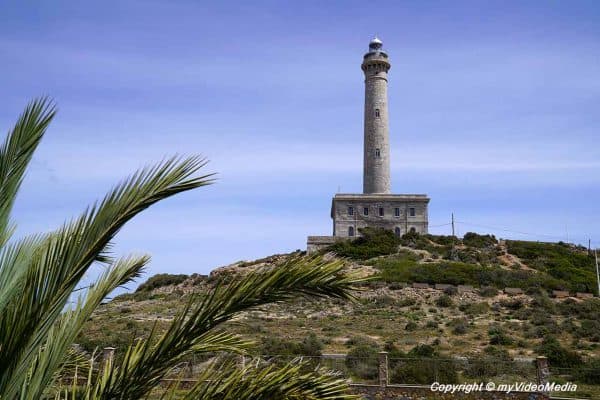
Before we drive along the headland, we first turn left and visit the Cabo de Palos. The lighthouse stands on a small hill, surrounded by a beautiful coastal landscape. It invites to walk and hike, but of course also to sunbathe and swim.
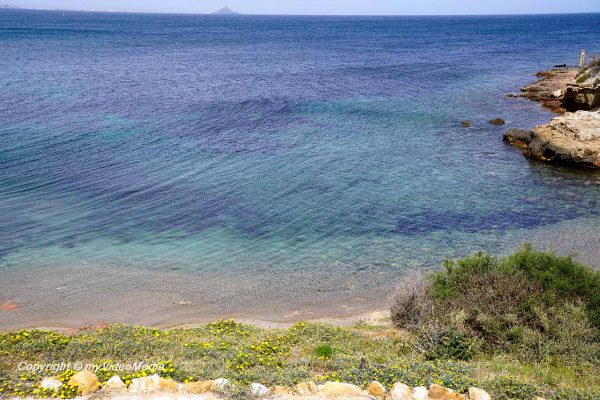
After approximately 14 km, we cross one of the natural canals on a bridge and then turn right again to the lighthouse Faro del Estacio.
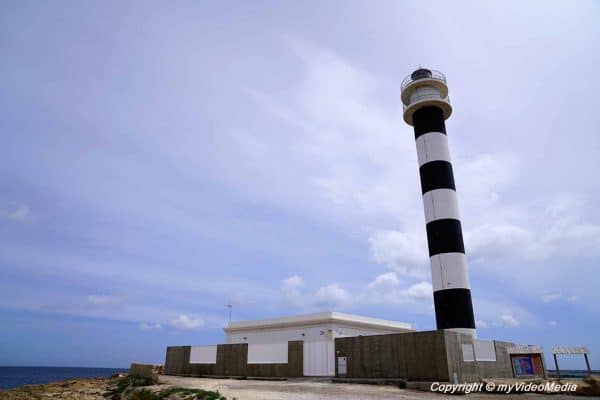
On the side in the direction of the Mar Menor is a marina. We don’t stay long and drive further north. The collection of skyscrapers are often interrupted by bungalow settlements so that they do not appear so oppressive.

5 km later we cross another bridge and stand in front of the widest canal between Mar Menor and the Mediterranean Sea. Many small islands interrupt the plain.

Since there is no way forward, we turn around and circle the Mar Menor in the west.
Please watch the 4K UHD video here
You are currently viewing a placeholder content from YouTube. To access the actual content, click the button below. Please note that doing so will share data with third-party providers.
More InformationWe pass Los Belones, Los Beatos, Bahia Bella, Los Alcazares, San Javier to San Pedro del Pinatar. This year’s sardine for the festival Entierro de la Sardina in Murcia came from San Pedro del Pinatar. But again we lack time, and so we drive on to Torrevieja.
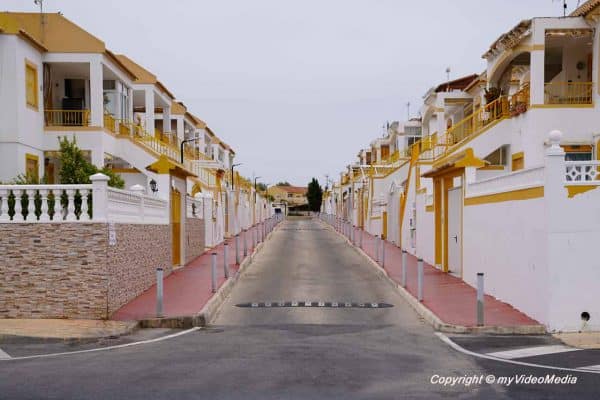
Torrevieja developed within 30 years from a place with 11.000 inhabitants to a big city with over 100.000 inhabitants. More than 57,000 of them are foreigners. The boom is mainly due to tourism, but there are other special features.
Nature park Lagunas de la Mata-Torrevieja in the interior has hiking trails and 2 salt lakes, one of which is pink and the other green. The lagoons are home to rare water birds, such as the Audouin’s gull. They also form the basis for salt production, which we see everywhere.
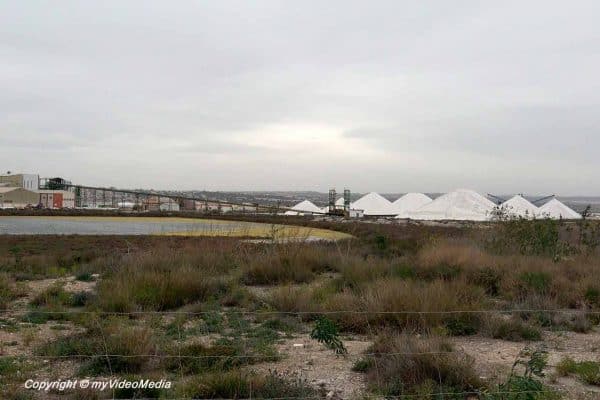
The salt lagoons have also created a salt climate that said to be the healthiest in Europe. Thus, there are many treatment options against rheumatism, heart disease, and asthma.
Last but not least, the fabulous beaches and rocky bays attract many tourists. In 2009, one opened the Parque Aromático on an area of 70.000 m². The fragrance experience of lavender, rosemary, thyme, jasmine, sage, and others lets a walk become aromatherapy.
Every year the Habanera takes place here, a festival with the participation of choirs from all over the world.
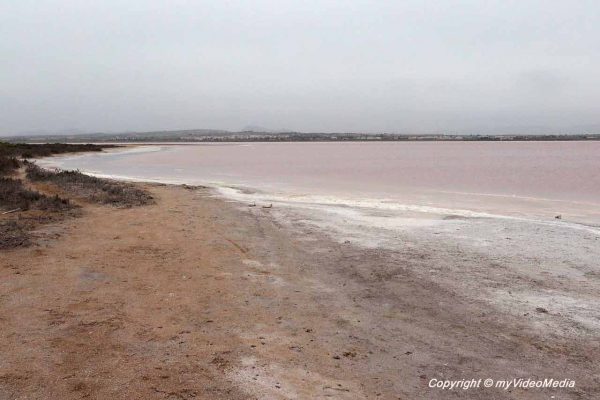
We did not miss a short visit to the pink salt lake. But we would have enjoyed doing a long walk.
Our tour continues to Santa Pola. But before that, we pass between La Marina and Santa Pola again many small salt lakes, which look like biotopes.
Just before Santa Pola, we see an Osborne bull. One finds these 14 m high symbols in different places in Spain. Originally they were meant as advertising for the Veterano, the Brandy of the Osborne Group.
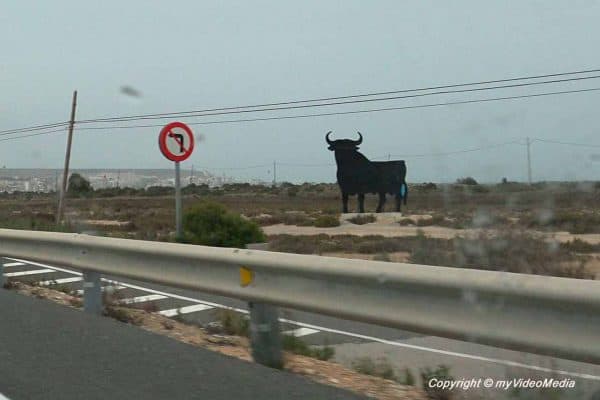
More and more artists discover these Spanish symbols and decorate them with well-known works of art. The artist Sam3 decorated the Osborne bull of Santa Pola with Guernica. Guernica, the destruction of the Spanish city of Guernica in the civil war by an air raid, is one of the most famous works of Pablo Picasso.

From a distance, we can see the famous kite-surfers on the beach, before the salt production channels and salt mountains obstruct the view.
We’re going west again and drive back to Murcia.
Please read on > A day trip to Valencia
Pin it for later
Text, photos and video: Copyright © myVideoMedia