Gothenburg, with more than 980,000 inhabitants, is the second largest city in Sweden. The area was already populated in the Stone Age. Gothenburg attained special importance, when the town granted free access to the North Sea,while Denmark controlled the access to the Baltic. King Gustav II Adolf founded the city of Gothenburg in 1619. In the 18th century, the Swedish-East India Company was founded; the only company that was allowed to do trade with India and China.
In the 20th century, Gothenburg was an important headquarters of the textile industry. Due to an unstable underground, the looms rubbed themselves off unilaterally. Sven Gustav Wingqvist constructed then the pendulum ball bearing and founded the company SKF(Svenska Kullagerfabriken), from which later the automotive supplier Volvo emerged.
Arrival in Gothenburg
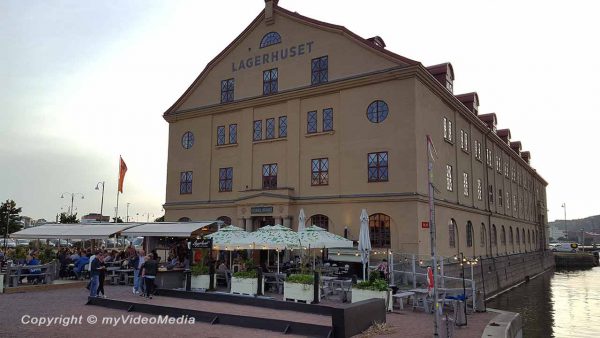
After our arrival in Gothenburg, the night falls and we are looking to get something to eat nearby our hotel. Quickly, we find the Lagerhuset at the harbor. Since it is a warm pleasant summer evening, we can sit on the benches in front of the restaurant.
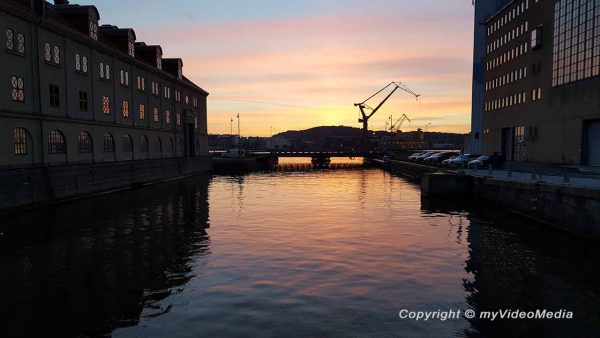
Afterward, we admire the play of colors of the sunset. The clear colors of the summer evening in the north fascinate us again and again. Unusually for us, of course, is that at the time of the recordings it is already 22:30.
City walk in Gothenburg
Feskekörka
The next morning, we start our walk in the same direction and then turn into a Rosenlundsgatan until we arrive at the Fish Church, Feskekörka. This building, designed by the city architect Victor von Gegerfelt, got his name due to its resemblance to a Gothic church.
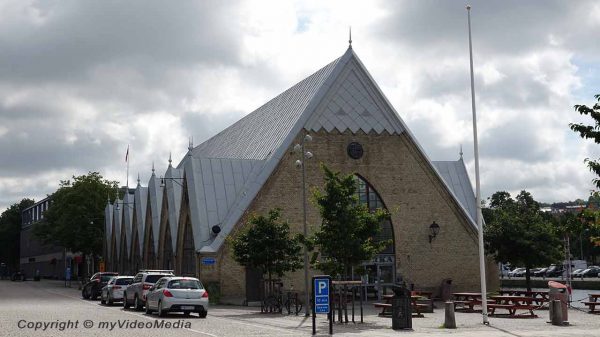
The Fish Market opened in 1874 and replaced the former outdoor fish market. Fresh and tasty presented, you get the best seafood in Gothenburg here.
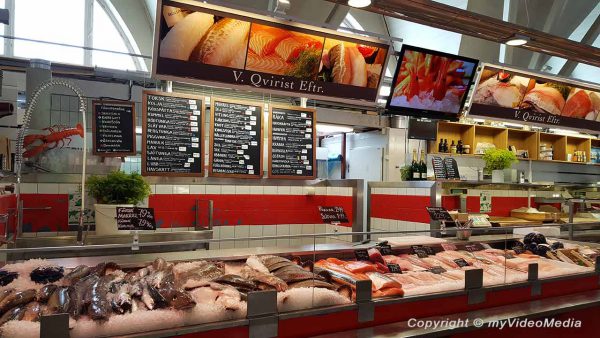
After a quick snack, we continue Sahlgrensgatan and turn left into the Victoriabron. Here are a number of educational institutions, from a teacher academy to university.
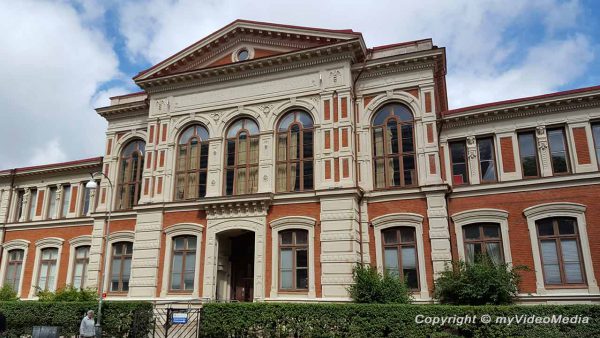
Södra Larmgatan
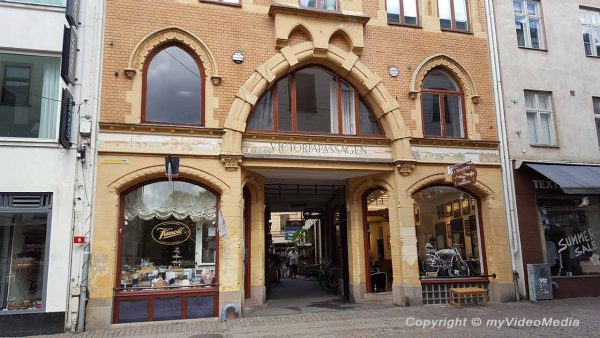
Södra Larmgatan is one of the main shopping streets of Gothenburg. We try to study the prices of the goods to get a sense of the price level. It seems that the prices are at the same range like at home in Germany.
From Södra Larmgatan smaller passages, like the Viktoriapassagen or the Torgpassagen, branch off.
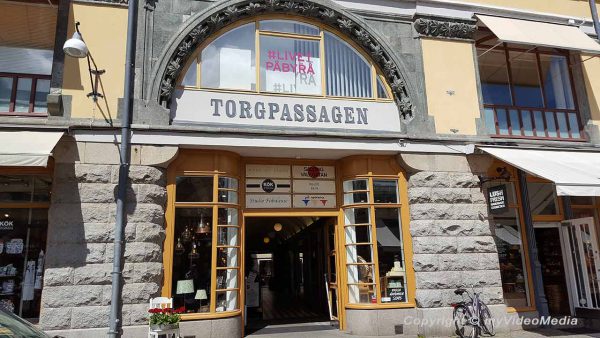
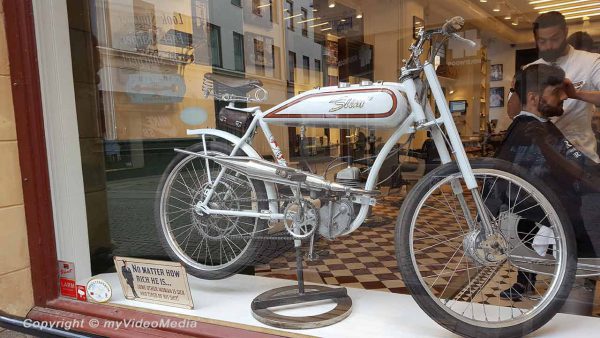
Here you find cafes, shops, and also hairdressers, whom you could watch at their craft.
Chance encounter at the Café Espresso House
In front of the Espresso House, a woman sees our camera and we quickly come into a conversation. Her name is Pia and she lives in Sweden. We quickly come to the subject of travel to speak and she tells us that she constantly travels around for little money. We ask her about their social media addresses, but to our surprise, she says that she has none.
She invites us to the back of the coffee and shows us a video. It is a promotional video of a club which operates worldwide. You can earn bonus points when you recruit new members. We quickly realized that she tries to recruit us. Since we regard this system for a pyramid scheme, what we also tell her, we say goodbye again.
Stora Saluhallen
We come to the Saluhallen, Gothenburg’s largest market. A paradise for foodies.
Please watch the 4K UHD video
You are currently viewing a placeholder content from YouTube. To access the actual content, click the button below. Please note that doing so will share data with third-party providers.
More InformationIn the covered market, you can find all kinds of food, from fish and meat up to vegetables, cheese, bread, cakes, and pastries and candy.
Vallgraven
The Vallgraven (moat) was once part of the fortifications of Gothenburg. On the canal near Stora Teatern, we observe young people having fun on their boats.
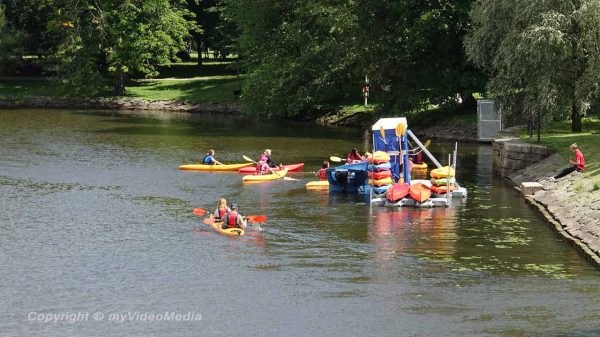
The excursion boats which drive through the channels of Gothenburg also land here. We have not missed a tour, but this is subject of a separate post.
Kungsportsplatsen
Vis-à-vis between Ostra Hamngatan and Ostra Larmgatan lies Kungsportsplatsen. On the square stands the impressive equestrian statue of King Charles IX, the father of King Gustav II. Adolf.

The sculptor John Börjeson created the monument in 1904.
Kungsportsavenyen
We turn to the Kungsportsavenyen, the grand boulevard of Gothenburg. Besides numerous restaurants here are numerous cultural institutions of Gothenburg.
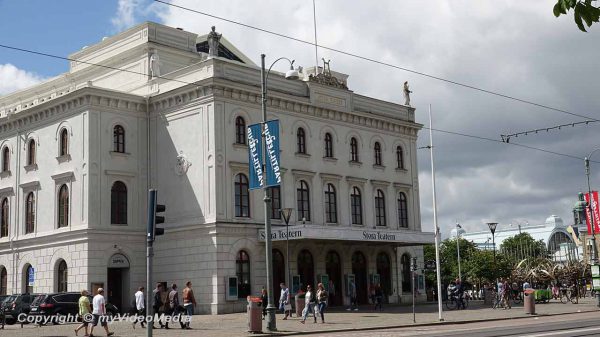
On the right hand is the Stora Teatern, which is theater and opera in one. Numerous works of art of contemporary artists are exhibited along the street.
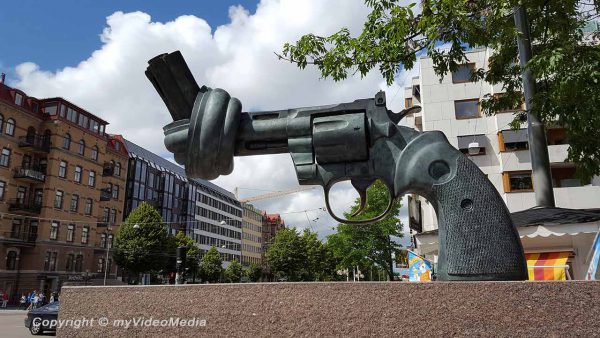
On occasion of the Gothenburg Green World 2016, we find blooming oases, that were artistically designed.
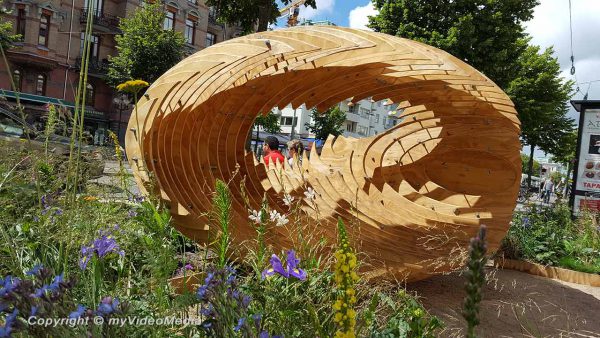
Some buildings stand out by their architecture, e.g. by their timber construction. Some buildings stand out by their architecture, e.g. by their timber construction. The Gothenburg Museum of Art marks the end of the road.
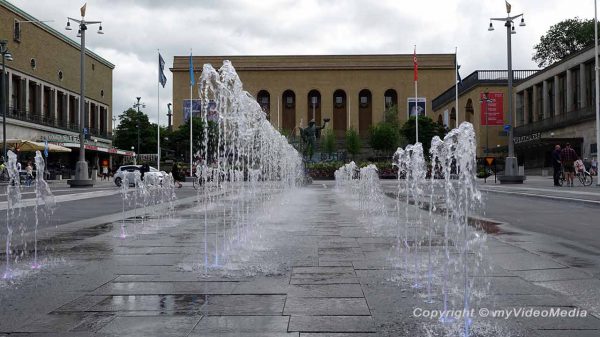
The Lorensbergs Teatern, Göteborgs Stadsteater, the Stadsbiblioteket, the Konserthuset and Gothenburg Symphony Orchestra are also based here.
Brunnsparken and Gustav Adolf Torg
We return to the actual center of the city. Brunnsparken is a small park, surrounded by tram stops and shopping centers. It still lies within the channels. The park is bordered by the Stora Hamnkanalen and its locks.
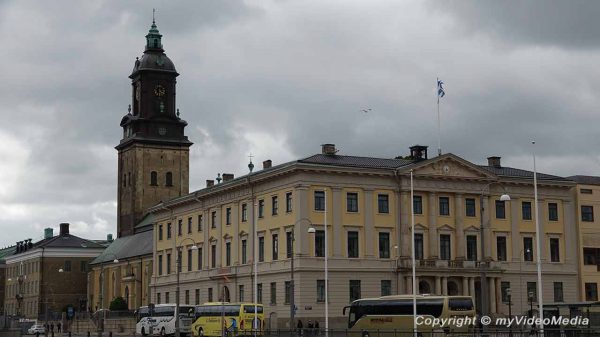
On the other side lies Gustav Adolf Torg, a town square with the city hall and the Bourse. Today the municipal building in Neoclassical style is mainly used for receptions and meetings.
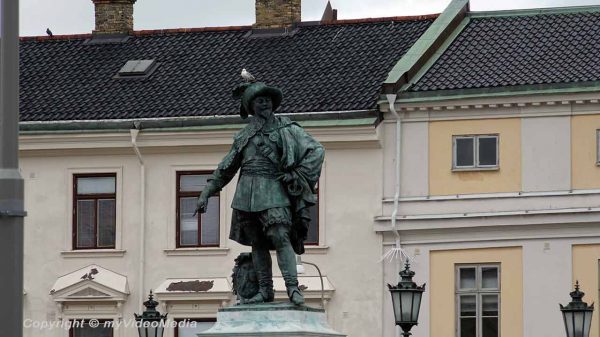
In the middle of the square stands the statue of King Gustav II Adolf.
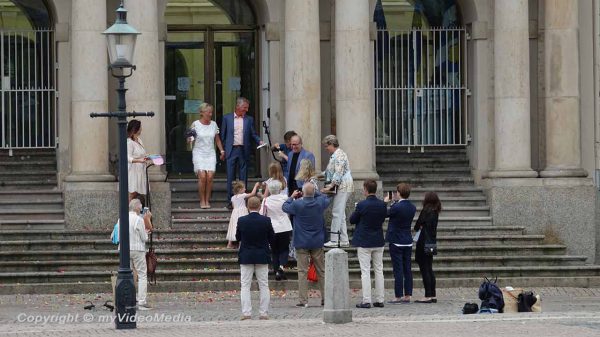
In front of the city hall, guests and photographers welcome the newlyweds.
Stora Hamnkanalen
Along the Stora Hamnkanalen we pass the Cristinae Kyrka, commonly known as German Church, since it was originally built by the German community. A few steps away is the Stadsmuseum.
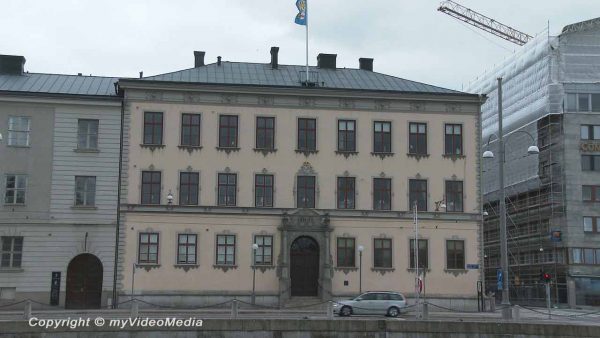
On the other side of the canal is the local residence of the king of Sweden on his visits to Gothenburg. The building is recognizable by the Swedish flag on the roof. To the left is a small square with the monument of Jonas Alströmer. He was the first in Sweden, who cultivated the potato on a big scale.
Harbor
The old customs house which now houses the Casino Cosmopol, the ship museum, and the building of the former Swedish East India Company, still bear witness to the importance of the harbor. In the distance, we see a tall column with a female statue at its top. It has been built in honor of the women who always looked into the distance and hope that their husbands will return from the seas and the oceans.

We watch the hustle and bustle of the historical ships which serve for the tourism and partly for ferry traffic.

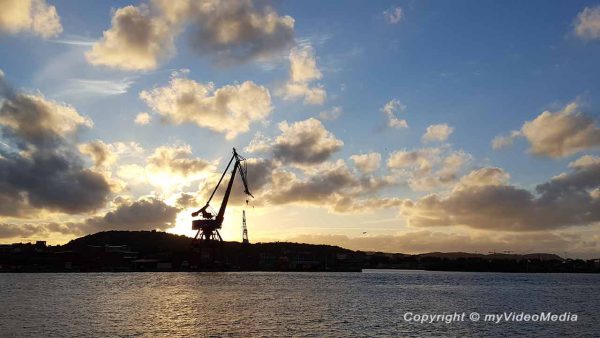
At sundown, we return again to the harbor to enjoy the light of the evening at the end of our city walk in Gothenburg.
During our visit we stayed at the Hotel Riverton.
Next -> Haga – the oldest neighborhood of Gothenburg
Text, Fotos und Video: Copyright © myVideoMedia