In the European Quarter of Brussels, the capital of Europe, you find the seat of the Council of Europe, the European Commission and the second seat of the European Parliament, beside Strasbourg. It is Saturday, no working day for the parliamentarians, but we want to see the place where a significant influence on our everyday life is exerted.

We go by subway up to the stop Trone and approach the European Quarter in the west of Brussels. Even from a distance you can guess the dimensions of this building complex.
The widely curved building connections over our heads convey the feeling to be an ant. The further we explore the terrain, the stronger the feeling.
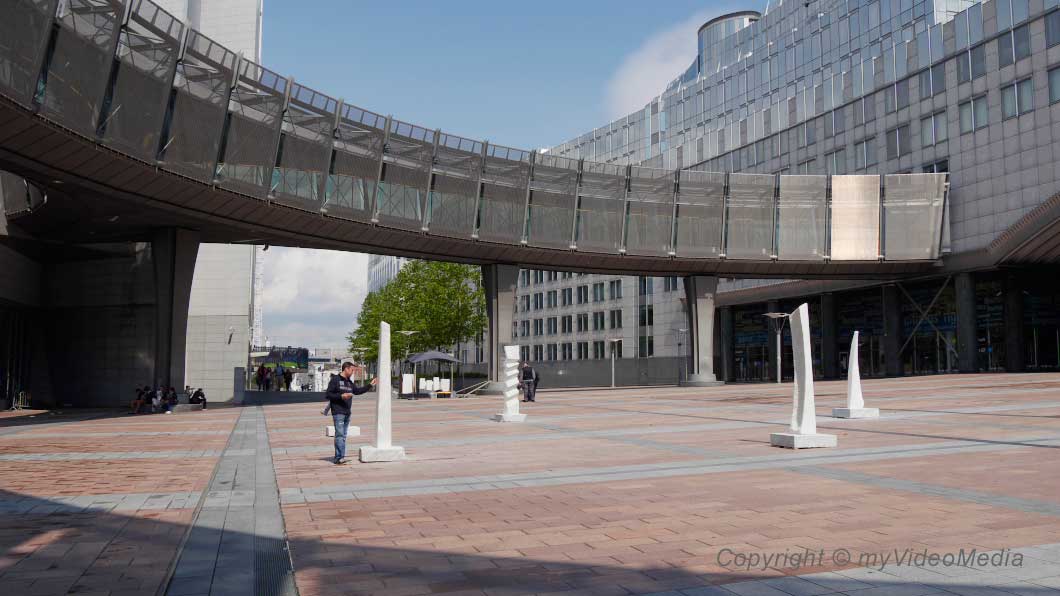
The mirrored facades make it impossible to look into the interior. Cameras, scanners and identity checks on all entrances do not give the feeling of being welcome.
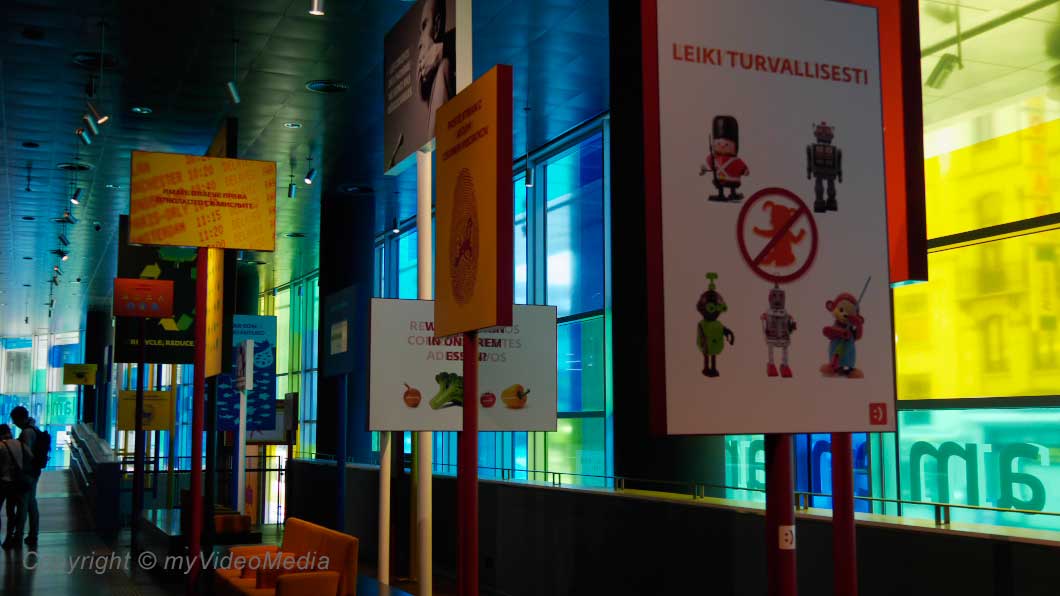
The only part that is open on Saturdays is the Parlamentarium, the EU visitors’ center with multimedia components in all 24 official European languages. Our standard camera was unwelcome, fortunately, we still had a slightly smaller one with us.
Slightly northeast of the parliament, we reach the European Commission and the Council of Europe. The gigantic office complexes which do not fit in a grown city like Brussels and convey the feeling of Orwell’s 1985.

We left the place with the feeling that we met an institution, which hides together with its lobby organizations behind its sealed windows while it is engaged in watching and supervising its citizens.
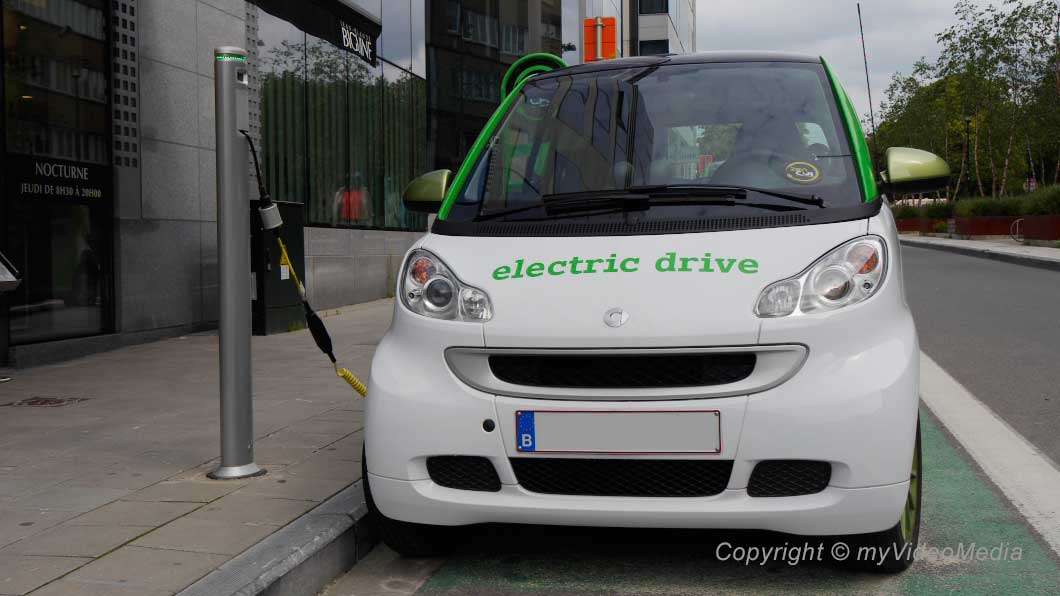
Hopefully, the two electric cars at their charging station are not only a fig leaf of the EU, but a sign that the EU really does something for the climate protection.
You are currently viewing a placeholder content from YouTube. To access the actual content, click the button below. Please note that doing so will share data with third-party providers.
More InformationText, photos and video: Copyright © myVideoMedia