After dropping our baggage in the Hotel Catalonia Conde De Floridablanca, we immediately get on the way to explore the city.
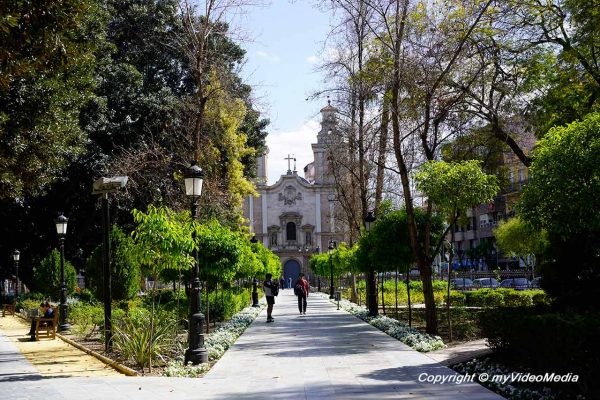
Around the corner is a small but beautiful park, the Jardin de Floridablanca, where the sardine greets us. It’s not decorated yet, but this shall change soon.
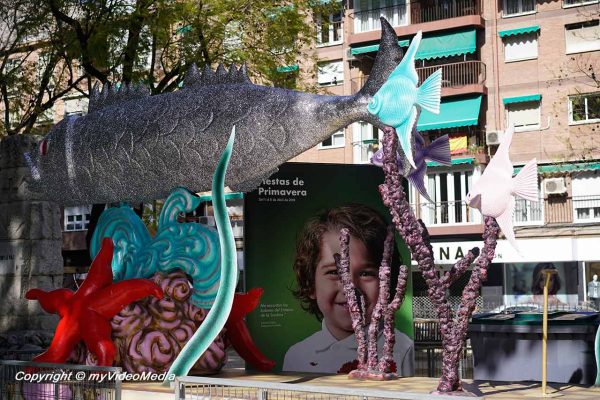
At the exit of the park is a car of the city administration …. with electric drive.

The church Parroquia de Nuestra Señora del Carmen is at the other end of the park.
At the Plaza de Camachos, the oldest square of the city, we see a monument of a Sardinero (Monumento de Sardinero).
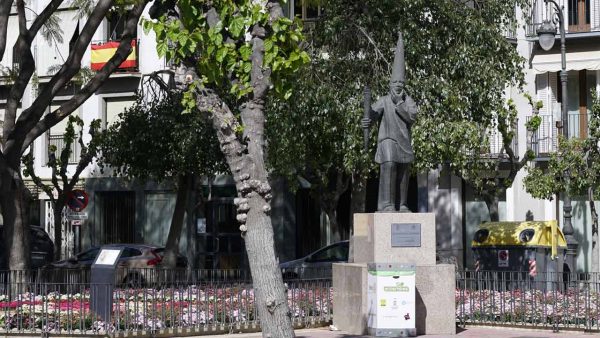
It commemorates the founding of a custom dating back to 1850 when students wanted to imitate a parade at the end of Lent in Madrid. Dark figures with pointed hoods followed a coffin containing an unfortunate sardine that was subsequently burned.
This is how the festival of El Entierro de la Sardina, the Burial of the Sardine, came about.
Unlike other regions in Spain, the festival in Murcia is not celebrated on Ash Wednesday but at the end of the week following Easter; the time after the Semana Santa, the holy Easter week, when traditionally no meat is eaten.
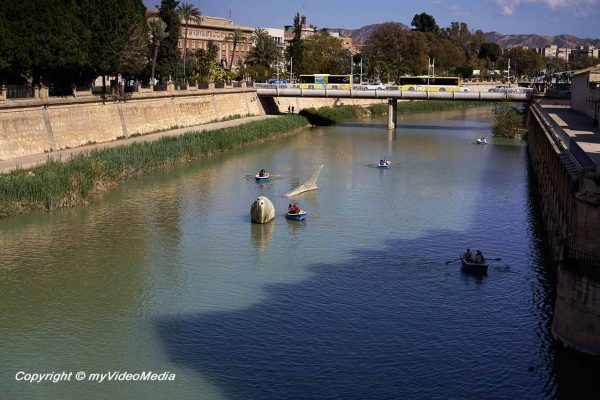
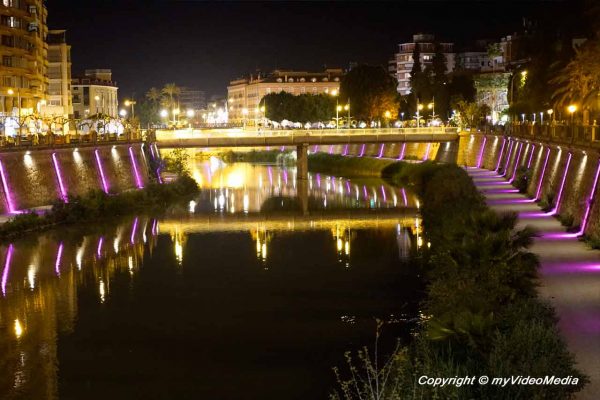
The Rio Segura cuts through the city and divides it into two halves. We watch the peaceful activities around a stone sardine in the river for a while.
Today, mighty embankment walls protect the city, which has suffered from some flooding. In 1651, the city was completely flooded, and more than 1,000 people died. When the earth is dry and heavy rains occur, huge amounts of water from the mountains stream to the sea.
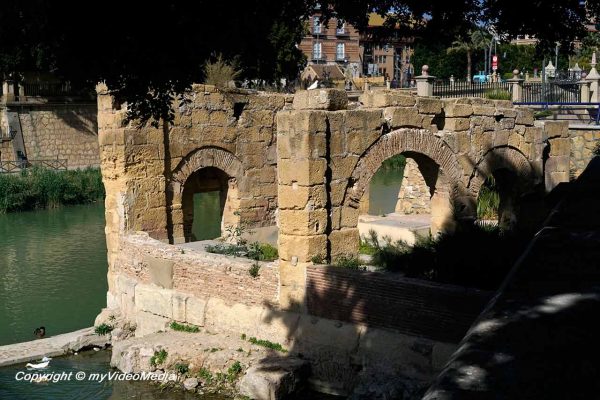
The remains of a torn-away bridge are preserved as a memorial. Murcia has also been affected by earthquakes and wars. On the opposite bank is a large market hall, which we will visit later.

We go on to the festively adorned city hall, the Ayuntamiento de Murcia, which also is called Glorieta Espana.
Marvelous flowers and little fountains stimulate the place and give it a wonderful atmosphere.
Please watch the 4K UHD video
You are currently viewing a placeholder content from YouTube. To access the actual content, click the button below. Please note that doing so will share data with third-party providers.
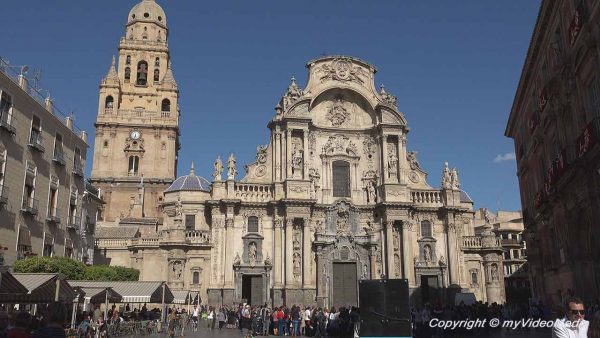
More InformationThrough a small side street, we reach the Plaza del Cardenal Belluga, the large square in front of the Cathedral of Murcia.
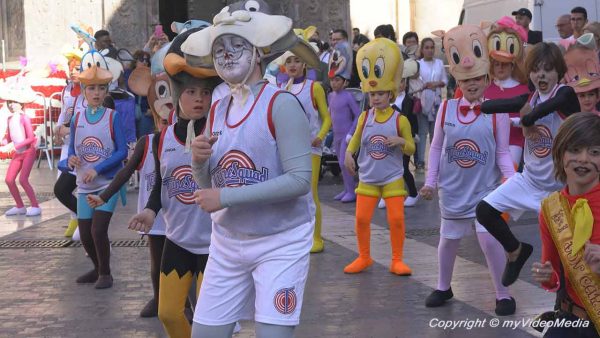
Children dance groups entertain the audience. One already promotes the kids, for future parades.
We return to the hotel. Here, Daniel Robles and Antonio de Blas are waiting to show us the most important points of the city.
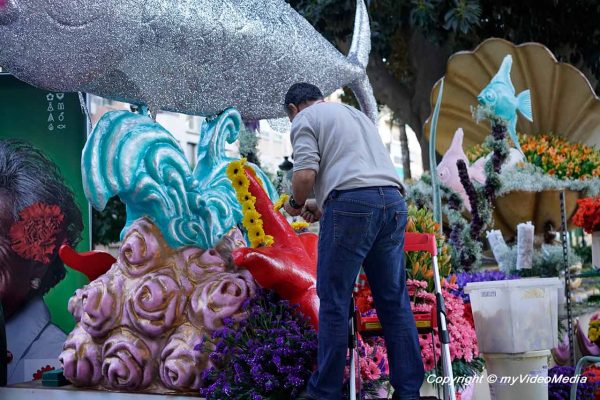
When we pass the celebratory cart with the sardine again, it just receives its floral decoration.
Our two companions draw our attention to the monument of José Selgas. He was one of Spanish lyricists and writers. He was also dyed-in-the-wool conservative and led a crusade against modern science and civilization.
We learn from Antonio, that the Placa de Gamachos is the oldest place of the town. Here, the first bullfights took place in Murcia, similar to the Plaza Mayor in Madrid.
When we reach the Rio Segura again, the city is already dipped into a red evening light. We pass the town hall and reach the square in front of the cathedral again. Our two companions draw our attention to the modern façade of the house opposite the cathedral. It is architecturally in full contrast to the other buildings on the square, but still fits in well.
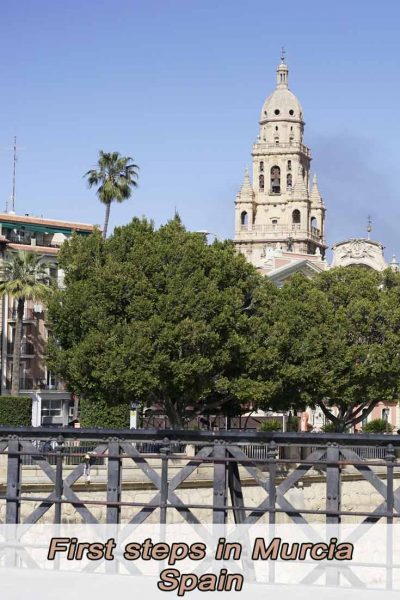
The square is dominated by the cathedral, which, after the tower of Seville, has the second highest steeple in Spain, with a height of 92 meters.
The Cathedral of Murcia has a peculiarity that one does not recognize at first sight. It is the chapel of Los Vélez. It was founded by Don Juan Chacón, the military governor of Murcia and member of the Fajardo family.
In 1507, the Spanish military family Fajardo was awarded the Spanish noble title Marquess de Los Vélez, which was also name-giving for the chapel. There was an intense quarrel about this chapel since it turned out to be larger than planned and thus was built also on a public area. Nobody found himself ready to consecrate it.
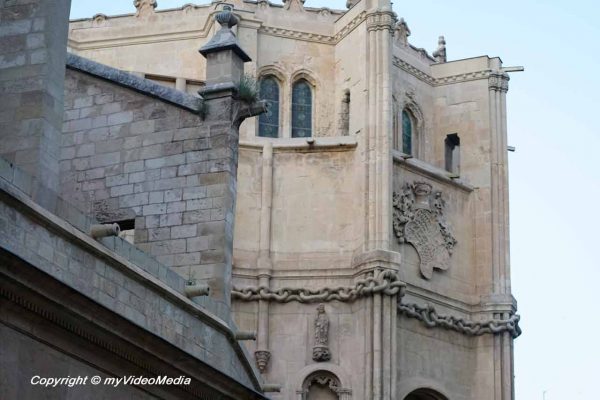
So one ordered to cut a chain out of one piece of stone and put around the chapel on the outside.
This defined the chapel as part of the cathedral and thus it is consecrated by definition. So that the stonemasons could not create such masterpiece again, they were dazzled and their hands chopped off.
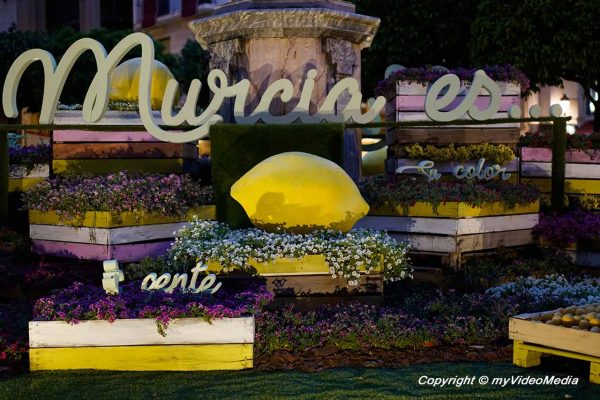
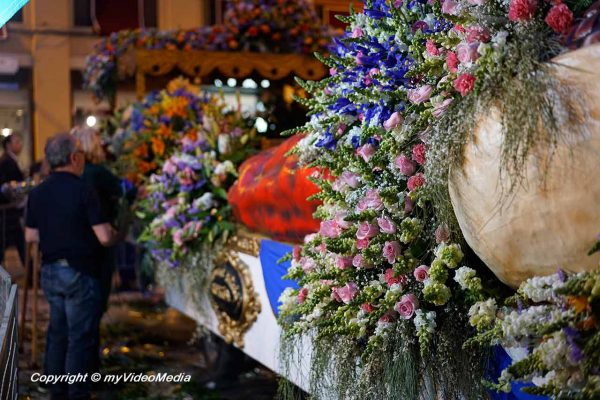
The well in front of the cathedral is adorned with flowers. In addition, we see carriages decorated with flower arrangements everywhere in the city.
The reason for it is the Spring Festival, whose highlight is the burial of the sardine.
We reach Calle Traperia, an important shopping street and pedestrian area in Murcia. It connects the cathedral with the Plaza de Santo Domingo and continues as Gran Via Alfonso X el Sabio to the Plaza Circular.

In the Calle Traperia, you find the Real Casino, an architectural highlight. The entrance hall of this is modeled after the reception room for ambassadors in the Alhambra in Granada.
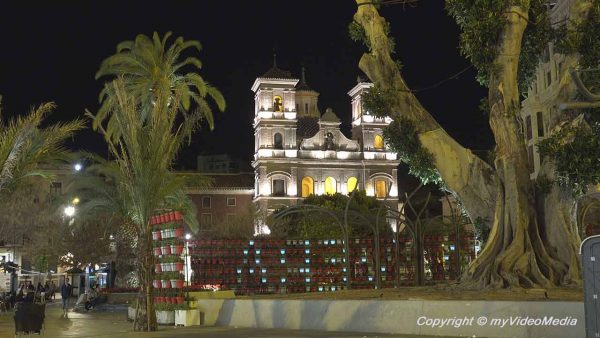
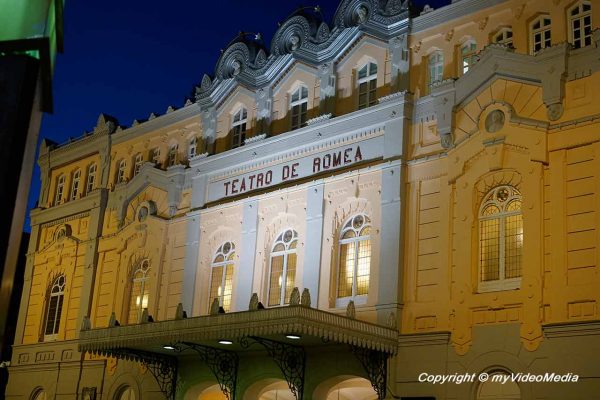
At the Plaza de Santo Domingo, we turn left and reach the Teatro Romea, one of two major theaters in Murcia.
From here, our two companions take us to the Museo de Santa Clara, built on the remains of an Alcázar. We will visit in in the next days.
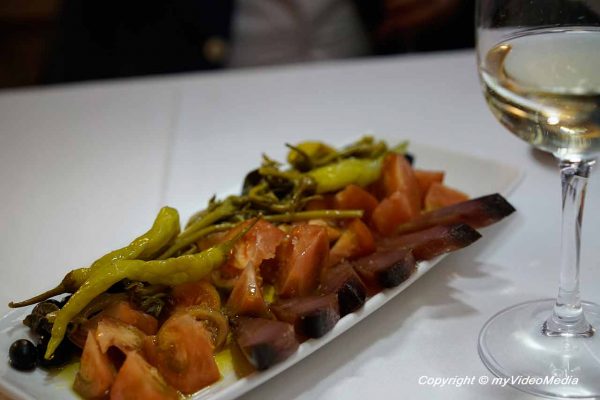
It’s getting late and Daniel Robles and Antonio de Blas invite us to delicious tapas, beer, and wine in a tapas bar.
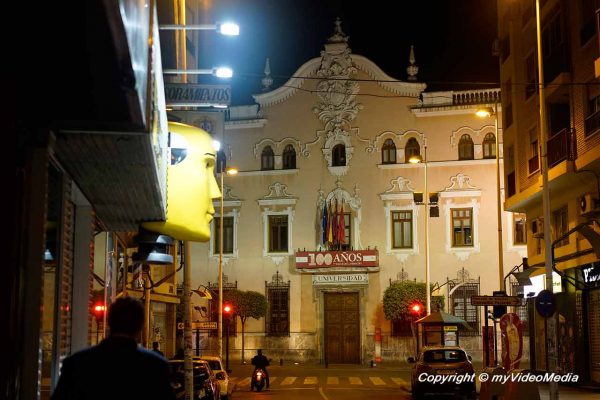
On the way back we take a look at the monument and the beautiful trees at the Plaza de Santo Domingo and pass a branch of the university.
Finally, we admire the colorful illumination on the banks of the Rio Segura.
A bit tired we reach our hotel, as we have already got up at 4.oo o’clock in the morning.
But it was a great day, especially because Daniel and Antonio took so much time for us.
Please read also
Pin it for later
Disclosure: We attended the Festival Entierro de la Sardina on invitation of Daniel Robles. Thank you! All opinions are, as always, our own.
Text, photos and video: Copyright © myVideoMedia