A visit to Helsinki should also include a visit to The Fortress of Suomenlinna. The fortress lies on a group of partly connected islands, at the entrance of Helsinki’s harbor. Suomenlinna is the biggest sea fortress in the world.
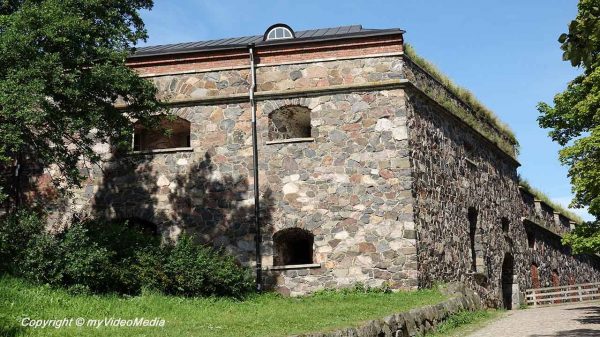
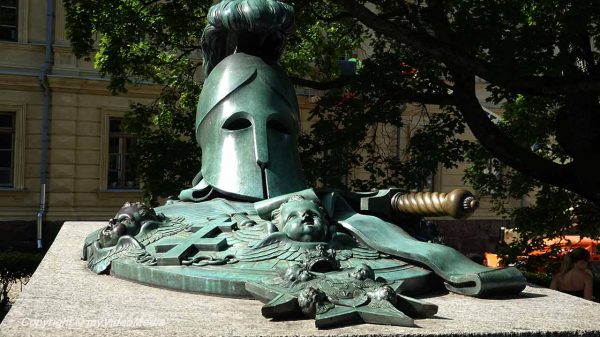
We set sail with a small ferry boat and go ashore in a bay. Slightly uphill, we reach the bastion Höpken and enter the courtyard with the tomb of Augustin Ehrensvärd.
Ehrensvärd was the builder, who began construction of the fortress in 1748.
At that time, Helsinki still belonged to Sweden. That is why they called the complex Sveaborg (Sweden castle). Peter the Great founded St. Petersburg, moving the Russian frontier closer to Sweden.
In 1788, the fortress had its first practical test during the Swedish Russian naval warfare. After the capitulation in 1808, the fortress was a navy base of the Russian Tsar empire for the next 110 years. Finland became an autonomous Russian Grand Duchy. Up to 13.000 soldiers were here at the same time.
During the Crimean war in 1855, the English and French fleet fired at the fortress and damaged it. Finland attained the independence in 1917, but a civil war claimed further victims. Suomenlinna became a prison camp, where 3000 prisoners found the death.
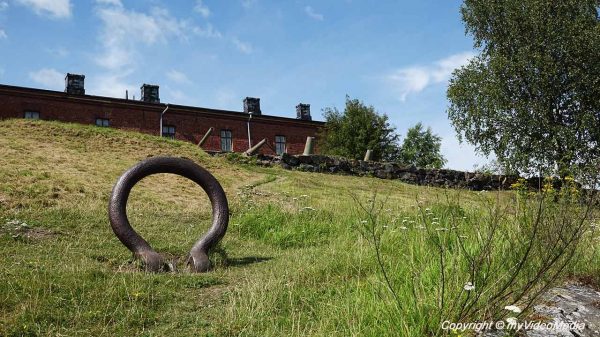
The fortress gained once again great importance in the 2nd World War. As a base for coastal artillery, air defense and submarines, it served the Finns for national defense. After the Second World War, it lost its importance.
In 1973 one transformed Suomenlinna into a museum.
Because of its well preserved military architecture, the Fortress of Suomenlinna belongs to the UNESCO World Cultural Heritage since 1991. It receives 900.000 visitors per year.
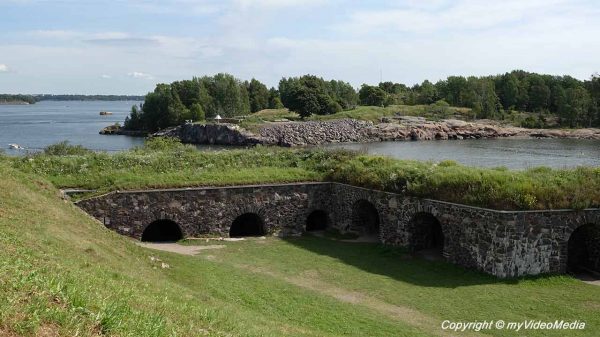
First, we visit the casemates and gun positions of Susisaari in the south of Kustaanmiekka Island. The strategic position of the fortress is amazing.
But also how one used the landscape to deposit ammunition depots in the rocky subsoil and to let the gun positions disappear between the hills. Up to 900 artillery pieces were placed here.
Please watch the 4K UHD video
You are currently viewing a placeholder content from YouTube. To access the actual content, click the button below. Please note that doing so will share data with third-party providers.
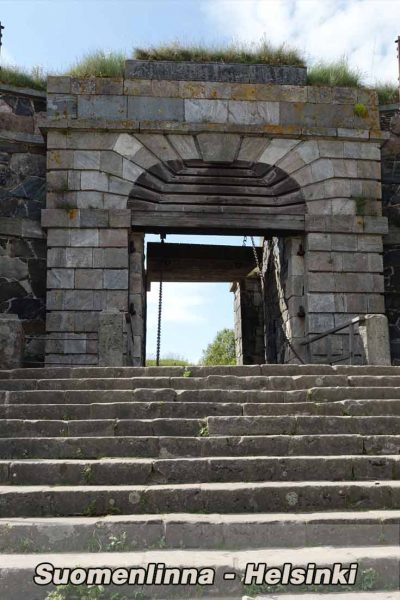
More InformationThe iconic symbol of the fortress is the King’s gate. In the early days, it was the only access to the fortress and secured by a drawbridge.
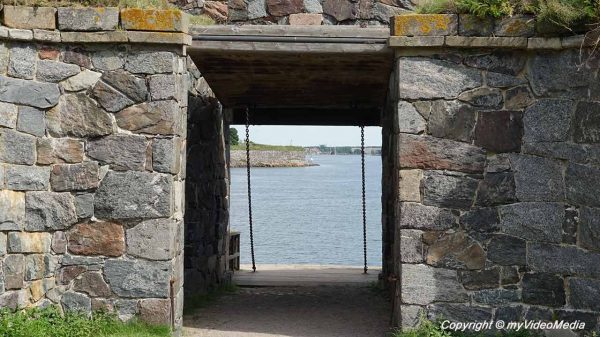
We go back to Iso Mustasaari. Besides to a war museum, there is a toy museum and a correctional facility.
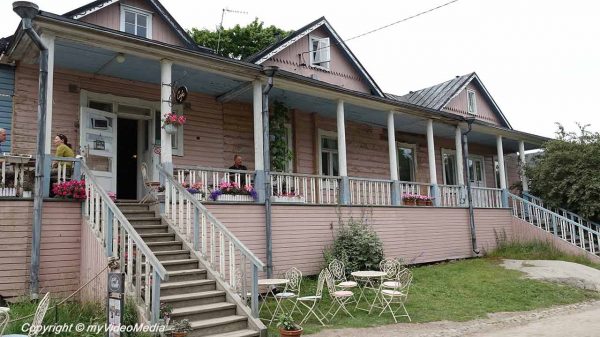
Down the main street, we reach Café Vanille. The wooden house was once part of the Russian merchants’ quarter. Here we enjoy a homemade cake and coffee.
On the opposite side of the street is a church. Until the 1920s it served as an Orthodox church. Then one dismantled the 5 domes and the church became Protestant. The roof of the church tower now adorns a lighthouse.
The large building next to it is part of the Marine Academy. The other part of the academy is on the island of Pikku-Musta, which can not be entered by tourists.
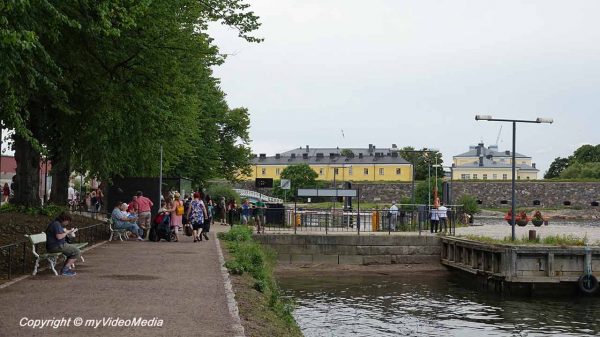
We go to the ship landing stage and look at the historical buildings before returning to Helsinki.
In the search for a cash machine, we pass the monument of the three blacksmiths. The bronze statue was once donated by the building-material dealer Julius Tallberg.
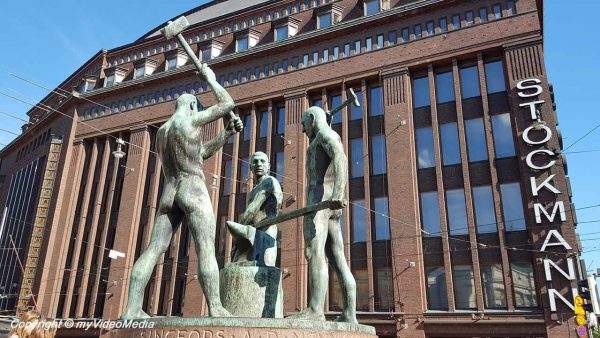
It is a popular meeting place because the place is also free of snow and ice in winter at temperatures down to -10º C. The sewage of the surrounding district heating flows under the place.
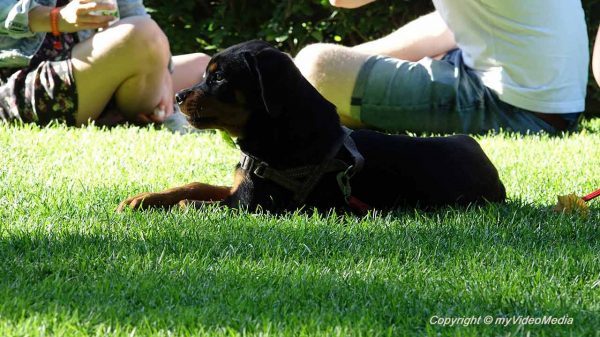
Afterwards, we go back to Esplanadi Park and watch the people and animals and listen to the jazz music.
Please read also > Helsinki City Tour
Pin it for later
Text, photos and video: Copyright © myVideoMedia