Before we visit the Ramkhamhaeng National Museum we take a look at the Sukhothai Fresh Market which is only open in the morning.
Sukhothai Fresh Market
The Sukhothai Fresh Market is near Wat Traphang Thon in Sukhothai Old Town. It is a typical Asian market which is not frequented by many tourists.

In the morning, mainly locals buy fruits and vegetables, but above all meat and fish for their daily use. The freshness of the fish can be recognized by the wriggling of the living animals. Grilled chickens are particularly popular. On partly self-built barbecue grills the production runs almost fully automatically.
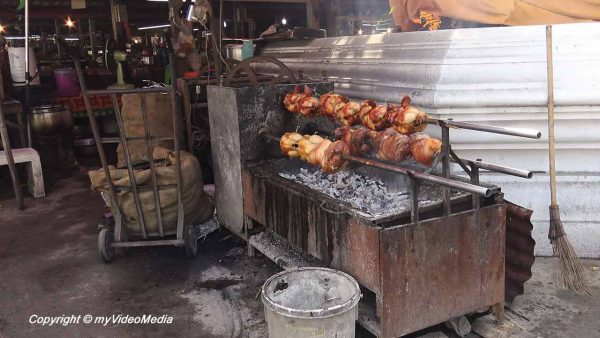
After a short visit, we continue to the National Museum.
Ramkhamhaeng National Museum
The Ramkhamhaeng National Museum in Sukhothai in the historic old town of Sukhothai is a regional branch of the National museums of Thailand.
You are currently viewing a placeholder content from YouTube. To access the actual content, click the button below. Please note that doing so will share data with third-party providers.
More InformationDue to the heat, we were not in the mood for visiting the museum, but at the end, we did not regret our visit.
In the lobby, we see a model of the historical town. During the tour, it helps to identify the individual places geographically.
The museum shows exhibits from the early history of Thailand. Crown Prince Vajiralongkorn, today’s King Rama X inaugurated the museum in 1983. The occasion was the 700th anniversary of Lai Sue Thai (invention of the Thai script).
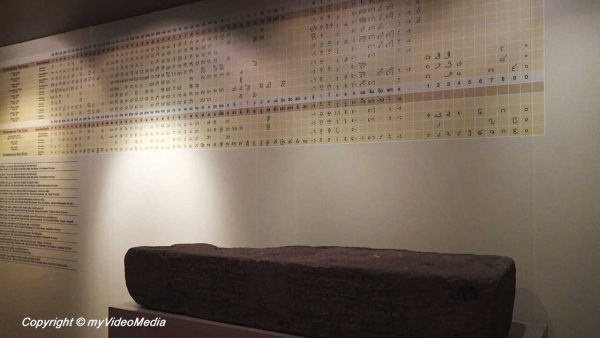
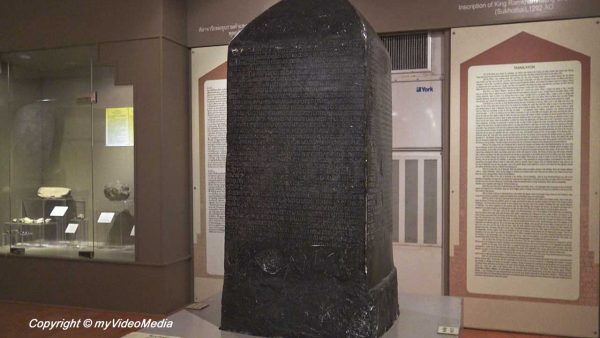
So it is not surprising that comprehensive alphabet panels in the main building already try to give the visitor an understanding of the Thai script. Next to it you see a labeled stele with the government declaration of King Ramhamhaeng, supposedly the first document that was written in Thai script. Thus, King Ramkhamhaeng is designated as the inventor of the Thai script. The stele is a copy, the original is in the National Museum in Bangkok. Today experts question the authenticity of the stele.
Although we see many Buddha statues, the untrained eye quickly recognizes Hindu sculptures. Shiva is also present here. It is not surprising because the early Thailand, dominated by the Khmer, was characterized by Hinduism. Later King Ramkhamhaeng introduced Buddhism as a state religion.
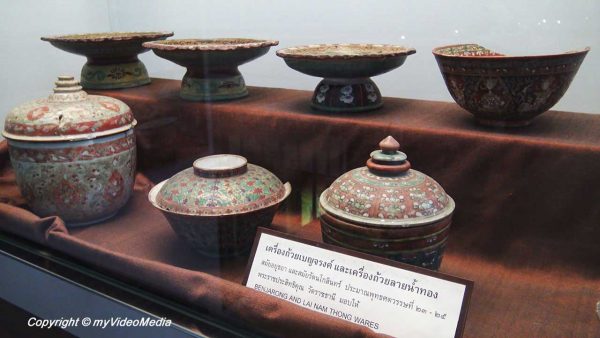
Besides to early stone tools, you see pottery from local production and also porcelain products from China, which prove the early trade relations with the neighboring country. Many sculptures and jewelry up to the 18th century, also from Ayutthaya, round off the picture.
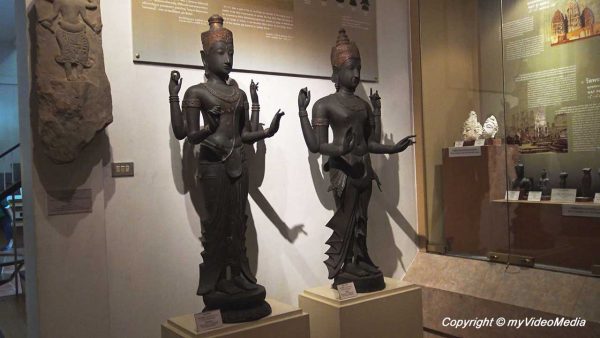
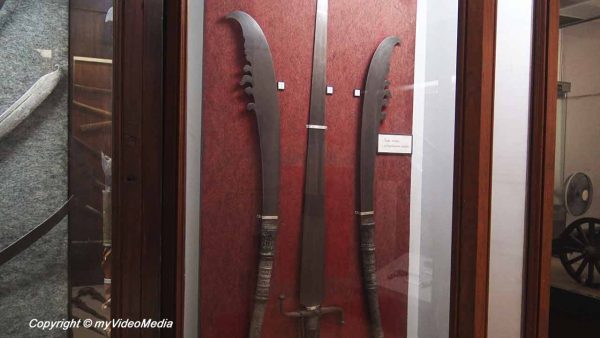
Of course weapons from that time mustn’t be missing.
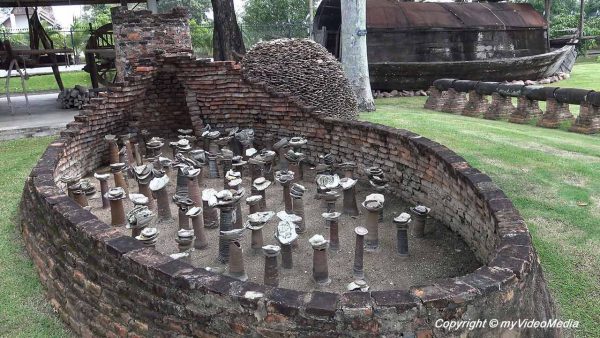
In the outdoor area, we see an exhibition of large items, such as transport equipment or kilns found in the surrounding area.
All in all, we are surprised by the broad cultural-historical overview offered by the Ramkhamhaeng National Museum.
Next >>> Tuk-Tuk tour outside the Historic City Walls of Sukhothai
Text, photos and video: Copyright © myVideoMedia