Paarl and Stellenbosch are among the best-known wine-growing regions in South Africa. Since the weather in Cape Town is not yet good enough to explore Table Mountain, we decide to make a round trip to Paarl, on to Cape Agulhas, and back to Cape Town.
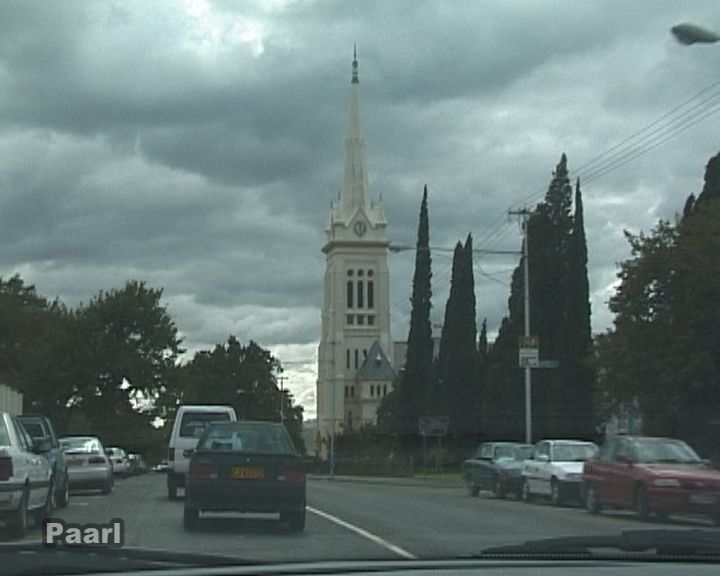
Paarl is located about 50 km northeast of Cape Town. The first settlers from Europe came here in 1687. The Huguenots who emigrated from France laid the foundation for South Africa’s wine industry here. That is why there is not only wine growing in Paarl but also a flourishing industry that extends to the automotive industry.
We first visit the KWV Wine Emporium, South Africa’s largest cooperative, responsible for more than 50% of the country’s wine exports. KWV stands for “Cooperatieve Wijnbouwers Vereniging van Zuid Afrika.”
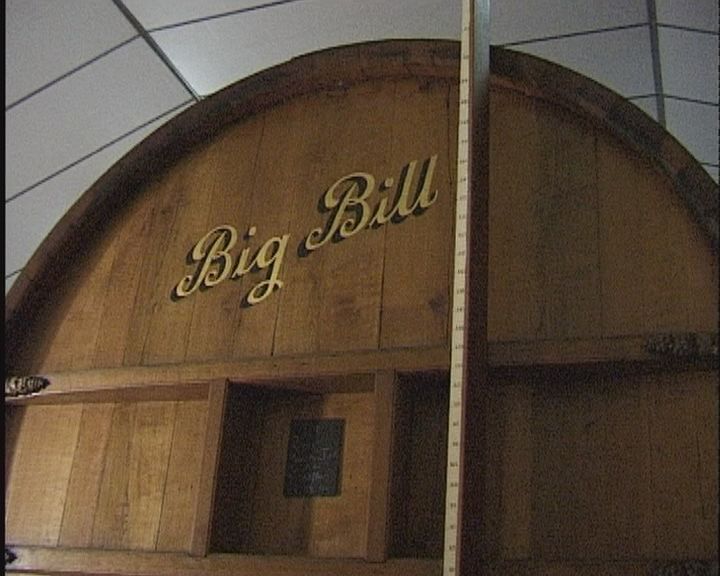
The tour starts at “Big Bill” one of the world’s larger classic wooden wine barrels with a capacity of almost 22000 liters. It was built in 1843 from French oak. It is framed by “Mrs. Bill” and “Baby Bill”.
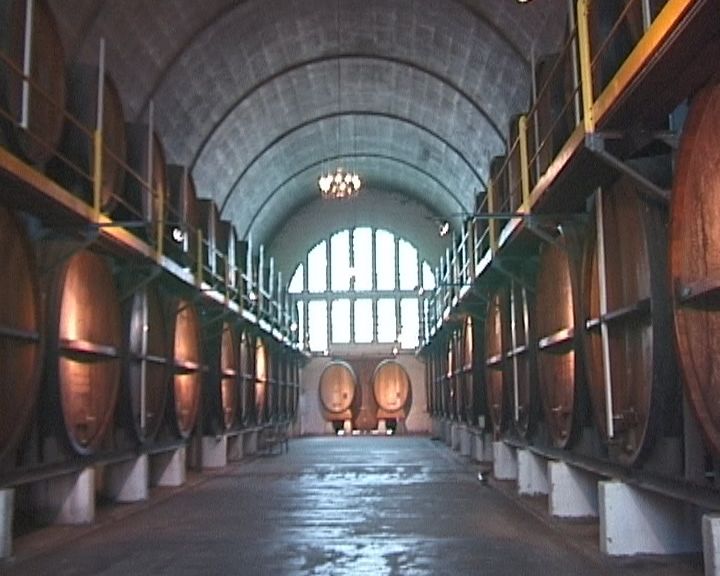
Right next to it is the “Cathedral Cellar”. It is often used for events. The barrels with the best wines of the house are crowded together. The barrels are decorated with beautiful carvings, which show scenes from the life of the settlers and winemakers.
Next are the production facilities with huge metal barrels and underground built-in barrels. In the last hall, we see five of the world’s biggest wine barrels, made from giant redwood trees. Each of these barrels holds 204574 liters.
Altogether 2.3 million liters of wine, brandy, and liqueurs can be stored at the KWV.
At the end of the tour, we were allowed to taste some of the best wines. It was a great tour with friendly and knowledgeable staff who gave us a lot of things to see.
Paarl is home to several other world-renowned wineries that produce top wines. We visit one of them afterward, the Nederburg Winery, founded in 1792, which we reach at the other end of town.
You are currently viewing a placeholder content from YouTube. To access the actual content, click the button below. Please note that doing so will share data with third-party providers.
More Information
The Cape Dutch house with a thatched roof is surrounded by a green landscape and conveys a relaxed and sustainable lifestyle. In fact, special wine can only be produced with enormous effort and a lot of knowledge. Today, Nederburg is probably the most awarded winemaking company in South Africa. We can convince ourselves here of the great wine varieties and also have a carton of wine delivered to Germany.
After we have had enough of looking at the well-kept facility, we continue towards Franschhoek, which is also a well-known wine-growing region.
On the way, we passed the Drakenstein Correctional Centre (former Victor Verster Prison), where Nelson Mandela had to spend the last 14 months of his prison stay.
Franschhoek was founded in 1688 by Huguenots who emigrated from France and included some winegrowers. Today Franschhoek is one of the most important wine-growing areas in South Africa.
However, we do not have time to stay here for a long time, so we only pass this place.
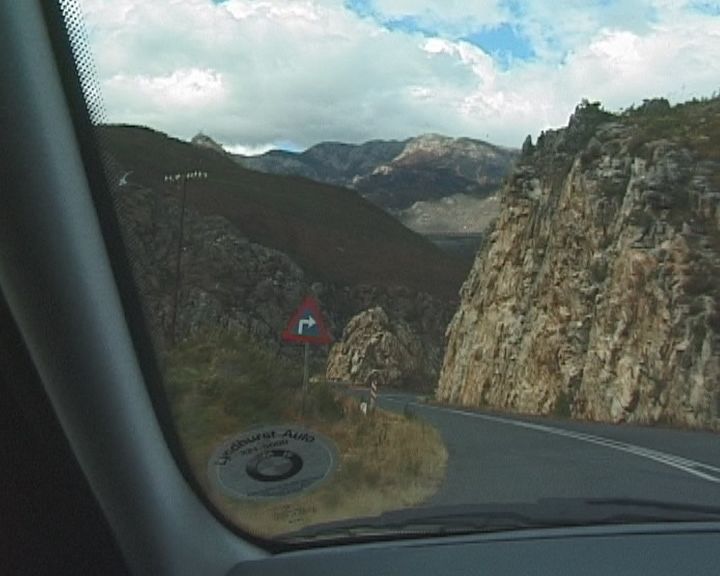
At the end of the village, we find ourselves in front of a 1000 m high mountain face, along which the driveway to the Franschhoek Pass (approx. 700 m) runs. The pass road is excellently developed and offers a great view over the plains to the northwest and southeast.
Passing the Theewaterskloof Dam, which contributes significantly to Cape Town’s drinking water supply, we reach first Caledon and later Napier.
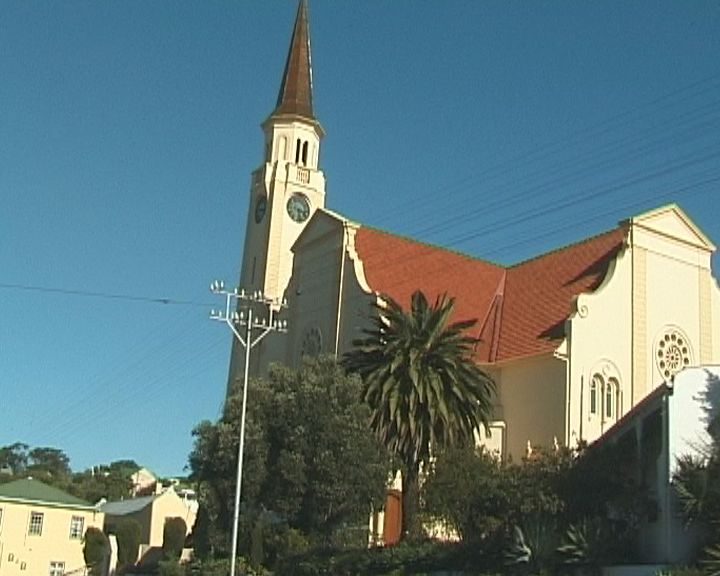
We will pass Caledon again during our trip from Cape Town to Plettenberg Bay.
About 15 km after Napier, we miss the turn to Cape Agulhas and instead, drive straight ahead to Amiston. The beach here looks fantastic, but as we learn later, it is one of those beaches off which most people died in shipwrecks in storms.
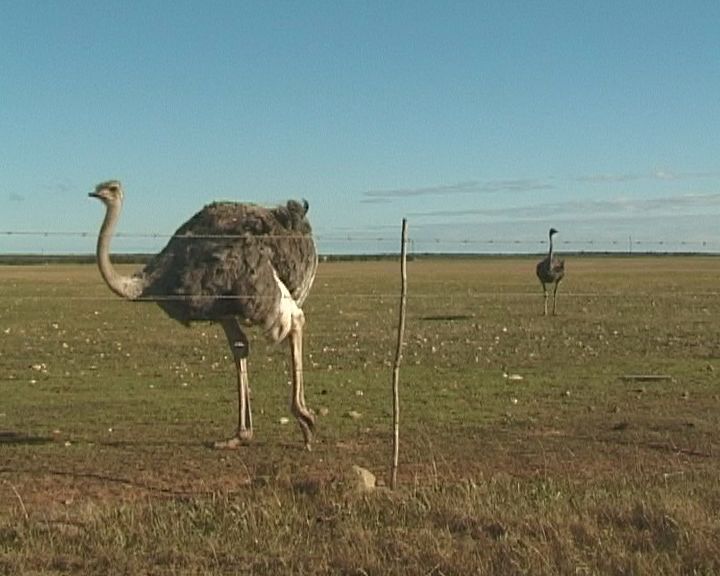
After realizing our mistake, we make our way along agricultural roads, past ostrich and cattle farms, to Struisbaai, and continue to Cape Agulhas.