The old town of Rhodes with its nested and narrow lanes reflects the turbulent history of the city and the island.
The city was founded after the victory of the Delian League over the Persians in 408 BC. After the Delian League was dissolved,
Rhodes became independent. Later, Rhodes approached to the Romans, but fell in disgrace due to the support of the Macedonian king Perseus.
Please watch the video
You are currently viewing a placeholder content from YouTube. To access the actual content, click the button below. Please note that doing so will share data with third-party providers.
More InformationAfter the partition of the Roman Empire, Rhodes belonged to the Eastern Roman Empire and later to Byzantium.

Changeable conquests by the Genoese and Venetians followed until Rhodes fell to the crusaders. 200 years later it was part of the Ottoman Empire. In 1912 Italy occupied Rhodes. After the end of World War II Rhodes became part of the Kingdom of Greece.
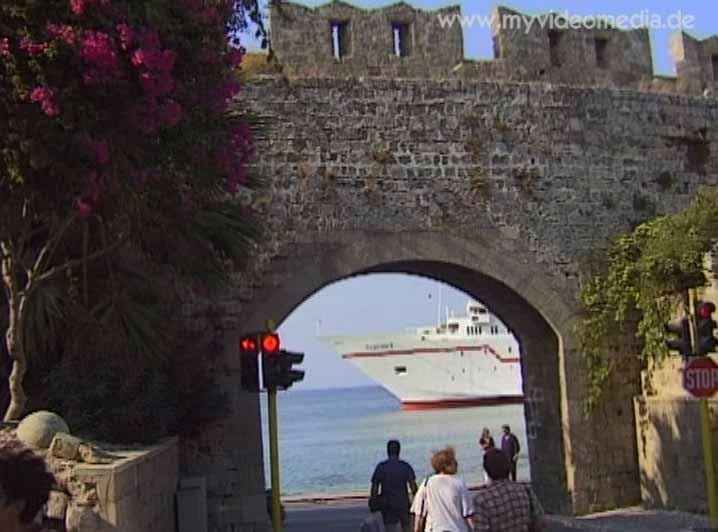
Many of these political phases are reflected in the architecture of this city, particular in the Mosque of Suleiman and the adjacent Turkish quarter.
The Socrates street leads to Platia Ippokratu with the Owl Fountain and the adjacent square of the Jewish martyrs with the Seahorse Fountain. The oldest Islamic mosque in the city is the Ibrahim Pasha Mosque.
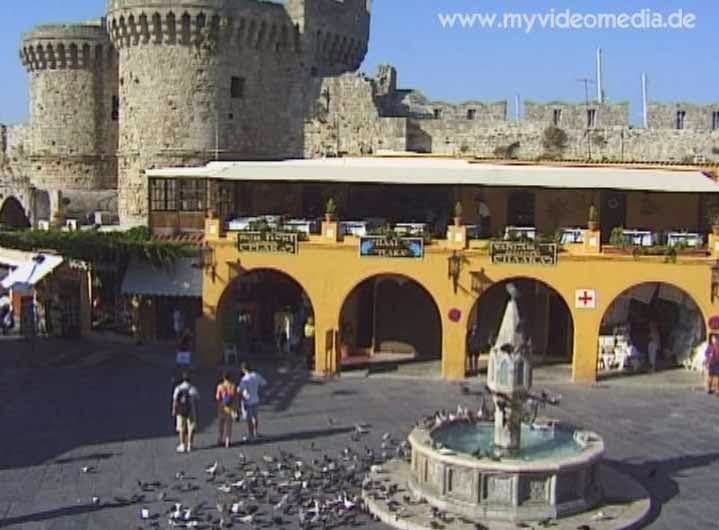
Since 1988, the old town of Rhodes is a UNESCO World Heritage Sites.
See also:
- City walls of Rhodes
- Palace of the Grand Master in Rhodes
- Petaloudes – butterfly valley on the island of Rhodes
Text and video: Copyright © myVideoMedia
Lovely information here on the history of Rhodes.
I am actually privileged to live on the island, although I am originally from the UK.
I have taken a lot of time to read and learn about the history of the island.
A lot of people visit Rhodes only to leave again without knowing some bare essentials to the history of this wonderful place.
You site hits the mark for a little education.
Thanks for sharing.
Chris
Hello Chris,
Thank you very much for your positive feedback. We really appreciate it.
You are lucky to live on such a beautiful island with a lot of history.
All the best,
Ursula & Guenther