Traveling on the Twin City Liner is a particular experience. Never before have we traveled so fast across a river and through a narrow canal on a ship of this size. The Twin City Liner is a jet-propelled catamaran for 250 passengers and can reach a speed of up to 70 km/h. The crossing to Bratislava takes 75 minutes.
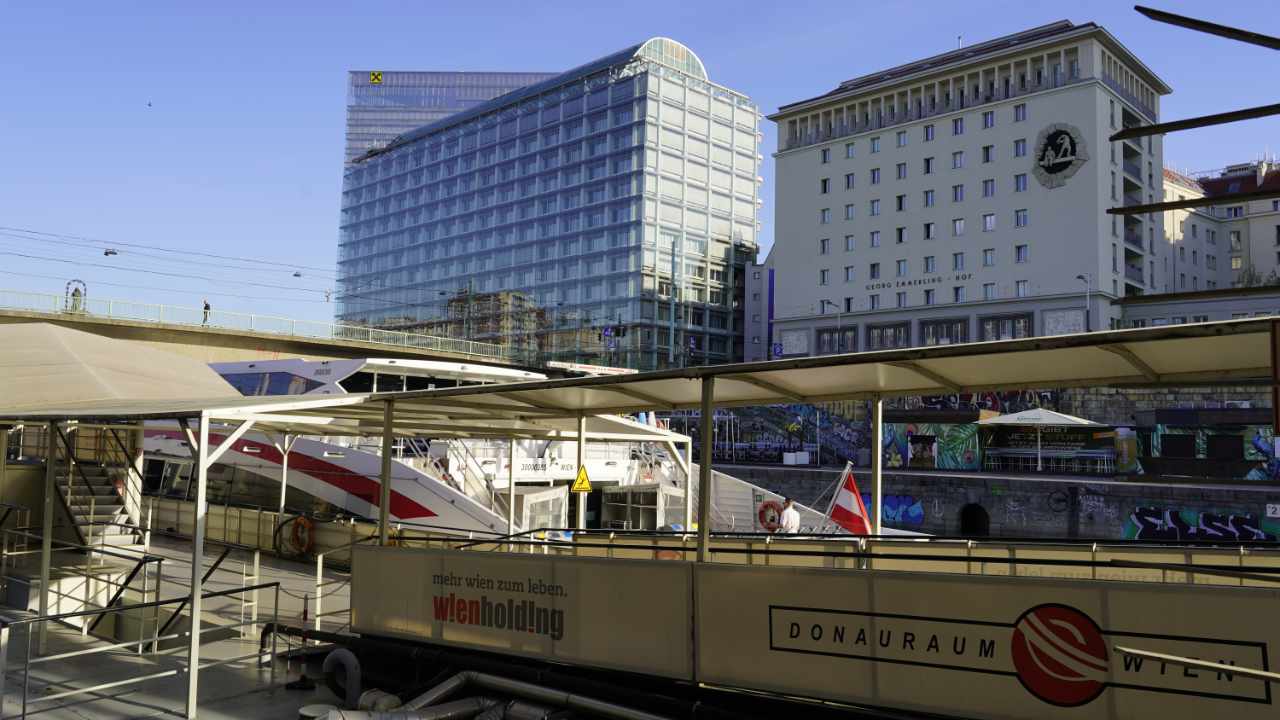
The trip begins in Vienna at Schwedenplatz and ends in Bratislava at Rázusovo nábrežie, about 500 meters from the city center. Bicycles can be taken along, but only by reservation and for a small surcharge of €5.
It is our first visit to Bratislava, the capital of Slovakia. The ship turns at the lock park and heads east. From the Franzensbrücke bridge, as soon as the banks of the Danube Canal turn green, the catamaran picks up considerable speed
It is a credit to the captains that they can travel so fast on this narrow waterway. We are also impressed by the skyscrapers in the Town-Town-Spange area.
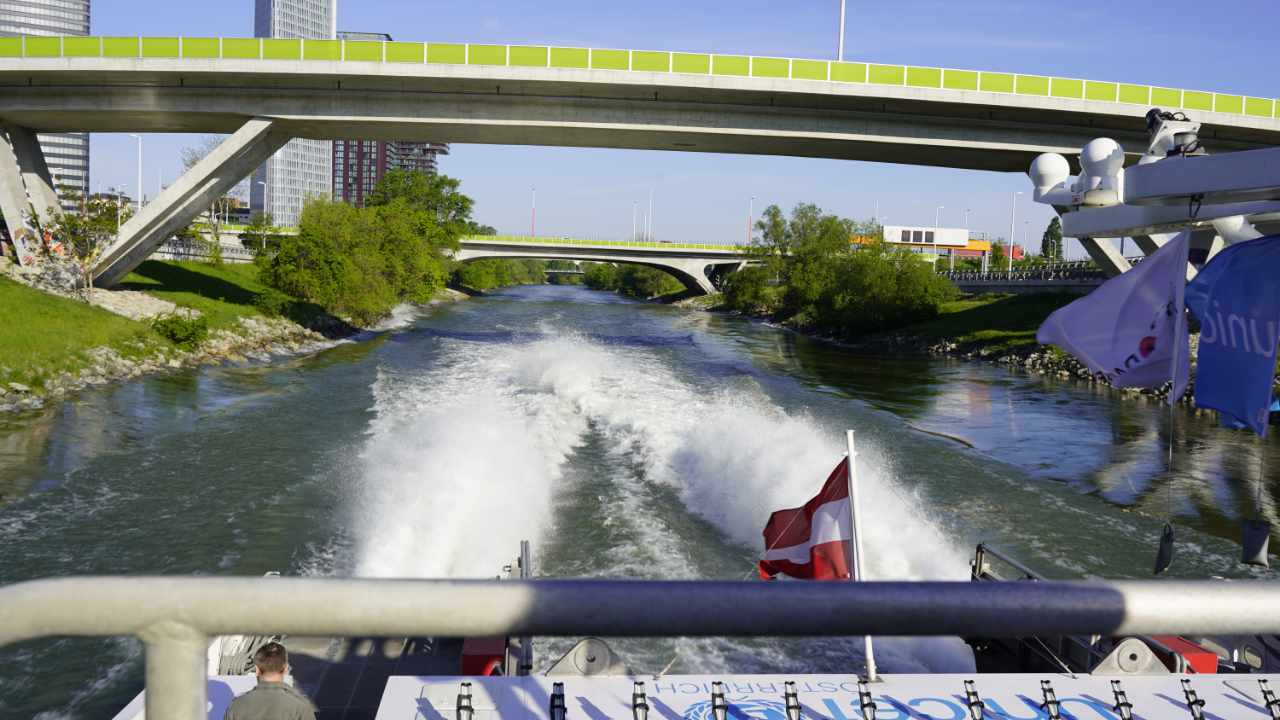
We reach the Danube at the Freudenau power plant bridge. The power plant is the tenth Danube power plant in Austria. It was completed in 1998. The power is successfully sold as green power by the energy supplier Lichtblick SE in Germany.
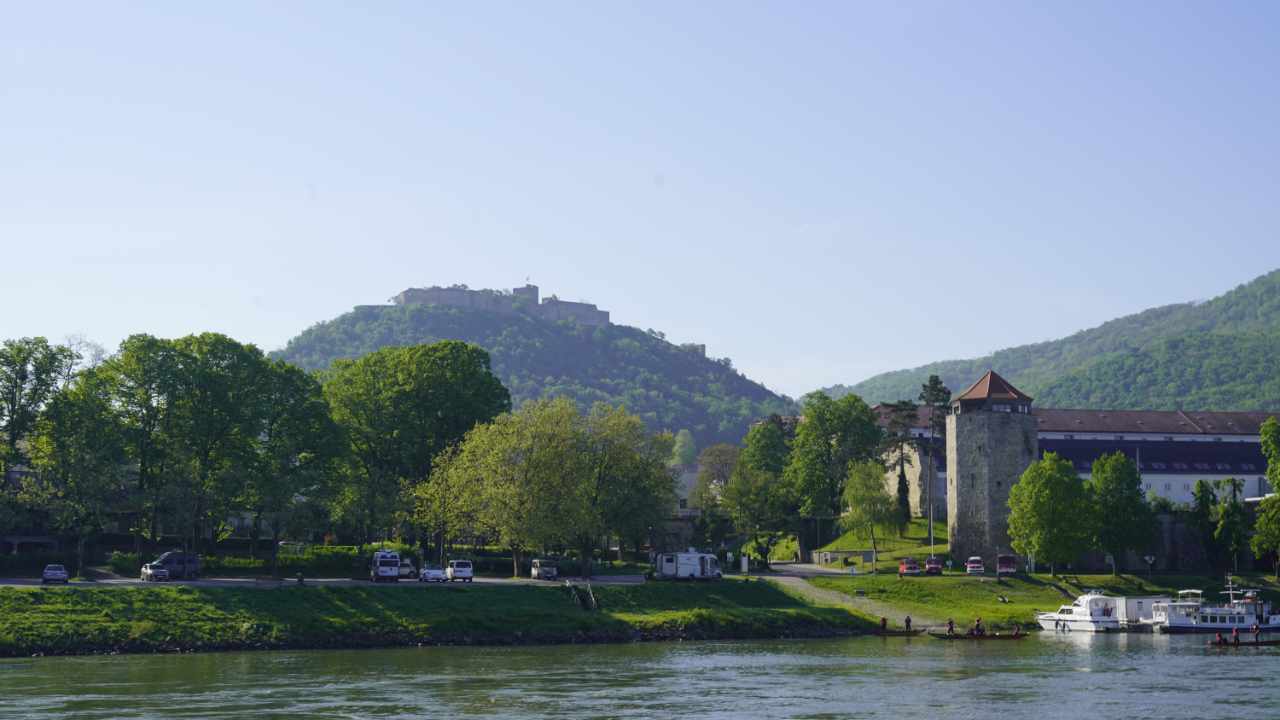
Hainburg is a border town with Slovakia. Its fortress is one of the largest in Europe. The place was probably founded by the Celts. It suffered greatly during the Turkish sieges of Vienna in 1529 and 1683 when the town and castle were devastated and destroyed. The Blutgasse is a reminder of the great bloodbath. Of the 8,000 people who died, only about 100 survived, including Josef Haydn’s grandfather.
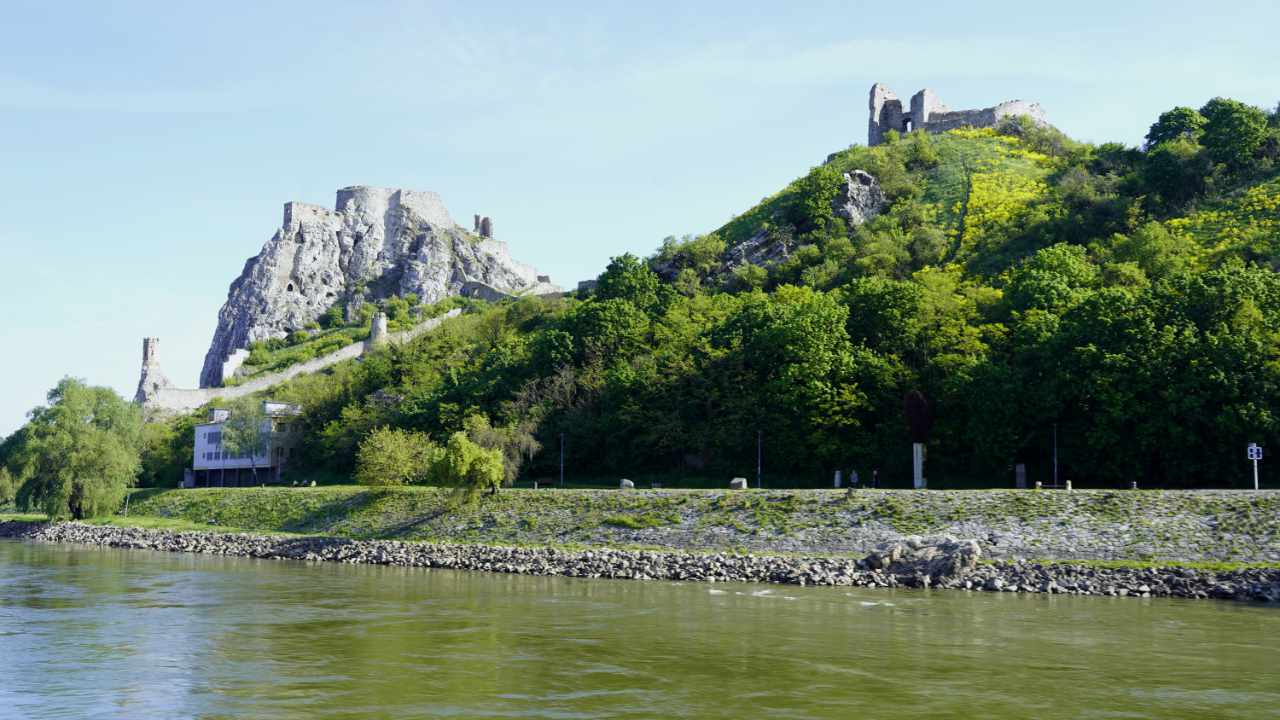
If you cross the border to Slovakia, you can see the ruins of Thebes Castle, which were destroyed by Napoleon’s troops. The Romans already had a border post here. The castle was first mentioned in the annals of Fulda in 864 as Dowina.
After the end of the Moravian Empire in the 15th century, the castle belonged to Hungary. It then belonged to various Hungarian noble families, from 1635 to the Pálffy family. Napoleon and Pálffy agreed that Vienna would be supplied with food and other goods by Pálffy.
To commemorate the history of the Moravian Empire, on April 24, 1836, Ľudovít Štúr made a patriotic excursion to Thebes Castle with other members of society. This was the birth of the national myth, the basis of Slovak identity and national pilgrimages.
In 1896, the 33-meter high Árpád column was inaugurated to symbolize the millennial kingdom of the Crown of St. Stephen. In 1918, it was blown up by Czechoslovak legionnaires. The remains were taken to Hungary. In 1938, a new national monument with the Bohemian Lion was erected here to commemorate the founding of Czechoslovakia. When Adolf Hitler saw the lion during a visit, he ordered it removed. The locals buried it nearby. After Slovakia gained independence from the Czech Republic, the lion was reinstalled before the Slovak National Museum in Bratislava. The castle ruins have been a national monument since 1961.
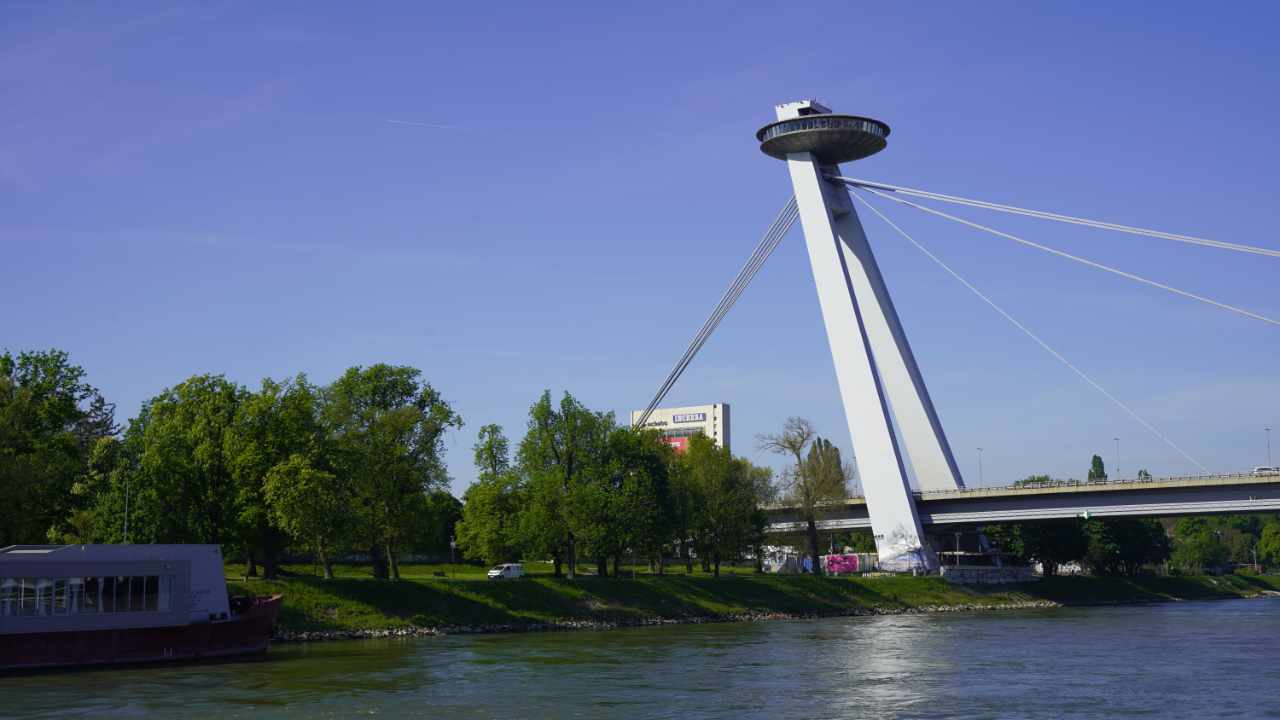
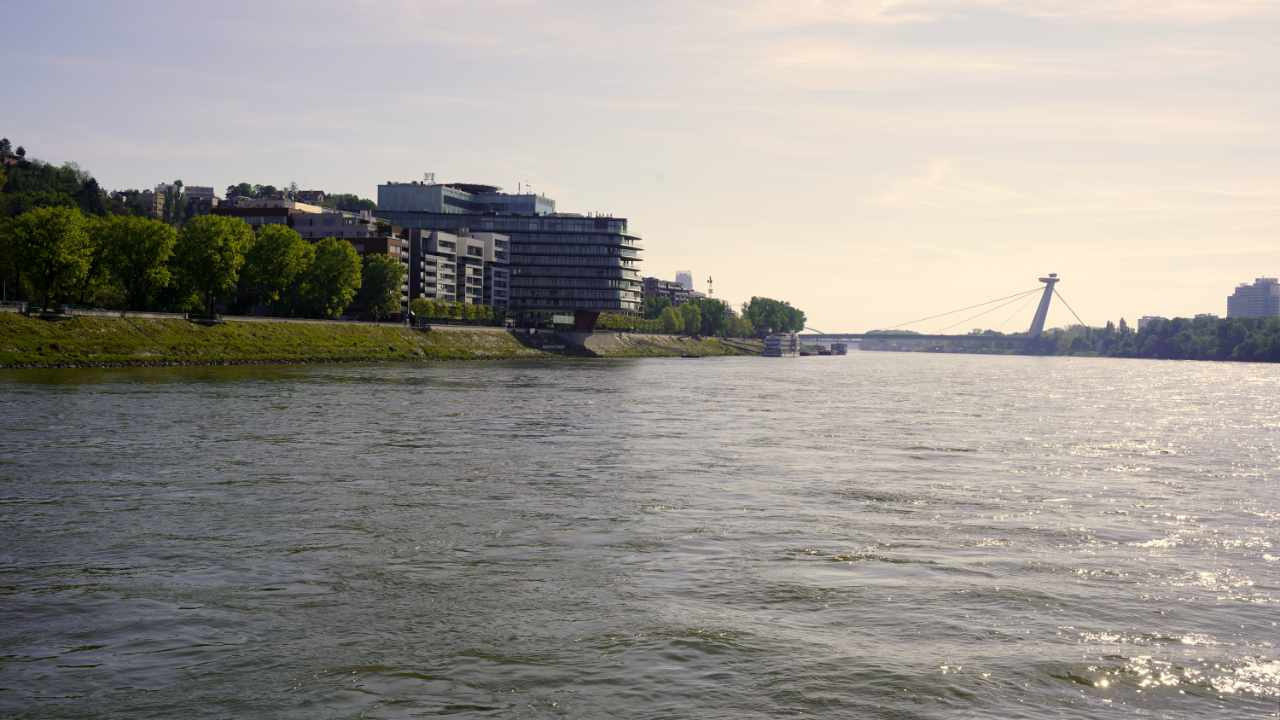
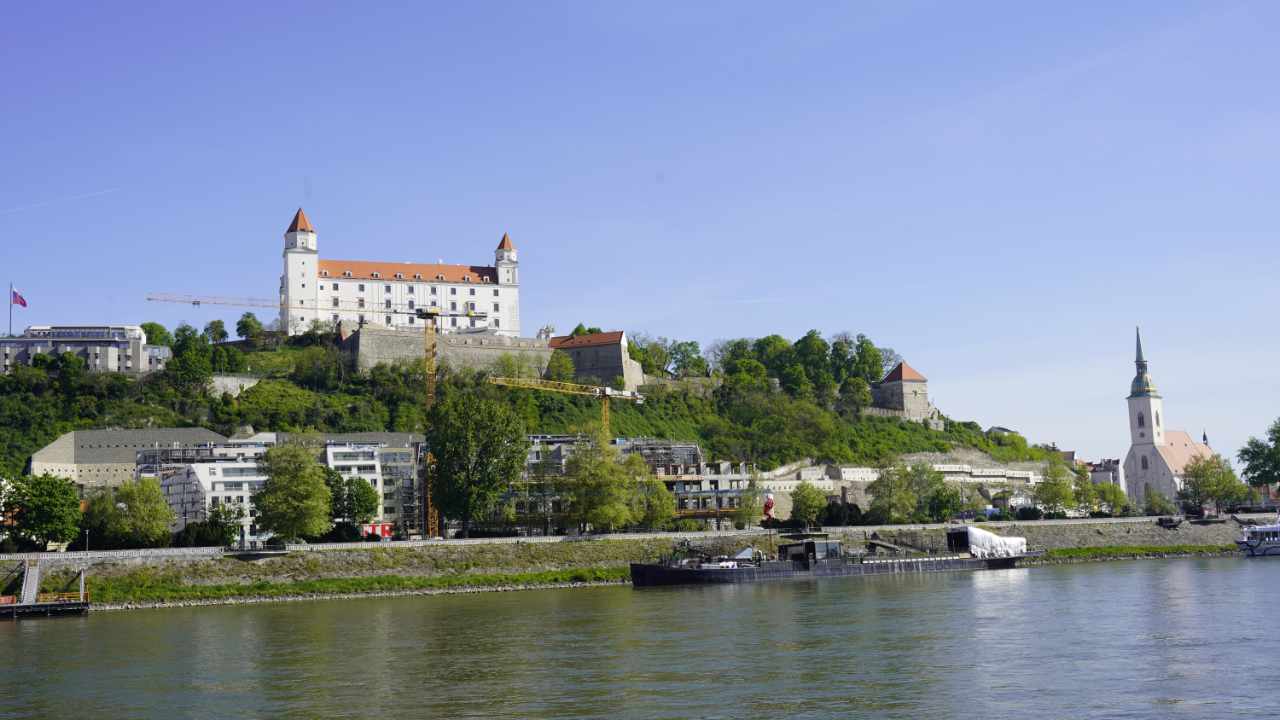
A short time later, we reach Bratislava and catch our first glimpse of the fantastic Most SNP Bridge (Bridge of the Slovak National Uprising), unofficially (UFO Tower), and Bratislava Castle.
Text, photos and video: Copyright © myVideoMedia