After arriving in Bratislava, we cross the Most SNP (Bridge of the Slovak National Uprising) to reach the UFO Tower. While cars pass above our heads, pedestrians and cyclists can cross the Danube below.
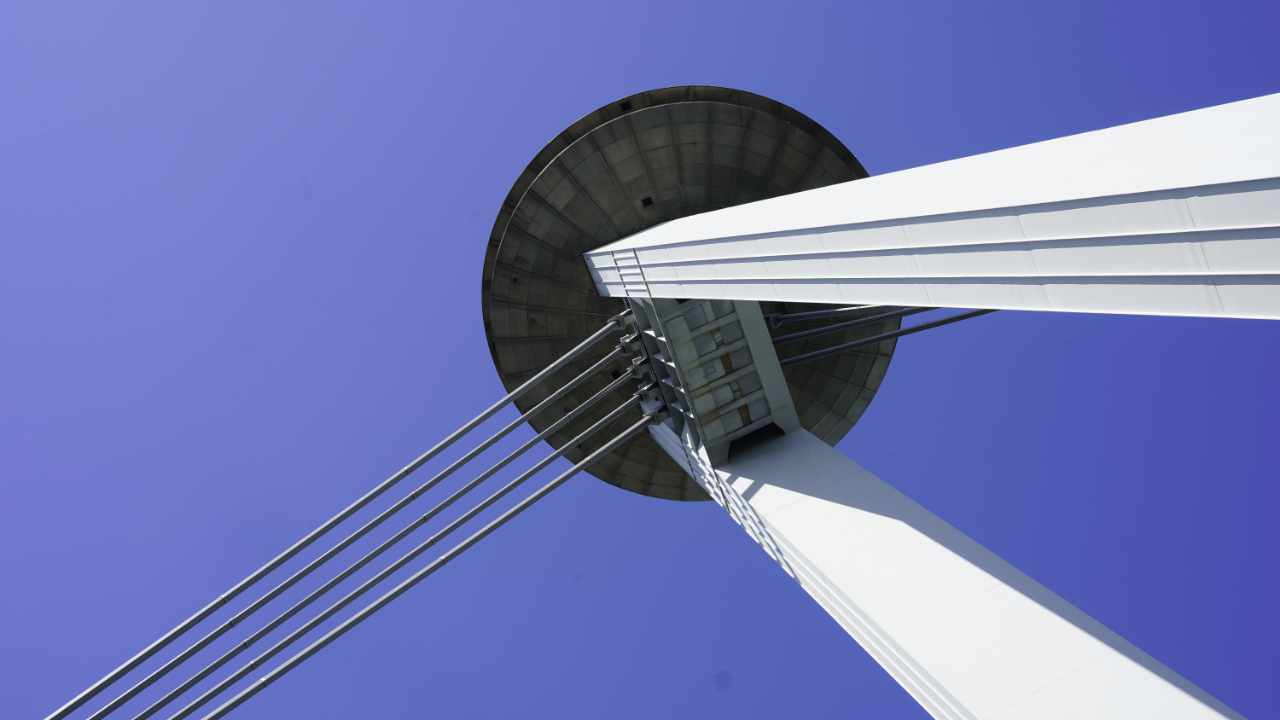
It is the world’s longest cable-stayed bridge to have one pylon. At the top of which is a restaurant and a viewing platform. From there we enjoy the magnificent view, especially of the castle, that we visit first. But also the television tower, the tower of the old town hall, and the surrounding church towers catch our eye.
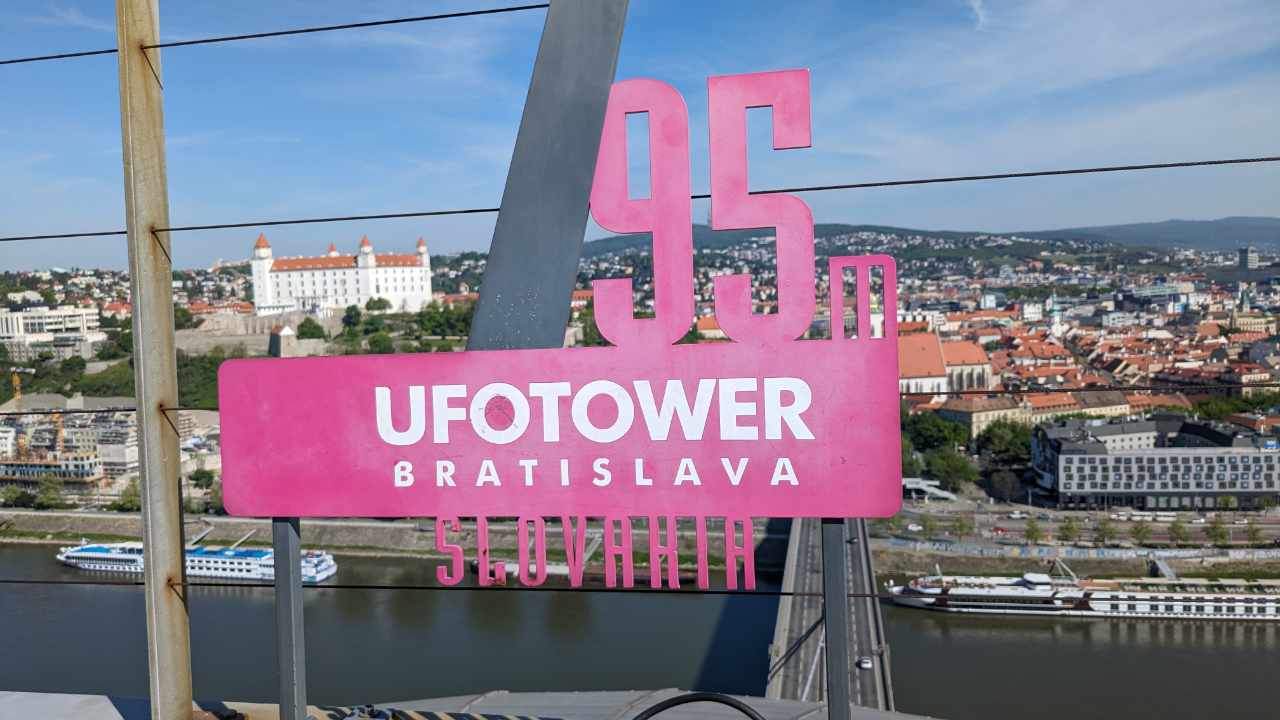
On our way back, we see the Twin City Liner, on which we have just arrived from Vienna, on its way back. From the Plague Column, we have a great view of Herrengasse (Panská), where many aristocrats and mighty men built their city palaces. Today, it is part of the pedestrian zone.
We turn west and reach the former castle grounds, which are now part of the Staré Mesto district, the Old Town. Our gaze falls on the restored section of the former city wall, the four-lane street, and the House of the Good Shepherd, today a clock museum.
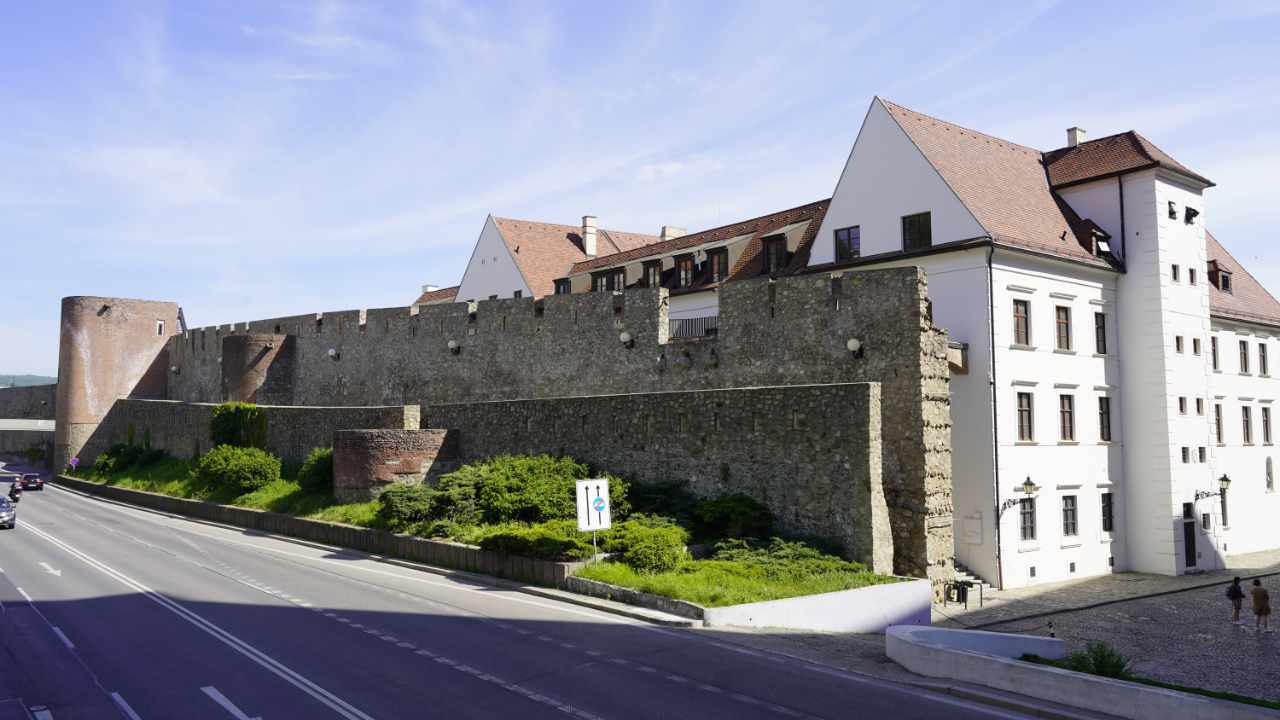
Many of the houses in which the majority of the Jewish population lived were demolished to make way for the road. The Museum of Jewish Culture, in the building of the former Zsigray mansion a little north of our location, commemorates the events. 10 houses on Beblavého Street are now national cultural monuments.
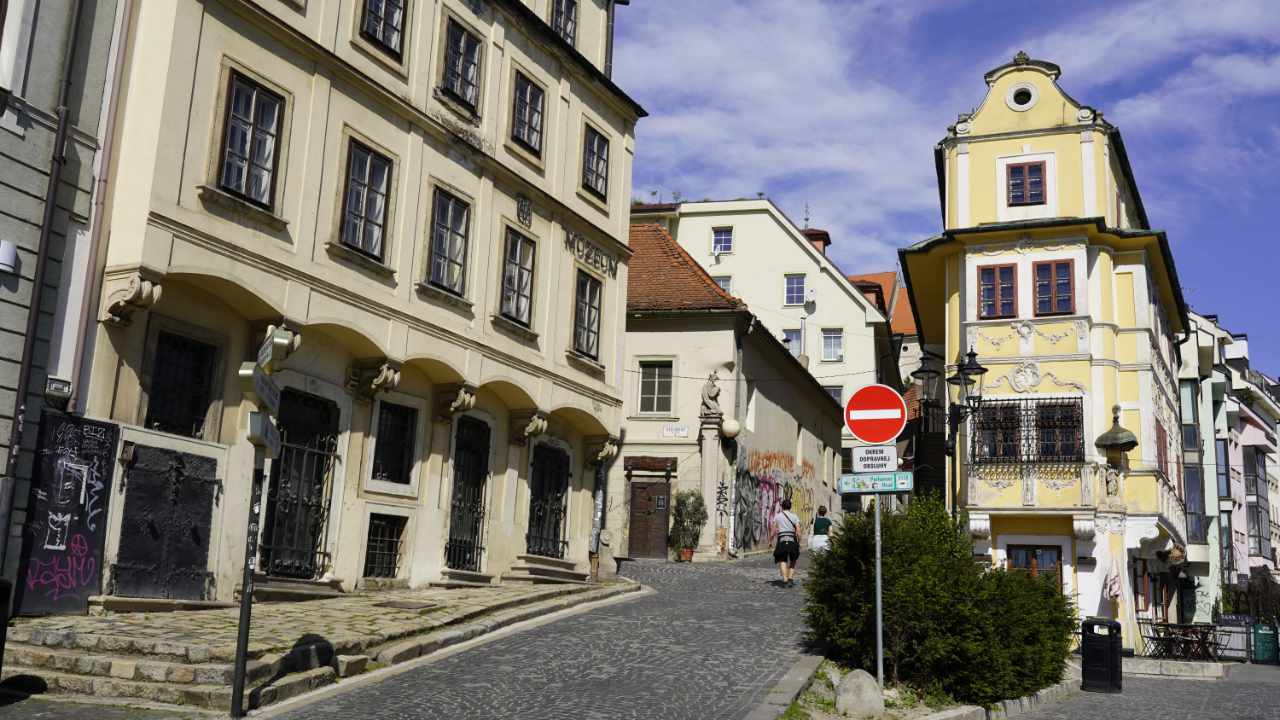
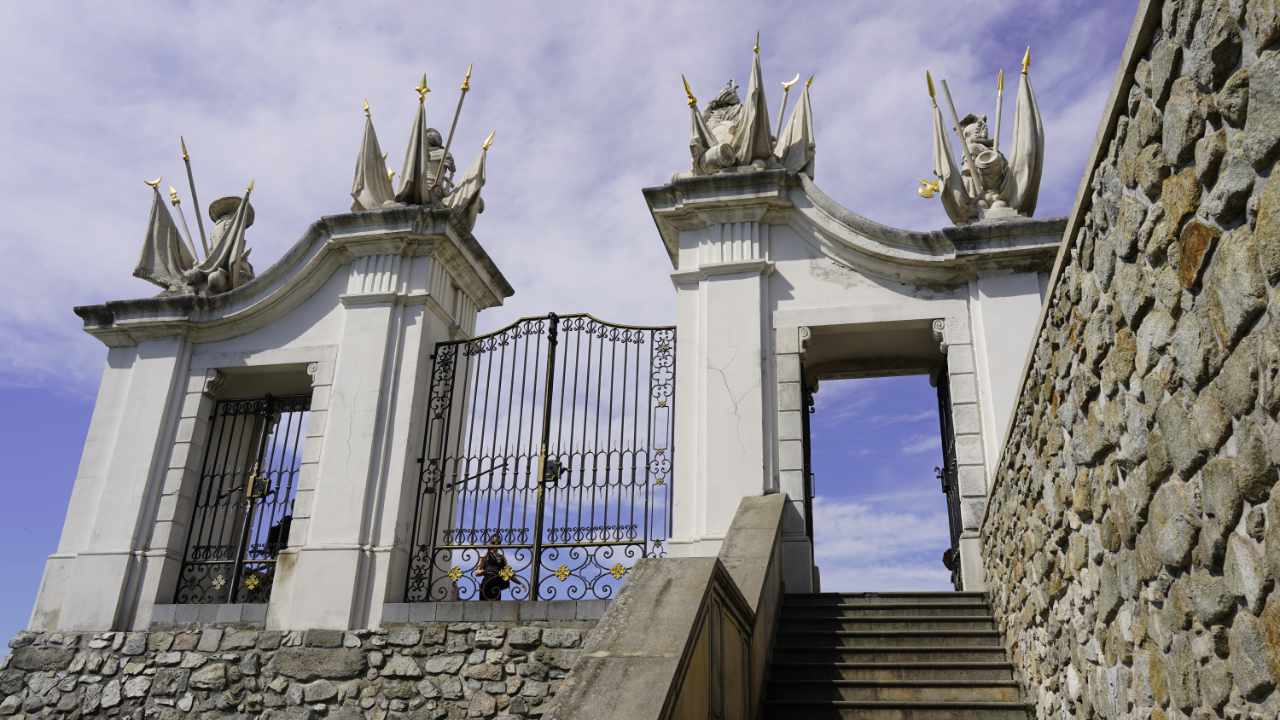
Climbing up to the castle, we come to the Sigismund Gate. Sigismund of Luxembourg was, among other things, Roman-German king and later Roman-German emperor in the 15th century. He had the castle rebuilt and gave it its present layout. Two bastions and the Sigismund Gate were also built because of the Hussite attacks. The castle was enlarged and rebuilt several times. Palatine Paul Pálffy of Erdőd and Empress Maria Theresa, among others. Today, the castle serves as a representative building, museum, and concert hall.
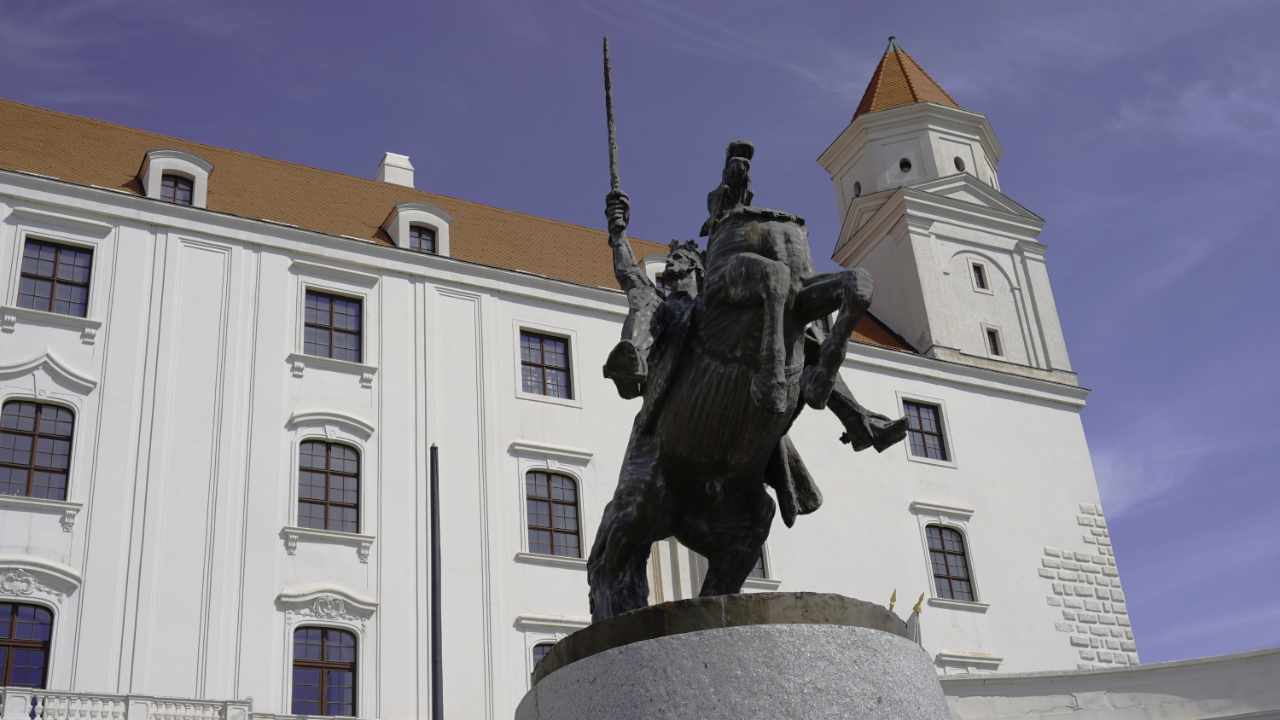
In the courtyard in front of the castle is an equestrian statue of Svatopluk I from the Moravian Mojmirid dynasty (9th century). He was actually a prince but is sometimes called a king.
From a lookout bastion, we can once again enjoy the view of the city from above, but from a different perspective

We walk back to Sigismundtor, down to the city highway, and towards the city wall.
Our route continues along Prepoštská, Ventúrska, Sedlárska and Michalská streets. At the end of Michalská, we find St. Michael’s Gate.
Once, the gate was a part of the medieval town fortification. It is one of the oldest monuments in the city, and today, it serves as a weapons museum.
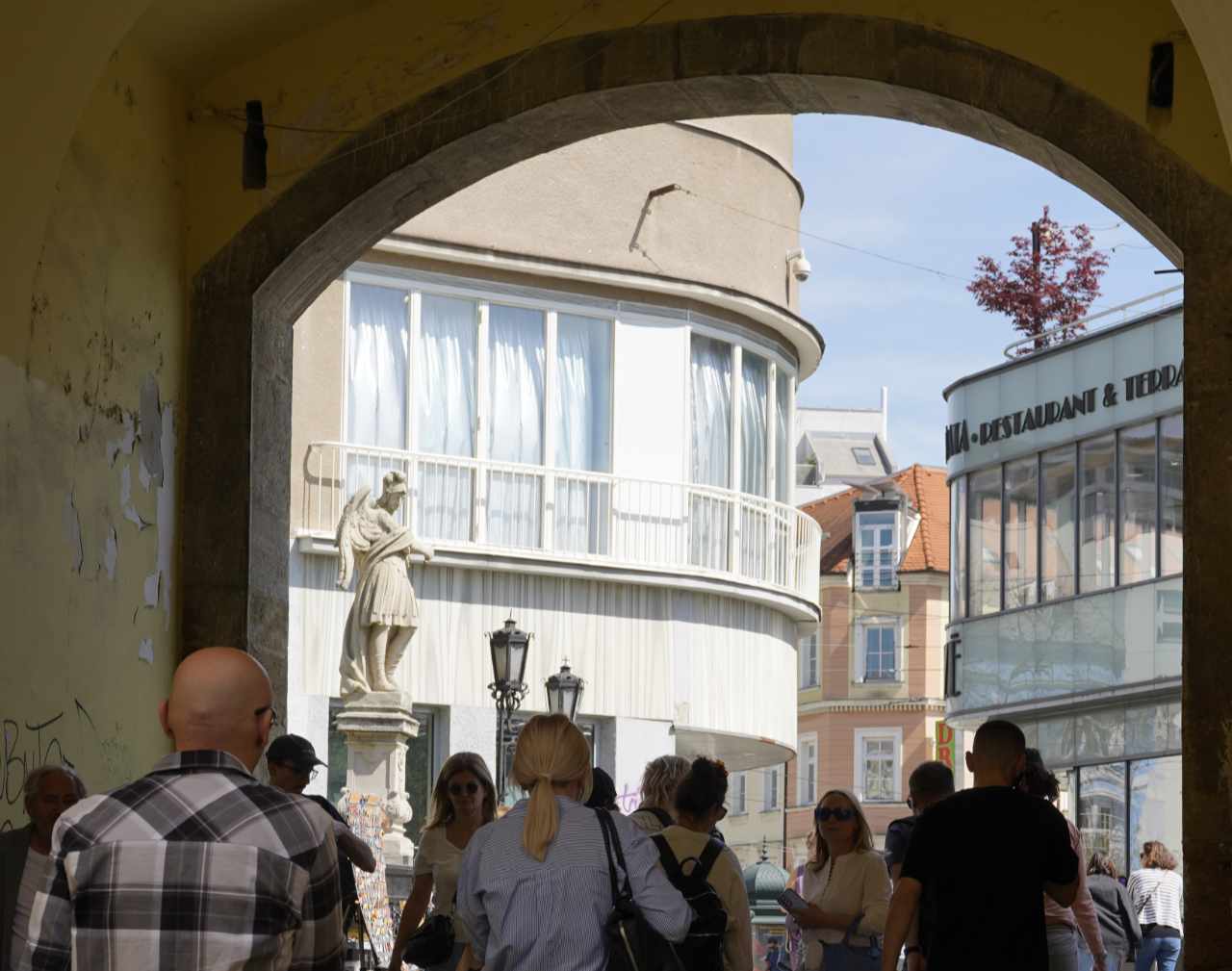
Behind the gate, the street turns 90 degrees to the east, leads through another passage of houses, and across a small bridge to a round square, Župné námestie.
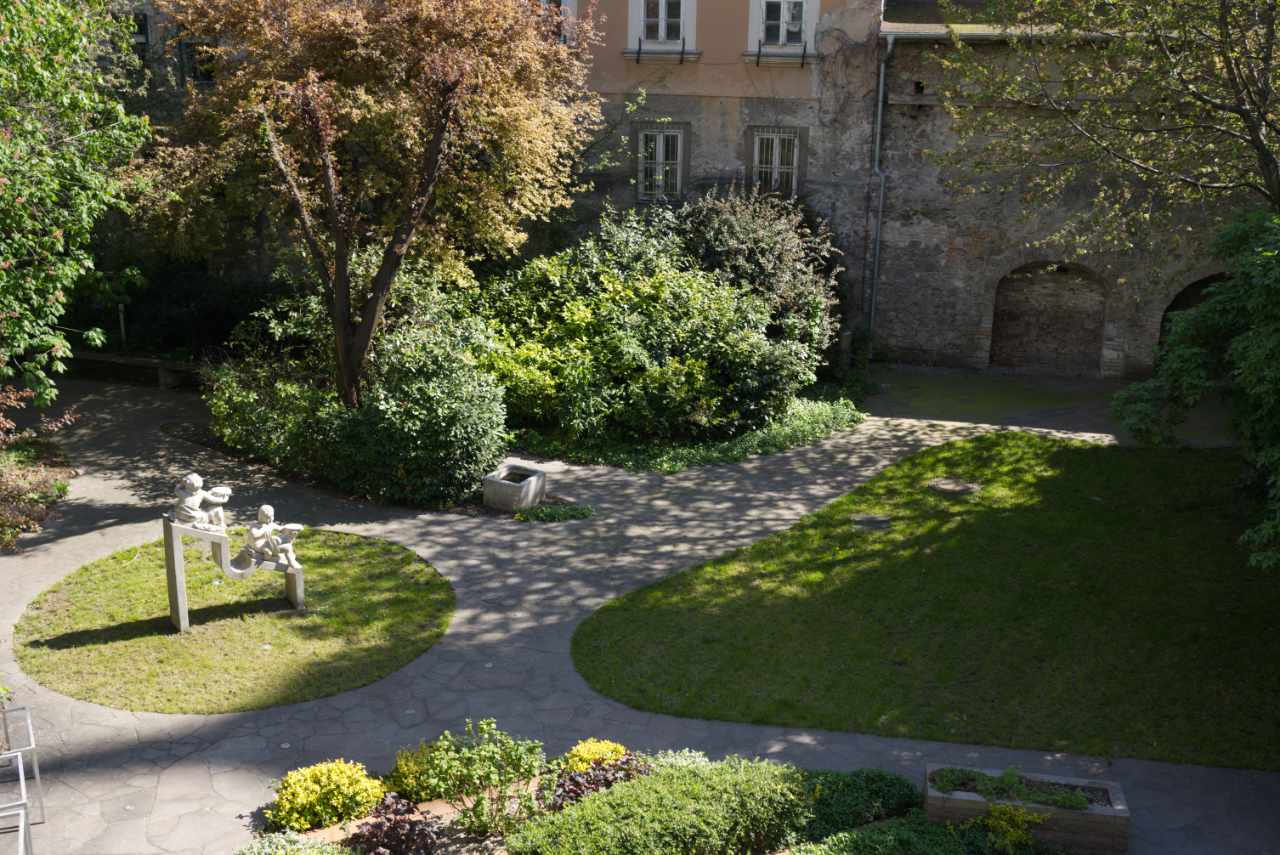
In front of us is the historic building of the National Council of the Slovak Republic.
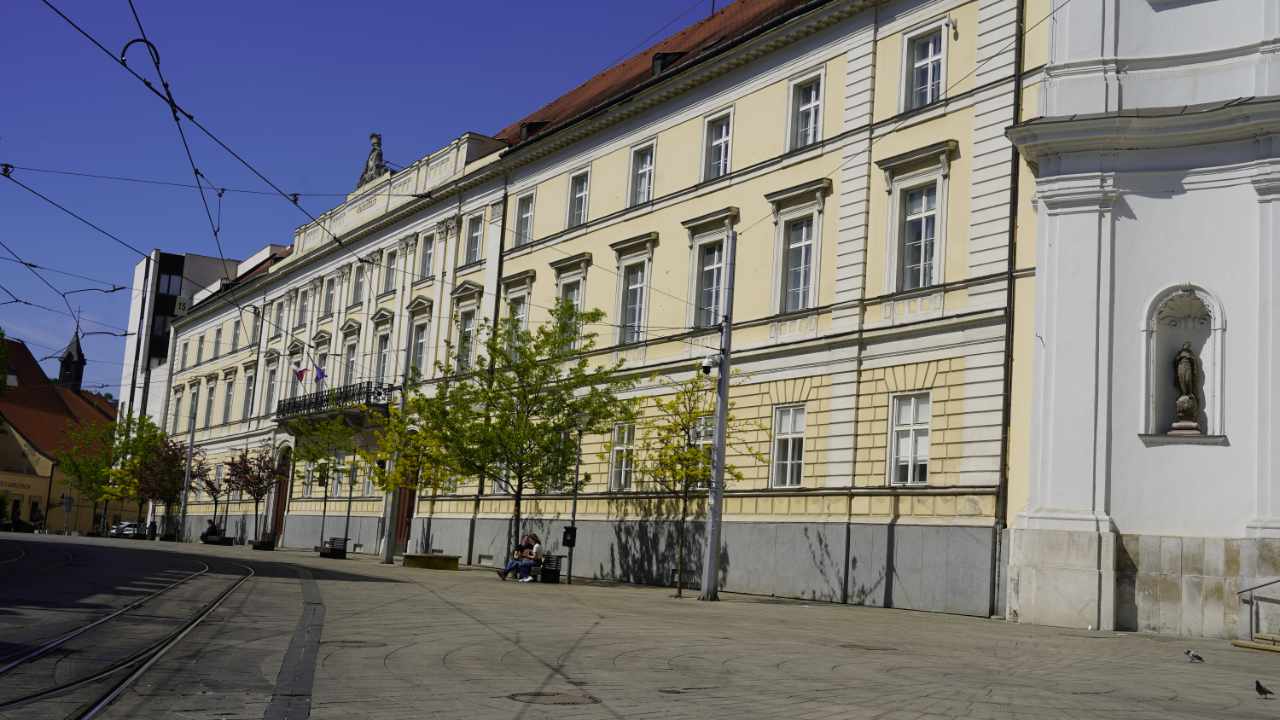
We continue along Obchodná to the Slovak Pub. The recommendation to eat here came from the receptionist at the Austria Trend Hotel near the Theresianum in Vienna. She is a native Slovakia from Bratislava. The Slovak Pub looks unremarkable from the outside.
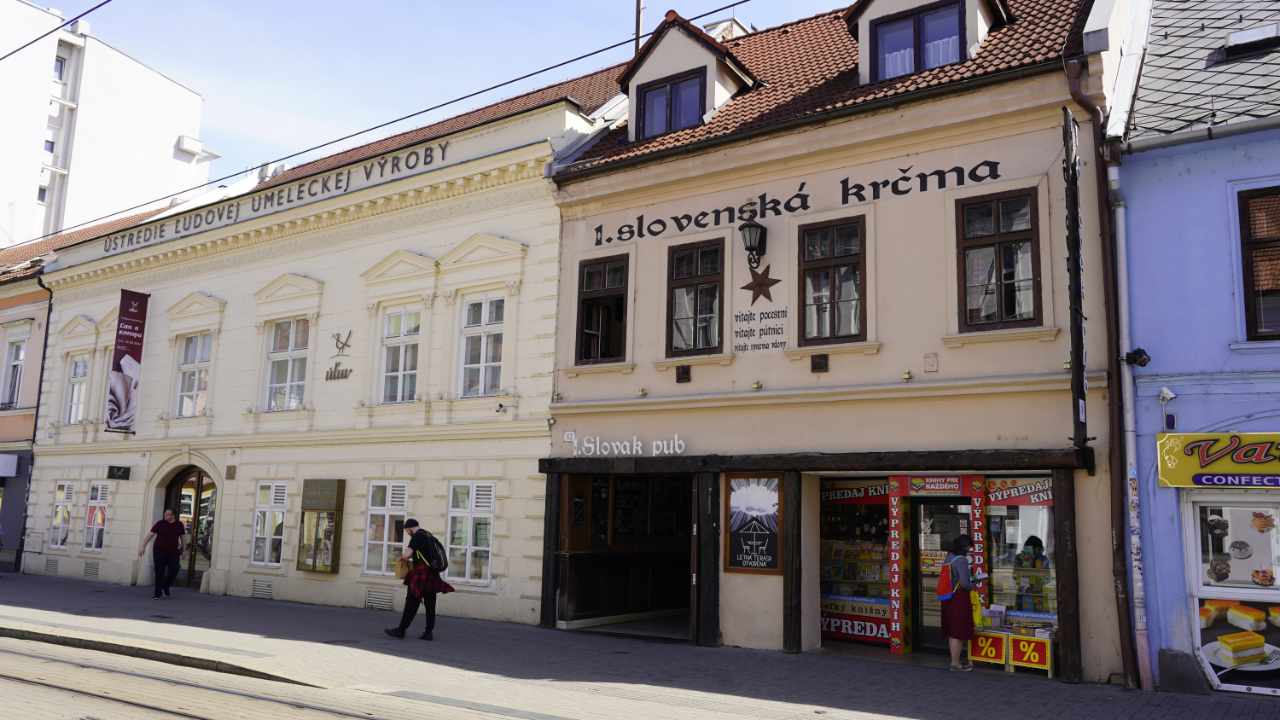
A sign points the way up the stairs to the second floor.
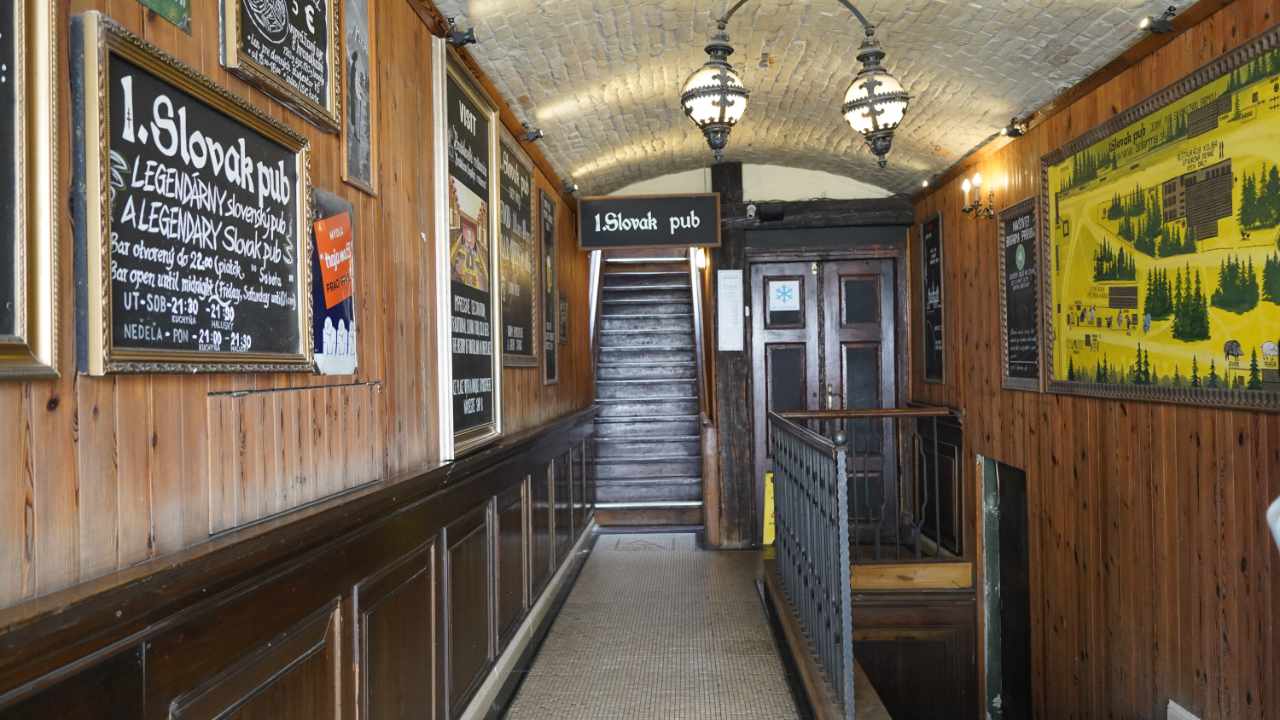
At first, you feel like you’re in a church. The impression is not wrong. It used to be a church, then a theater, and now it has been a pub for 20 years. You enter the pub through a door with two panes of glass. It has about 11 rooms, some in the adjacent building, and 2 roof terraces, separated into smoking and non-smoking areas. It has a capacity of 500 people. Since it is very inexpensive and offers excellent local dishes, it is frequented by many students.
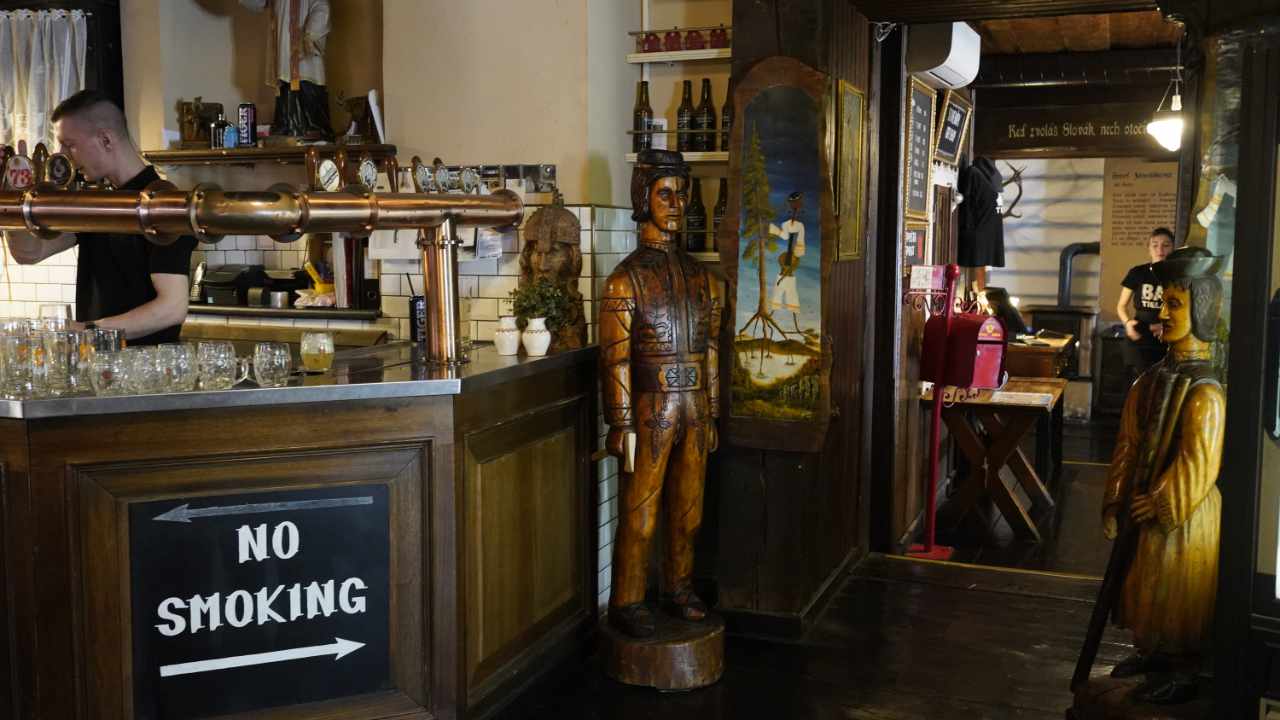
The Slovak Pub has its own organic farm and brewery, which supplies the pub with many organic products and beer. Together with the Klasterny Pivovar flagship restaurant, it has the same menu and the same owner. The service is professional, friendly, and helpful.
On the way back through Obchodná, we explore some architecturally interesting courtyard entrances. Meanwhile, it has become hot for this time of the year. It is 13.4.2024, and the temperature is 28 degrees Celsius.
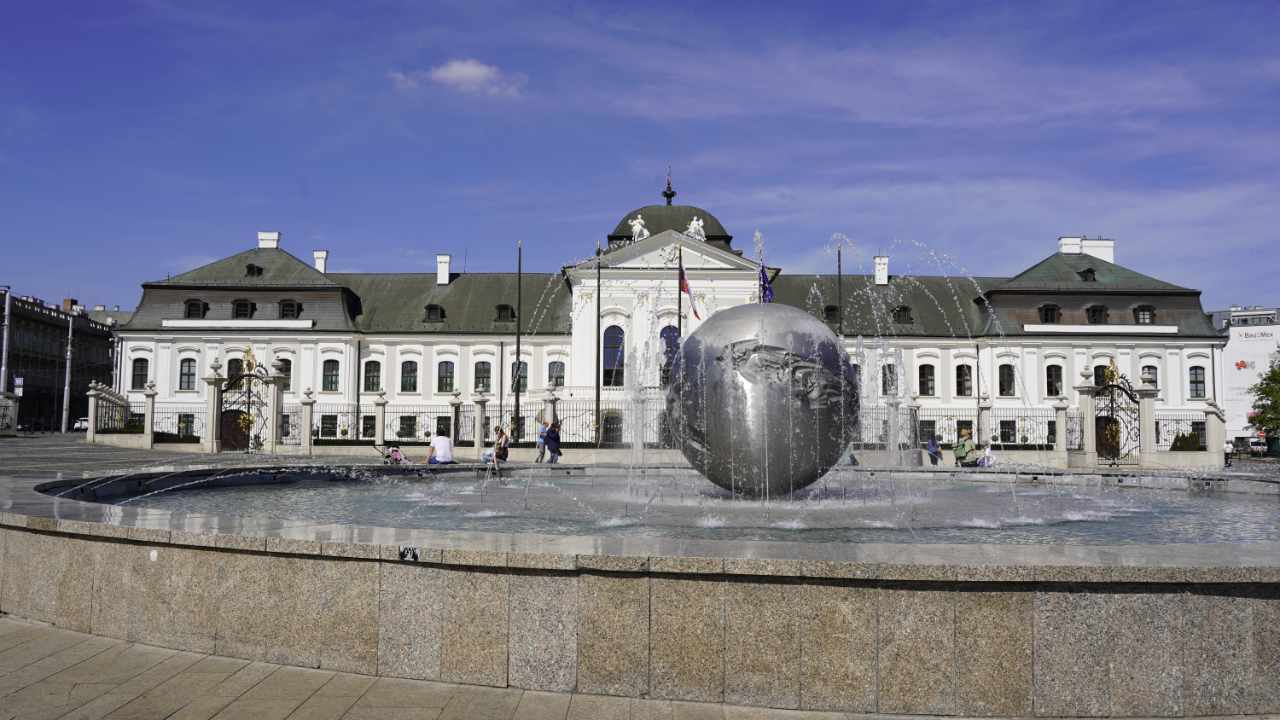
The next stop is the Presidential Palace and the Presidential Garden with interesting sculptures, including an equestrian statue of Empress Maria Theresa. The beautiful gardens are also worth a visit.
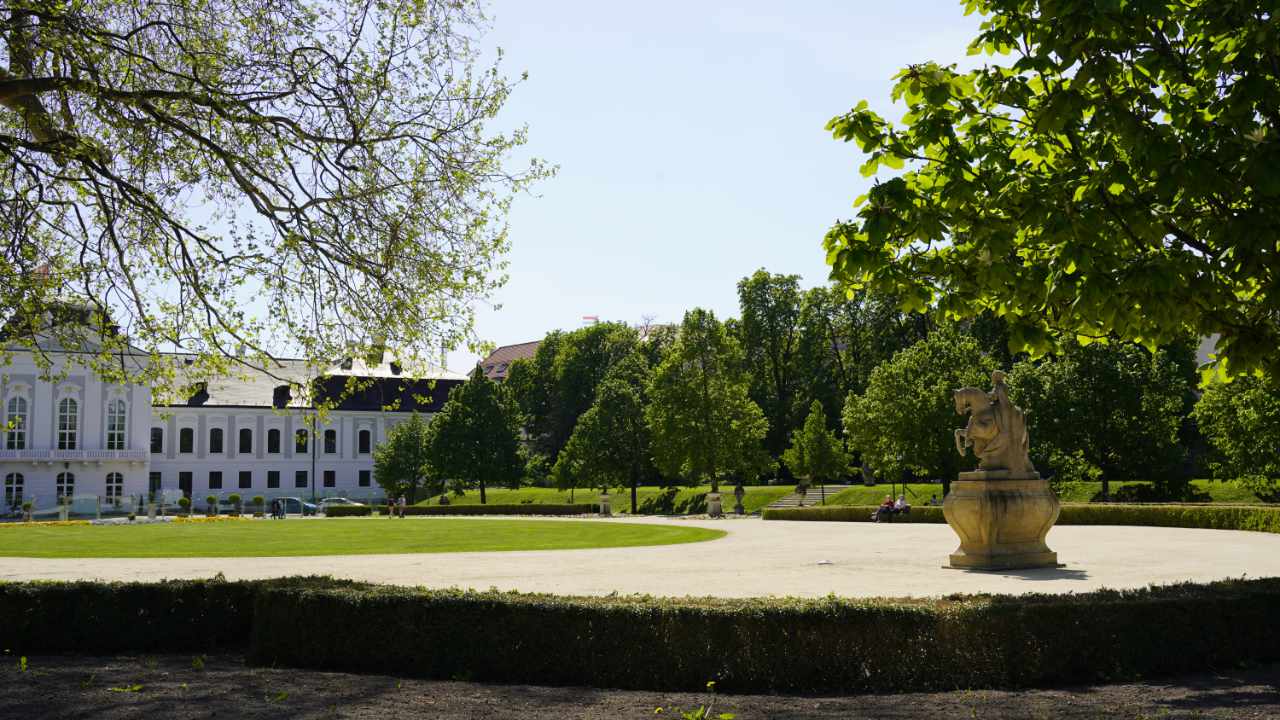
The palace was built in 1760 for Count Grassalkovich and quickly became the social center of Bratislava. The Habsburg court soon discovered its potential. Joseph Haydn organized a series of concerts and premieres here.
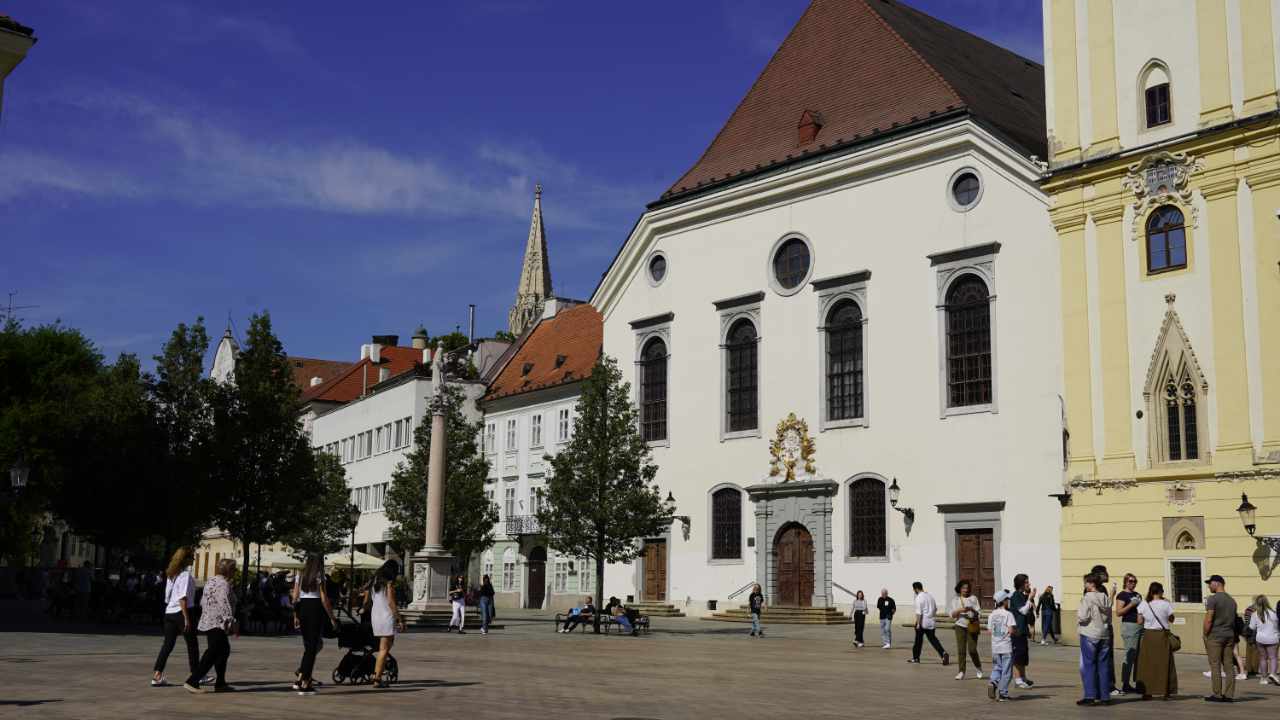
On the way to the center of Bratislava, we pass the Sedlárska again. In the meantime, however, numerous cruise ships have reached the city center, making it hard to film. So we sit in a café on the main square (Hlavné námestie) in front of the old town hall and watch the hustle and bustle.
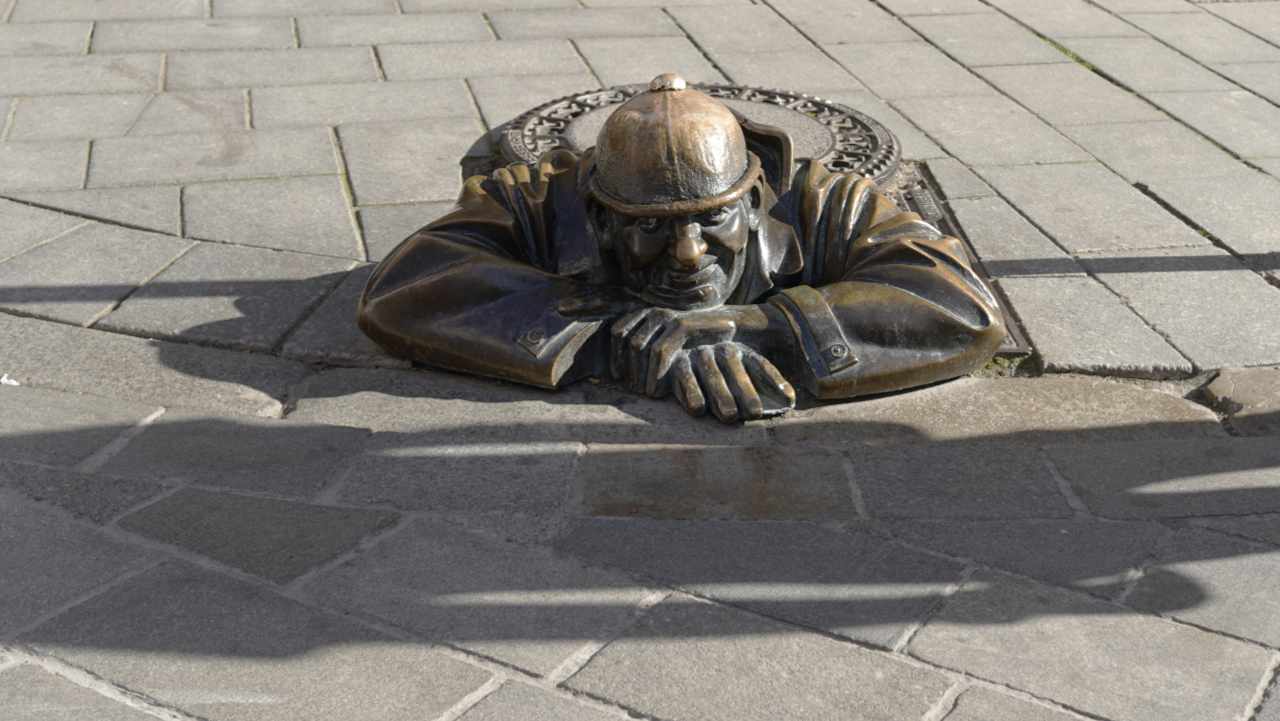
In many places in Bratislava, we see strange characters that are very popular with tourists and children, including the soldier behind the bench and Čumil the gazer. Čumil was voted the most popular character. There is another French soldier in a watchtower on the main square.
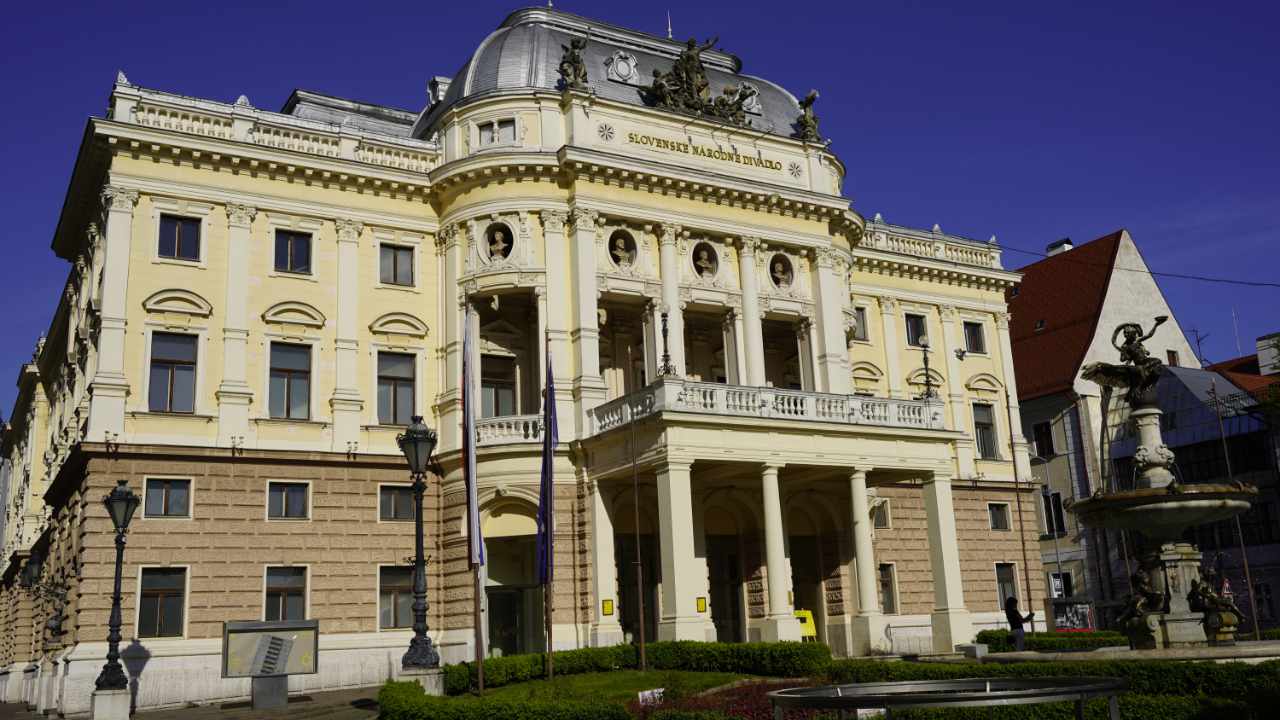
The building of the former Slovak National Theater forms the end of the long Hviezdoslavovo námestie (Hviezdoslavovo Square). The theater was closed in 2021 due to structural defects and is being renovated. In the meantime, a new Slovak National Theater was built on the banks of the Danube in 2007.
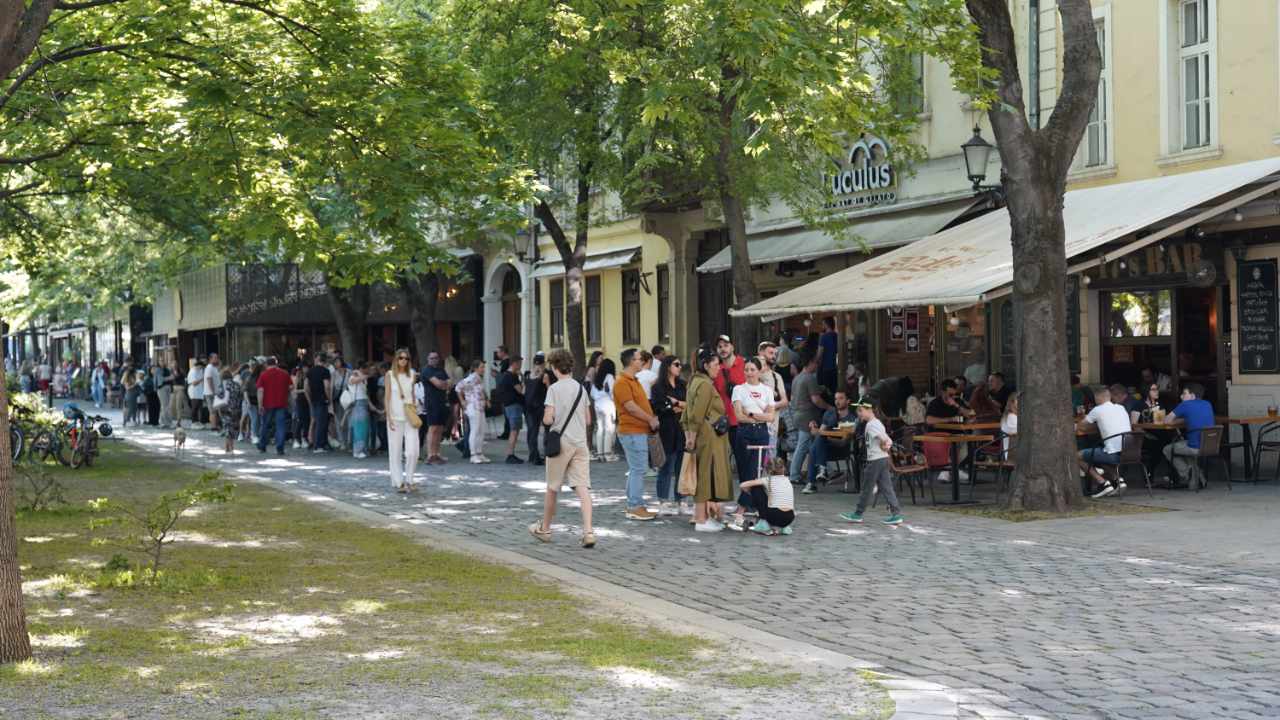
Hviezdoslavovo Square is beautifully landscaped and resembles a park. On this warm day, tourists and locals alike populate the streets. There are queues in front of every ice cream parlor.
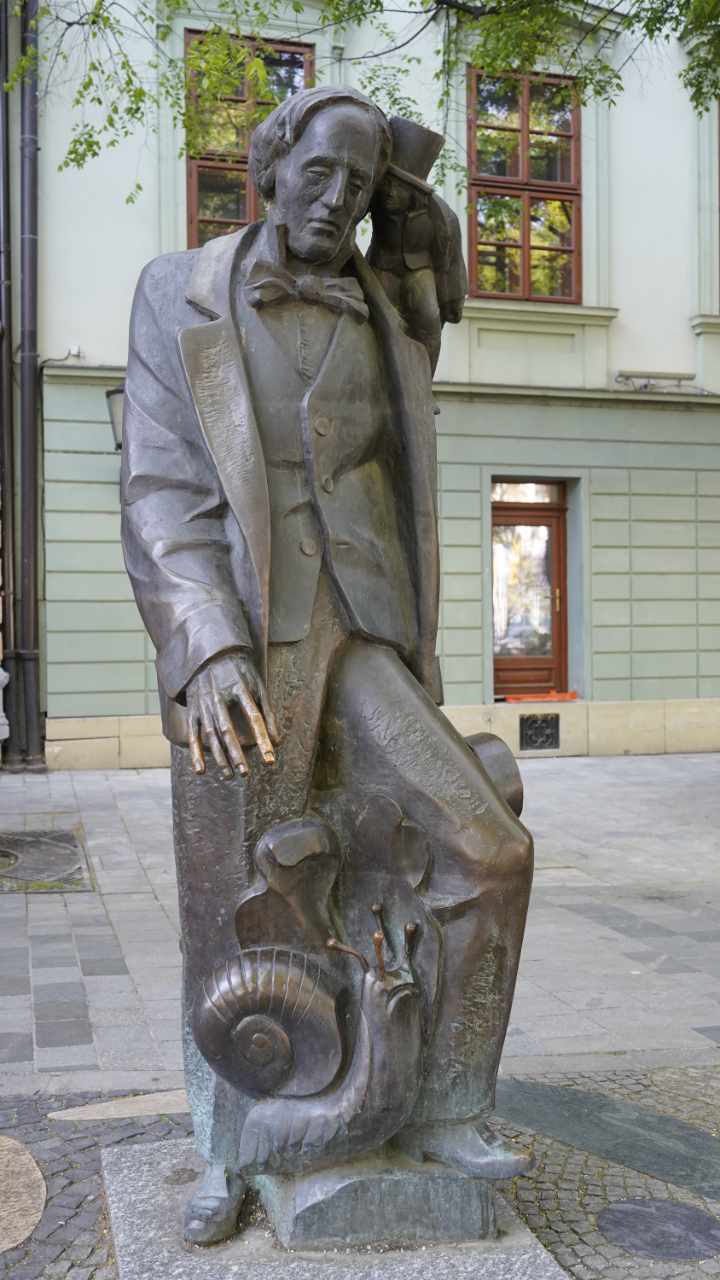
At the other end of the square is a statue of Hans Christian Anderson. Legend has it that a little girl gave him a red rose when he visited Bratislava. This experience inspired him to write his fairytale ‘The Girl with the Sulfur Woods.
After enjoying an ice cream, we continue on to the Danube. The Twin City Liner brings us back to Vienn