We really wanted to explore Praia, the capital of Cap Verde, as well as the former capital, Cidade Velha on the island of Santiago. Since traveling by boat wasn’t feasible, we decided to fly. Even then, the only option was to fly to Santiago the night before, spend the night there, and fly back the following evening. No sooner said than done!
Josina Fortes, the receptionist at the Blue Marlin Hotel, arranged the trip through Levy Travel, a travel agency in Praia. The flight departs late in the evening from Mindelo to Praia.
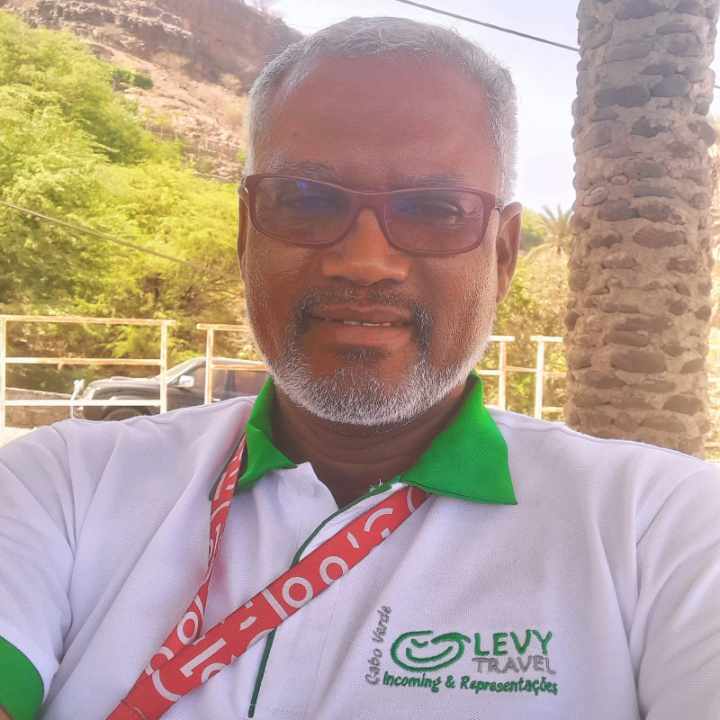
The agency’s manager, Levy Simao, picked us up at midnight and took us to the Hotel Santa Maria in the center of Praia. He showed us our room briefly before leaving us around 1 a.m.
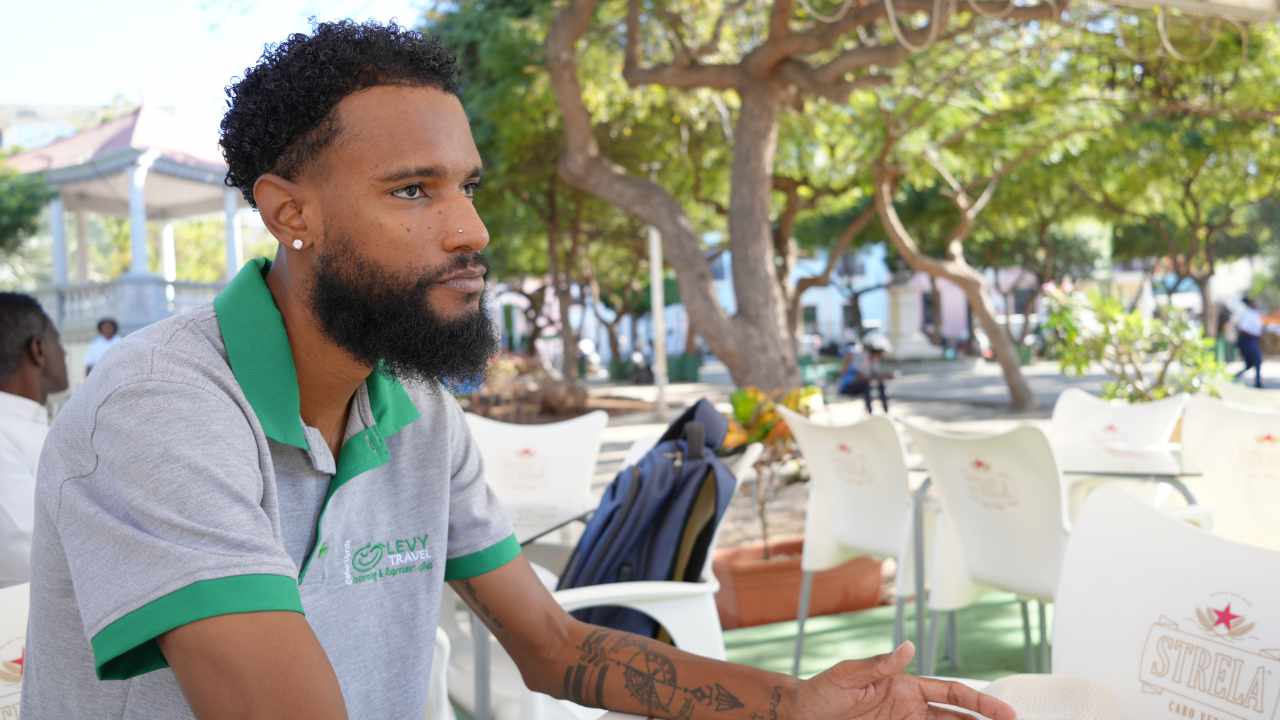
He tells us that his son will accompany us the next morning to show us the city and Cidade Velha. We assume we won’t see Levy again, but we’re wrong; he’ll help us again in the afternoon and evening.
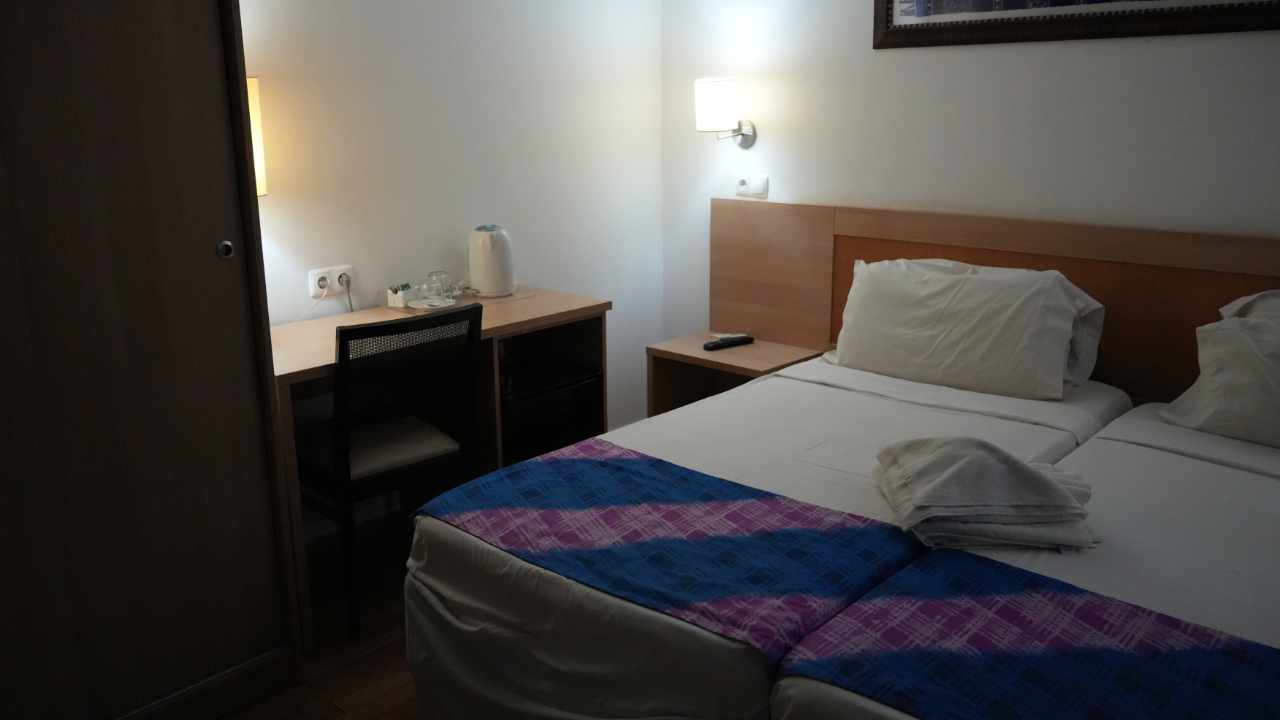
The room is simple but clean with everything you need for a good night’s sleep. The breakfast buffet is excellent, and the reception staff is friendly. Afterwards, we took a brief look at Rua 5 de Julho while waiting for our guide, Marcos Levy.
Rua 5 de Julho is Praia’s main shopping street. It’s bright and welcoming, lined with inviting shops and cafés. What makes it special is that it’s beautifully shaded by trees without feeling dark.
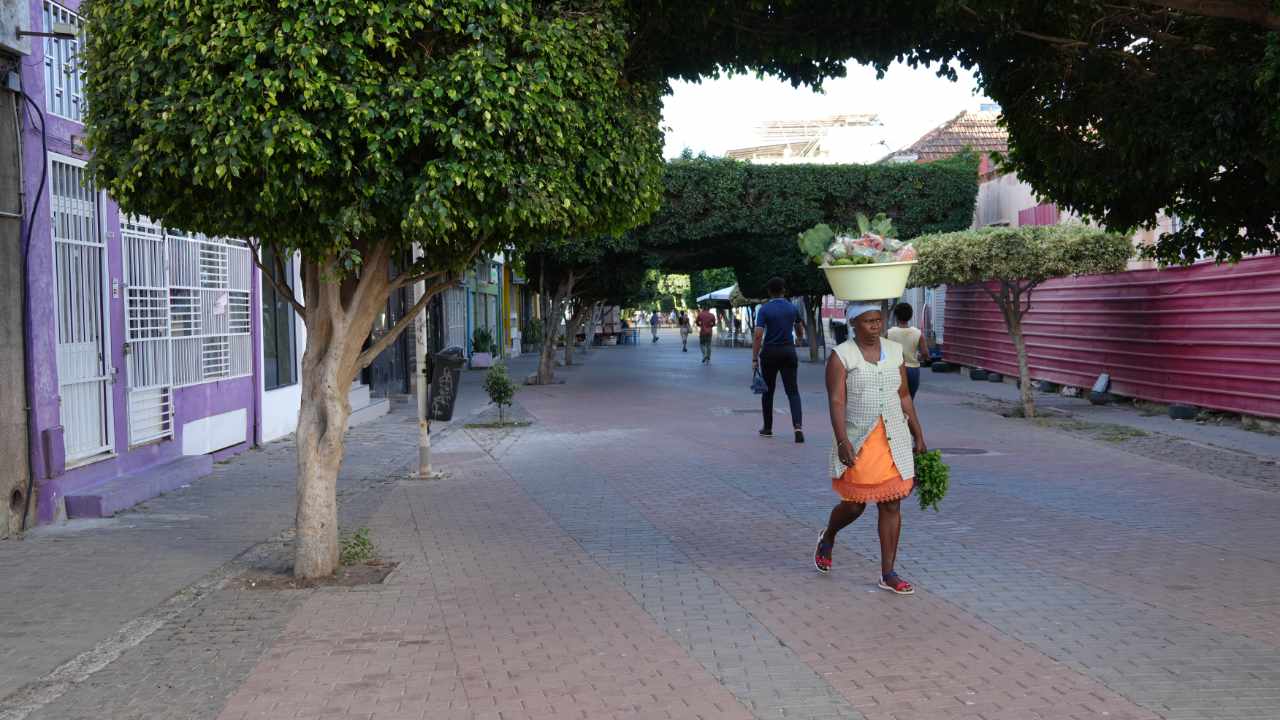
We are on the Praia plateau, where African, Creole, and Portuguese cultures blend.
First, Marcos takes us to the southern end of the street to the Mercado Municipal de Praia, the central market for vegetables and groceries.
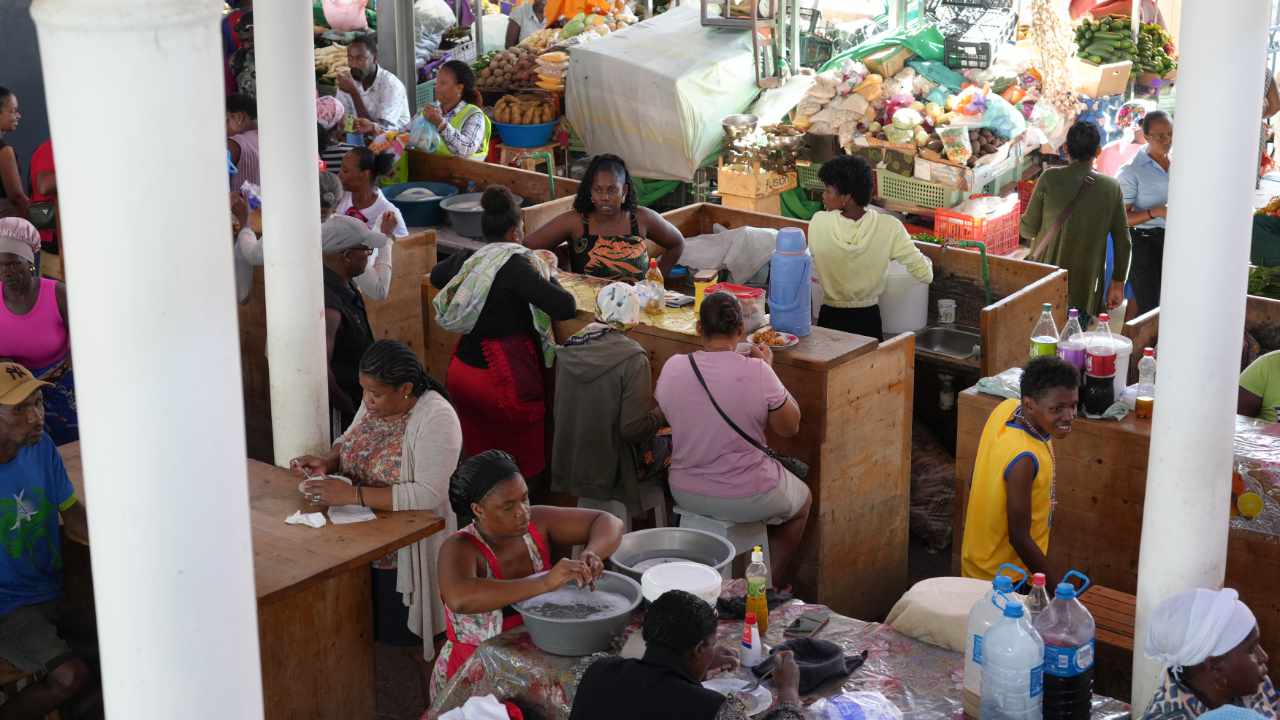
However, it also includes various snack options and appears to serve as a meeting place for exchanging the latest news.
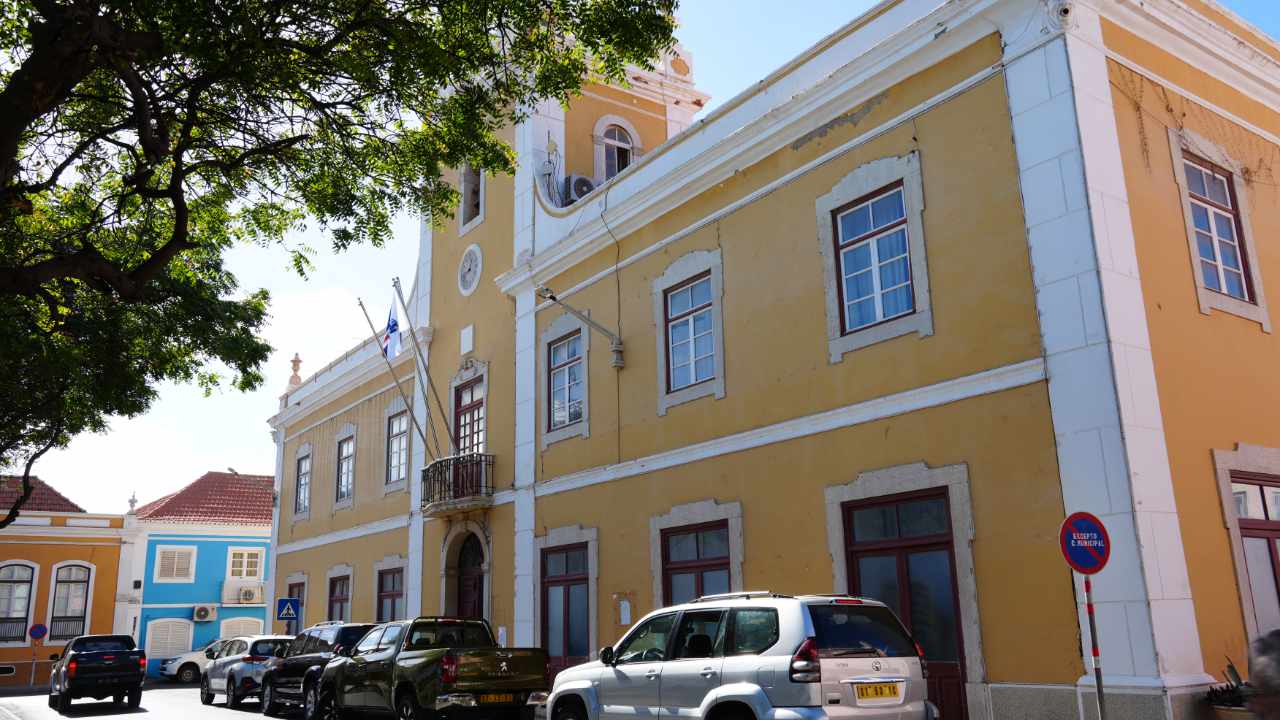
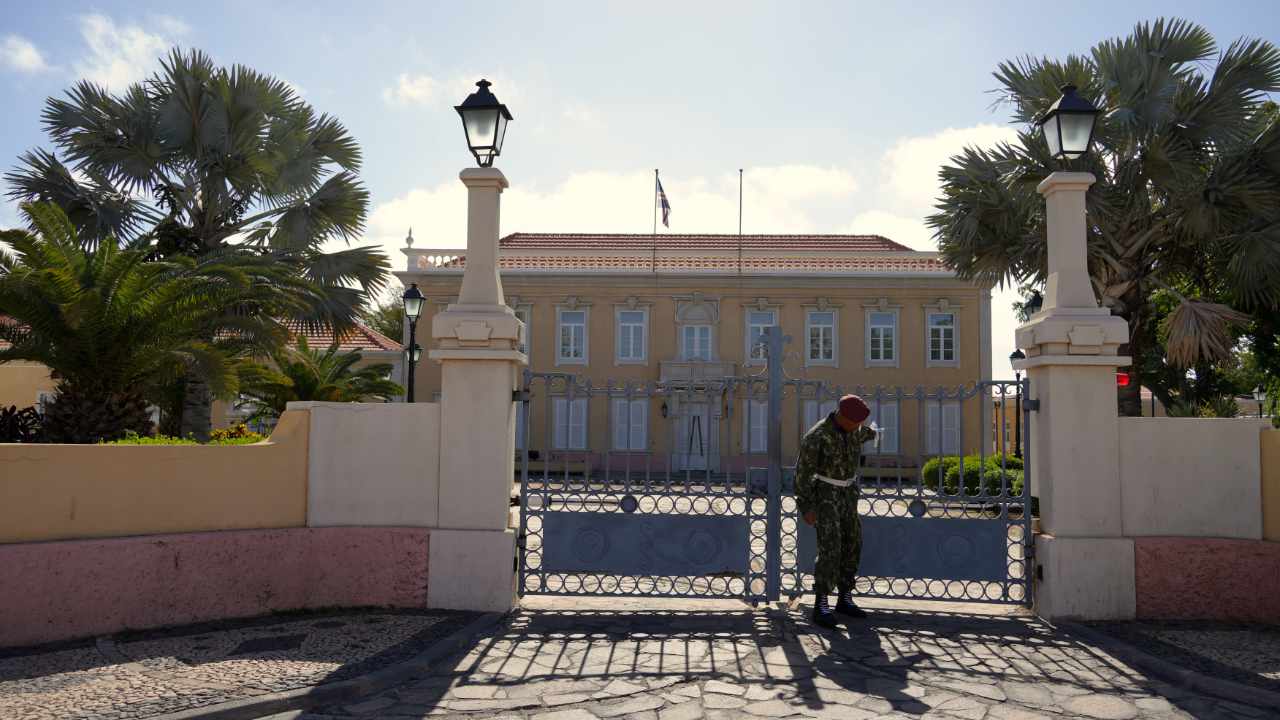
Next, we walk to “Praça da Fonte,” where the City Hall (Câmara Municipal) is located. It is also used for events. Just a few meters further on is the Governor’s Palace (Palácio da Presidência da República), which once served as the governor’s residence. Arguably, it is the most important building on the plateau.
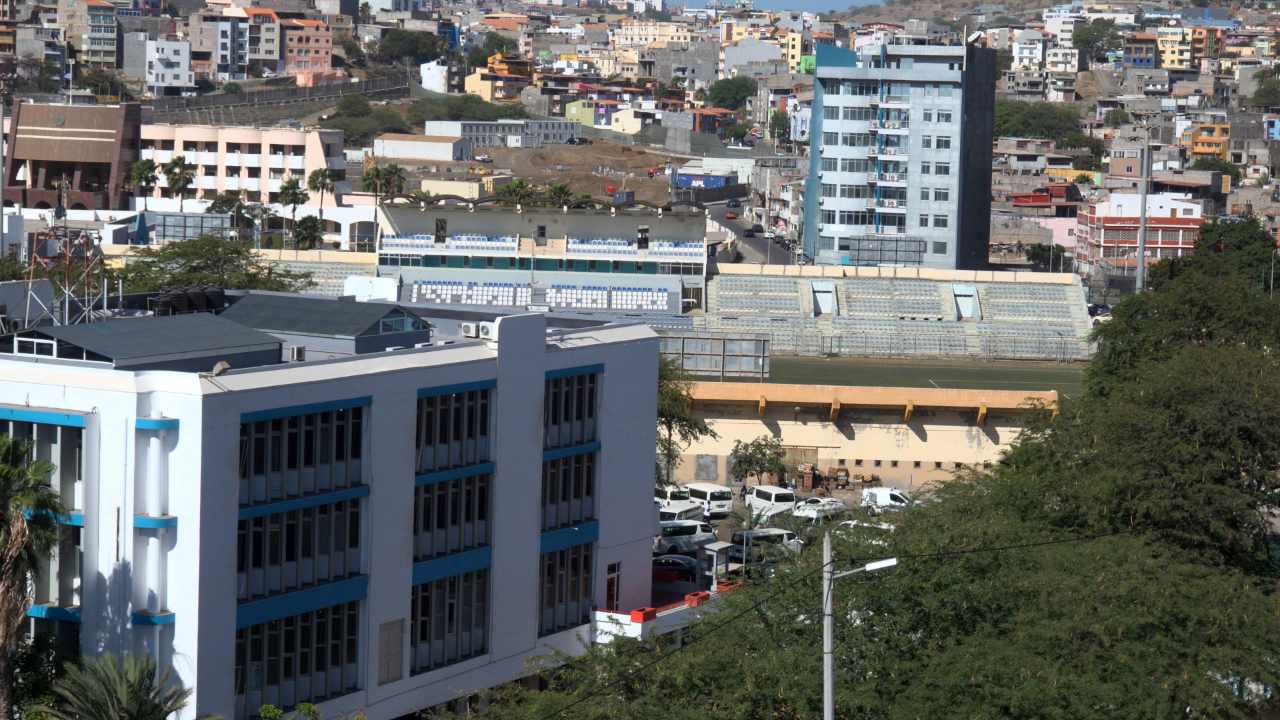
We continue our tour, enjoying the views of the Estádio da Várzea soccer stadium and Ilhéu Santa Maria along the way.
At the southern end of the plateau, there is a military base named after the Cape Verdean freedom fighter, Jaime Mota. Mota was killed in Guinea-Bissau. Today, the base serves as a military museum and office building for the Ministry of Defense.
We continue our tour and enjoy the view of the Estádio da Várzea soccer stadium and Ilhéu Santa Maria. At the southern end of the plateau is a military base named after the Cape Verdean freedom fighter, Jaime Mota. Mota was killed in Guinea-Bissau. Today, it serves as a military museum and office building for the Ministry of Defense.
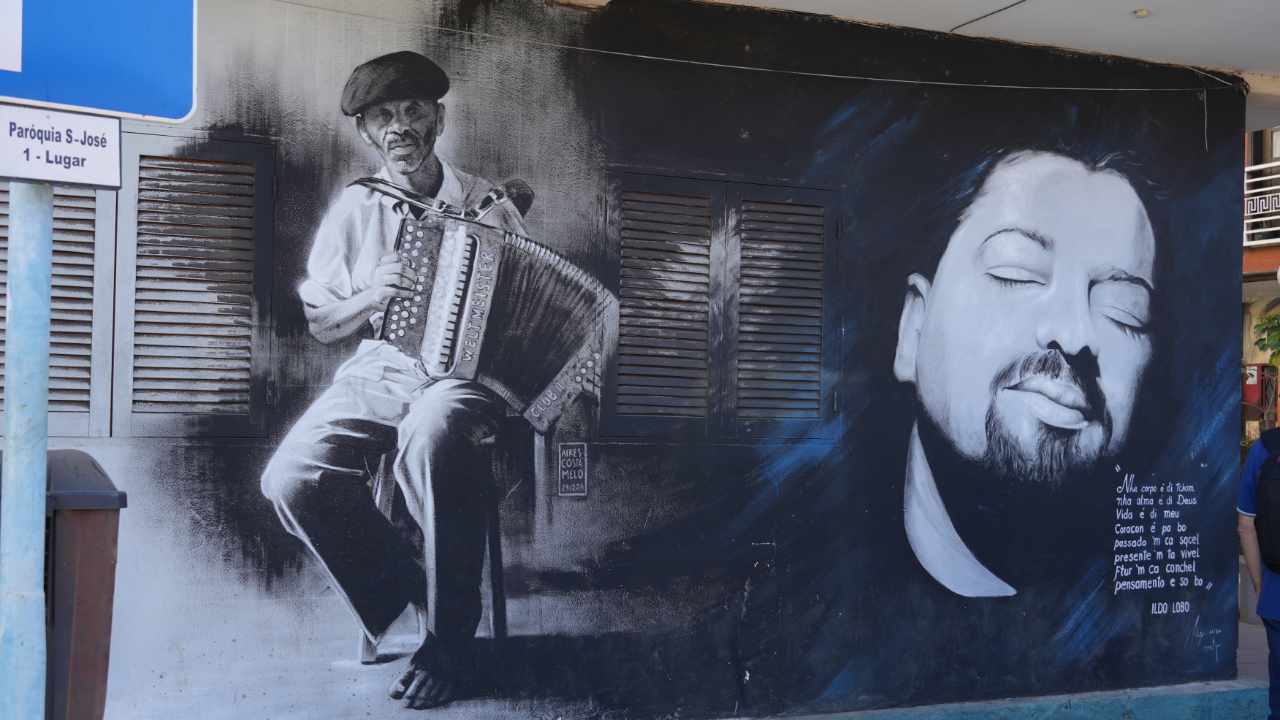
Marcos then takes us to the Terra Branca neighborhood, which is centered around the artist Tutu Sousa. He founded the well-known Galeria de Arte Tutu Sousa art gallery.
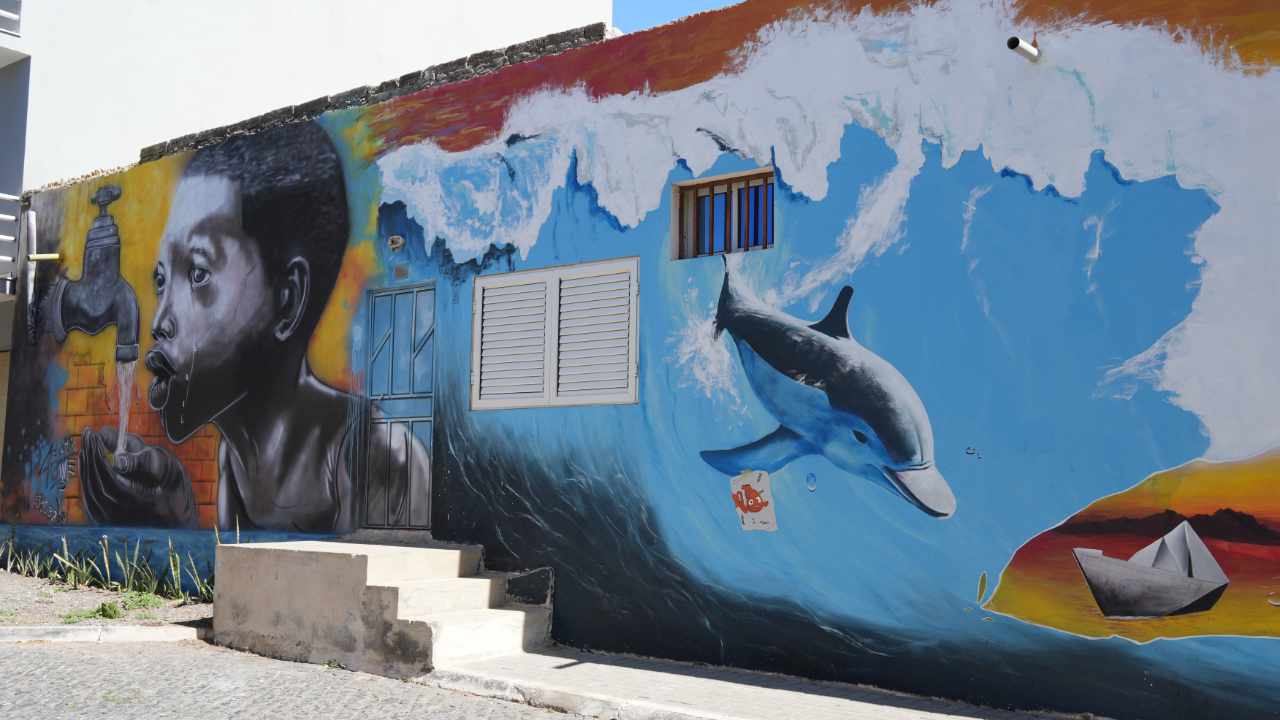
The gallery showcases art by Cape Verdean and international artists from countries such as Portugal, Guinea-Bissau, São Tomé and Príncipe, and France. Located in the vicinity of Rua d’Arte, the gallery has transformed the entire neighborhood into a work of art. We even meet the artist Tutu Sousa in person in his gallery, where he stands amidst his works.

Our second destination on the island of Santiago is now in sight: Cidade Velha.
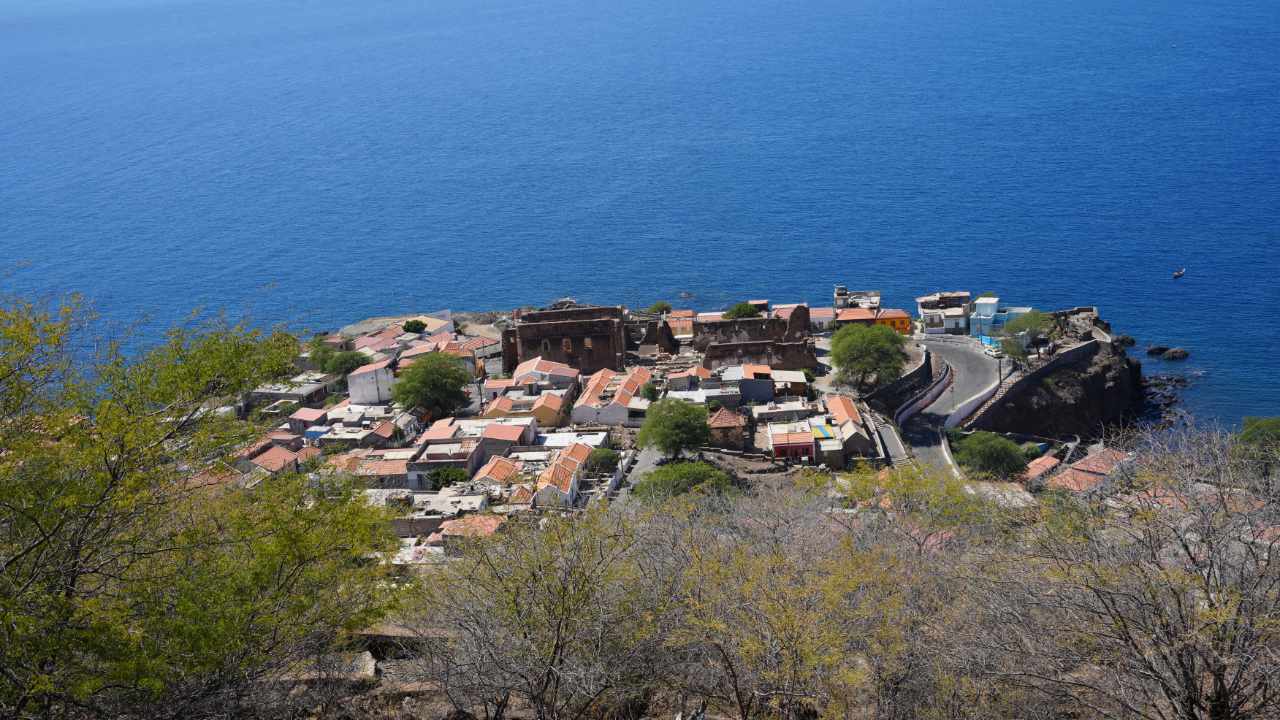
Officially known as Ribeira Grande de Santiago since 2005, Cidade Velha is the historic center of Cape Verde and has been a UNESCO World Heritage Site since 2009. Founded in 1462, it was the first city established by Europeans south of the Sahara.
Slavery has existed for a very long time. It did not begin with the Egyptians, Greeks, or Romans. In ancient times, the slave trade was widespread and a major economic factor. Tens of thousands of slaves were traded daily on Delos. Later, the Franks and the Venetians played significant roles. The Radhanites, Jewish free-trade merchants, were active internationally from the 8th to the 11th century, trading between the Christian West and the Islamic world as far as India and China. From the fifth century onward, slavery was prevalent in Africa, especially in the Islamic world. It is estimated that 10 to 15 million people were affected by intra-African slavery.
As early as 1466, the city of Cidade Velha (then called Ribeira Grande) was granted a royal monopoly on the slave trade. From there, slaves from Guinea-Bissau and Sierra Leone were shipped to Brazil and the Caribbean. At the same time, Portuguese fleets bound for India were supplied here. Thus, Cidade Velha established itself as a central trading hub. Slavery was banned in Cape Verde in 1866.
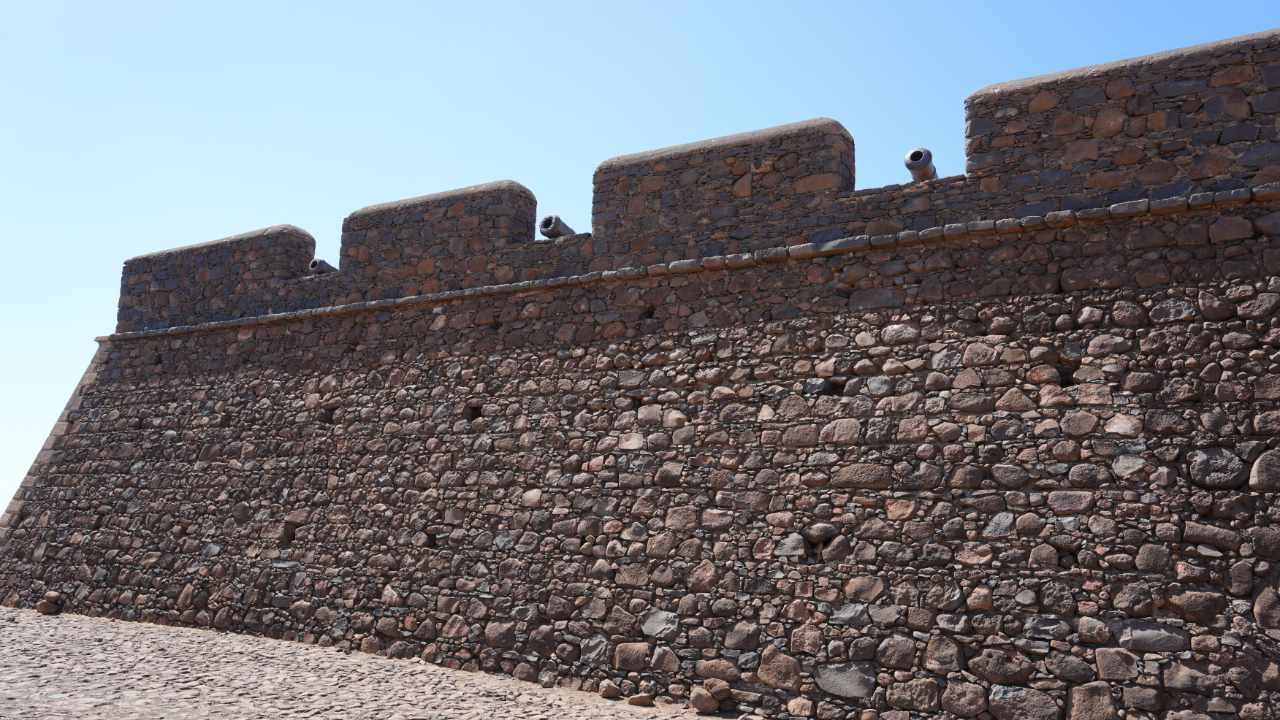
The city was raided by Sir Francis Drake in 1585 and 1586. Construction of the Real de São Filipe fortress began the following year. In 1712, Jacques Cassart, a Frenchman, conquered, plundered, and destroyed the fortress from the land side. As a result, Cidade Velha’s importance declined, and the seat of government was moved to Praia in 1769.
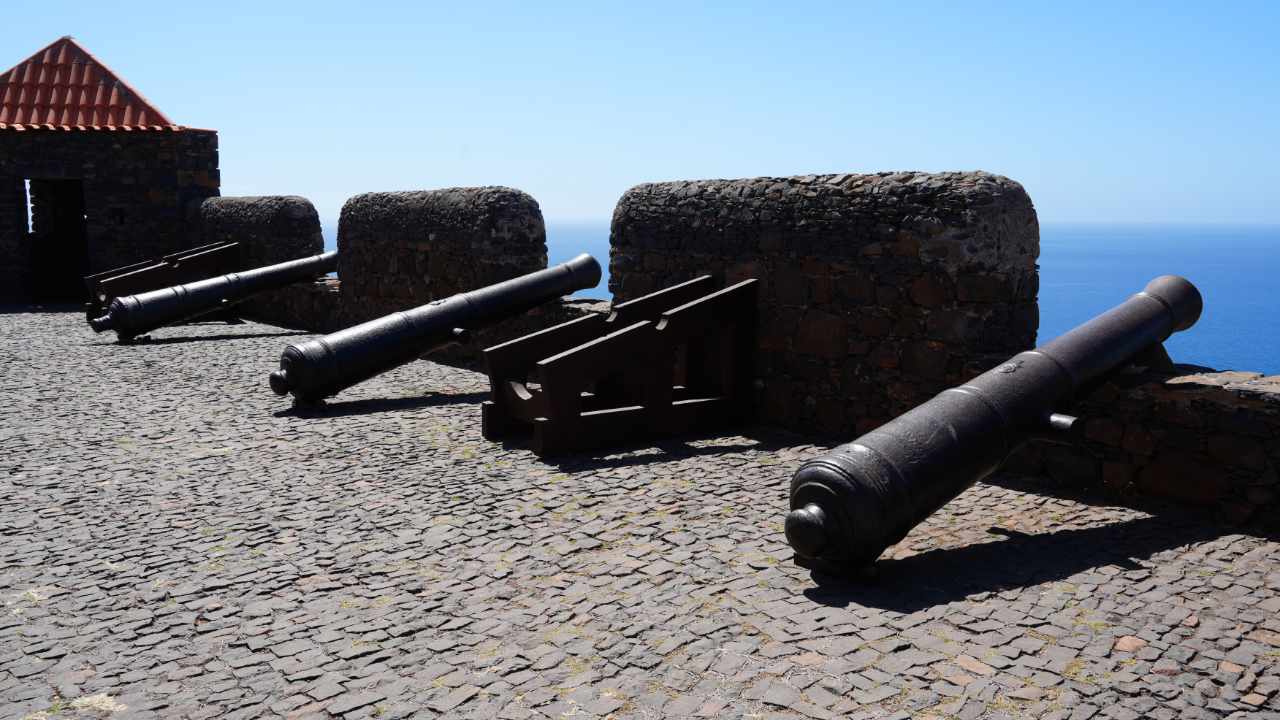
Our tour begins at the Fortress Real de São Filipe. Perched high above Cidade Velha, the fortress’s massive walls and cannons are impressive. From here, you can also enjoy beautiful views of the city and the sea. To the north lies the vast Ribeira Grande valley, which was ideally suited for housing slaves.
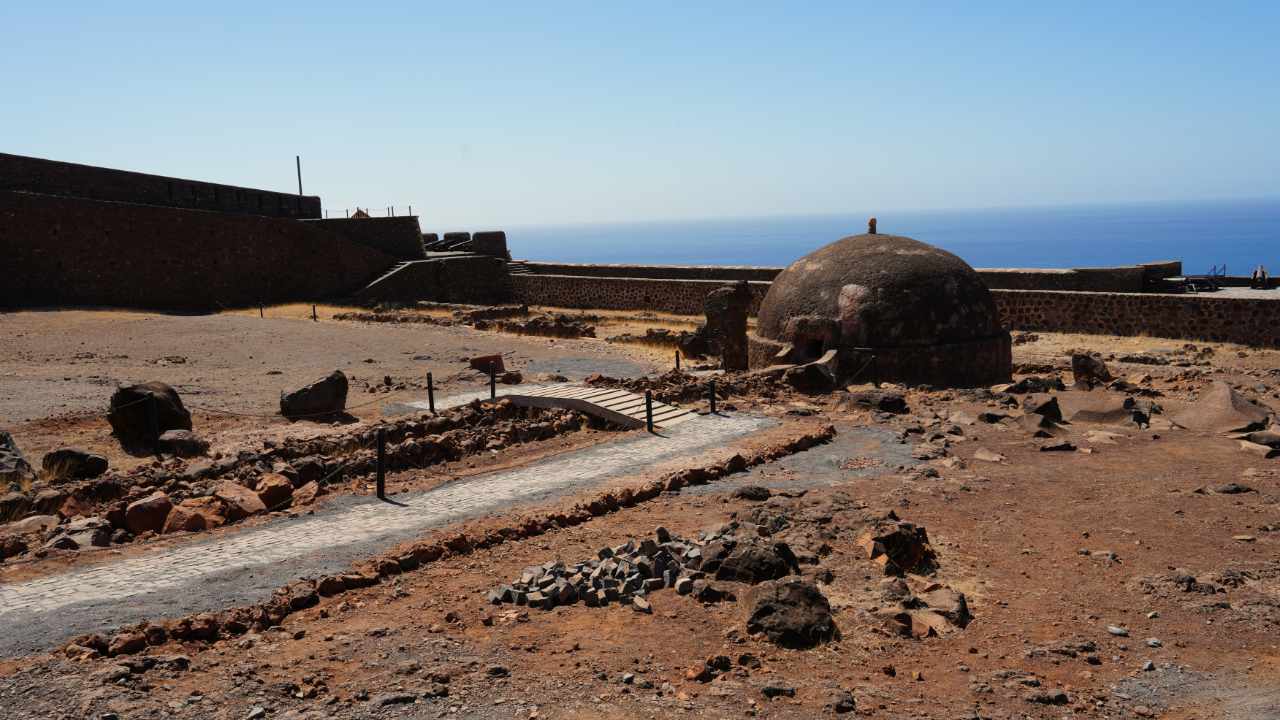
Upon entering the fortress, your gaze first falls upon the round dome of the cistern. The kitchen was behind it. Right next to the kitchen were the prison cells, which were barely large enough to stand or sit in. The prisoners were given very little food, yet the smell of the kitchen was always present.
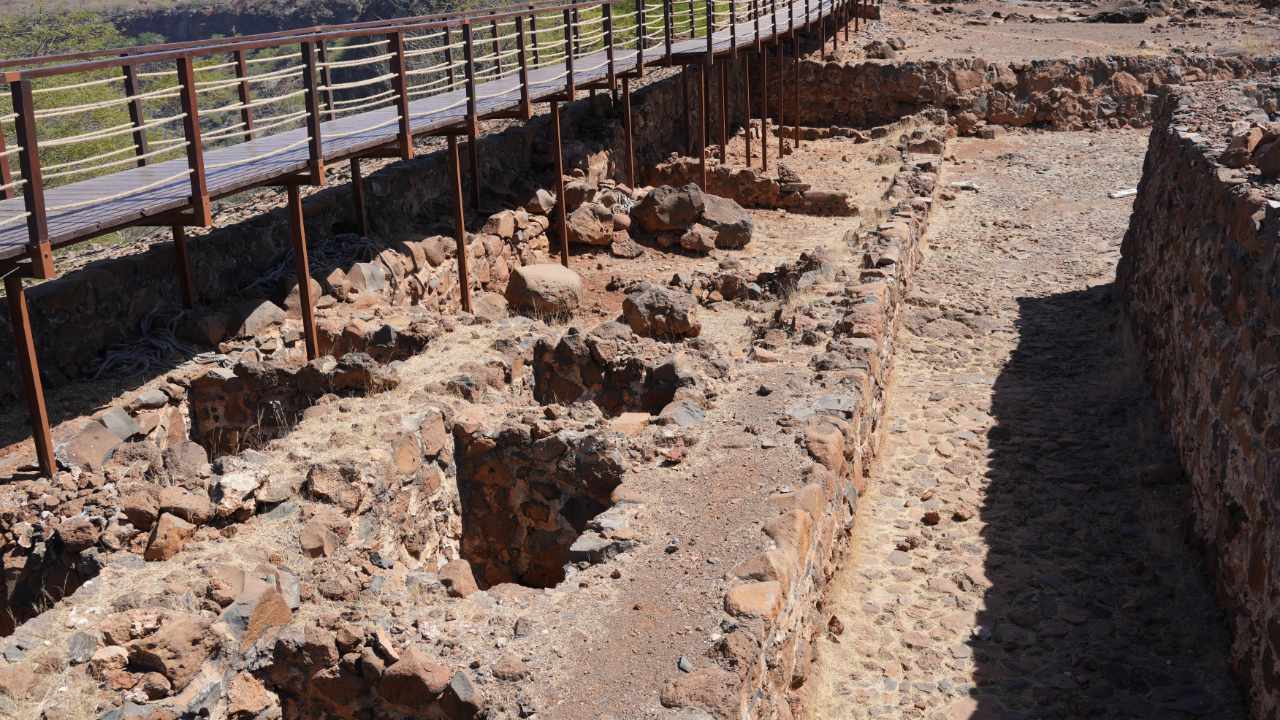
To the south were the quarters of the crew and commander. On the southeastern bastion, we spotted a Chioninia, a plant endemic to the Cape Verde Islands. We took another look inside the cistern that supplied the fortress with water.
On the way into town, Marcos stopped briefly to feed some banana peels to the goats by the roadside. They regarded the peels as a delicacy.
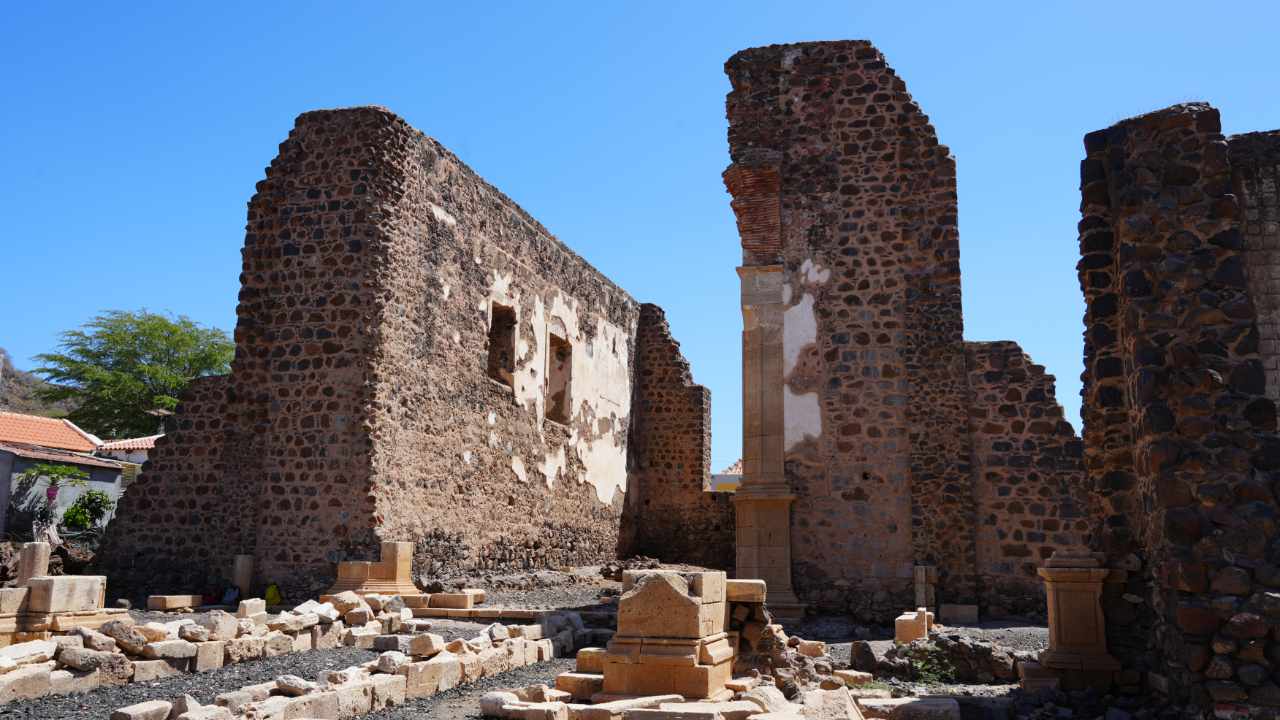
Then, we visited the ruins of the cathedral, which was constructed from 1556 to 1705. The cathedral was the first south of the Sahara and featured a 60-meter-long nave as well as a double transept.
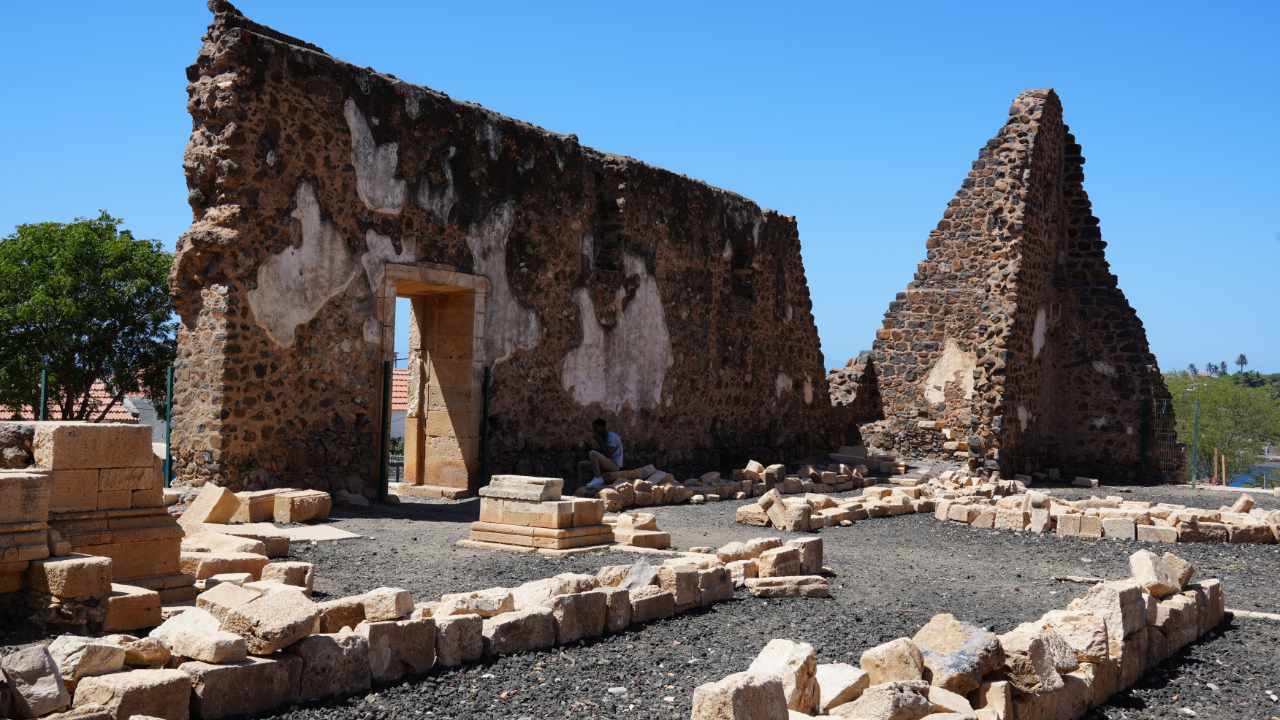
Many stones were imported from Portugal. Many slaves were baptized in the cathedral, which made them easier to sell. However, just seven years after its completion, the cathedral was plundered and destroyed by the French privateer Jacques Cassard.
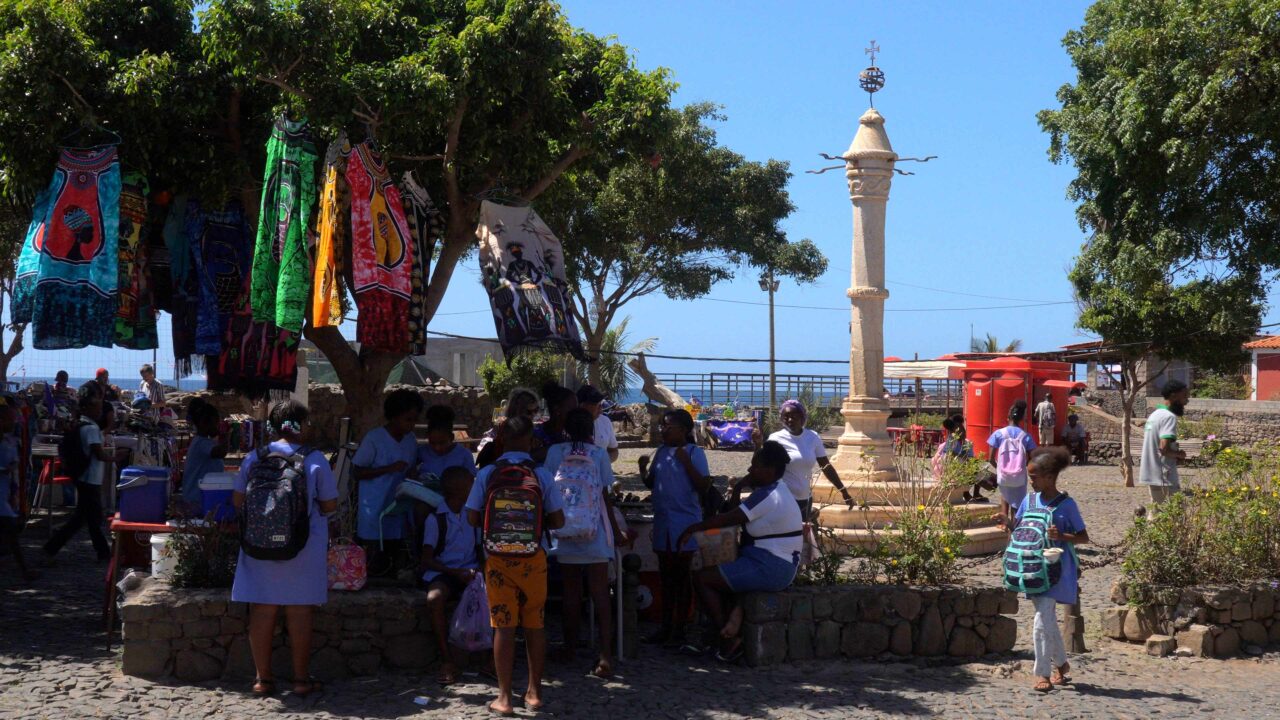
A few meters further on is the historic center of the city, featuring a circular square with the Pelourinho, the historic pillory topped by a Christian cross. Slaves were auctioned off at its base, tied to the pillory, put on display, and publicly punished.
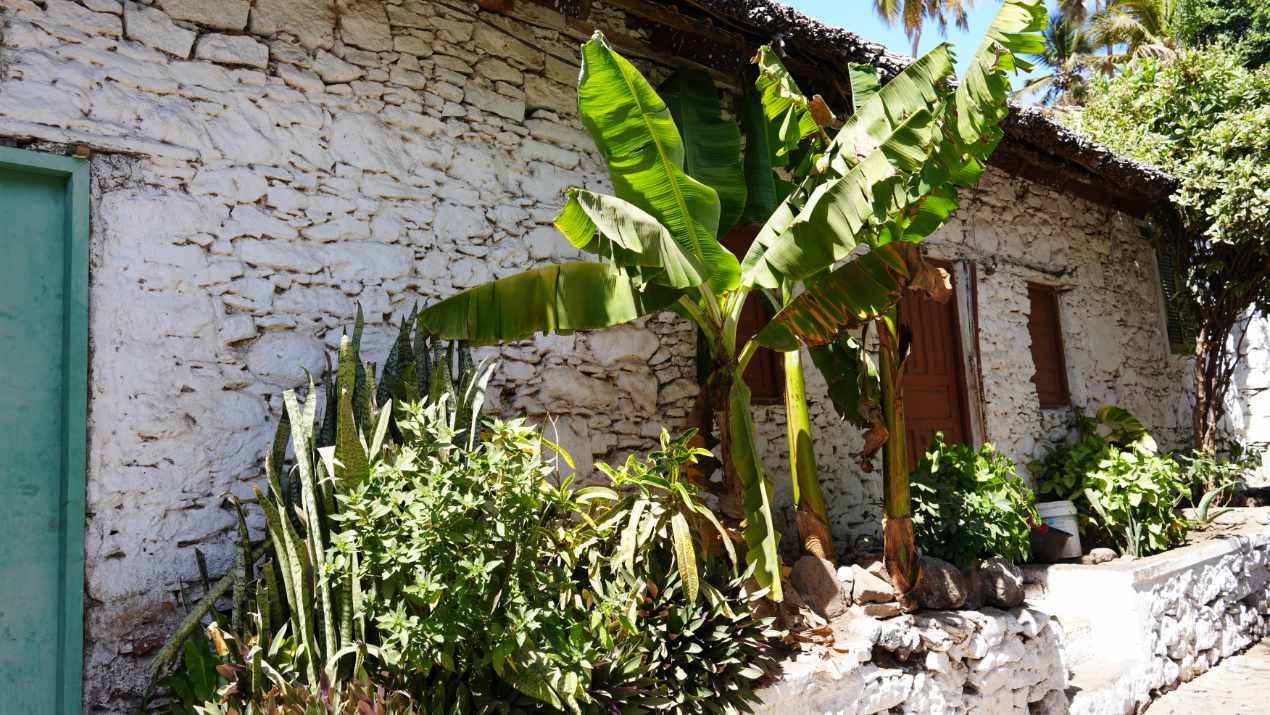
The adjacent Rua de Banana was Cape Verde’s first paved street. The picturesque houses on the right and left were once slave quarters.
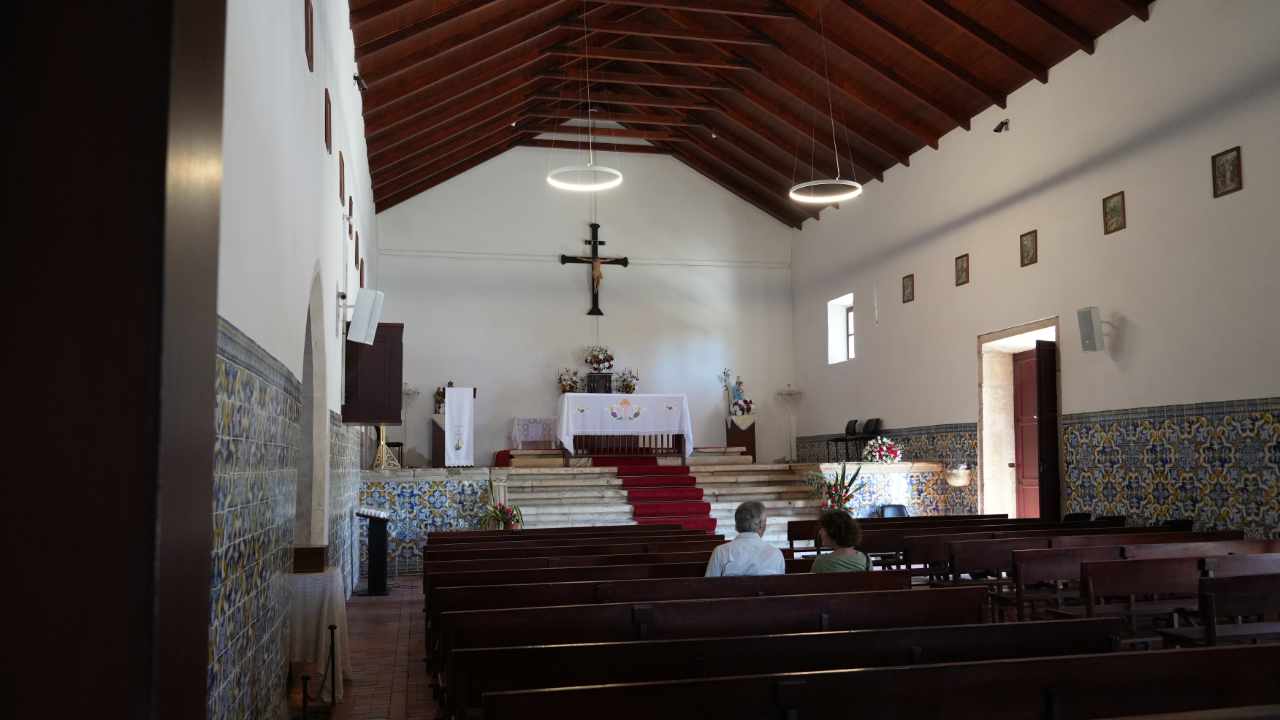
The Igreja de Nossa Senhora do Rosário is the city’s oldest church, and fragments of the original walls are still visible. It is also considered the oldest surviving historic building in Cidade Velha.
On the outskirts of Cidade Velha, there is a grogue distillery with an attached restaurant: Cabral & Martins — Fábrica Familiar de Grogue (Rum) / Cruzeiro Restaurante. The food was excellent, and you can purchase grogue there, too.
It was now time to head back to the airport. On the way, we passed the Universidade de Cabo Verde (Uni-CV), one of the two major universities in Praia. China funded it, and Chinese companies built it.
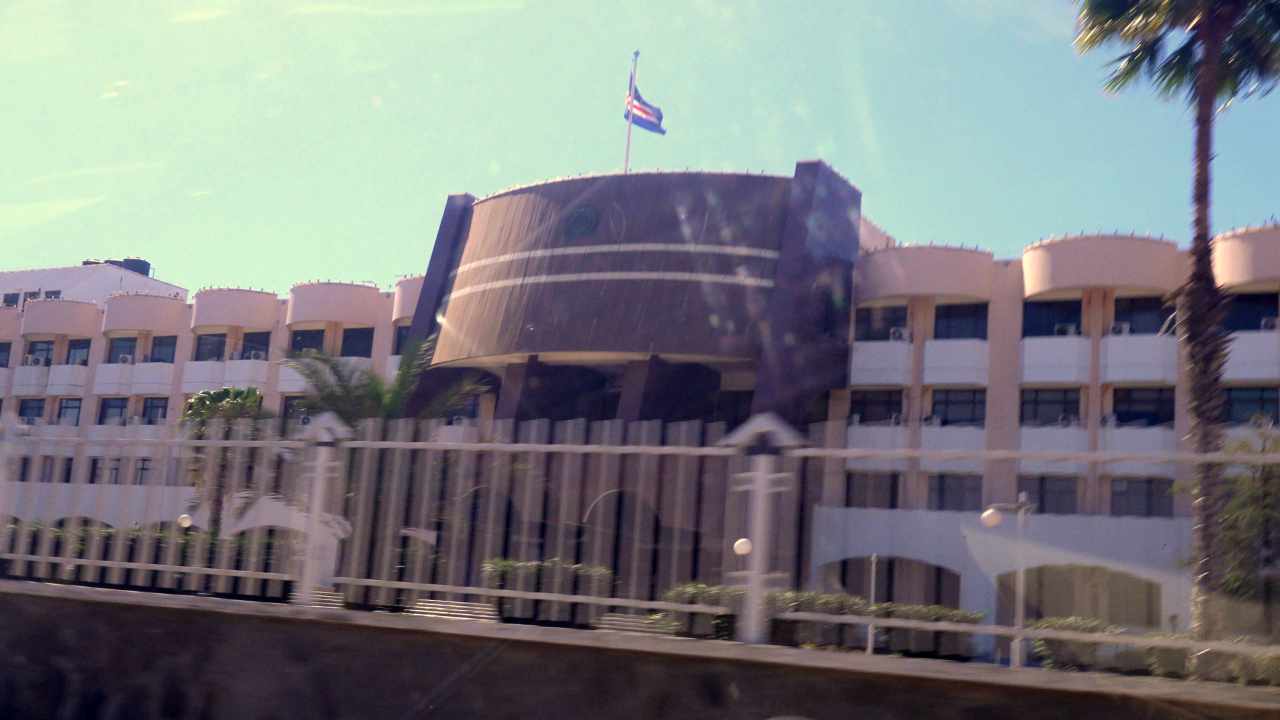
The same goes for the modern presidential palace. It, too, was financed by China and built by Chinese companies.
On the way, we received a call from Marcos’s father saying that our flight had been canceled and that we should hurry to the airport.
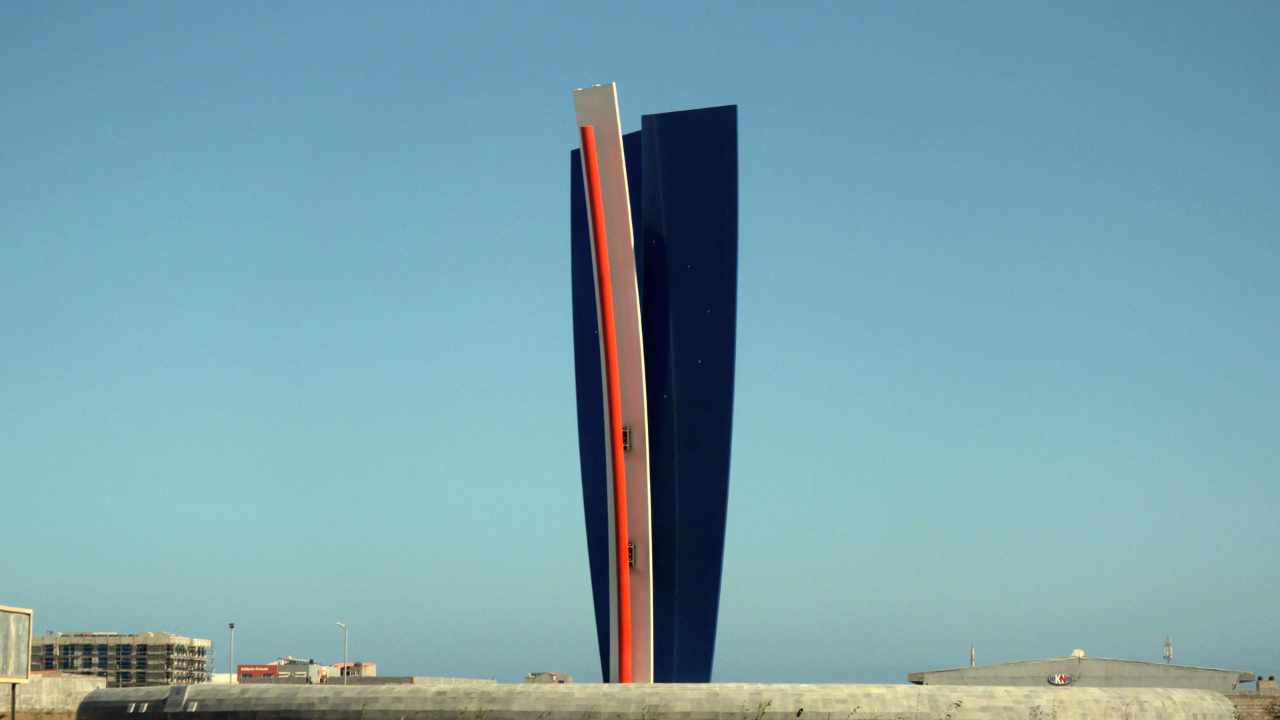
After passing the Cape Verde Independence Monument, we arrived at Nelson Mandela International Airport.
It’s complete chaos here. Marcos asked at the counter, and we were told to get in line at check-in to register for one of the next flights. Then, Marcos said goodbye. After waiting in line for about two hours, we finally reached the check-in counter only to be told that we weren’t registered and had to go back to the previous counter. Rumors were swirling through the hall in the meantime that some people were supposed to stay at a hotel, etc.
With the help of a friendly local passenger, Ursula found the phone number for the Levy Travel Agency and spoke with Levy Simao. He promised to come right away and help us, and he did just that. Thanks to him, we were able to book the next flight and check in two hours later. We are very grateful to him, as it could easily have ended with us having to spend another night in a hotel.
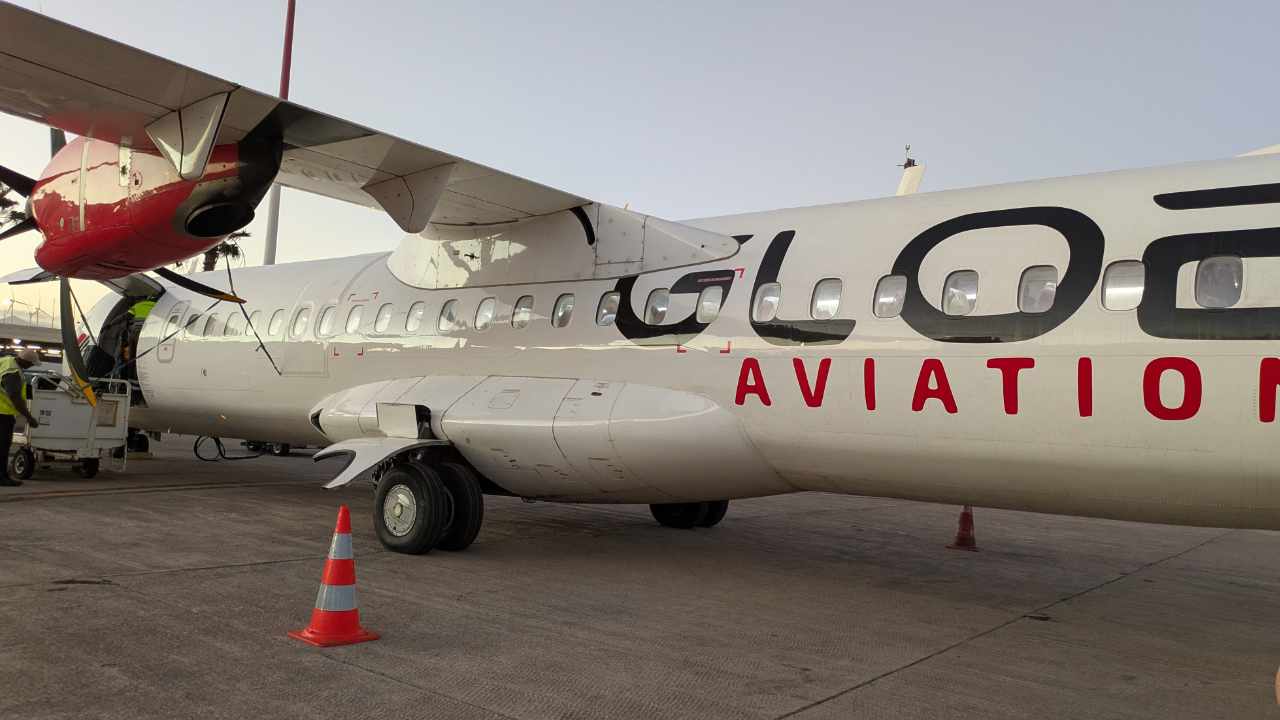
At around 10 p.m., we finally arrived at the Blue Marlin Hotel in Mindelo, bringing our eventful—and ultimately exciting—journey to a happy conclusion.
Text, photos and video: Copyright © myVideoMedia