The Baths of Caracalla were the second largest public bath in Rome after the Baths of Diocletian. Both baths were open to the public with free admission.

The Baths of Caracalla offered places for about 2000 spa visitors. The construction was started by Emperor Septimus Severus in 206 AD and completed by Emperor Caracalla in 216 AD.
The main building is 214 x 110 m in size and was spanned by a ceiling with a height of more than 20 m.
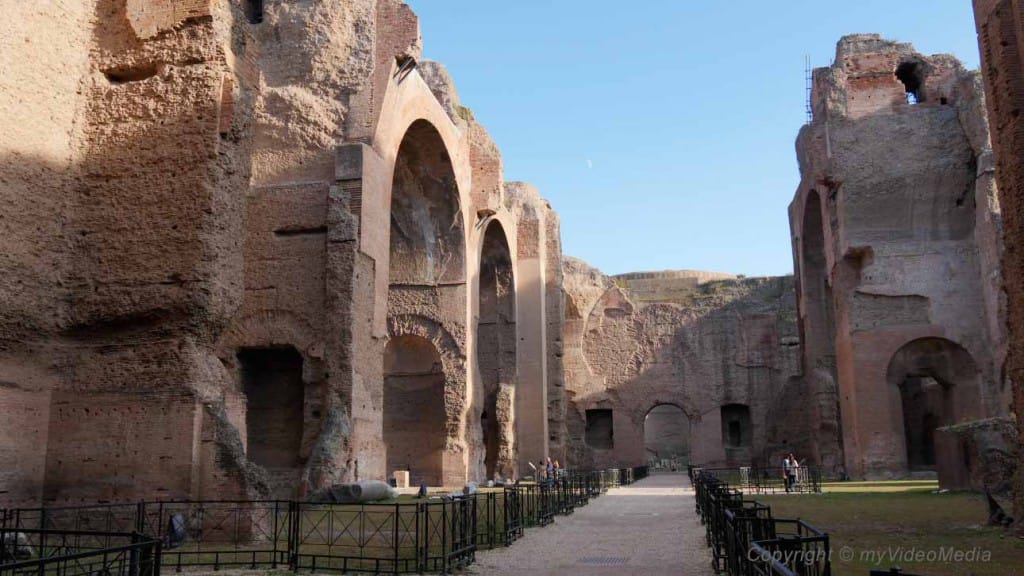
In the year 573 the water pipes were destroyed by the Ostrogoths and the bath could not be used any longer.
You are currently viewing a placeholder content from YouTube. To access the actual content, click the button below. Please note that doing so will share data with third-party providers.
More InformationIn Rome, the baths were of high social and hygienic importance. It was a meeting places for the bath or sauna and served also for gymnastics and other sports.
In addition, there were libraries, meeting rooms, barbershops and other stores. They were important for the hygienic reasons, since the houses in Rome had no private bath at that time. In this respect, one was dependent on public bathhouses.
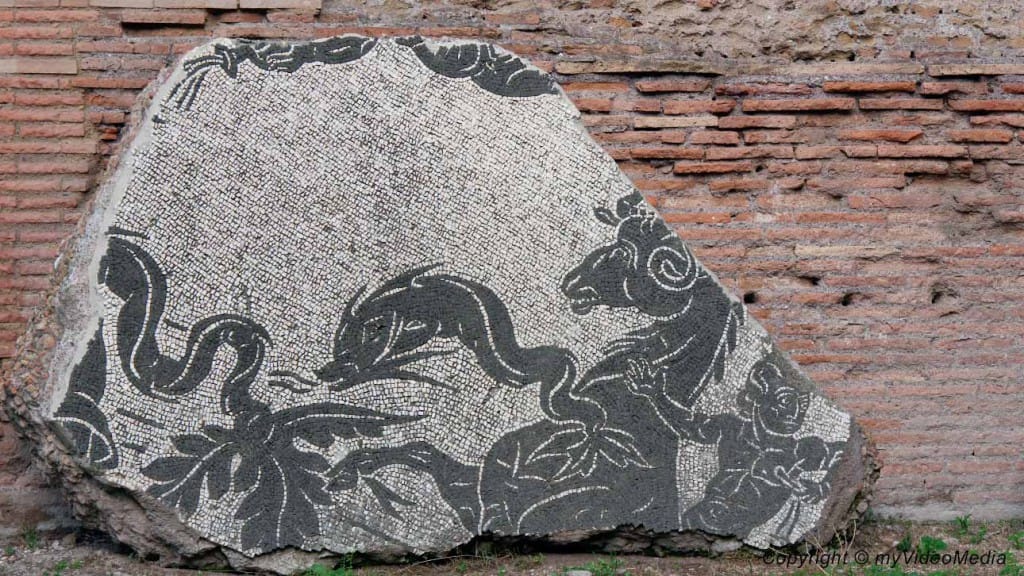
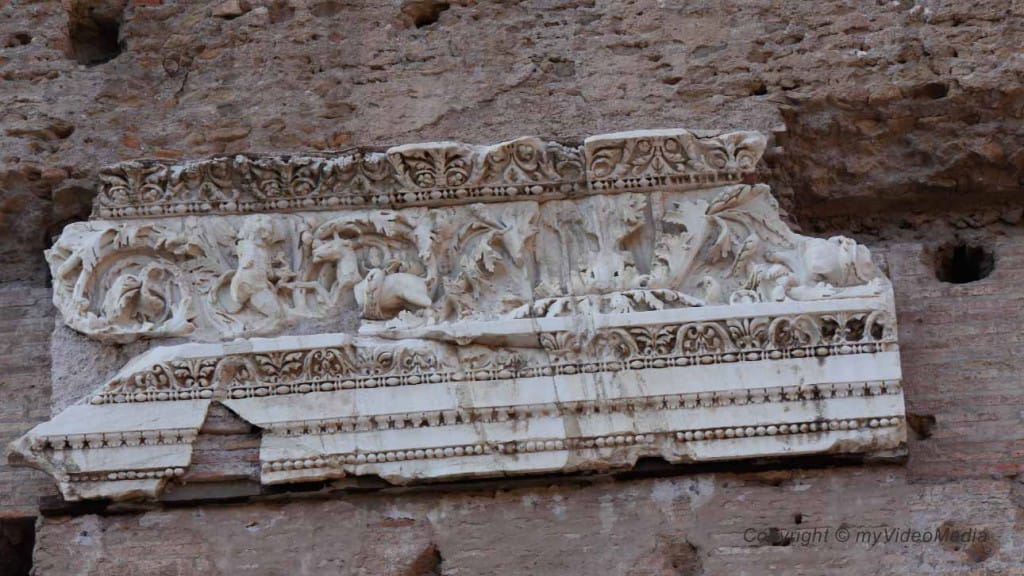
In addition to various mosaics, the rooms were lavishly decorated with marble, paintings and sculptures. 1600 stone chairs for guests to relax were found here.
The caldarium (hot bath) was spanned by a 35 m wide dome of ceramic hollow ware, the world’s largest of its kind. The temperature in the caldarium was between 40 and 50 ° C.
The combustion chambers were in the basement which was not accessible for the public. Here, the hot air was generated, which was then passed into the floors and walls.
More than 100 slaves were needed in order to fire the stoves. Over a period of 400 years, 10 tons of wood were burned per day . An own logistics was needed to supply the baths with wood from all over the empire.
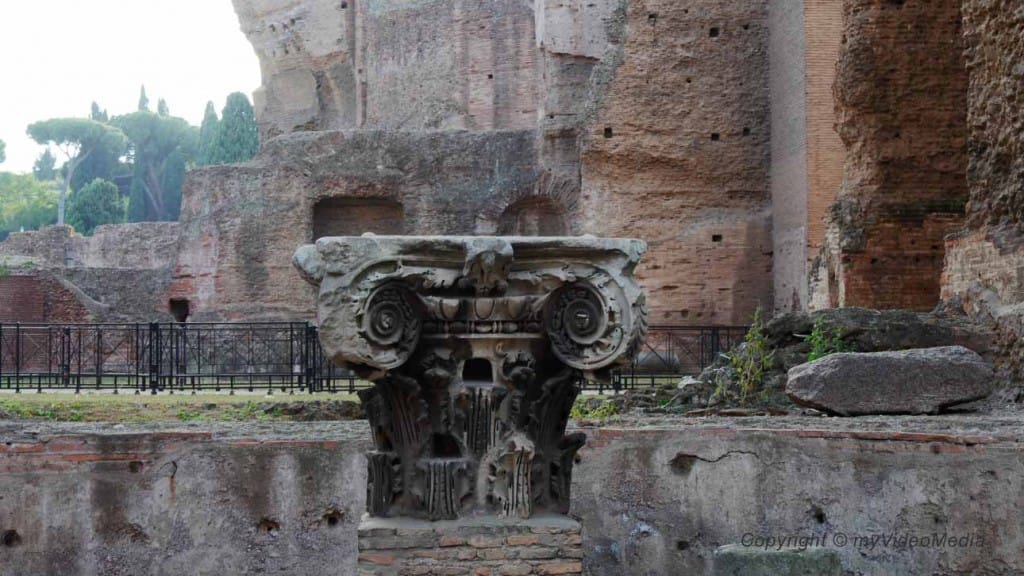
Polemius Silvius counted the Baths of Caracalla as one of the seven wonders of Rome. Since 1980, the historic center of Rome, and St. Peter’s Basilica and the Vatican City, belong to the UNESCO World Heritage Sites.
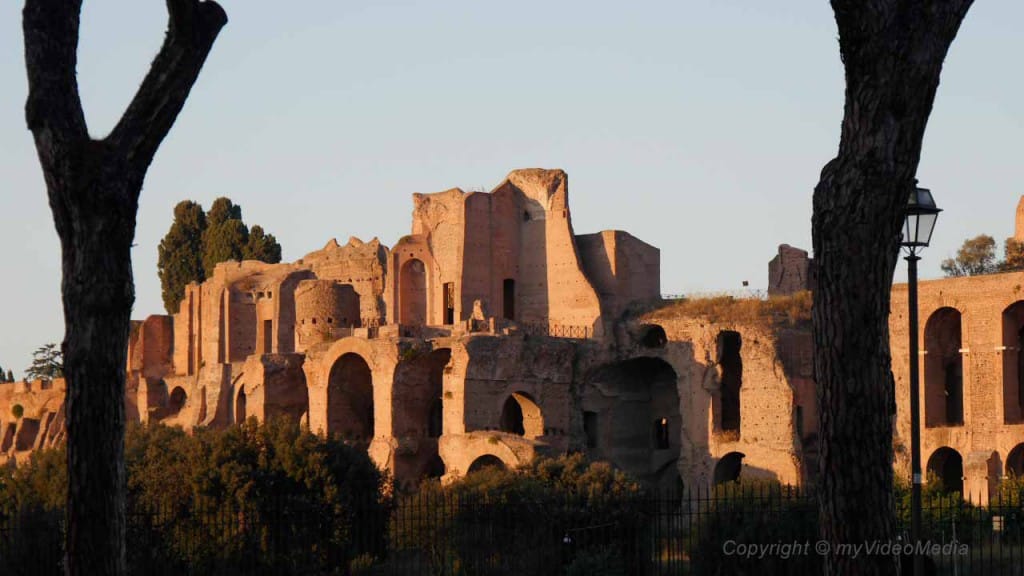
On the way back to the hotel we were able to take a look at the ruins of the Domus Augustana above the Circus Maximus at sunset.
Please read on > Rome walking tour
Pin it for later
Text, photos and video: Copyright © myVideoMedia