The next morning, the weather is absolutely beautiful, so we enjoy the view from our balcony at the Blue Marlin Hotel before setting out on our walk through the city center.

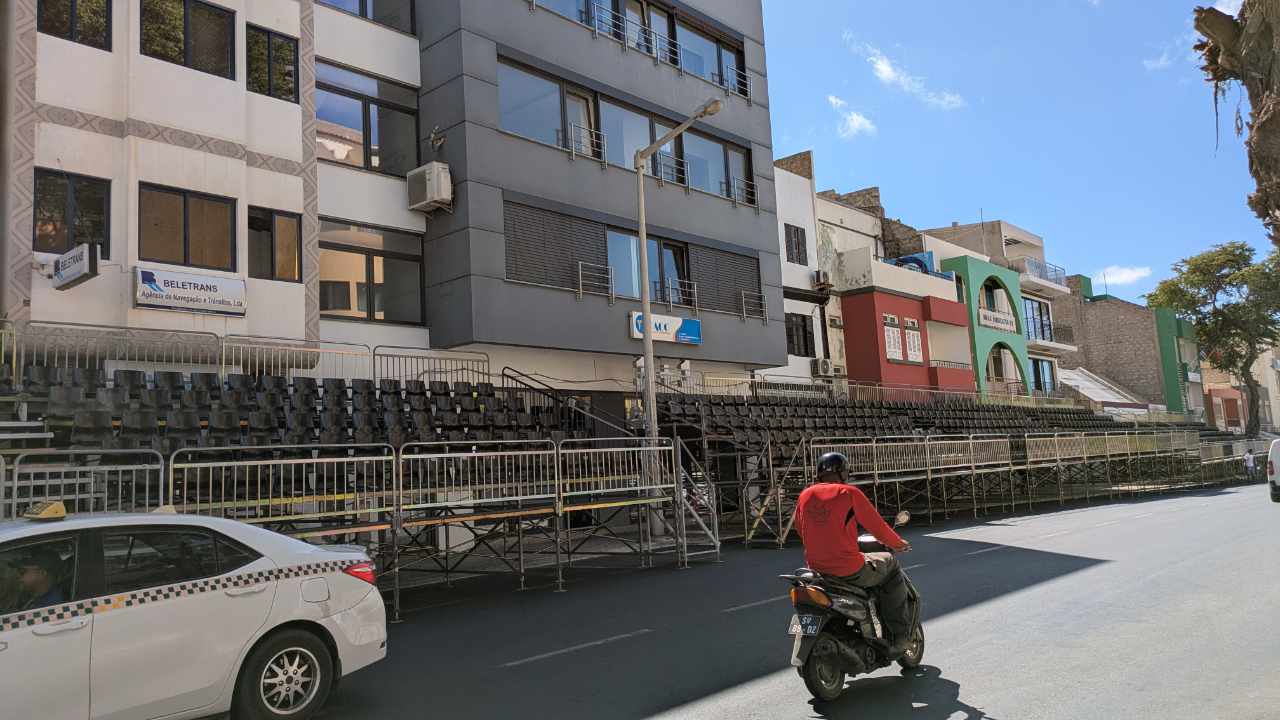
On Rua de Liberdade d’Africa, in front of the Palácio do Povo (the former governor’s palace), preparations for the carnival celebrations and parades are already in full swing.
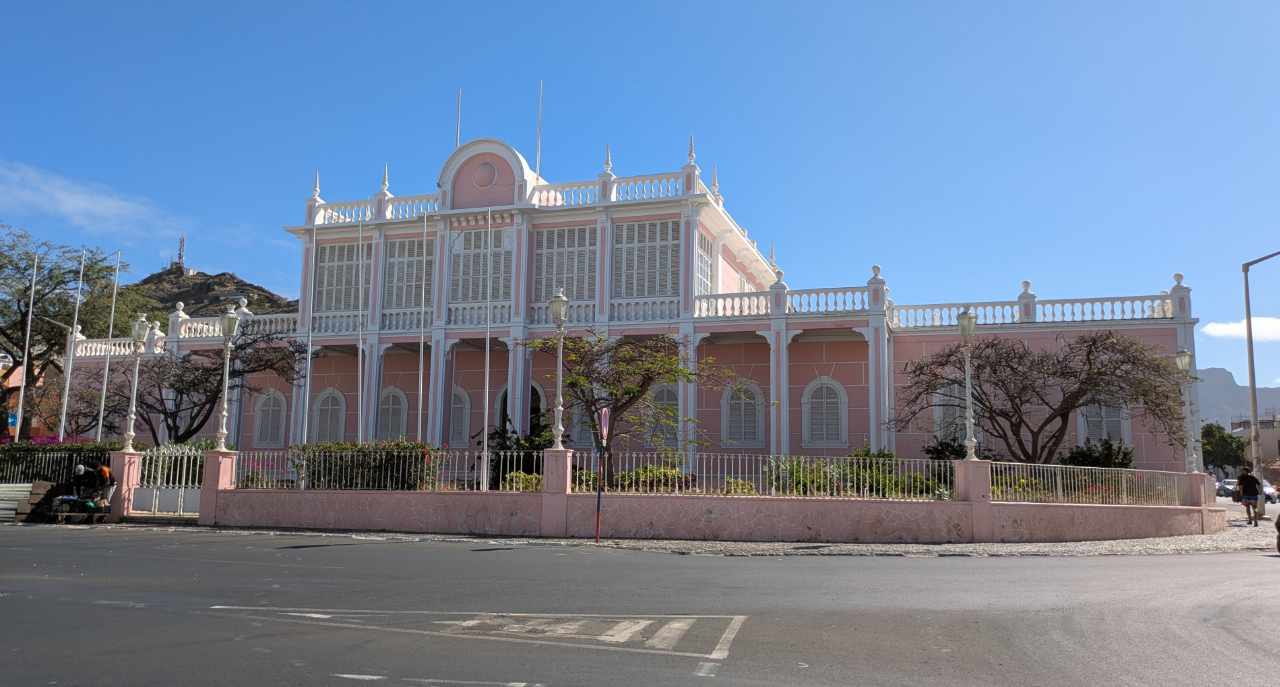
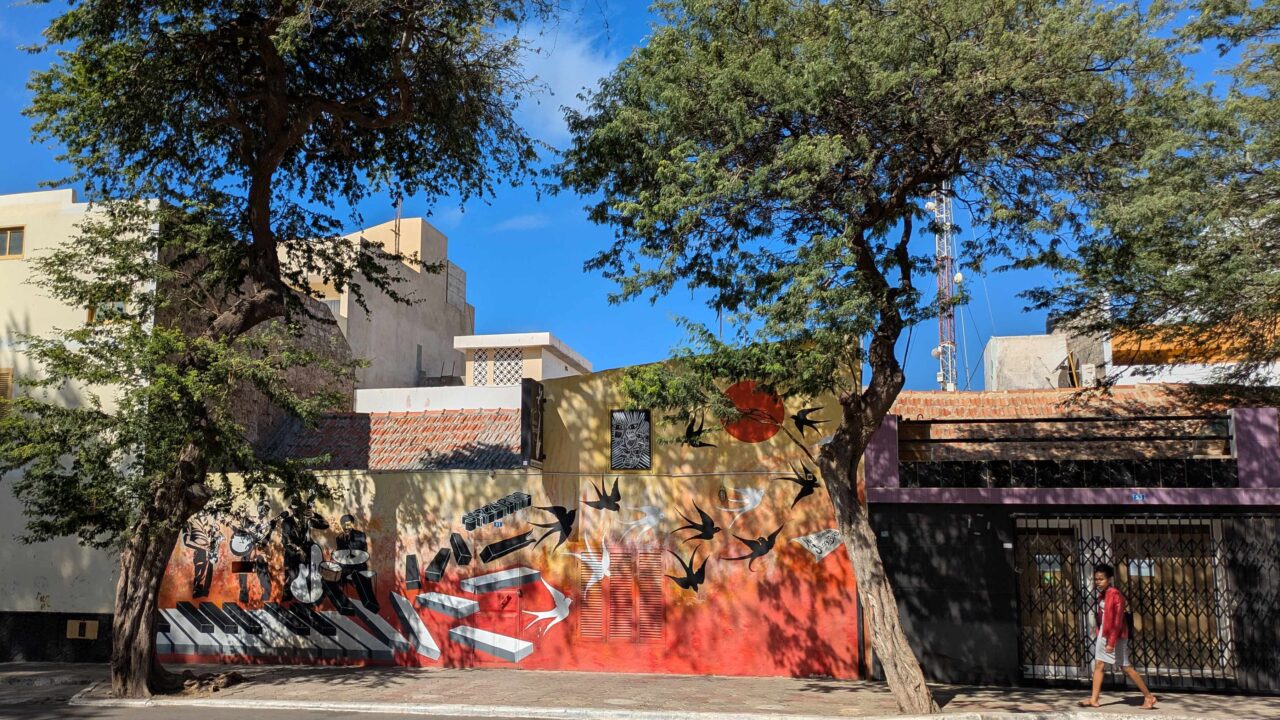
We turn onto Avenida Baltazar Lopes da Silva. We quickly realise that Mindelo is a colourful city, adorned with beautiful streetart referencing the local music scene and culture. It also seems to be the norm for restaurants and bars to offer music alongside food and drinks in the evenings, as at the Jazzy Bird Bar Pub.
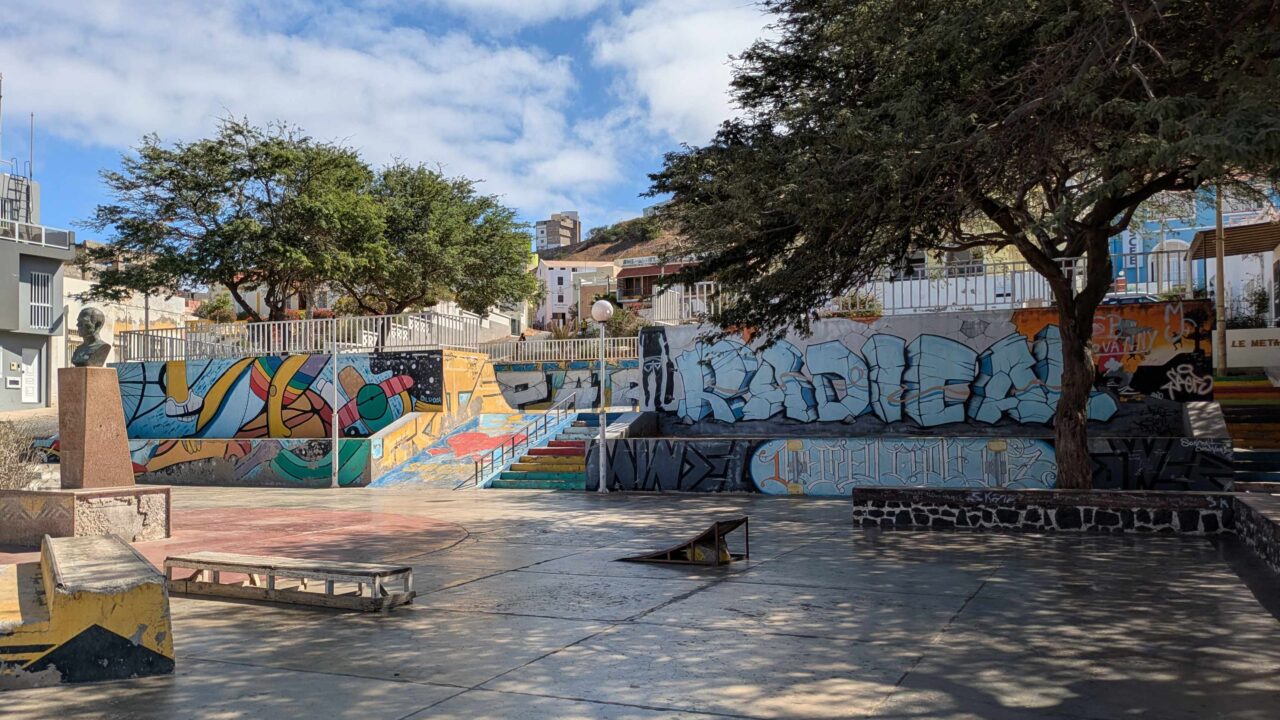
The excellent restaurant Le Metalo, which we’ll visit later, is located at the Parque de Skate.
We then head back via Rua Guiné Bissau and Avenida Baltazar Lopes da Silva. En route, we notice the many modern houses with colorful facades that give off a friendly vibe.
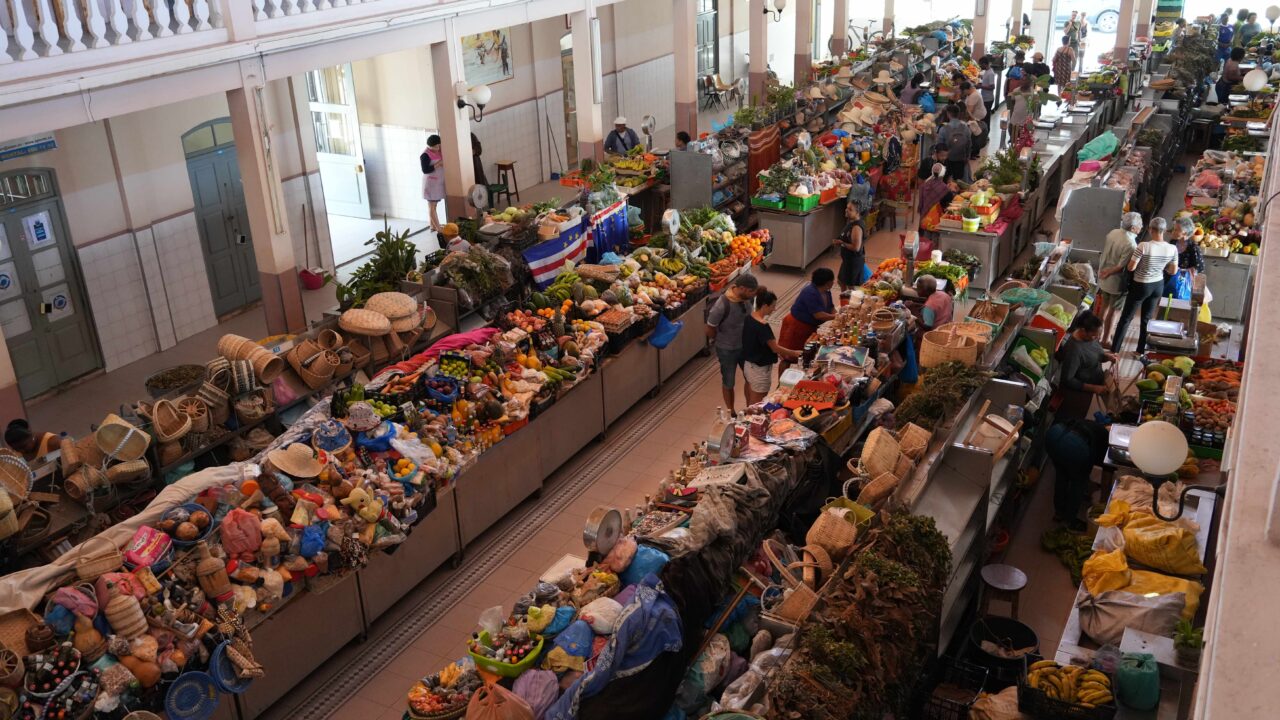
We go to the central fruit, vegetable, and meat market, the Mercado Municipal, on Rua de Liberdade de África.
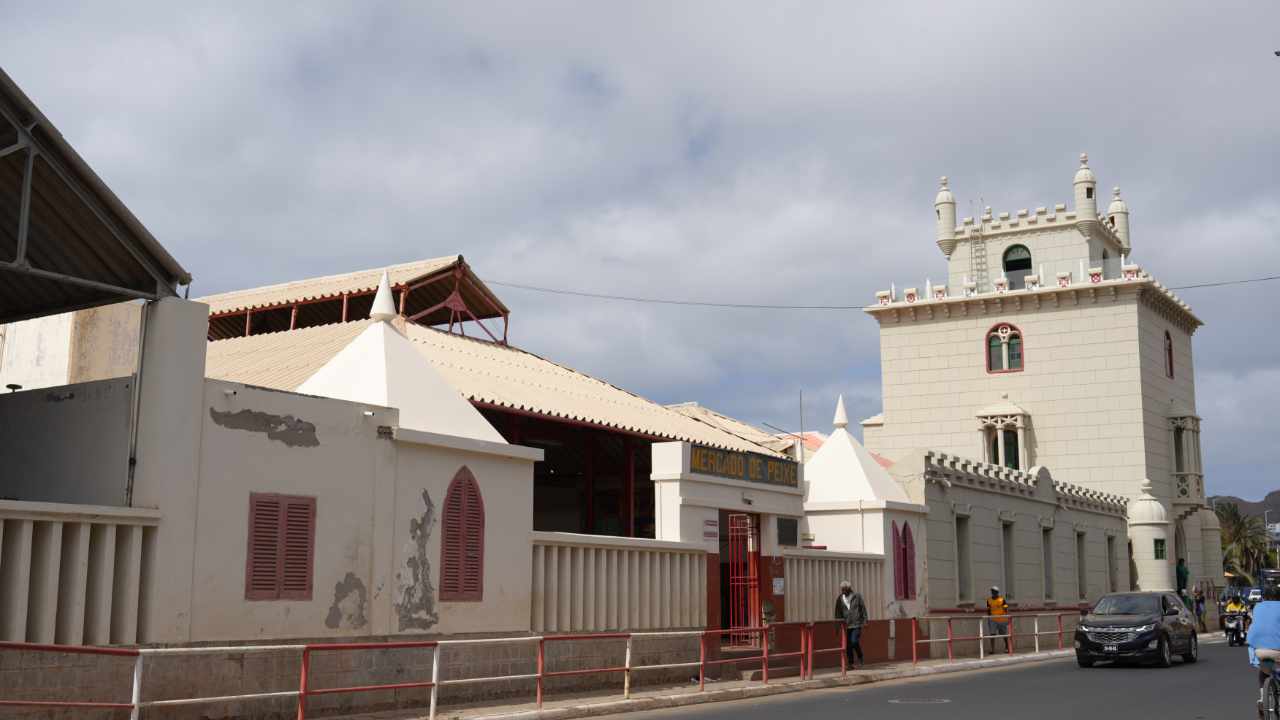
Next, we visit the replica of the Belém Tower, housing the Maritime Museum.
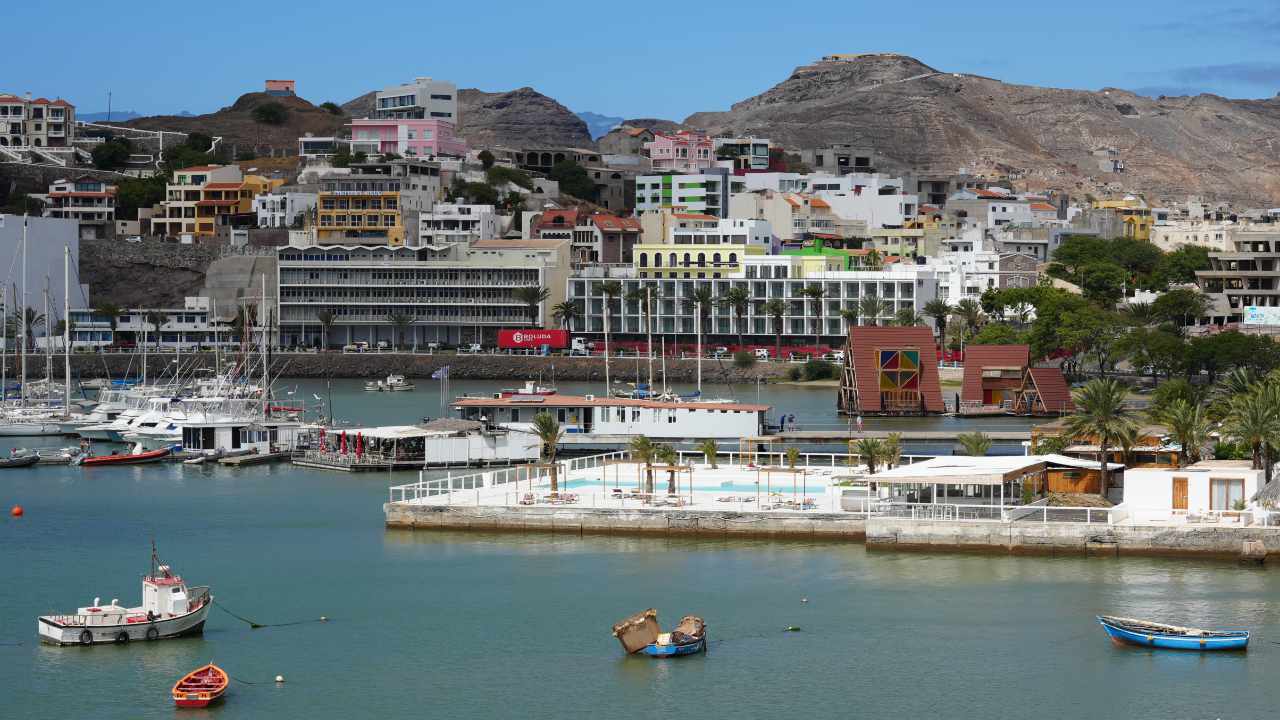
At the top of the Torre de Belém, we have a magnificent panoramic view of the city, the bay, and the surrounding mountains.
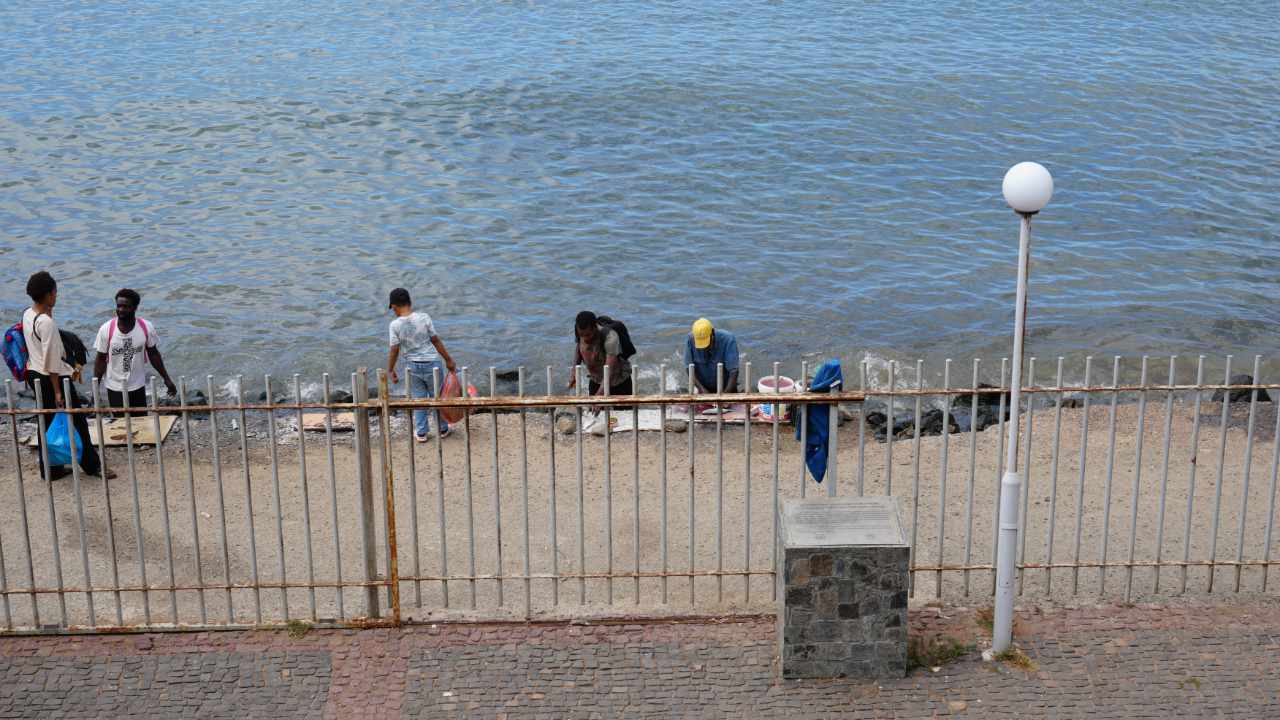
You can also watch local fishermen at work here. They catch fish on the beach itself using simple methods.
The Marina Mindelo Floating Bar also catches our eye. From there, you can enjoy a great view of the bustling marina, as well as a good meal with an excellent Caipirinha.
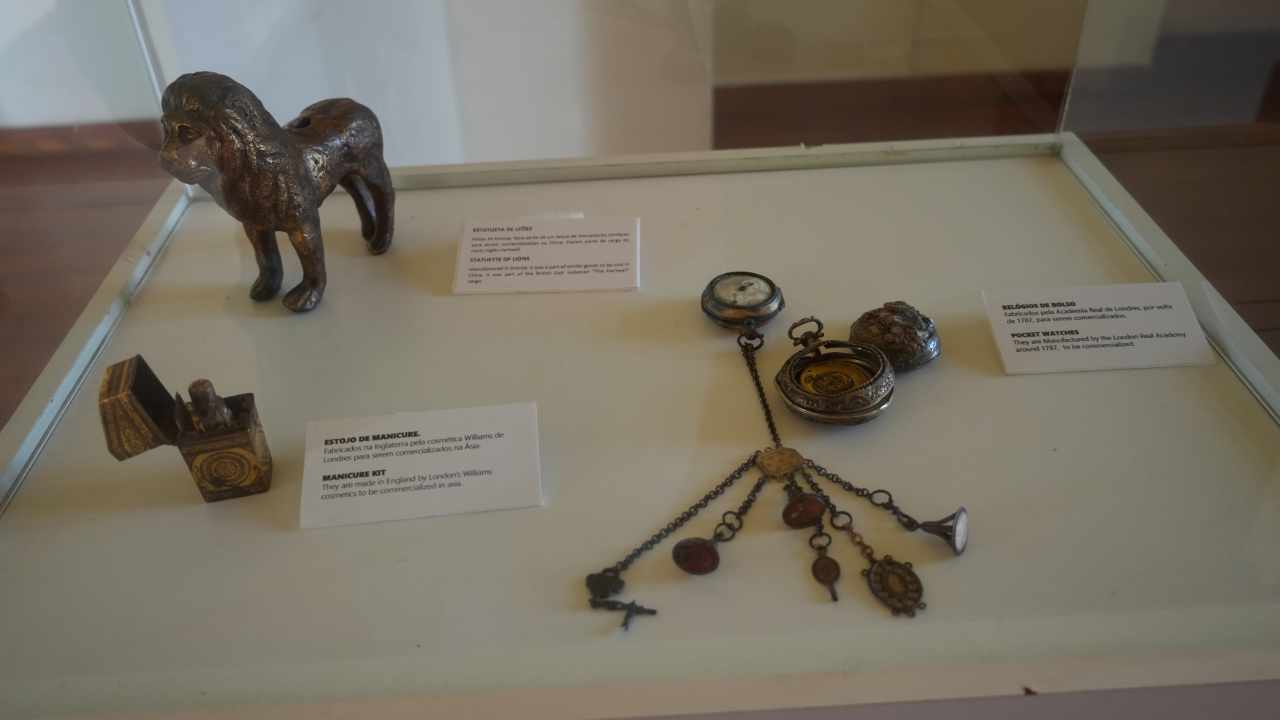
Some of the roofs in the area still bear visible signs of damage from recent storms. At the Maritime Museum, you can see the major shipping routes originating from Cape Verde, as well as many artefacts and historical photographs from the maritime past.
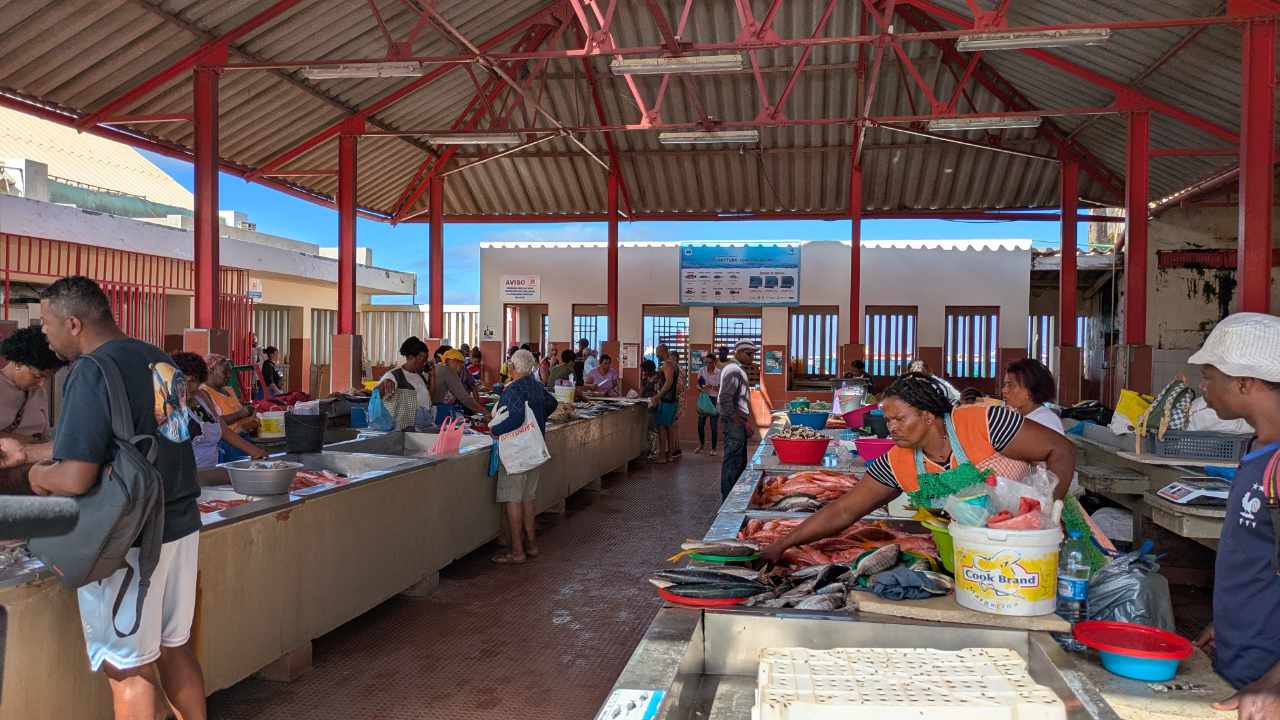
Right next to the Belém Tower is the central fish market, the Mercado de Peixe. This fish market is particularly busy in the morning.
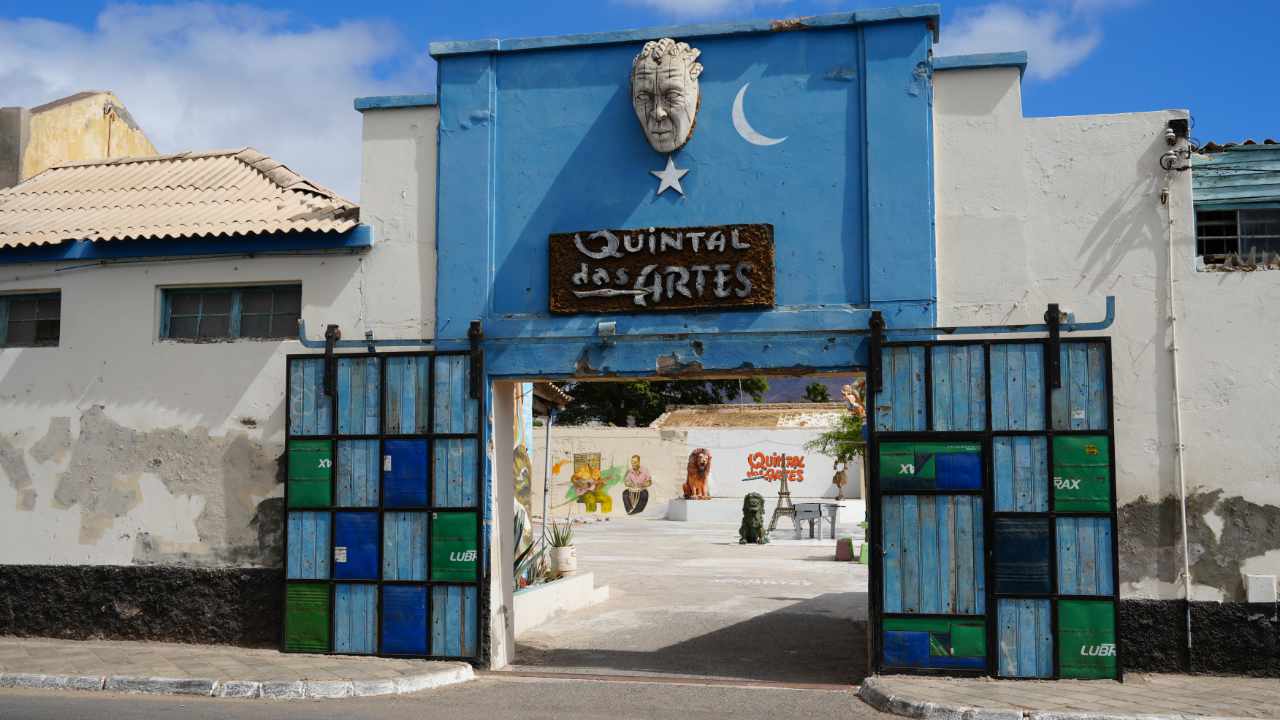
Across the street is the Quintal das Artes, an area housing workshops and retail spaces for local visual artists. Many of the artworks have a strong connection to the local population, who are predominantly of African ancestry.
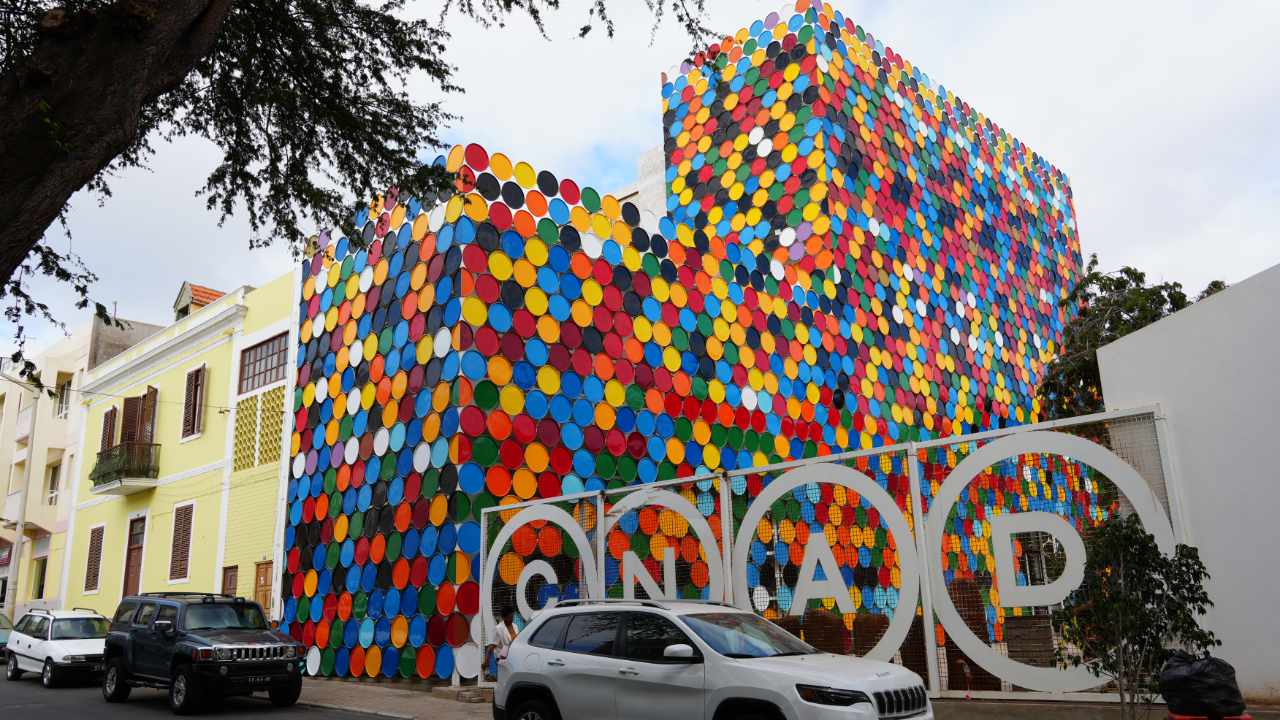
Finally, we visit the CNAD (National Centre for Artesanato and Design) on Rua Cristiano de Sena Barcelos. Its colorful facade, designed using barrel lids, captivates and evokes the maritime tradition and the diaspora. Interestingly, individual segments can be opened to allow more light into the interior. Glancing through the entrance door is enough to realise that a visit is well worth it.
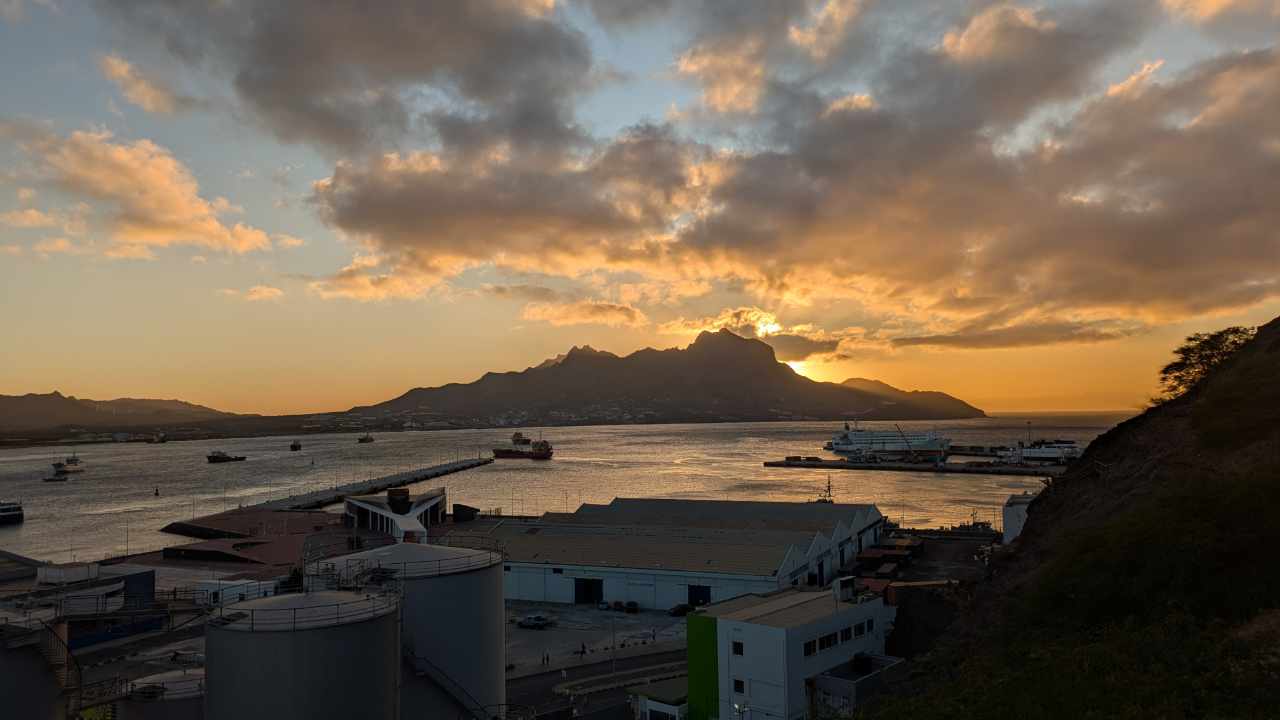
We enjoy the sunset once again from the balcony of our hotel room.
Text, photos and video: Copyright © myVideoMedia