We continue our guided city walk in Bukhara at the Ark Citadel and walk through Khodja Nurobobod Street to Poi Kalon.
Poi Kalon
The Poi Kalon is an ensemble of buildings, consisting of the Kalon Minaret with the Emir Alim Khan Madrasa right next to it. In front are the Kalon Mosque and the Mir-i-Arab Madrasa.
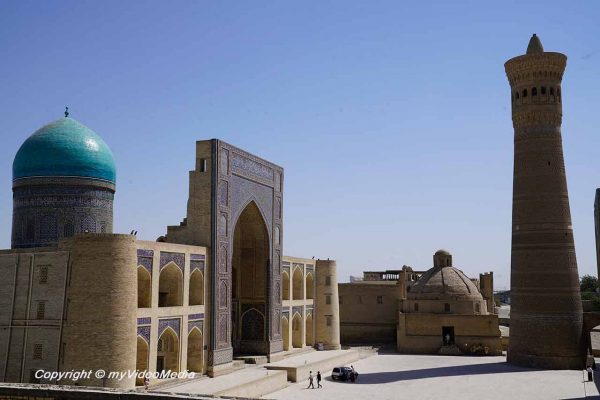
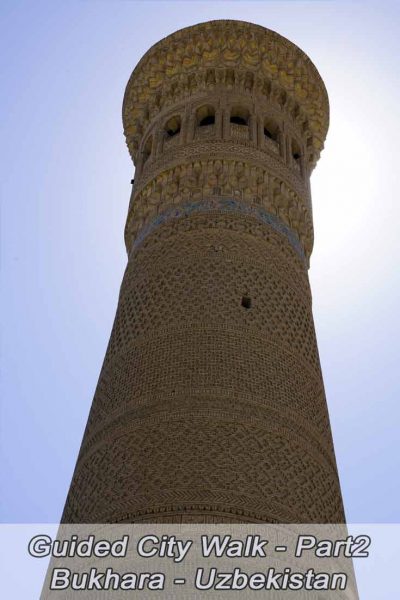
The Kalon Minaret is over 46 meters high and, like the Samanid Mausoleum, is among of the oldest buildings in the city. Built in 1227, the minaret was exempted from Genghis Khan’s destruction, as well as the Samanid Mausoleum. The Kalon Minaret is a landmark of the city.
The Kalon Mosque with its 288 domes is on the right hand. The Kara-Khanid Khanate ruler Arslan Khan built it in the 12th century. After various modifications and extensions, it was not completed until 1514. It is the second largest mosque in Central Asia, after the Bibi-Khanym Mosque in Sarmakand.
Please watch the 4K UHD video
You are currently viewing a placeholder content from YouTube. To access the actual content, click the button below. Please note that doing so will share data with third-party providers.
More InformationThe 80-meter-long courtyard is surrounded by 208 pillars that support the domes. At the opposite end is the Mihrab, the prayer niche, that dictates the direction of prayer.
Next to the minaret is the Emir Alim Khan Madrasa, built in the early 20th century by Alim Khan, the last Emir of the Emirate of Bukhara.
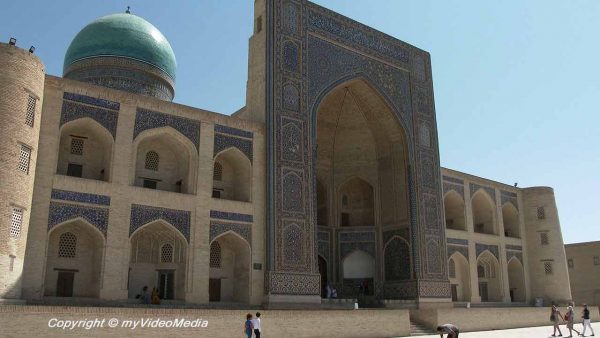
The Mir-i-Arab Madrassah is opposite the Kalon Mosque. Visitors are only allowed to enter the foyer. It was closed in 1920 but reopened in 1945 and was the only Madrasah in the Soviet era that was allowed to maintain teaching. This made it the Islamic center of the Soviet Union.
It was built by Sheikh Abdullah Yamani of Yemen, also called Mir-i-Arab. He was the spiritual mentor of the Shaybanids and had great influence on Ubaidullah Khan. Both were buried in the Madrasa, completed in 1536.
Then we take a short break at the Minor Cafe House.
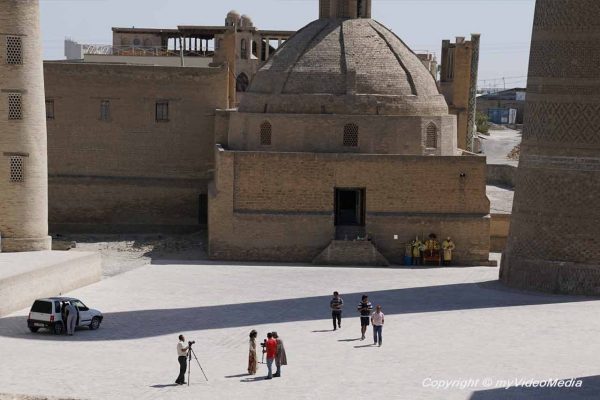
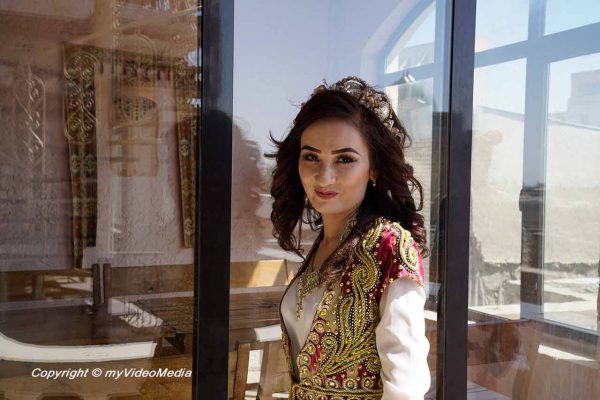
The Cafe has a higher level terrace that overlooks the square and the ensemble of buildings and a photo shooting.
Taqi Zargaron Market
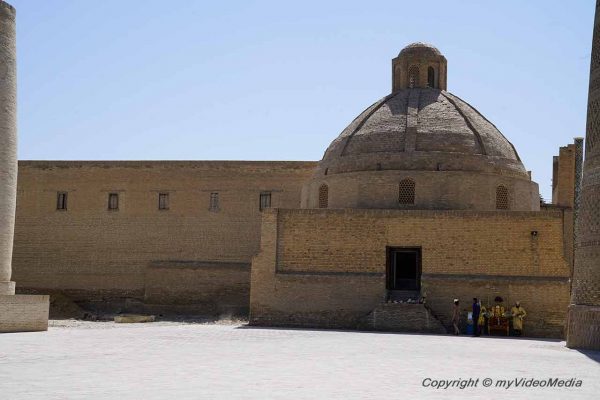
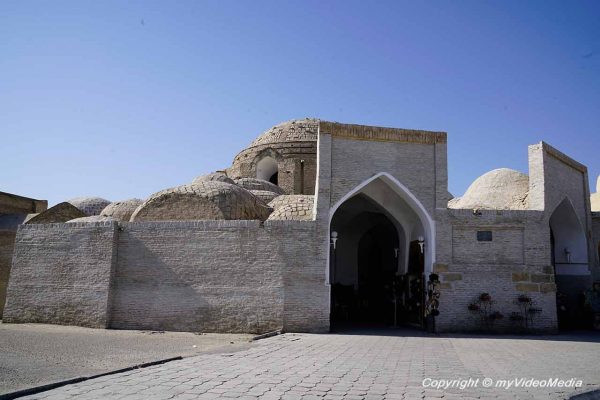
We walk on in eastern direction and arrive at the Taqi Zargaron market. Several domes cover the market. Dating back to the 16th century, it is the biggest old covered market in Buchara. The name means “bonnet of the jewelers”. I
n the past, one sold scented candles and soaps here, which, at that time were as expensive as jewelry. Today, the product range includes clothing, carpets, jewelry, pictures and crafted items.
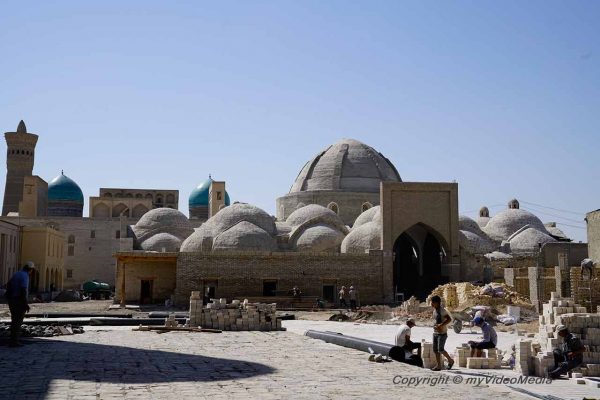
When we leave the market hall at the other end, we are standing in the middle of a construction site. One transforms the entire inner city area into a pedestrian zone and covers it with a new pavement.
Ulugbek Madrasa
At the northern end of the square lies the Ulugbek Madrasa. It was built in the early 15th century by the Timurid ruler Khan Ulugh Beg and completed in 1417.
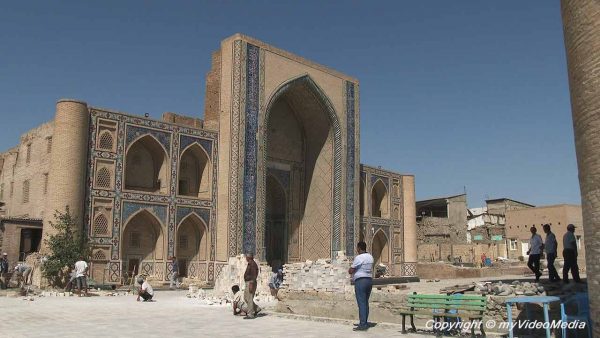
This makes it the oldest extant madrasa in Central Asia.
Abdulaziz Khan Madrasa
Directly opposite lies the Abdulaziz Khan Madrasa. It is the largest madrasah in Bukhara and was built by the Janjan Khan Abdul Aziz, in 1652.

The construction of Abdulaziz Khan Madrasa marks the progress of Central Asian architecture. Elaborate decorations such as reliefs, marble carvings, and brick mosaics, reflect the amazing skills of architects, builders and artists.
The housing conditions also changed. The flats had an entrance area, fireplace, and a second floor, equipped with wall niches as storage space.
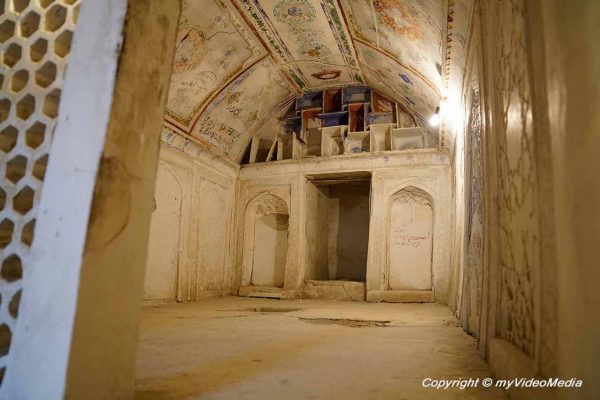
Behind the entrance of Abdulaziz-Khan-Madrasa, there is a classroom on one side and a winter mosque on the other. The courtyard once served as a summer mosque. In the intermediate areas, you find merchants everywhere.
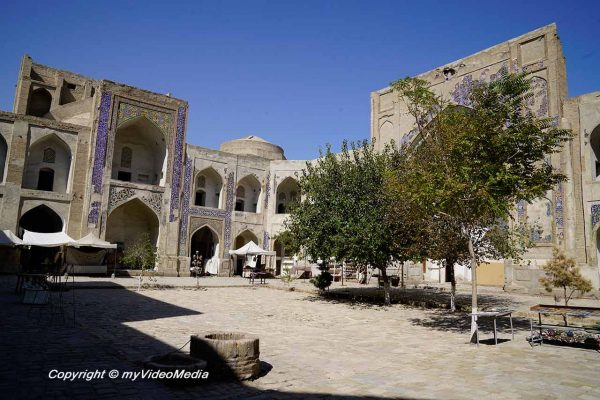
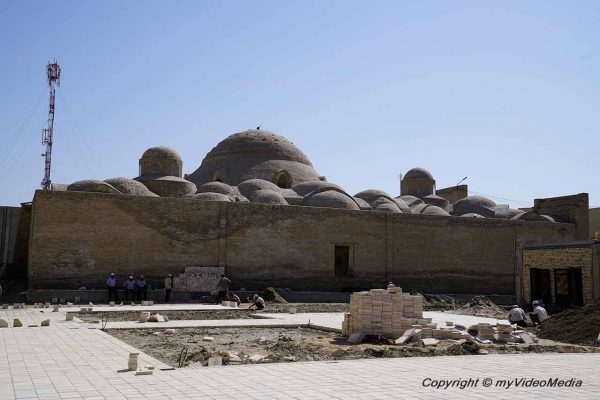
We leave the Madrasa and turn south. There we pass the market hall Trading dome of Tim Abdullah-khan.
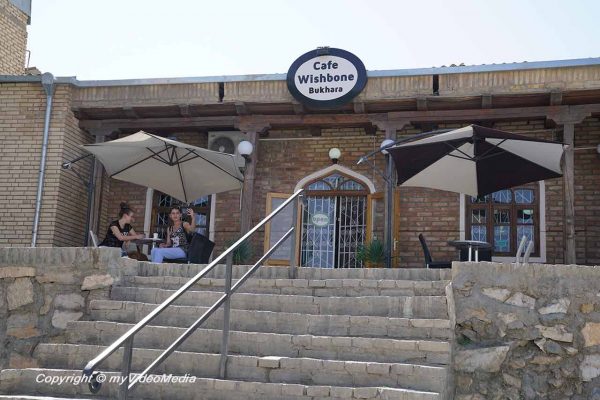
Café Wishbone Bukhara
In the Café Wishbone Bukhara, we make a break.
A German lady owns the Café and provides the guests with German cakes and small dishes.
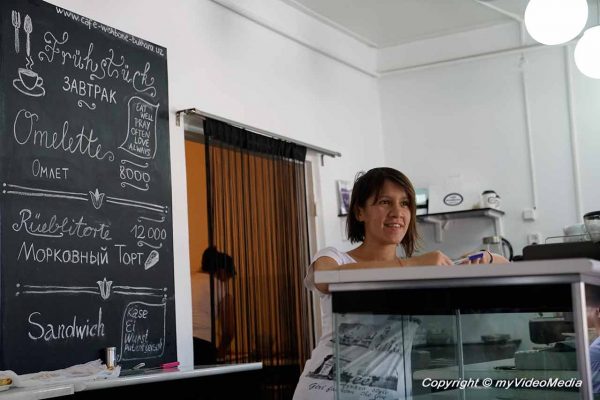
Unfortunately, she was not present during our visit.

Taqi-Telpak Furushon Bazaar
Our way leads us to the next bazaar, the Taqi-Telpak Furushon Bazaar, built directly over the intersection of several roads. In the past, books, hats, and hats were offered here. Today the offer hardly differs from that of the other bazaars.
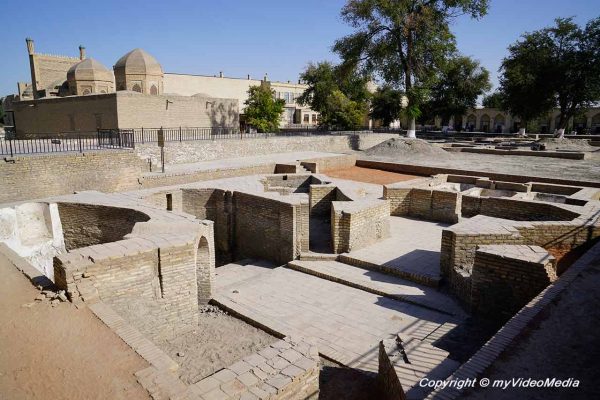
We leave the bazaar at the other end and stand in front of archaeological excavations. It used to be a caravansary and a public bath. Before the caravans could enter the city, the merchants had to take a bath here and were able to take care of their animals.
Right next to it is the Mag`oki Attori Mosque. It is one of the oldest preserved mosques in Central Asia and was able to withstand the Mongol storm of Genghis Khan.
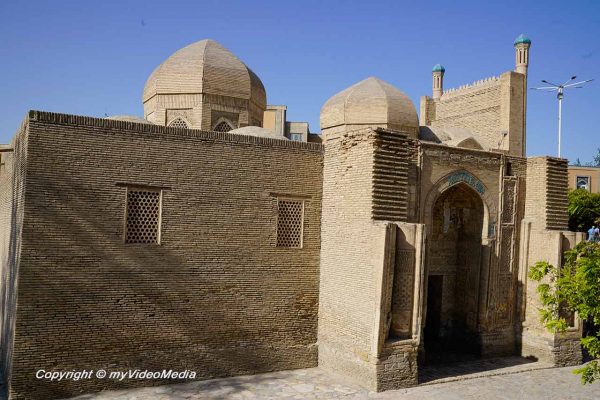
The floor is about 4.50 m below the surrounding soil level, thus the name addition Mag`oki (meaning: in the pit). In the course of time, one extended, rebuilt and renovated the mosque; Last in the 1930s. A part of the original substance is still to be seen in a corner of the interior. It serves as a carpet museum today.
We reach the building ensemble Labi Hovuz in the proximity of our accommodation. We discover the Nodir-Devonbegi Chanaqa which lies on the west shore of the central pond.

It served as a living and gathering place for the dervishes and as a hostel for the pilgrims.
Puppet Museum
The last item on our agenda for this day is the famous Puppet Museum. Precious puppets are exhibited and manufactured here. International awards testify to this.
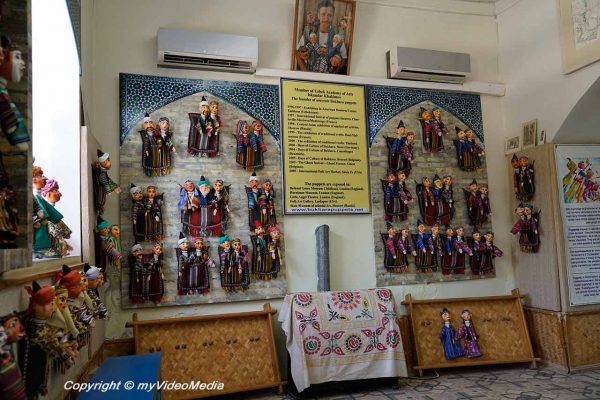
Besides Ali Baba and the Forty Thieves, you see puppets from the most different years of the company’s history. The owner demonstrates the operation and handling. He has already traveled to many countries with his puppets.
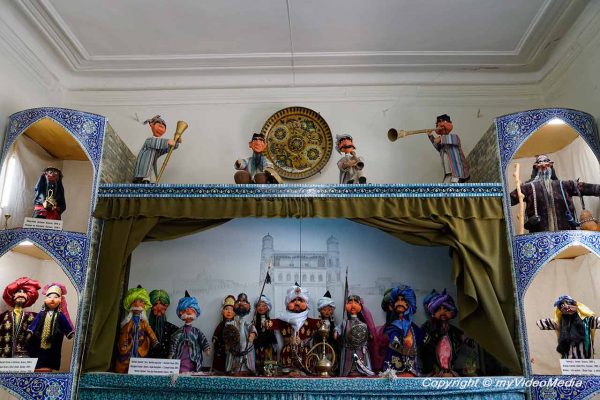
Yet, Ursula must visit the museum alone, since I must go back to our room. A gastrointestinal infection forces me to do so. Fortunately, we still have Uzara drops, and the next morning, I felt better again.
Please read on > National Dance, Music and Fashion Show
Pin it for later
Text, photos and video: Copyright © myVideoMedia