From the Seven Bulls, we continue our journey directly to Karakol. Here, we meet Amann from Destination Karakol in the Visitor Center.
Please watch the 4K UHD video here
You are currently viewing a placeholder content from YouTube. To access the actual content, click the button below. Please note that doing so will share data with third-party providers.
More InformationHe will introduce us to the food of different nationalities and the best local food spots in town.
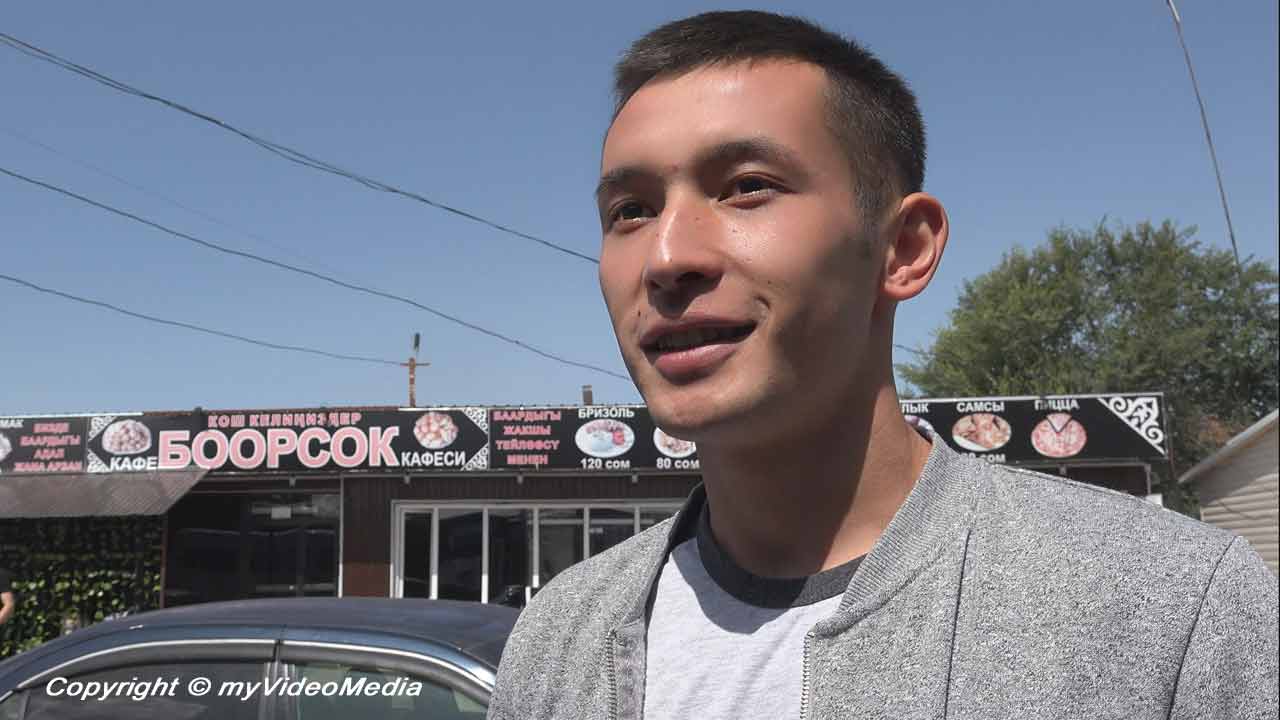
First stop is at the bazaar in Karakol, where you find people of the Dungan, Kyrgyz and Uyghur nationality. The Dungans came from China in the 18th and 19th centuries, originally they were Hui Chinese.

We go to a Dungan family to try Ashlyan-Fu, their national dish. It is made from thick rice noodles and thinner wheat noodles, mixed with a vinegar chili sauce. Sometimes it is spicy, so it is good to eat it together with piroshky, the fried bread stuffed with potatoes.

Our second stop is Cafe Zarina, run by Uyghur business. The Uyghurs were originally from China and they are one of the oldest nationality in this area, even older than the Kyrgyz. The Uighurs are the third largest population after Kyrgyz and Russians.
We enjoy Laghman, the national food of the Uyghur people. Laghman is made of long noodles, that means long life. The noodles come with a special sauce, made of vegetables Sometimes it is spicy. You find different varieties of Laghman, where only the noodles are the same, sometimes boiled, sometimes fried. But the sauce and the vegetables can vary. We try the fried version, the Boso Laghman.

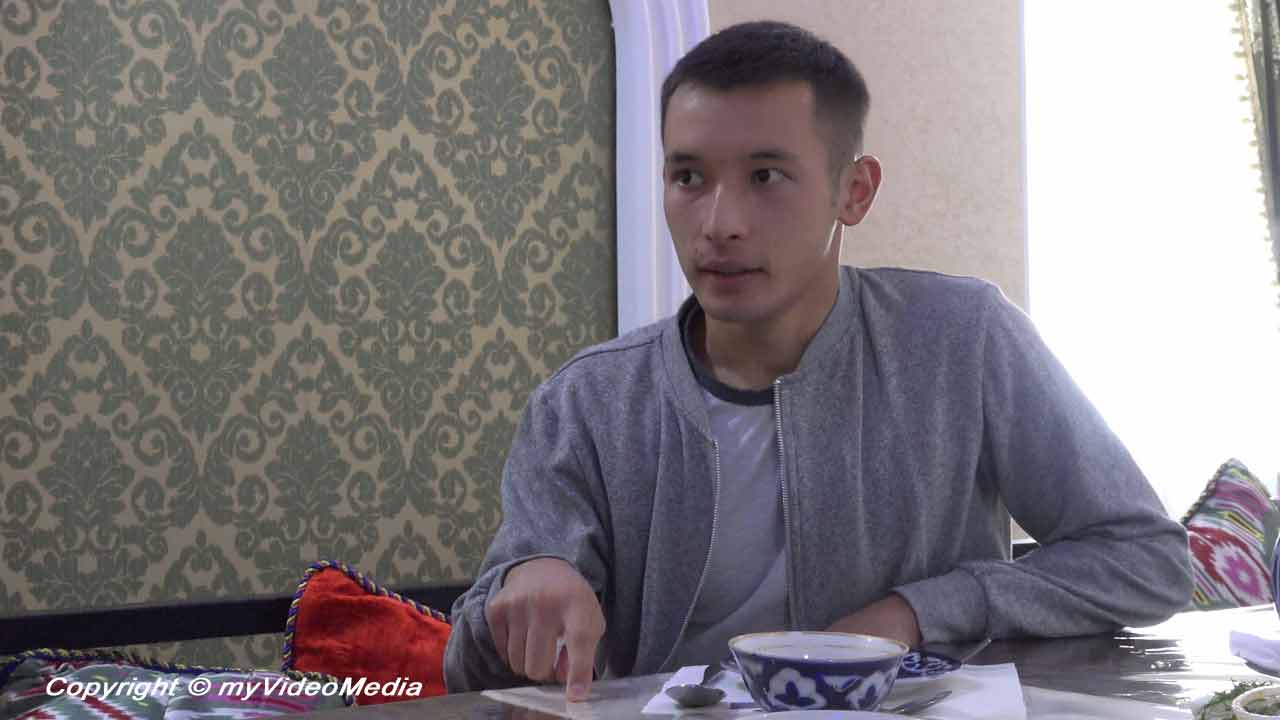
The third stop is Kafe Kaynar. Here we enjoy Tatar Azuu. In the Tatar language it means food, in the Persian language, it means slices of meat. In this version, it is made of french fries with marinated, fried slices of meat, salted cucumbers, and onions. Originally it was made without potatoes because the potatoes came to this region 200 years ago. It is a Tatar national dish. Aman is Tatar and Tatar Azuu is his favorite dish.

During the meal, he tells us more about the history of the Tartars. The Tatars are actually Bulgars whose roots go back to Attila’s Huns. When Attila died, his empire broke down into three parts. One part came to Central Asia, one to central Russian territory. The third part remained in Eastern Europe, today’s Hungary, Bulgaria and the Balkan Peninsula.
During the reign of Genghis Khan, one of the Chinese tribes near the Chinese wall was named Tatar. But Genghis Khan killed the whole tribe. A lot of tribes joined the Mongolian Empire. To divide real Mongolian tribes from the others, Genghis Khan ordered to call them Tatars.
In the days of Marco Polo, the name came to Europe via the Silk Road. Later, the meaning changed to the Greek word Tatar, which means as people from hell. And people believed this because they were afraid of the Mongol invaders.
In France, King Louis IX was a very religious person and he thought they would not survive the invasion. He recommended his people, to pray to god for help. Later he says a miracle happened because at that time the Mongolian King Batu Khan passed away and the whole army had to come back to central Asia.
That was the reason for the people to believe even stronger that these people were from hell and god helped them to survive. Sometimes people take this as an offense when one calls them Tatars. They say they are Bulgars and Tatar is just a name.
Originally the definition of the word Tatar is, to pull the string of a bow. Probably the people of that tribe were good archers. They were one of the first Nationality who moved to this region during the Russian empire. Tatars build the first school, the first mosque, and the first library in this region. They had a major influence on the development of the town. Today, 3-4 % of the population in Karakol is Tatar and speak Tatar language, that is similar to the Turkish language. Originally, they had blond hair and blue eyes, like Europeans.
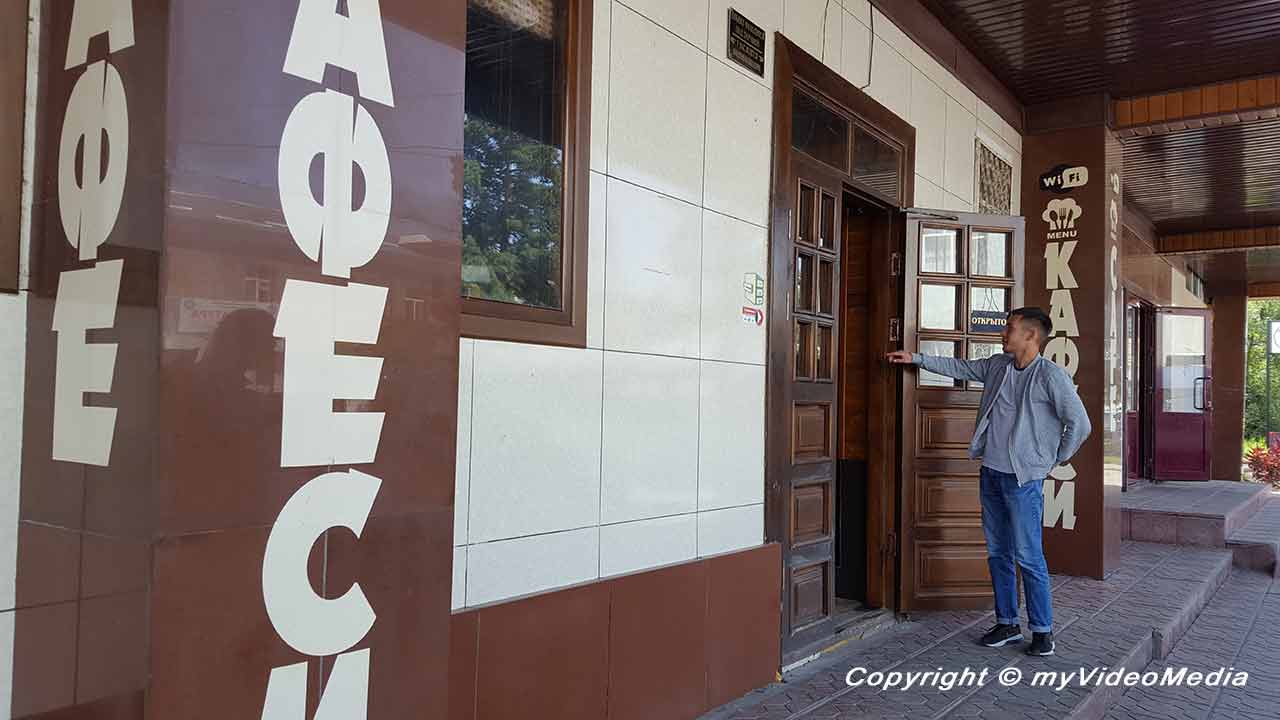
Next stop is the Kochevnik Cafe. Here, we try a Kyrgyz national food, called Oromo, which means wrapped. Basically, it is dough with pieces of meat, fat, and carrots inside. Sometimes, one makes it with different vegetables or with potatoes. One serves us the Oromo in beautiful shape of a rose together with Kaymak, a sour cream. In Aman’s family, it is a special dish for holidays.

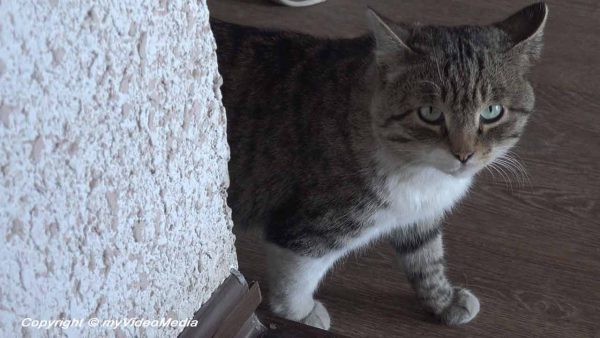
Our last stop is Fat Cat Karakol, the first socially responsible business in Karakol. Here you can enjoy breakfast, lunch, and dinner together with drinks and coffee.
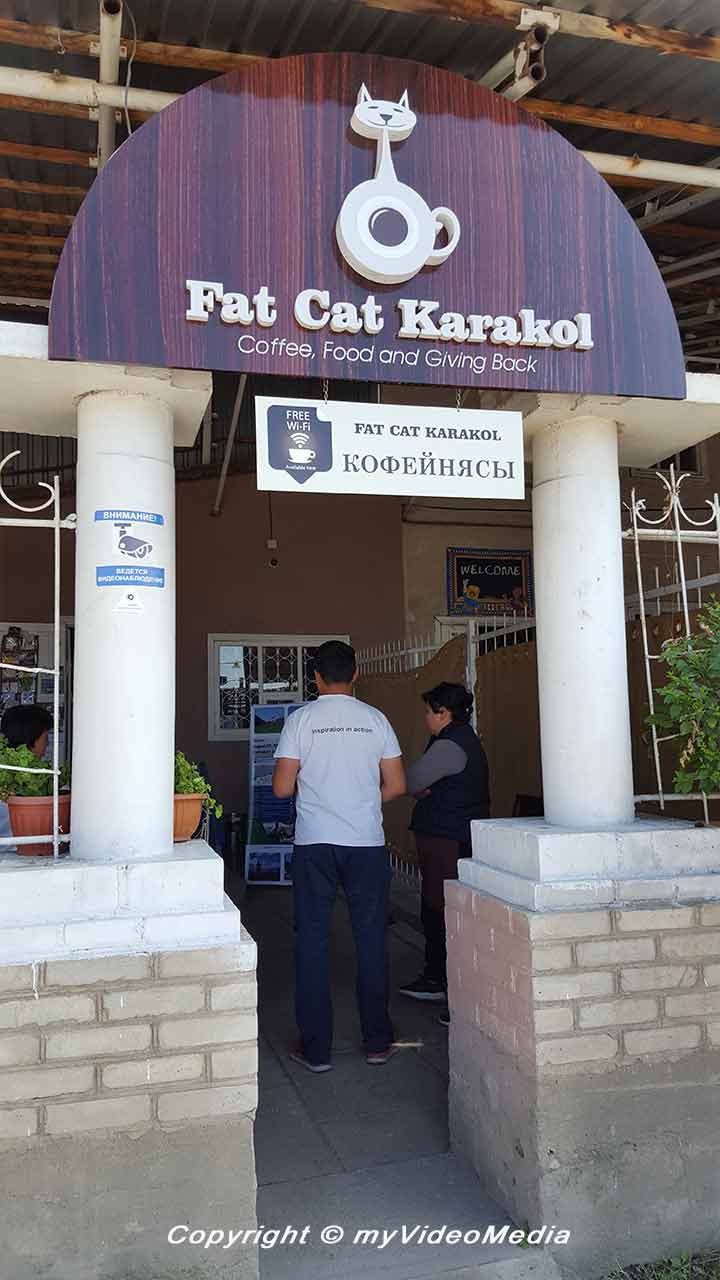
Zhamilia Sydygalieva, the owner gives us some insights into her work. Apart from business, she does a lot of charity work, like feeding the homeless, helping families with low income through food drives and fundraising for different events.
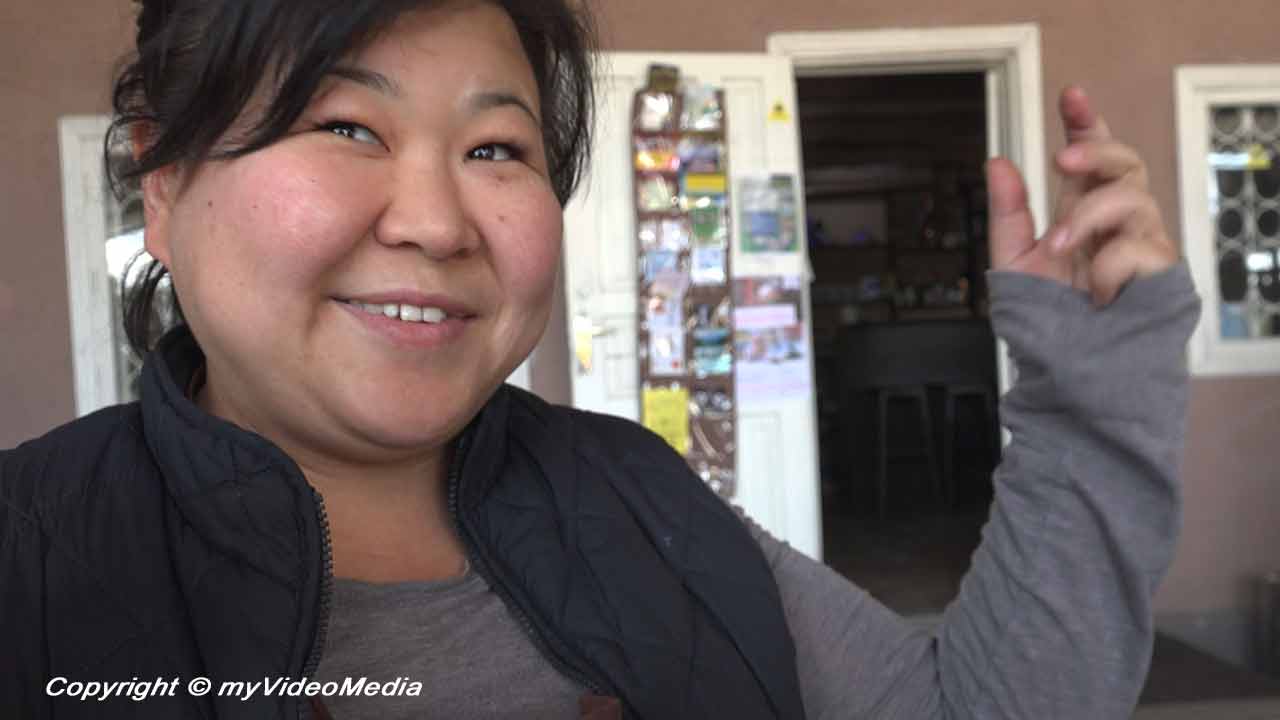
All year round they do clothes-drive; some people bring clothes in good condition and they redistribute them to the needy.
Zhamilia explains: “The idea of Fat Cat Karakol is not to do it all by ourselves, but also to encourage the locals to change their mindset and encourage them to get more socially involved”.
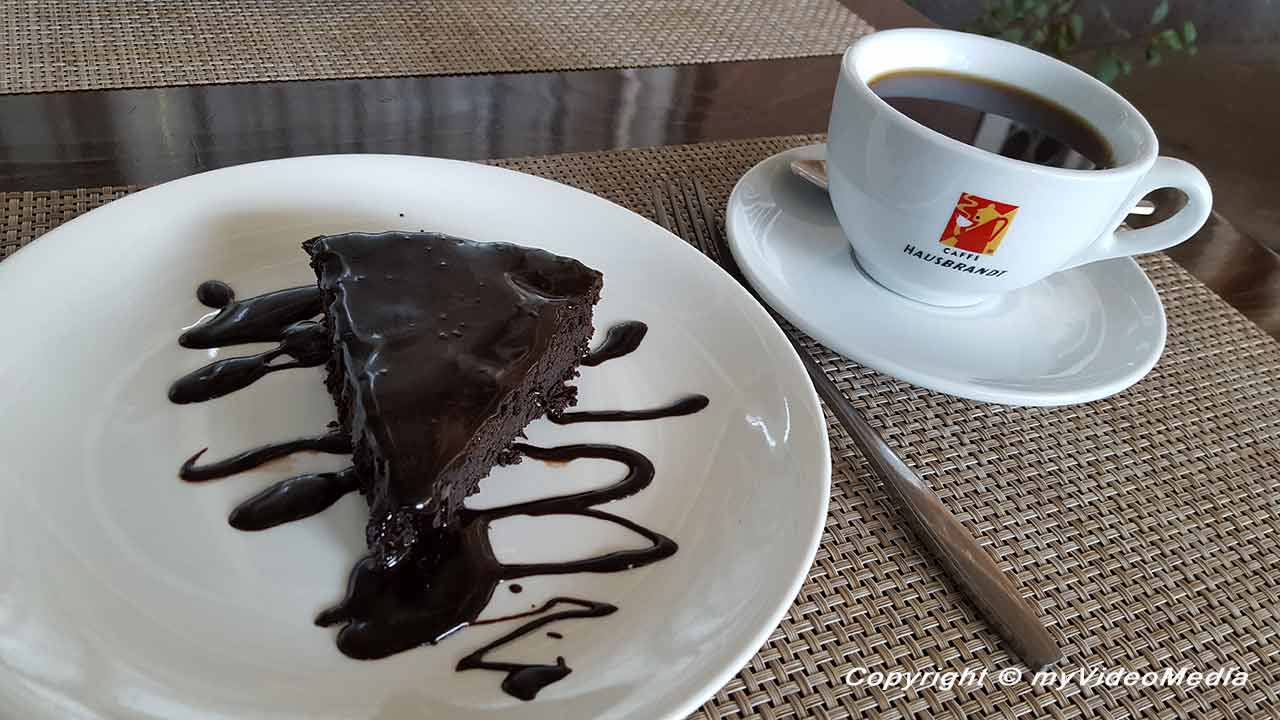
But after all this wonderful food, we only wanted a coffee. In the end, we couldn’t resist the wonderful chocolate cake.
We would like to take this opportunity to thank Aman for this interesting and delicious tour, which we can highly recommend.
The Karakol food tour is a perfect way to learn more about the culture and the nationalities. And you get to know the best food spots in town. But be hungry, because there are a lot of tasty dishes to try.
Please read on > Bird’s Eye View of Karakol
You like to know more about the Food in Karakol, or make a food tour?
Check Food and Drink in Karakol to get more information about food, tours, restaurants and accomodations.
Pin it for later

Disclosure: Our trip was organized in cooperation with Discover Kyrgyzstan, and made possible by the support of the United States Agency for International Development (USAID). All opinions are our own.
Text, photos and video: Copyright © myVideoMedia