The Killing Fields, Choeung Ek, are approx 14 km south of S-21 on the outskirts of Phnom Penh. It is an area of approximately 200m x 200m in size.
It is estimated that about 17,000 people were killed here, most from the torture prison S-21. At first, one tries to bury the executed people near S-21, but the space in the city was very limited, so one sought another solution.
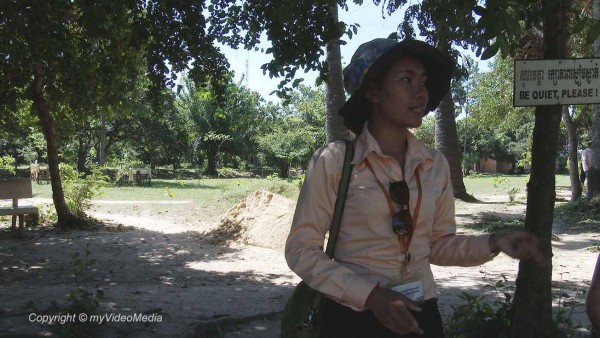
Choeung Ek was a former orchard and Chinese cemetery that lay outside the inhabited area. This is where the prisoners from S-21 were transported by truck at night.
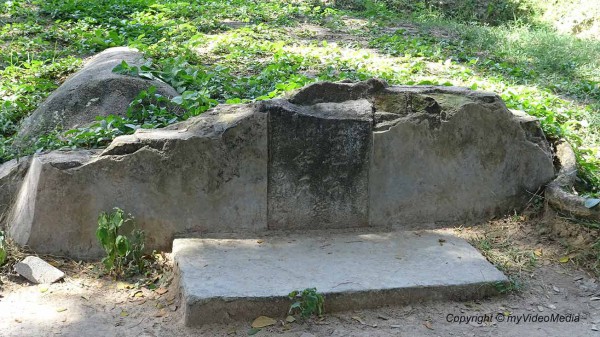
The execution started the next morning. The prisoners were placed in a row, the hands tied behind their backs, and killed either with iron bars, or their throat was severed with the sharp stalks of palm leaves. Then they were thrown into the pits and covered with chemicals. The chemicals were used to prevent the smell penetrating to the outside and to assure that possible survivors should finally die.
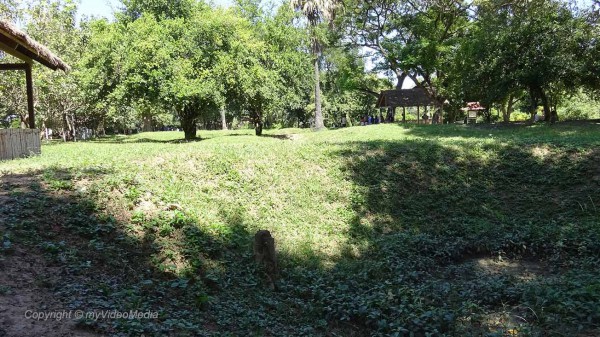
One mass grave contained only corpses without heads. These were to soldiers who were accused of having failed in the fight against Vietnam. Their body was Cambodian but her head Vietnamese. The heads were destroyed elsewhere.

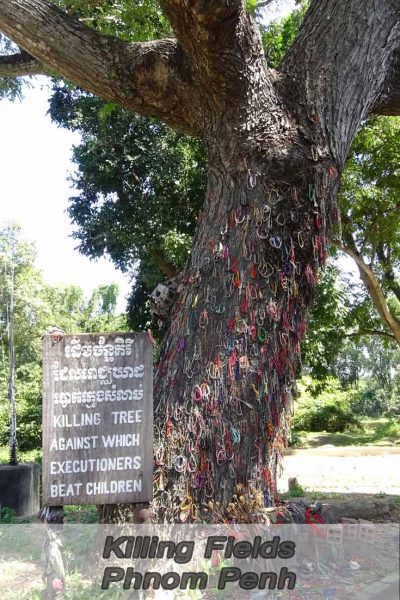
Another mass grave contained only the bodies of women and babies. In front of the eyes of their mothers, the babies were beaten with the head against a tree until the skull shattered. Then the mothers were executed. The tree where the babies died is is adorned with colored prayer ribbons today.
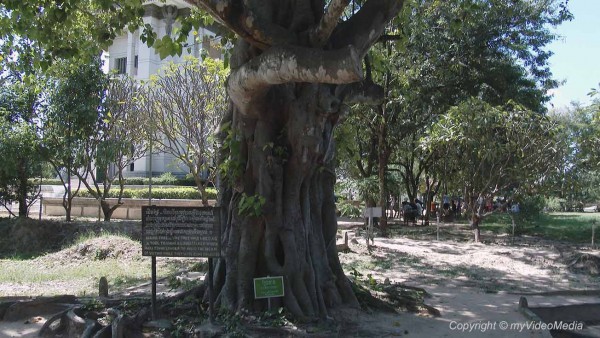
One tree is described as a “Magic Tree”. Loudspeakers which played loud music were mounted here, thus the surrounding smallholders on the paddy-fields could not hear the screams of the prisoner and the wail of the wounded.
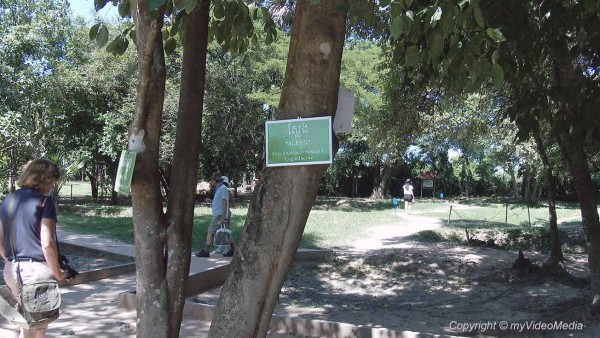
Some prisoners have tried to eat the highly toxic seeds of a Loganiaceae tree, which contain strychnine, to commit suicide.
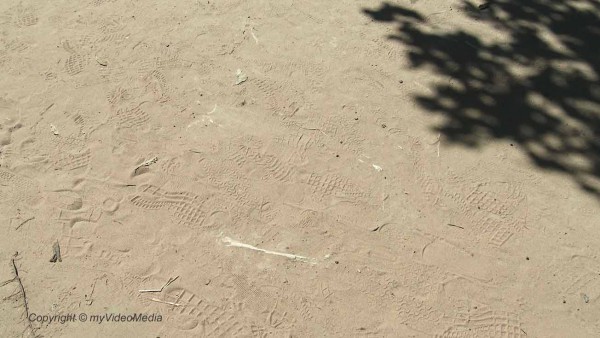
Human remains and clothes residue that are washed out by the rain are regularly collected from the paths.
At the entrance is an information center with a small movie theater, where you can see an introductory video that explains the correlations.
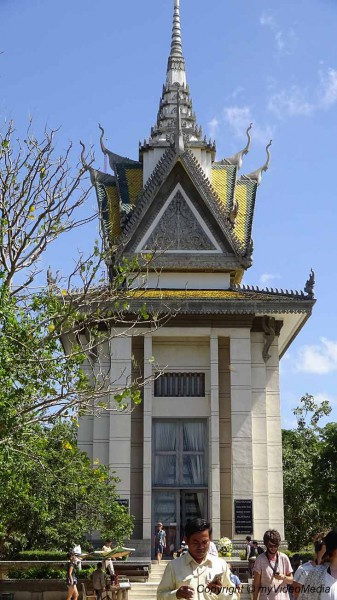
A stupa in Khmer style was built in the center of the killing fields. It contains about 8000 skulls and some of the instruments of torture. It is Cambodia’s most important memorial.
The children of the Khmer Rouge
Since our visit to S-21 and the Killing Fields, we ask ourselves how the population in Cambodia thinks about the events today. From what we could hear from conversations, the subject continues to be hushed up. The young people are thinking of their future and do not want to deal with the past. The elderly, who actively witnessed that time, are largely traumatized and just try to repress. This is supported by some of the rulers in Cambodia, since many leading cadres of the Khmer Rouge took over high-level government offices.
Somehow we were reminded of Germany. Also many former Nazis returned later to office and dignity (see Kurt Georg Kiesinger). Crimes were hushed up, denied or repressed. The old power structure could establish itself in many areas again.
However, there is much more in common. The National Socialism was based on the fascism, which was based on the principle of leadership. In the early days, the Khmer Rouge hid their ruling cadre behind the name Angka, but Pol Pot had a claim to absolute power, which manifested itself in the name of “Brother No.1”. The Khmer Rouge called themselves communist, but this was not the essential. Both Pol Pot and Hitler pursued a racist ideology. Hitler appointed the Aryans to the chosen people. (This does not mean the real Aryans, peaceful people living in Iran ). Pol Pot wanted the pure Khmer people. In both systems it was necessary to unconditionally eradicate everything foreign.
This was also recognized by the Indian doctor and psychiatrist Jegannathan Bhoomi Kumar, who began his work in Cambodia in 1995. After the fall of the Khmer Rouge in Cambodia you hardly found disabled. All had been killed. The enemies of the Nazis were primarily Jews, but also all the people of the conquered and occupied territories as long as they are not required as work slaves and soldiers. Angka annihilated all who did not meet their demands or who were ideologically dangerous, such as intellectuals. They mercilessly pursued all ethnic minorities, like indigenous highlanders, Cham Muslims, Chinese and Vietnamese minorities.
Please watch the 4K UHD video of our visit!!!
You are currently viewing a placeholder content from YouTube. To access the actual content, click the button below. Please note that doing so will share data with third-party providers.
The obstructive attitude of the Cambodian government to process the responsibility for the crimes of the Khmer Rouge causes that the former perpetrators feel encouraged in their attitude and to continue as before. The consequence is crime and corruption.
In the streets of Cambodia, we had also noticed that there is something like a lacking empathy. Children are often left to themselves. That may be because Cambodia is a very poor country and the parents constantly have to see how they can make money. However, it may also be that parents themselves had been child soldiers and thus did not have any childhood. Or they are still busy with their own fate.
In Germany the traumatic events lie almost 70 years back, but history shows that the unsatisfactory processing and the insufficient justice lead to a new right-wing radicalism as can be seen in the “refugee crisis”. Why is this actually called refugee crisis and not refugee chance or policy crisis?
Next >>> Fireworks Water Festival – Phnom Penh
Pin it for later
Text, photos and video: Copyright © myVideoMedia
Oh my, what a powerfully thought provoking post. Thank you for sharing.
Thank you very much for your comment. What happened there was really a shame for the mankind.