Sintra is approx. 25 km northwest of Lisbon and part of the Cultural Landscape of Sintra which became UNESCO world cultural heritage in 1995.
In the municipality of São Martinho you find the Royal Palace, Palácio Nacional de Sintra, essentially built by King Manuel I. It is known by the distinctive shape of the two chimneys.
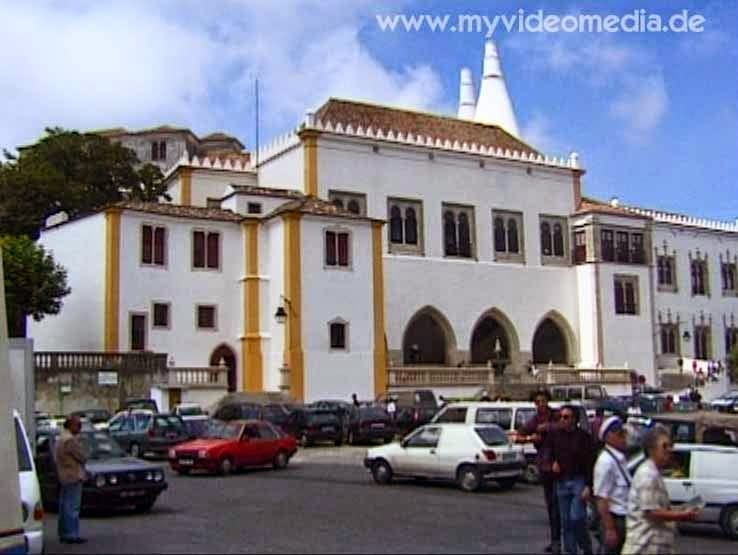
Please watch the video
You are currently viewing a placeholder content from YouTube. To access the actual content, click the button below. Please note that doing so will share data with third-party providers.
More InformationUnder the rule of Manuel I, Portugal developed into a world power. The sea route to India was discovered and the diplomatic representations were extended from Malacca to East Timor and Macao and thus broke the Arabs’ trade monopoly for spices.
In addition, Brazil was discovered and incorporated as a colony. As a result a considerable quantities of gold and silver came to Portugal.
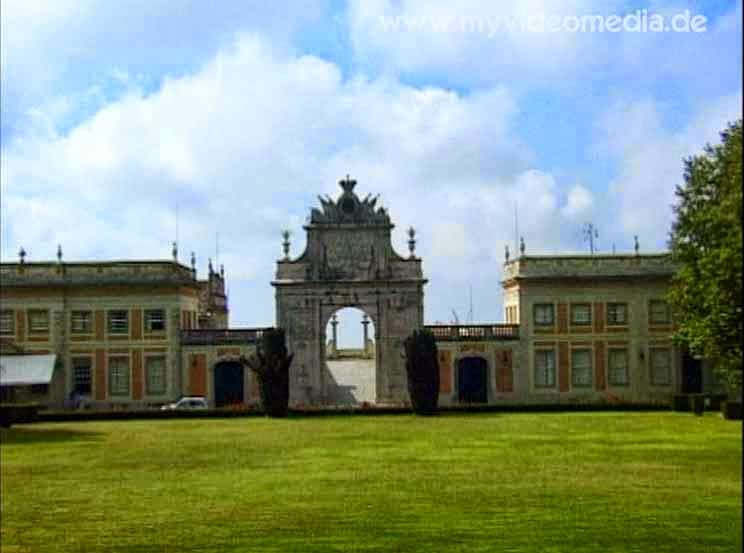
The Seteais Palace, Palácio de Seteais, was built in 1787 by the Dutch Consul Daniel Gildemeester.
In 1802, it was rebuilt in honor of Prince Regent John VI and Princess Carlota Joaquina in its present form. At present, it serves as a Tivoli Hotel.
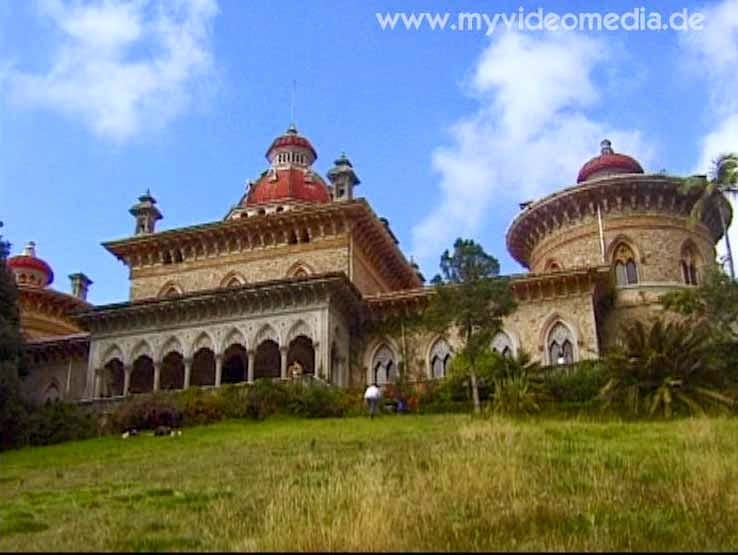
The Monserrate Palace, Palácio de Monserrate, served as traditional summer residence of the Portuguese royal family. I
ts architecture was inspired by the Indian Mughal Empire and is unique in Portugal.
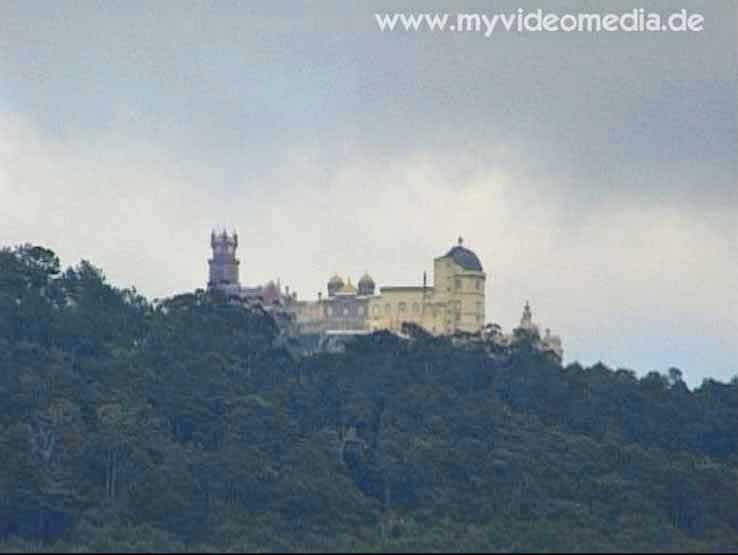
The Palácio National de Pena rises majestically above the landscape.