We walk along the banks of the Guadalquivir while spring shows its best side. From afar we admire the Puente del Alamillo, the first cable-stayed bridge in the world without rear anchoring. It was designed for the Expo 1992.
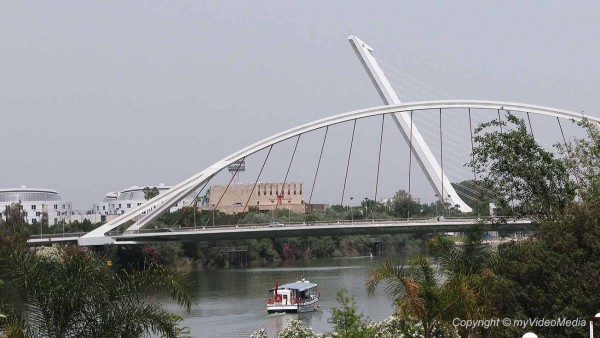
Already from afar our view goes towards the
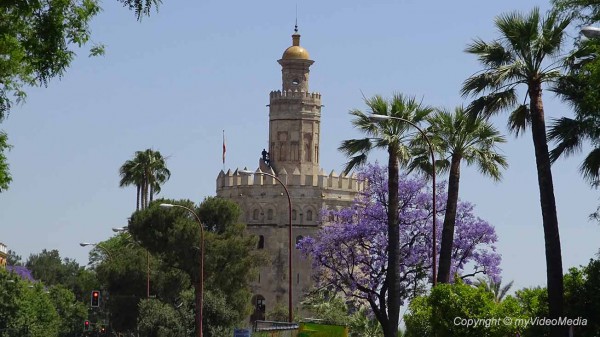
Torre del Oro
It is uncertain how the Torre del Oro got its name. Originally it had a bright band of tiles in the upper part which shone like gold in the sun. On the other hand, in the 16th century, the Spanish treasure fleet used the tower as a temporary storage for the gold and silver, that has been disembarked from overseas.
Please watch the 4k UHD video
You are currently viewing a placeholder content from YouTube. To access the actual content, click the button below. Please note that doing so will share data with third-party providers.
More InformationThe Torre del Oro was built at the beginning of the 13th century by the governor of the Almohad dynasty, residing in Marrakesh. It was part of the fastening systems but not part of the city wall.
Together with the Torre de la Fortaleza it served as anchor for an iron chain in order to lock up the access to the port. However this chain was broken through by Ramón de Bonifaz and allowed Ferdinand III to take over Seville in 1248.
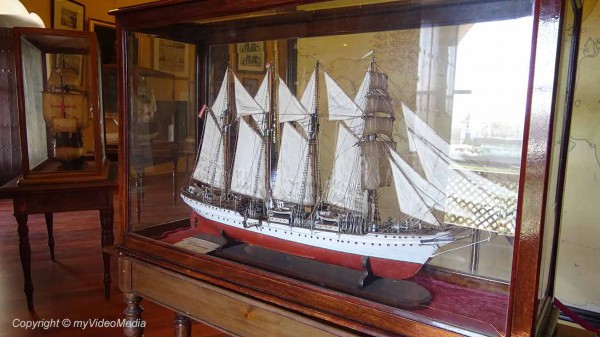
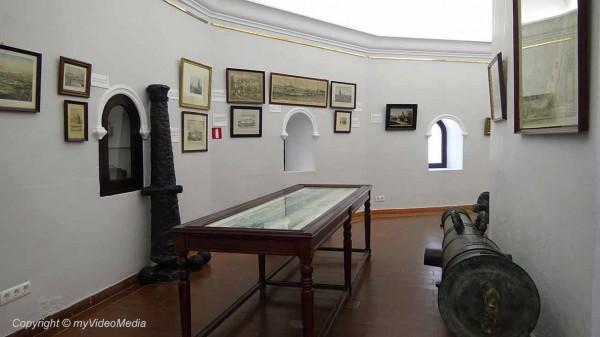
Today the tower houses the Museo Naval de Sevilla, with ship models, pictures, documents and nautical instruments.
From a platform at the top of the building you have a wonderful view of Seville and the Guadalquivir River.
Plaza de Toros Real Maestranza de Caballería
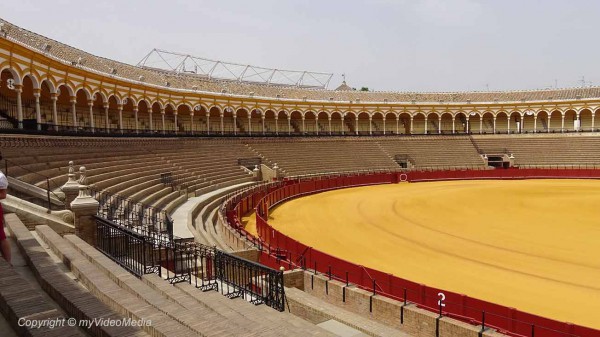
is the former bullring and today a museum. After the one in Madrid, it is the second largest bullring in Spain. Build up like an oval amphitheater, the top ranks are surrounded by ornate arcades. The dainty form of the columns lend the arena a certain lightness.
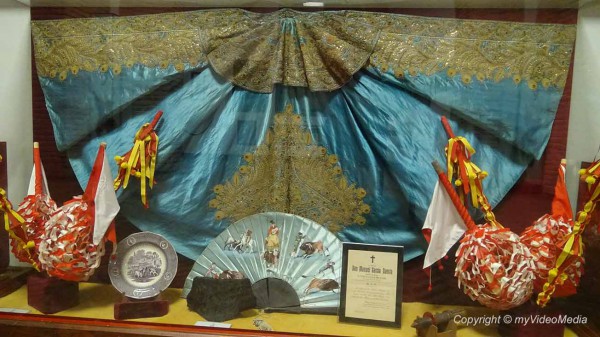
The museum commemorates famous Mataderos. On display are magnificent costumes and weapons, as well as their training facilities.
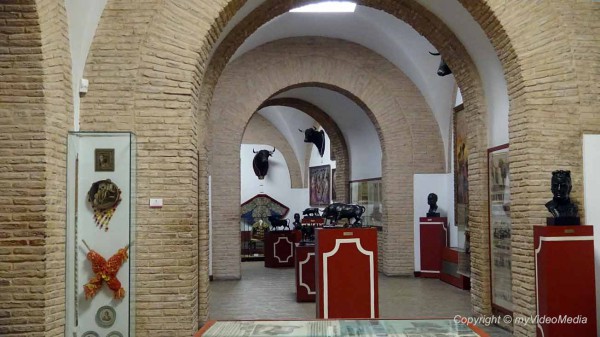
Of course, famous bulls are “honored”. The dissected bull heads are hanging on the wall.
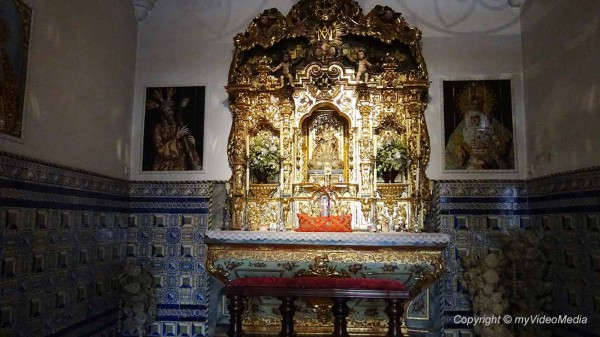
During the tour we visit a chapel, where the Mataderos could speak a prayer before the fight, as well as the stables.
On the way back to the city we pass a picture exhibition, installed on an open space. It shows works by Sebastião Salgado, a Brazilian sociocritical photographer and photojournalist.