The next morning, we leave Bukhara in a northeasterly direction. We pass the airport and shortly thereafter we are surrounded by cotton fields. But also new housing developments can be found here.
About 10 km from the city center, we arrive at a national monument of Uzbekistan. The tomb of Bahauddin Naqshbandi was extended to a mausoleum and is an important place of pilgrimage today.
Please watch the 4K UHD video
You are currently viewing a placeholder content from YouTube. To access the actual content, click the button below. Please note that doing so will share data with third-party providers.
More InformationBahauddin Naqshband is the namesake of the Naqshbandi Order, one of the largest and most influential Muslim order of Sufism.
Baha-un-Din Naqshband was born in 1318 AD near Bukhara. Already three days after his birth, he was adopted by Baba Muhammad Sammasi, the Murshid (one who wants to follow the path of knowledge under the guidance of a sheikh) of his grandfather Hamadanis, as spiritual progeny. Sammasi engaged his student Amir Kulal to do the instruction in the teaching and practice of the Sufis.
Later he joined Khali Ata for 12 years, who is considered as Chagatai-Khan, the second son of Genghis Khan. After his fall, Bahu-un-Din returned to his birthplace Kasr-i Hinduwan and began teaching his own disciples.
He left the region three more times. Twice for a Hajj and once he went to the ruler Mo’ezz-al-Dīn Ḥosayn in Herat, whom he explained the principles of his mystical practice. He died in 1389 in his birthplace, that is called Bogoudin today.

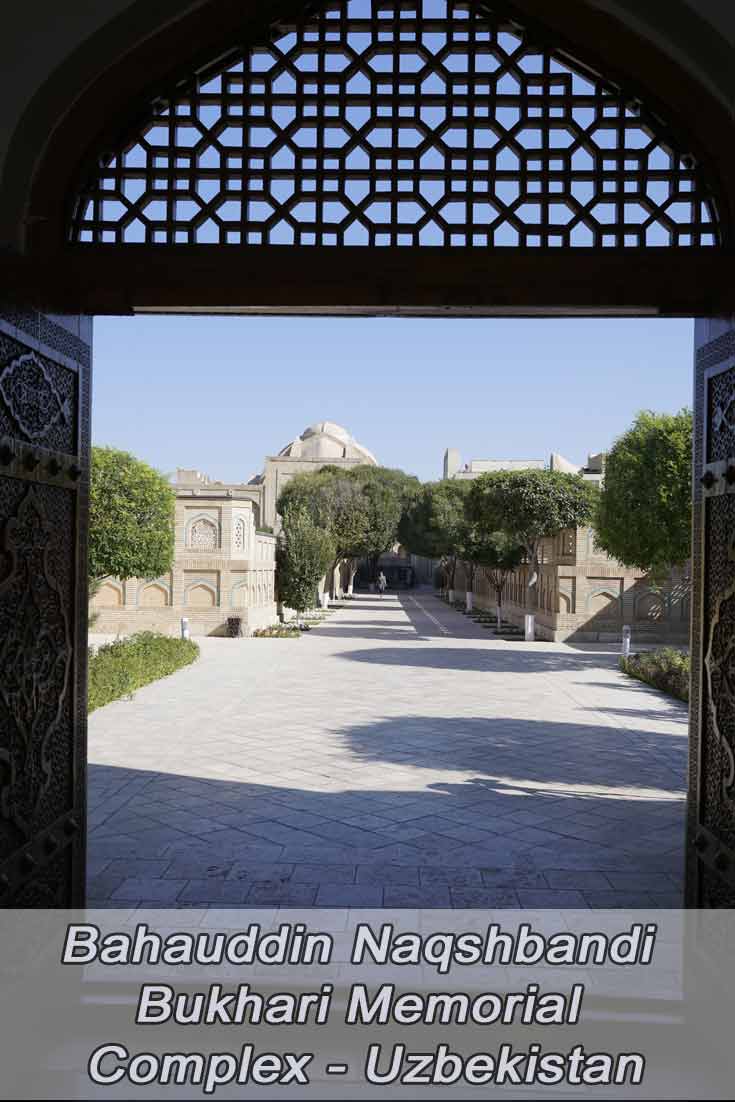
We enter the site through the main gate and quickly find our way to the courtyard with the tomb of Bahauddin Naqshbandi. A banner on a tall pole indicates that a spiritual leader rests here.
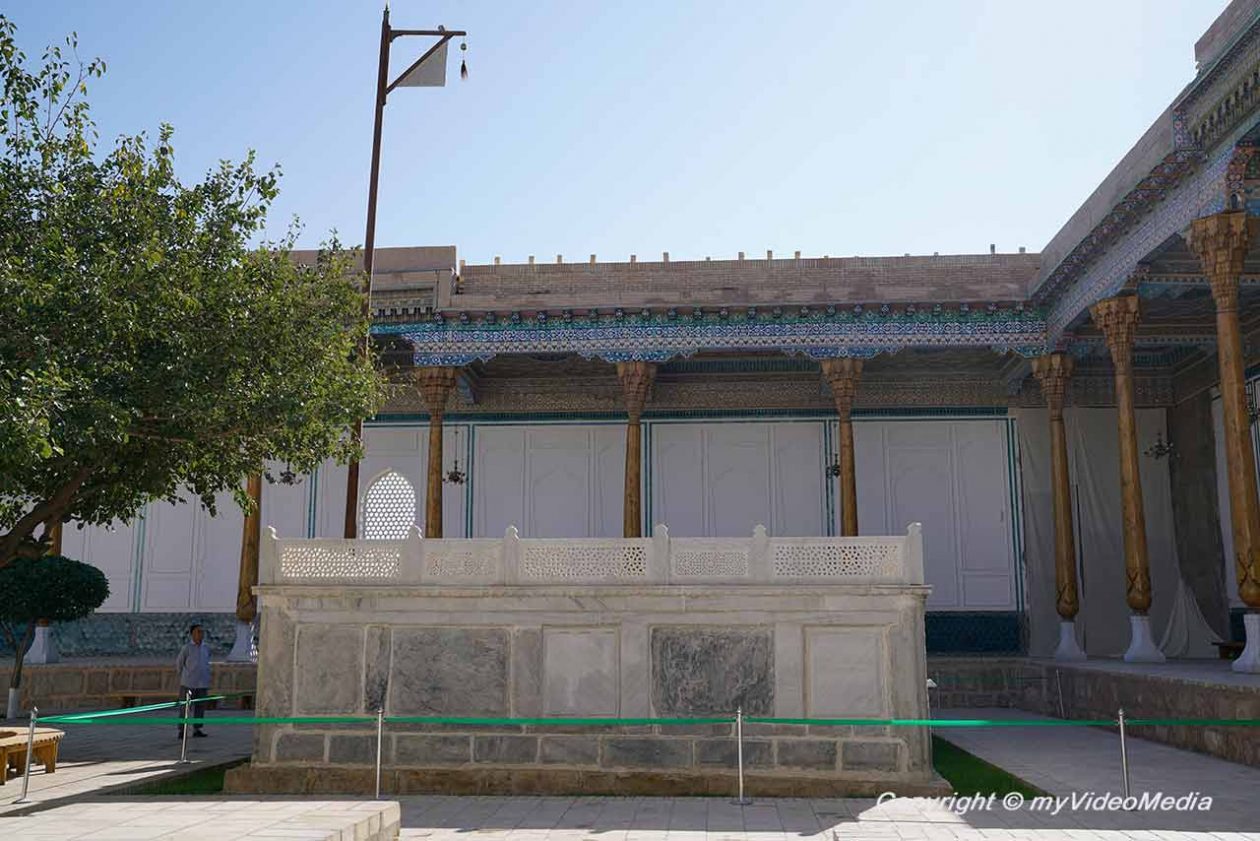
The courtyard is surrounded by a beautiful portico, with carved wooden pillars carrying the roof. A water pool and a widely protruding tree provide a pleasant climate.
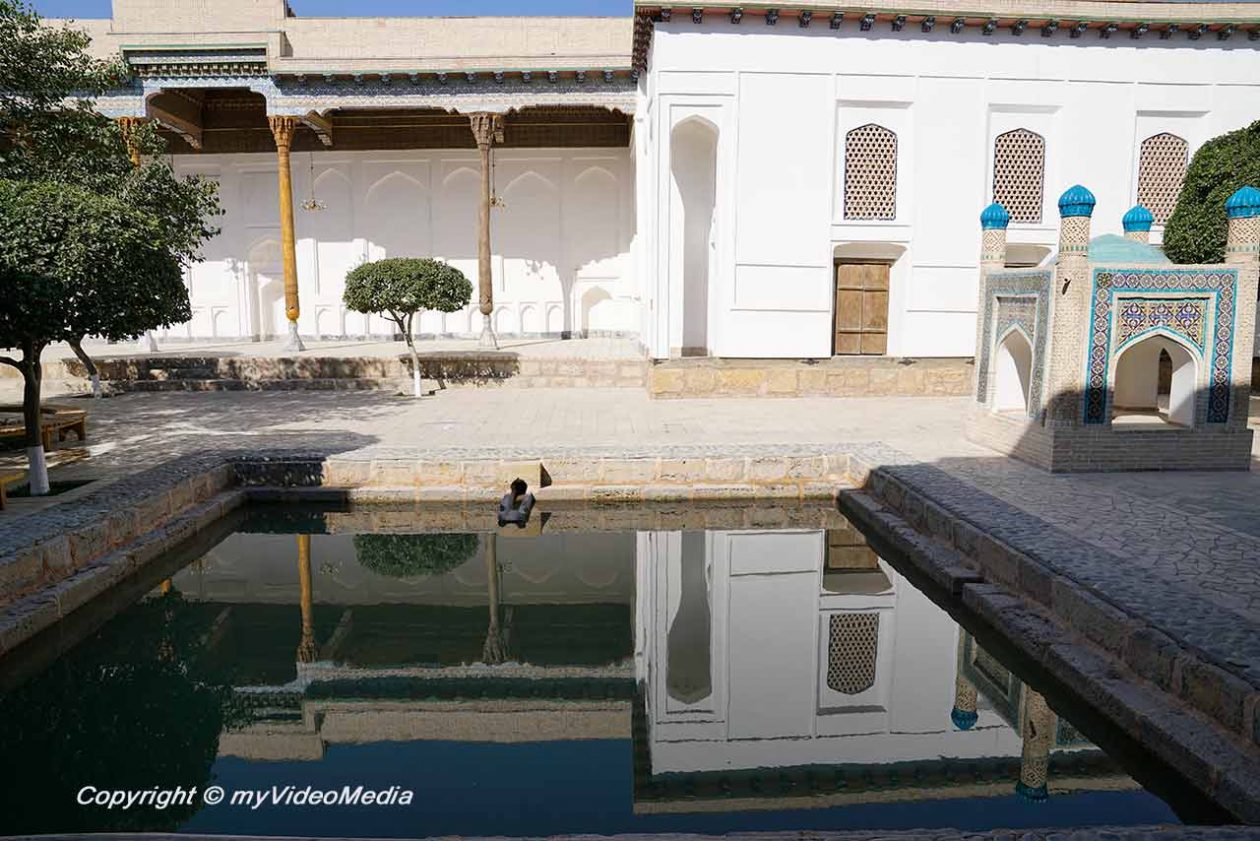
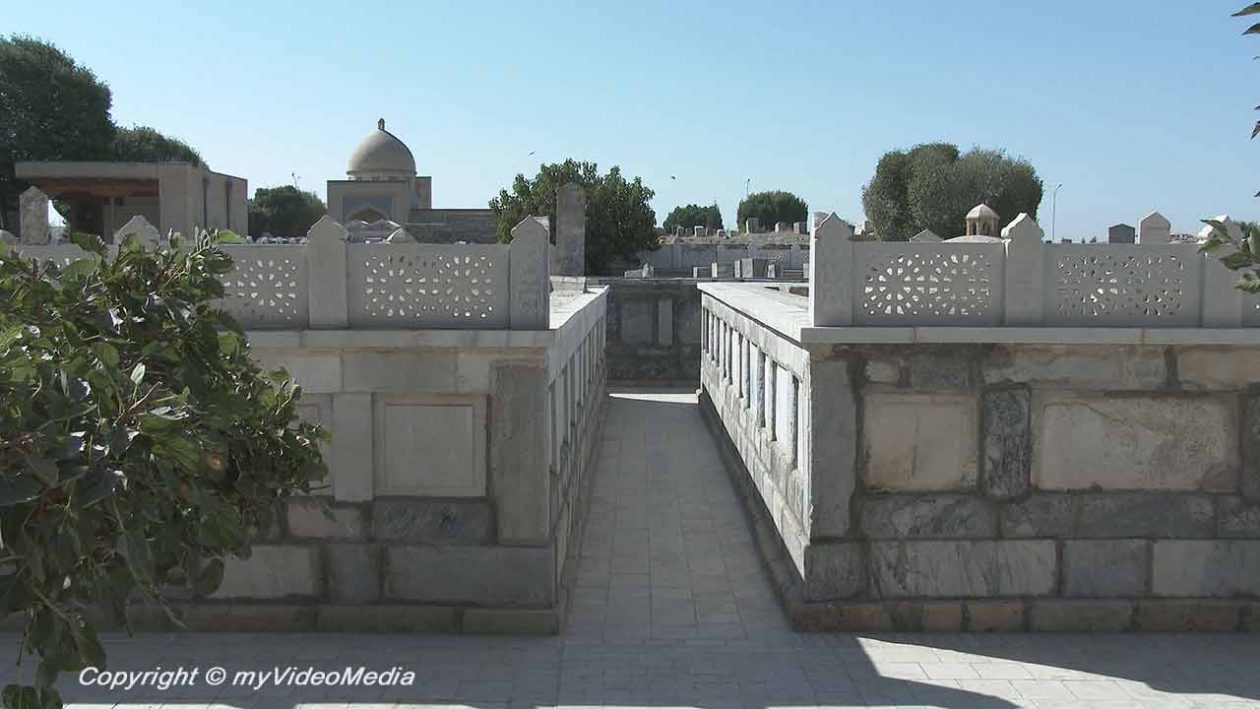
The entire complex includes a Sufi study center, a cemetery with the tombs of many Sufis, and a mosque that women are not allowed to enter.
A young woman proudly presents us her two children.

Bukhara has very much benefited from Baha-ud Din. It owes its status as a center of Islamic scholarship and religiousness to him.
Please read on > Sitorai Mohi Xosa Palace
Pin it for later
Text, photos and video: Copyright © myVideoMedia