Koblenz is the third-largest city in the federal state of Rhineland-Palatinate. It lies directly at the confluence of the Moselle and the Rhine. As early as 1992, Koblenz celebrated its 2000th anniversary, making it one of the oldest cities in Germany. On 26.9.2019, the Koblenz city council declared a climate emergency.
Historical Facts
Already in Roman times existed a bridge over the Rhine in Koblenz. It was probably built around 50 AD and destroyed in the 3rd century. Only in 1818, one built a bridge over the Rhine again.
The Romans recognized the strategic importance of Koblenz. In addition to a bridge over the Rhine, they also built a fort in today’s old town center, the Fort Confluentes. And on the other side of the Rhine, they set up the Niederberg Fort, next to the succeeding Ehrenbreitstein Fortress.
In the 5th century, the Franks conquered the region and built a royal court here. In the chestnut church, consecrated in 836, the three grandchildren of Charlemagne negotiated the future of the empire in 842, which finally led to the division of Europe in the Treaty of Verdun in 843.
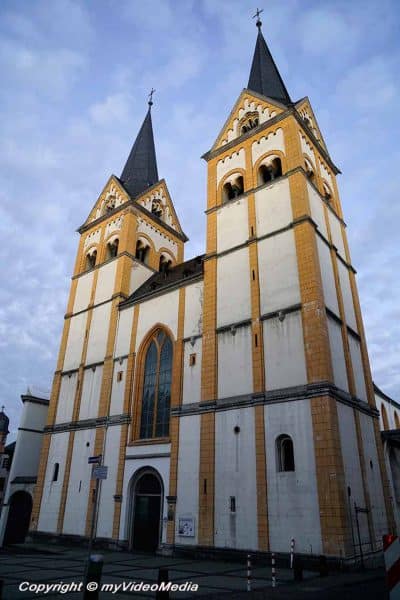
The archbishops and electors of Trier later expanded their influence. Besides the construction of the St. Florin’s church and Liebfrauenkirche (Church of Our Lady), most important was the construction of Ehrenbreitstein Castle. Later one expanded the castle into a fortress. In the fortress housed the most important largest sanctuaries of Trier.
During the Thirty Years’ War (1618-1648), Elector Philipp Christoph von Sötern moved his official residence from Trier, first to Ehrenbreitstein Castle and 50 years later to the newly built Philippsburg Castle below the fortress.
But only the outbuildings still exist. The castle was destroyed by the French in 1801, during the capturing of the castle by the French Revolutionary Army. In 1786, Elector Clemens Wenzeslaus of Saxony moved to the Electoral Palace Koblenz. At the Congress of Vienna in 1814/1815, the Rhineland possessions of the Trier Electorate, including Koblenz, were transferred to the Kingdom of Prussia.

From 1850 to 1858, Augusta and Wilhelm of Prussia, the later Emperor Wilhelm I, lived in the Electoral Palace. After his death, one erected him a large memorial in 1897, at the Deutsches Eck (German Corner), the confluence of the Moselle and Rhine rivers.
During the 2nd World War, Koblenz had suffered considerably from the air raids of the Allies. Today Koblenz is the seat of numerous federal and state authorities.
Our first tour of the city
We booked an apartment in Löhrstrasse near the Herz-Jesu-Kirche (Sacred Heart Church). With its octagon, the exterior of the church is reminiscent of the architectural style of the Merovingians, such as the Aachen Cathedral.
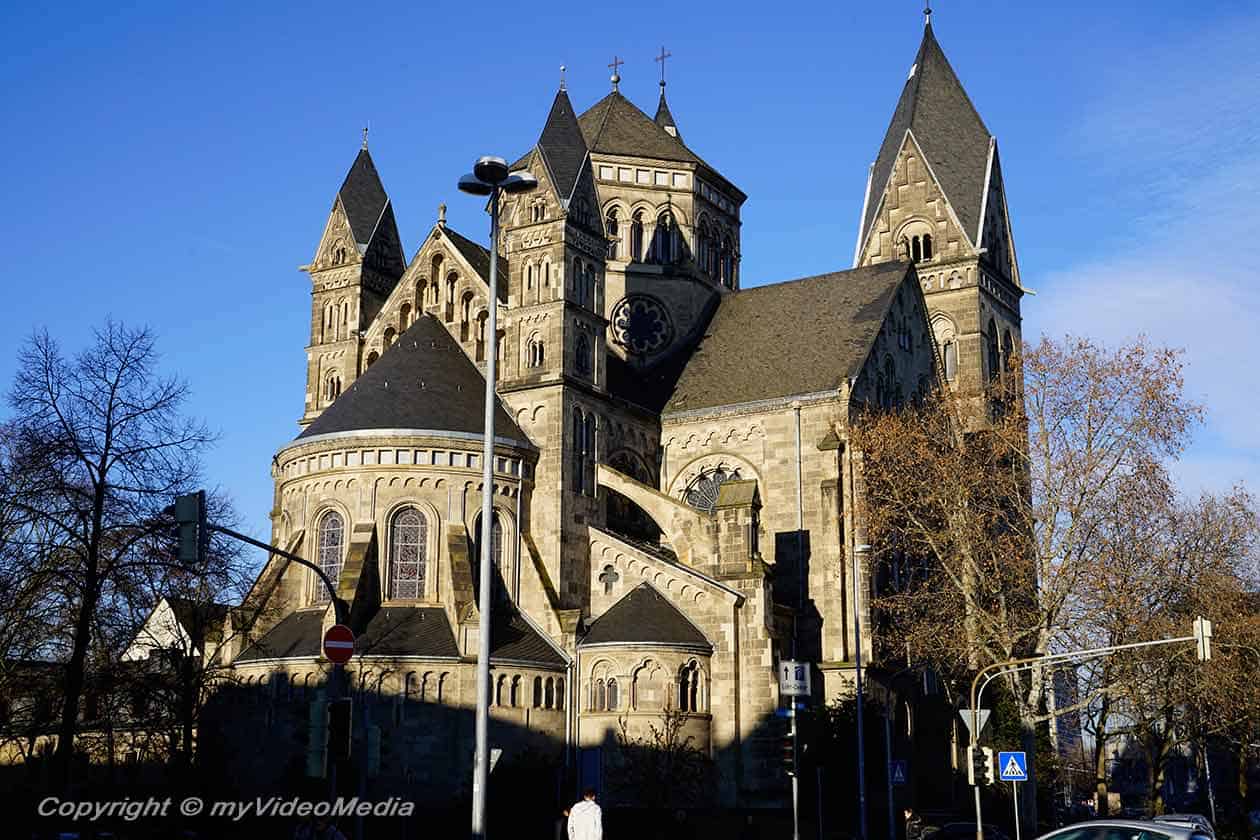
The square in front of the church is called Löhrrondel. On the opposite side, the Löhrstrasse continues as a pedestrian zone.
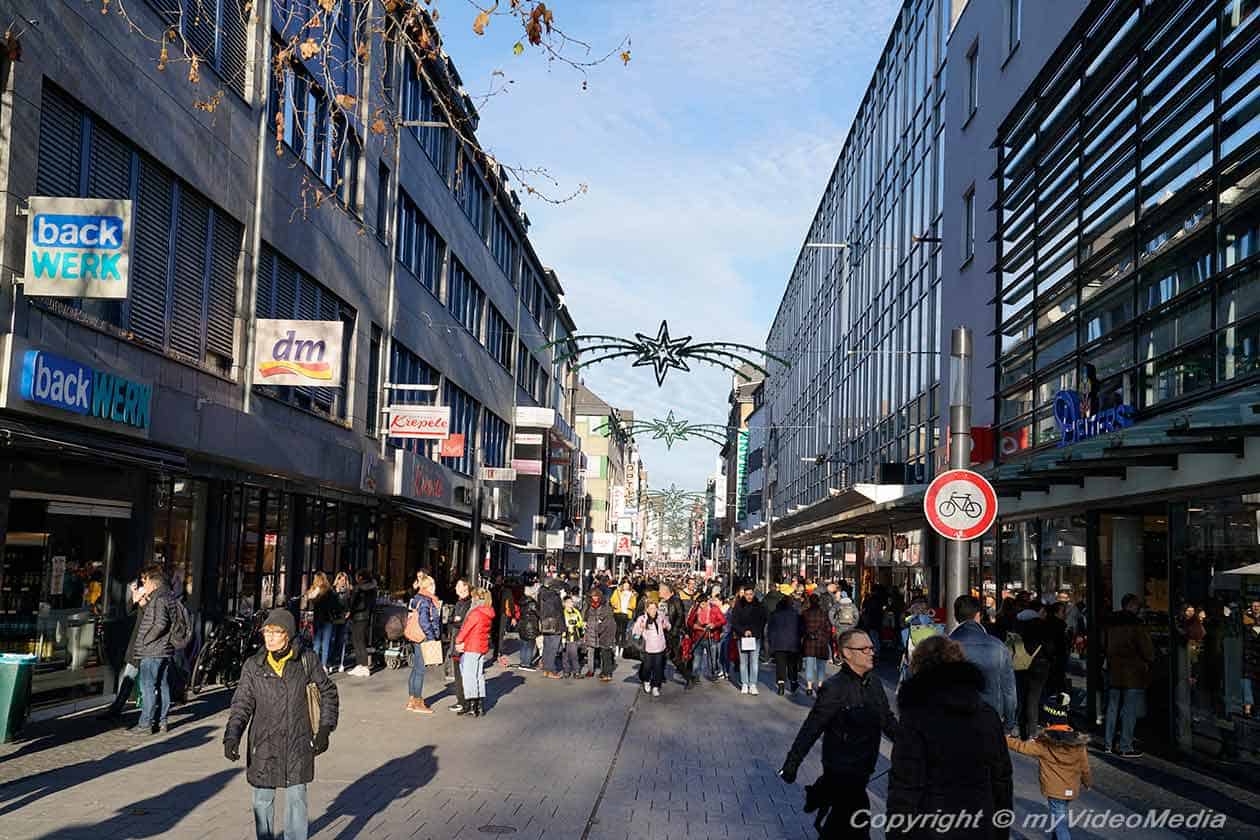
But we turn right into the narrow picturesque Kleinschmittsgäßchen, as we are interested in the Mittelrheinmuseum (Middle Rhine Museum) in the modern Forum Confluentes, opposite the Forum Shopping Center. It shows a 2000-year-old art and cultural history of the Rhineland.
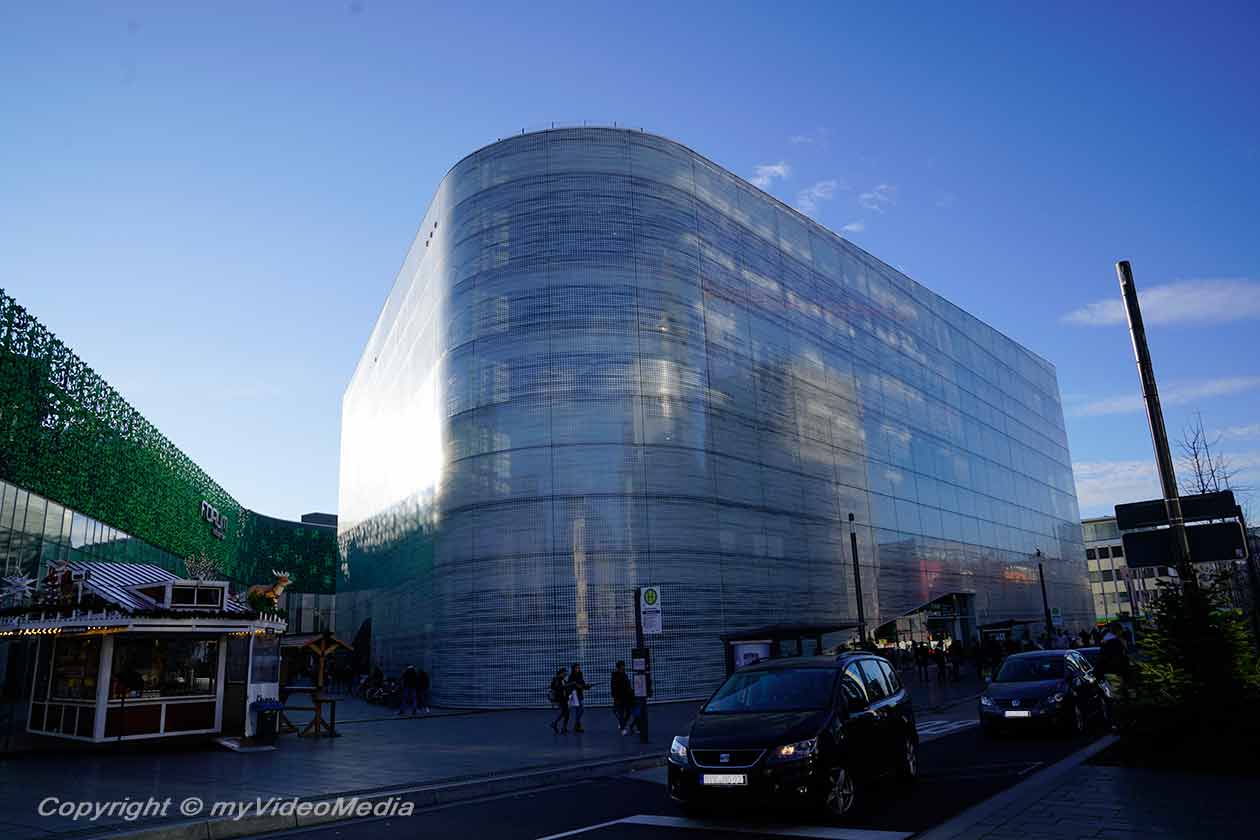
Unfortunately, the museum is closed, because it is December 30th, and the people are already in a New Year’s Eve mood. On the central square in front of it, we find a carousel and an ice skating rink that seems to be very popular.
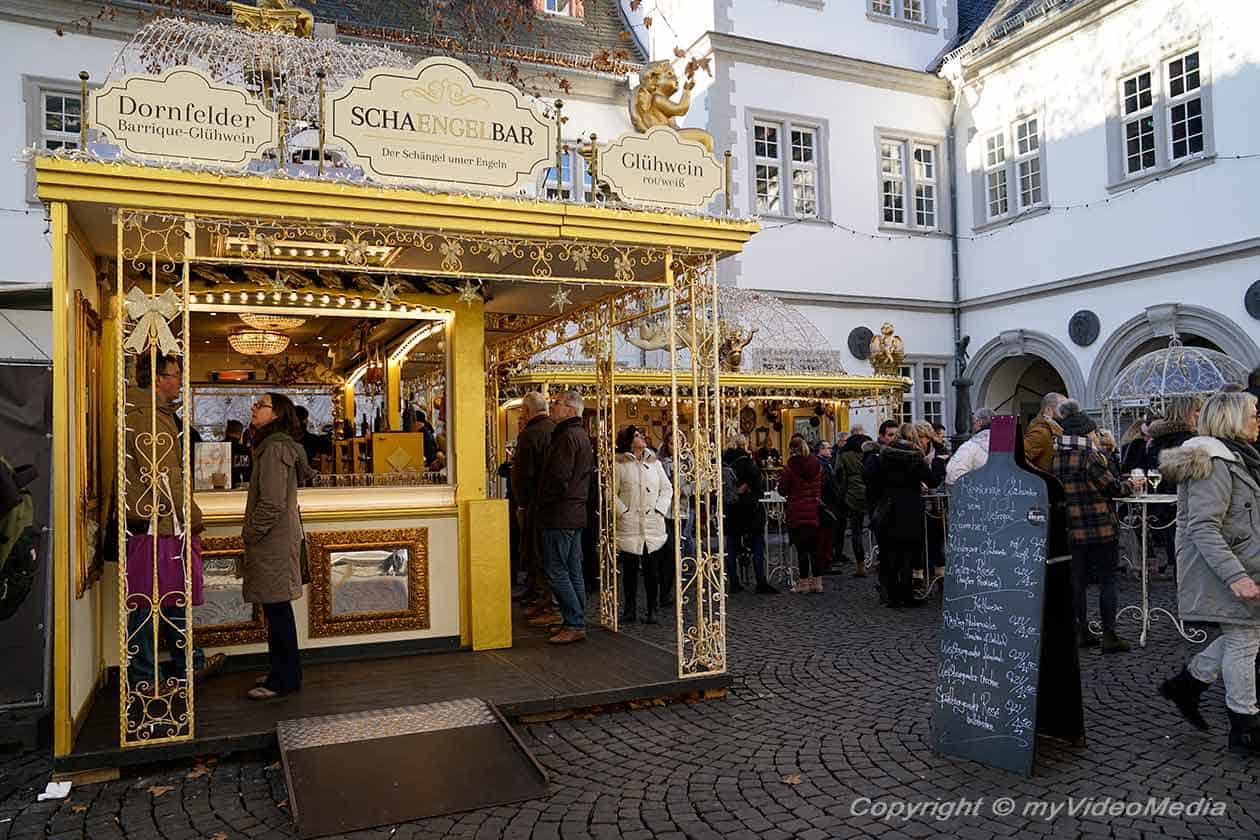
In the Gymnasialstraße we pass the Bürgeramt and reach the Willi-Hörner-Platz, the Rathaushof, where some stalls for beer and wine are set up. The building on the right houses the registry office and the city administration of Koblenz.
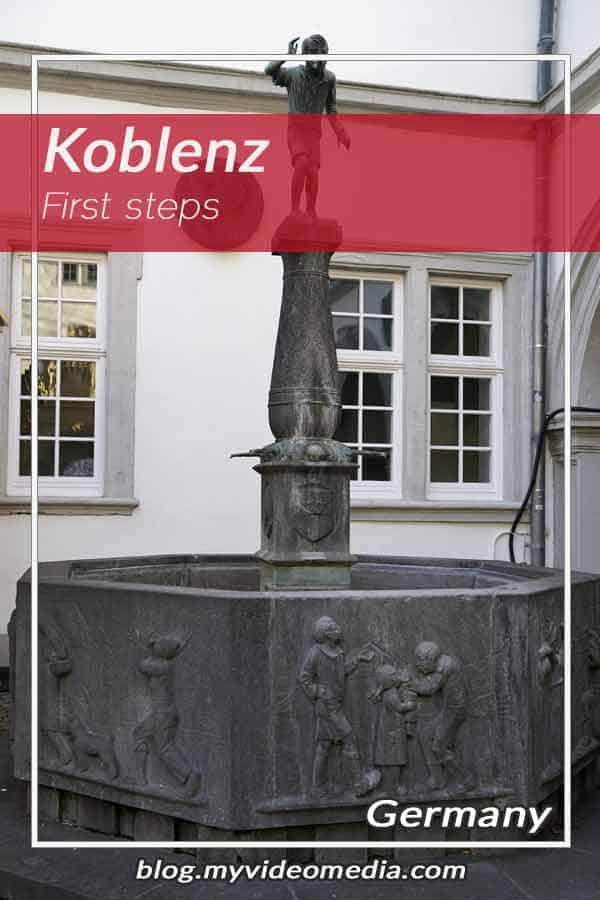
In one corner of the square is the Schängelbrunnen fountain, designed in 1940 by Carl Burger. It represents a Koblenz boy from the time when Koblenz belonged to France. A boy called Hans or Johann regularly played pranks. The name Hans turned into the French name Jean. In the Koblenz dialect, Jean changed to Schang and finally Schängel. Today the people of Koblenz are proud to call themselves Schängel.
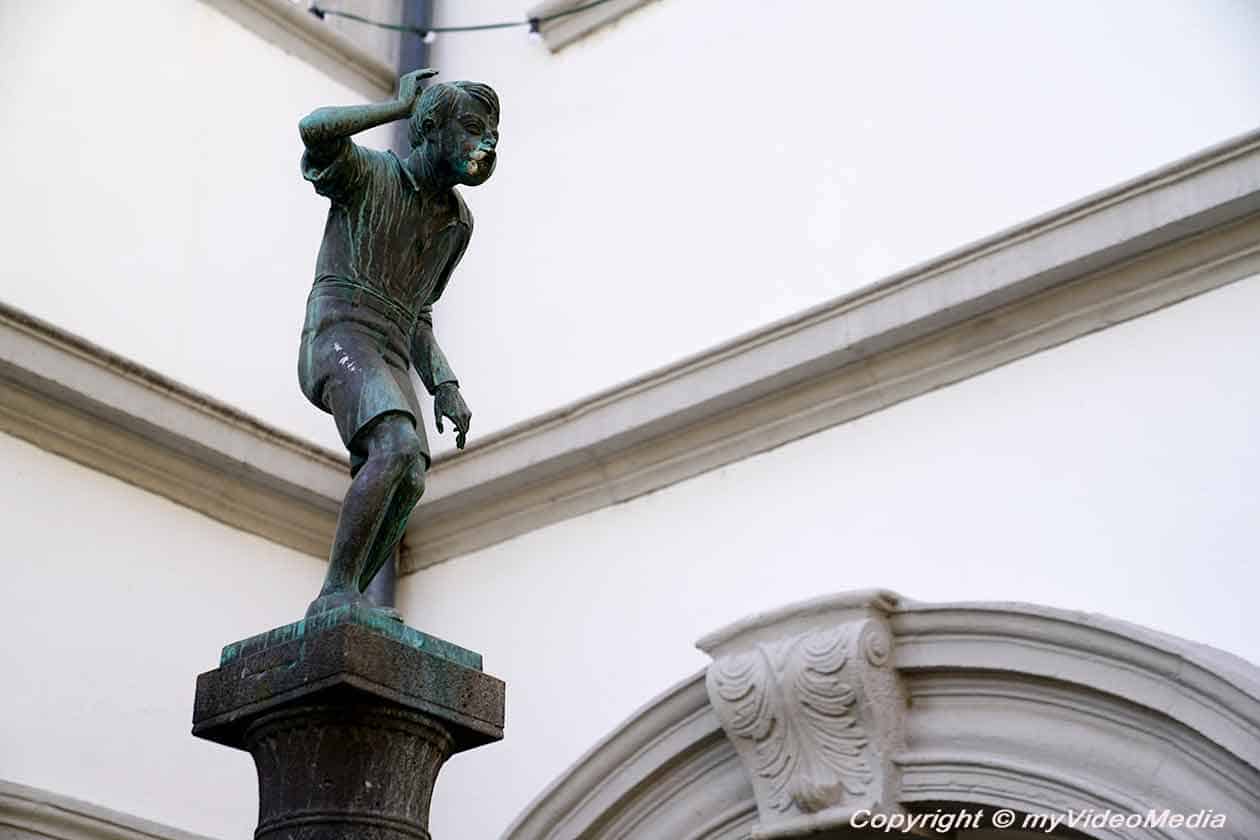
The fountain, built 1940, was cast in bronze in Munich and dedicated to the poet Josef Cornelius, born in Koblenz, who wrote the lyrics for the anthem of Koblenz, the Schängellied. Today the Schängelbrunnen fountain is the landmark of Koblenz.
Please watch the 4K UHD video
You are currently viewing a placeholder content from YouTube. To access the actual content, click the button below. Please note that doing so will share data with third-party providers.
More InformationThrough an archway, we reach the Jesuitenplatz, with the Johannes-Müller-Monument, a doctor, born in Koblenz. Through Firmungsstraße, we come at Josef-Görres-Platz to the fountain with the over 10 m high historical column, completed in June 2000.
The history column by sculptor Jürgen Weber shows the history of Koblenz in 10 three-dimensional pictures, arranged on top of one another .
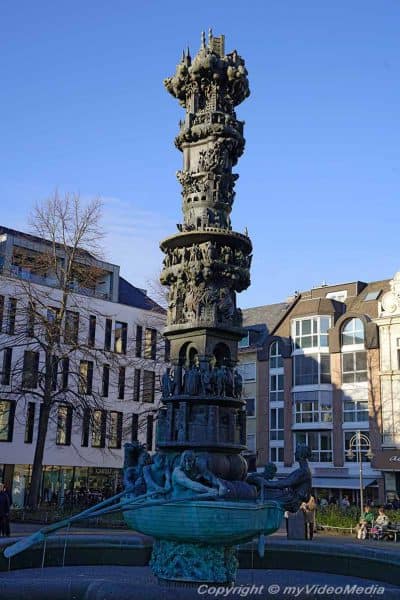
From bottom to top:
- Picture 1: Roman castellum settlement
- Picture 2: Frankish period – Crown dominion and meeting place
- Picture 3: From Regnum Francorum to Electorate of Trier
- Picture 4: Crusades and slave trade
- Picture 5: Prospering community
- Picture 6: Thirty Years’ War and persecution of witches
- Picture 7: French Revolution
- Picture 8: Prussian period
- Picture 9: Destruction 1944
- Picture 10: A forward-looking town
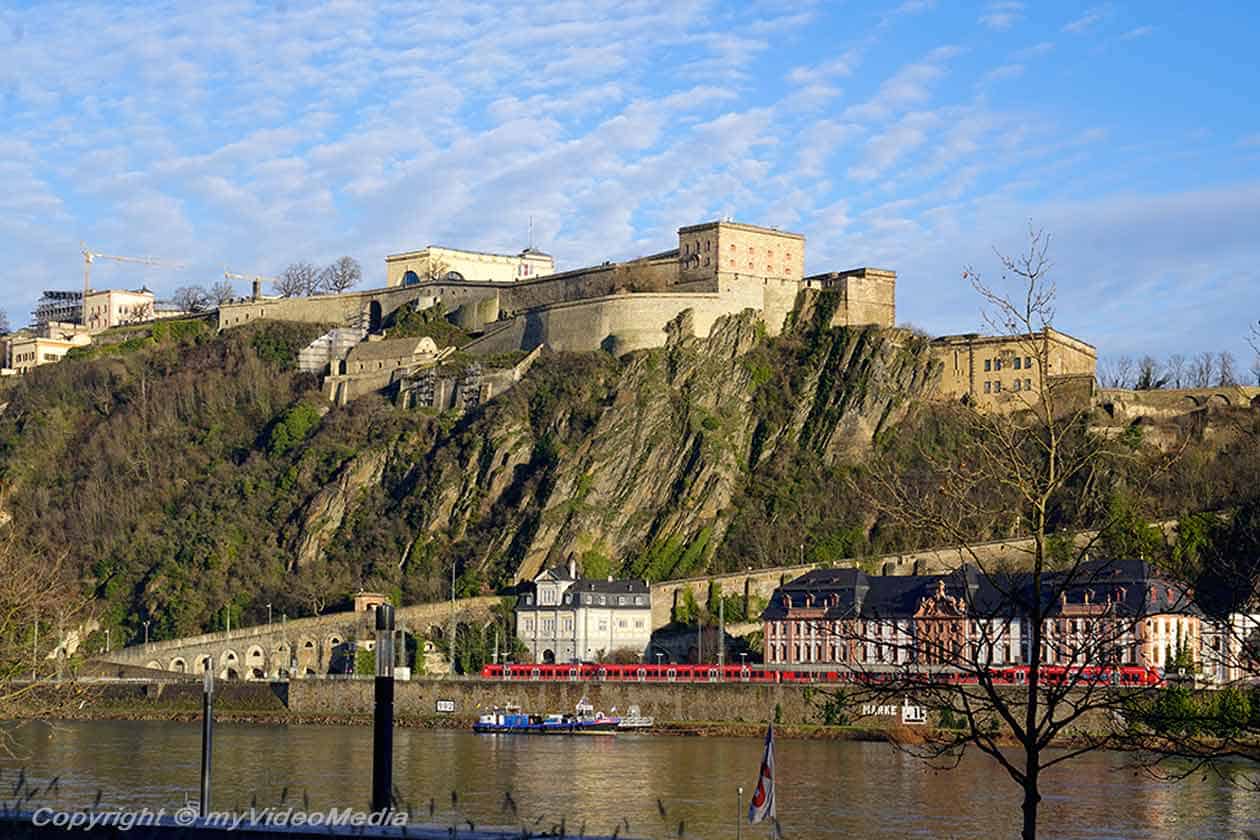
Arriving at the Rhine, we see the imposing Ehrenbreitstein Fortress on the opposite side. Below are the remains of Philippsburg Castle, especially the Pagerie (the gate to the fortress) and the Dicasterial Building (central administration of the Electorate of Trier).
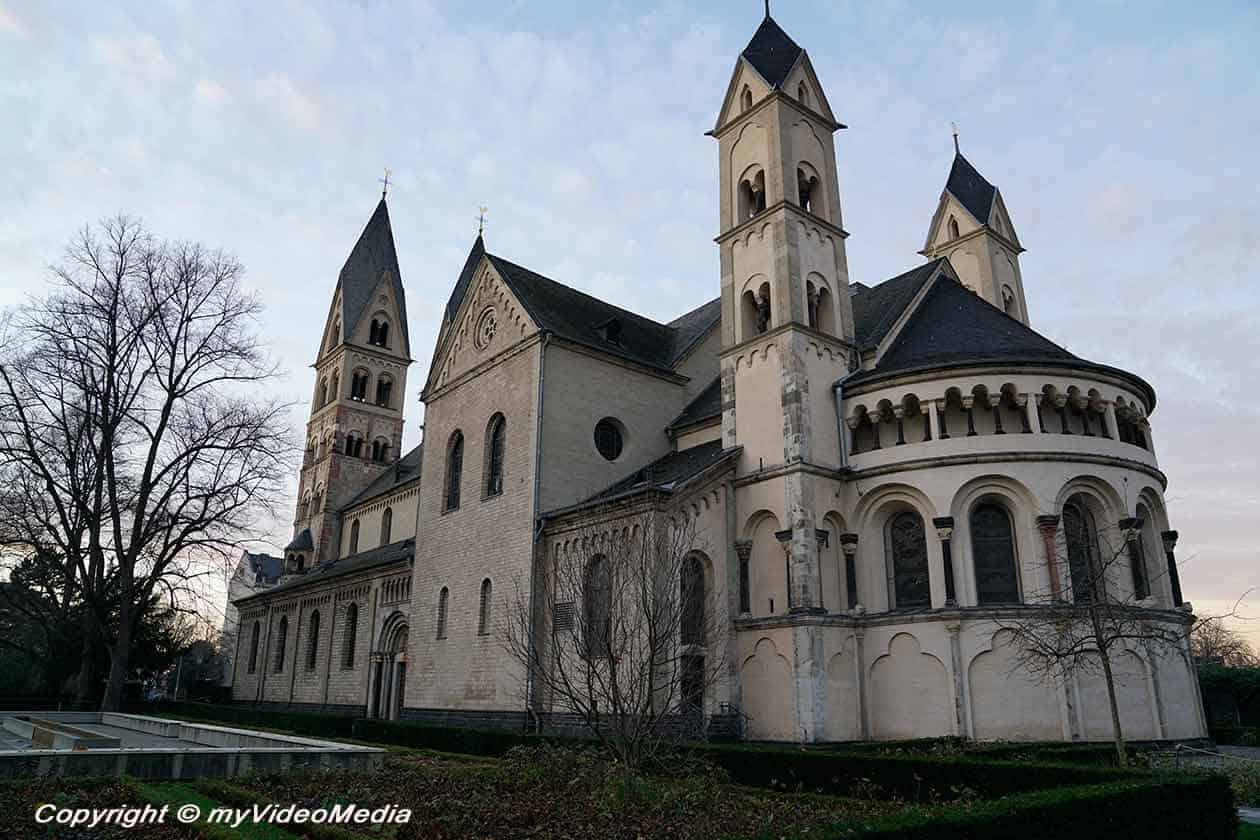
Along the Rhine, we come to the Basilica of St. Castor. Here the grandchildren of Charlemagne negotiated the future of the empire.
We follow the Moselle and turn into Kornpfortstraße, where we arrive at the old city library.
Dinner
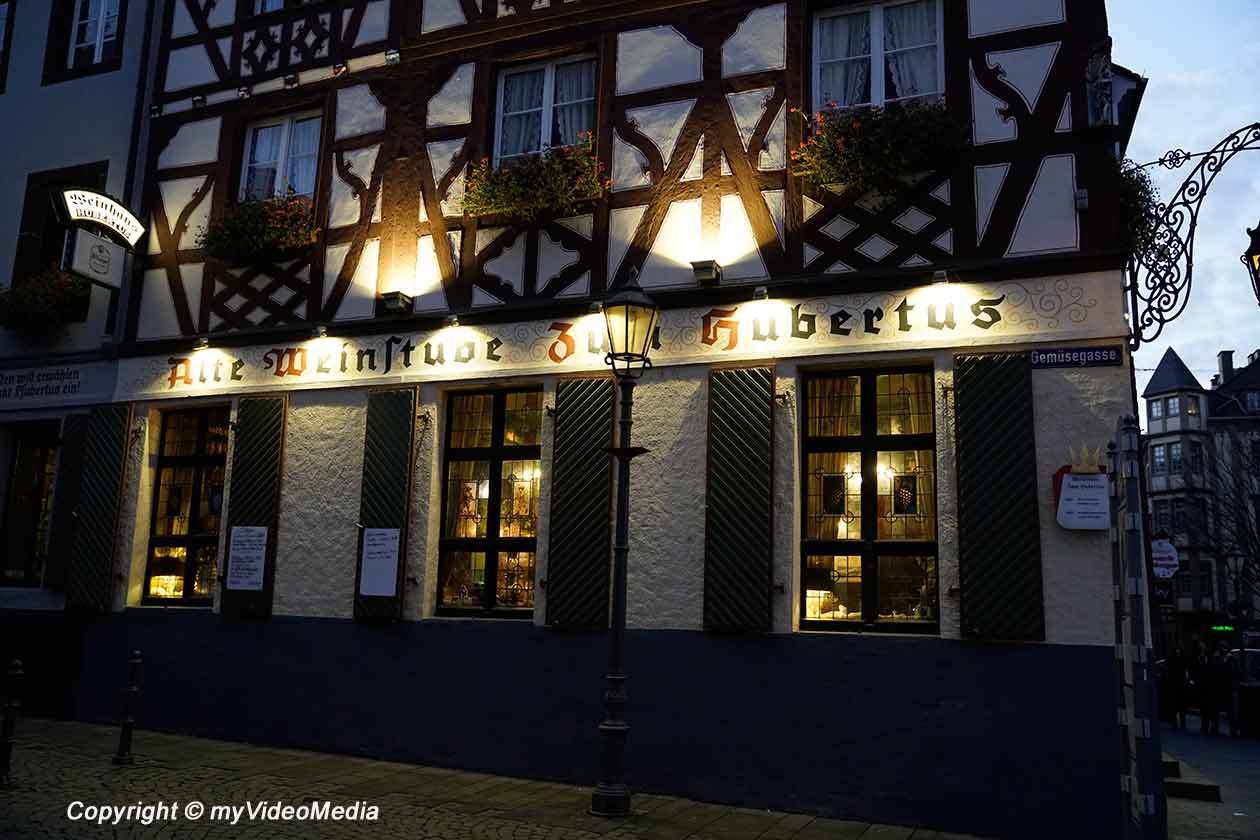
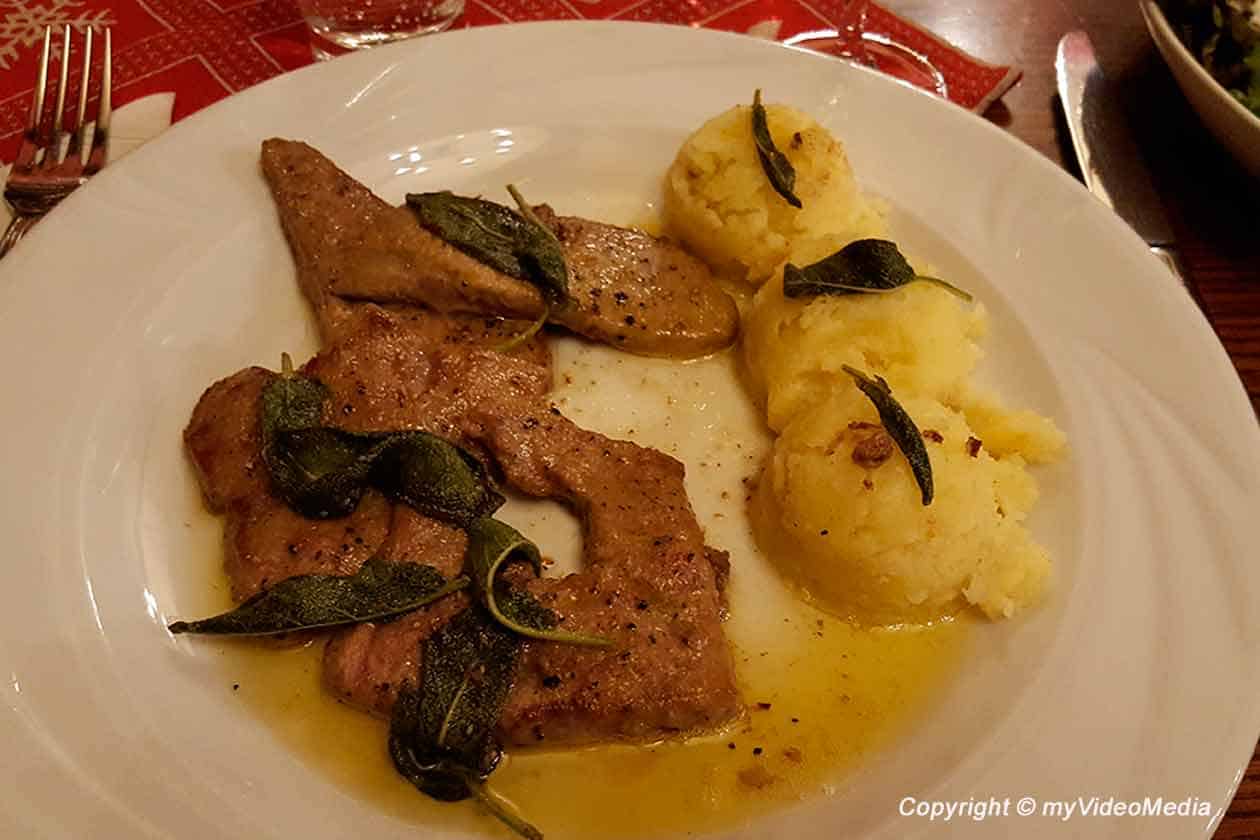
For dinner, we reserved a table in the Wine House Hubertus at the Florinsmarkt square . The food is delicious, the service very friendly, and the price/performance ratio is favorable. The wine is excellent.
On the way back, we pass the Liebfrauenkirche, the Münzplatz square, and the square “Am Plan”, where the New Year’s Eve party is to take place.
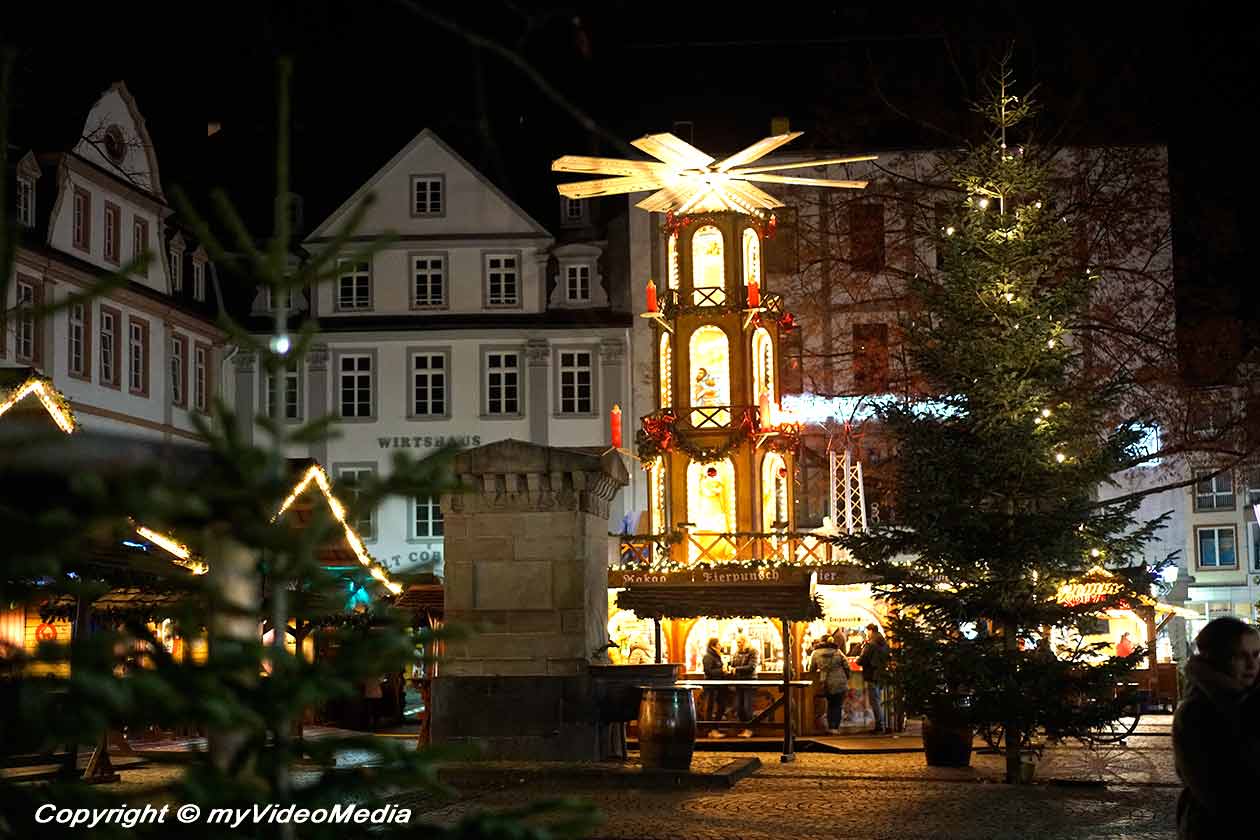
At the end of the evening, we return to the town hall and enjoy a glass of wine amid the companionable people of Koblenz.
Pin it for later
Text, photos and video: Copyright © myVideoMedia
Soundtracks in video:
- Work Out Fine (bill berry mix) by William Berry (c) copyright 2006
Licensed under a Creative Commons Attribution license. http://dig.ccmixter.org/files/williamberry/7354 - It’s Gonna Be OK by Christian S (c) copyright 2006
Licensed under a Creative Commons Attribution license. http://dig.ccmixter.org/files/Christian_S/7869