No major city in Europe suffered more under the Nazi terror regime than Warsaw. After the withdrawal of German troops, the city was largely destroyed and in most parts practically uninhabitable. All the more remarkable is the considerable achievement the Poles have made in rebuilding the city.
Today you see modern urban features in which international star architects like Norman Foster and Daniel Libeskind have played a part. However, the first steps towards reconstruction were taken immediately after the war and aimed at the construction of the old town true to the original.
Later one rebuilt the streets Miodowa, Diuga, and Senatorskaand restored innumerable palaces.
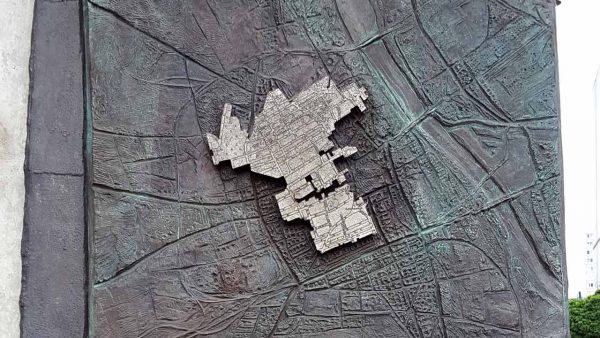
A central topic in Warsaw’s war history is the Warsaw Ghetto, into which hundreds of thousands of people were crammed and later deported to concentration camps. The Pawiak prison plays a particular role. 37000 people were murdered and 60000 were transferred to concentration camps from there. Today it is a museum. Another important museum is the Museum of the History of Polish Jews.
But we want to see the quarters and buildings of the Warsaw Ghetto and start our search. We are aware that almost everything has been destroyed after the war and many prefabricated buildings stand on the sites today.
We take the Metro to the station Metro Ratusz Arsenał. It was the location of the main synagogue from Warsaw until it was blown up.
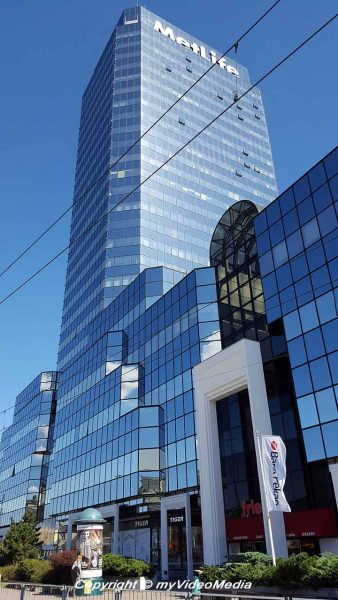
But there is no trace of the synagogue anymore. There is supposed to be a plaque (Warsaw Ghetto boundary marker) somewhere, but we didn’t come for commemorative plaques. Where once stood the synagogue is the Blue Tower Plaza, an office complex with the logo of the insurance company MetLife at the top today.
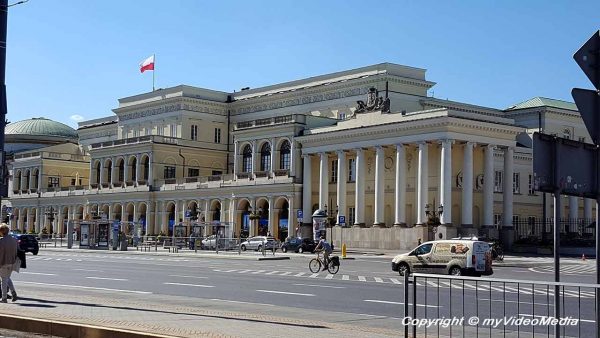
On the opposite side of the street is the City Hall of Warsaw with the seat of the Lord Mayor.
The museum Kolekcji is in the round extension of the former stock exchange in this at the left end of the complex, in Jana Pawła II. It houses the most important collection of European art in Warsaw, dedicated to Pope John II. 450 exhibits are donations of Zbigniew and Janina Porczyński.
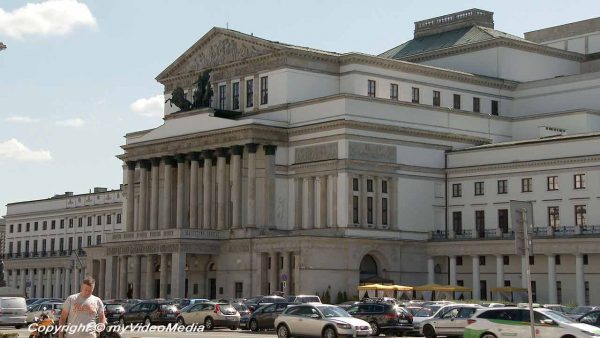
We turn off in into the Senatorska. Here is the Teatr Wielki Opera Narodowa, the national theater, and the national opera. The beautifully reconstructed building on the opposite side houses a bank today.
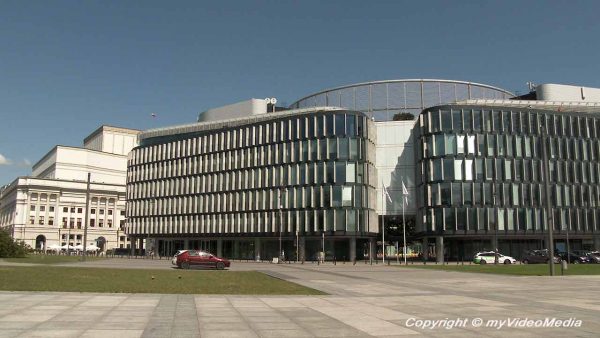
We reach the Piłsudski Square. To the left is the Metropolitan office building designed by Norman Foster.
The Russian Orthodox Alexander Nevsky Cathedral stood here until 1924. On the south side of the square stands the rectangular complex of the Hotel Victoria. Next to it is the Lutheran Trinity Church.
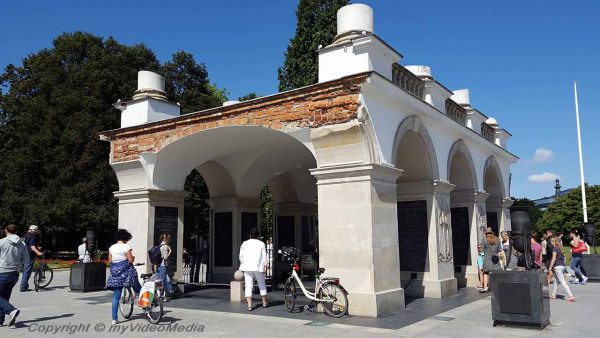
On the west side was the Saxon Palace. Only a fragment of the columned arcades reminds us of it.
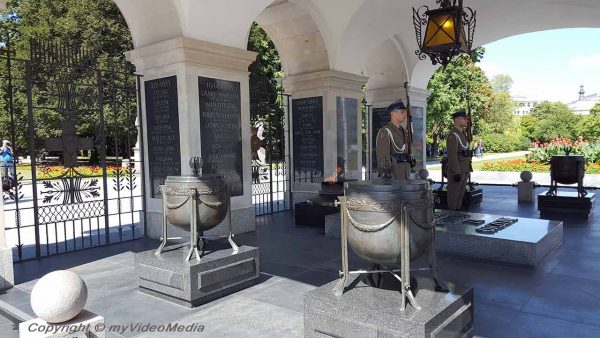
It houses the tomb of the unknown soldier, next to which two soldiers hold a vigil.

Next, to the vigil, there is a musical bench playing Chopin’s melodies. Frederic Chopin was a Polish-French composer who was born in Żelazowa Wola in the Duchy of Warsaw. His father was French, his mother Polish.
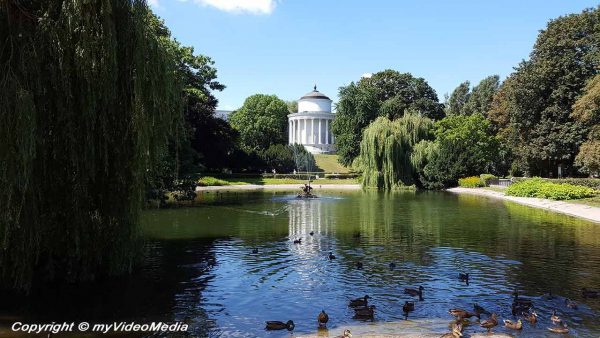
The Baroque style Saxon Garden laid out by King August II the Strong, adjoins to the west. Later one transformed it into an English Landscape Park.
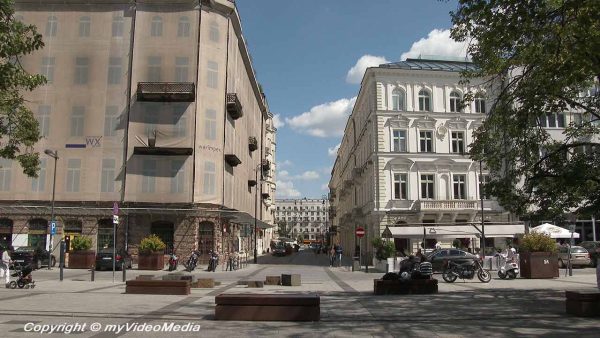
Ulica Prózna Street is the only street in the Warsaw Ghetto where you see four renovated apartment buildings. Number 7 houses the Austrian Cultural Forum.
The 160 m high Cosmopolitan Twarda 2/4, with sales areas, 252 apartments, and four penthouses dominates the adjacent Grzybowski Square. On the south side is the Catholic Church of All Saints, where Pope John II had already said a mass.
Please watch the 4K UHD video here
You are currently viewing a placeholder content from YouTube. To access the actual content, click the button below. Please note that doing so will share data with third-party providers.
More InformationIn the lower part of the Cosmopolitan Twarda, we see a fascinating art object with a woman and a man on a balance beam.
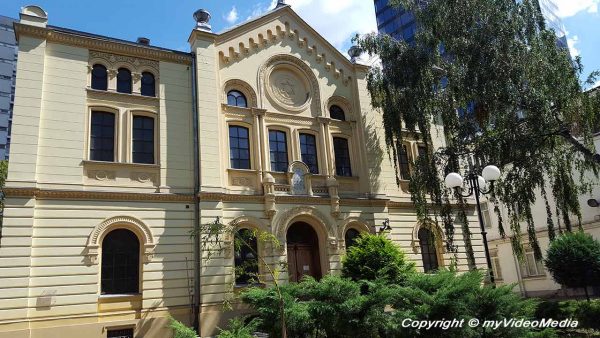
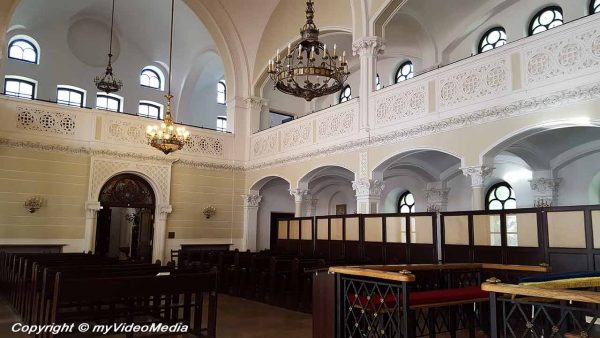
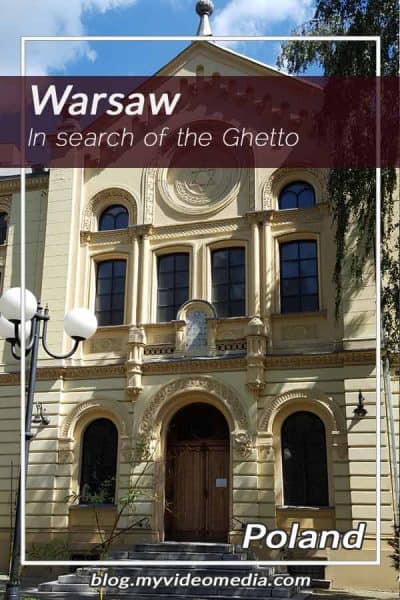
Behind the skyscraper, well hidden and hard to find is the Nozyk synagogue. It is the only synagogue in Warsaw which survived the war. As of 1941 one used it as storage. Since 1983, it shines in an old gleam again.
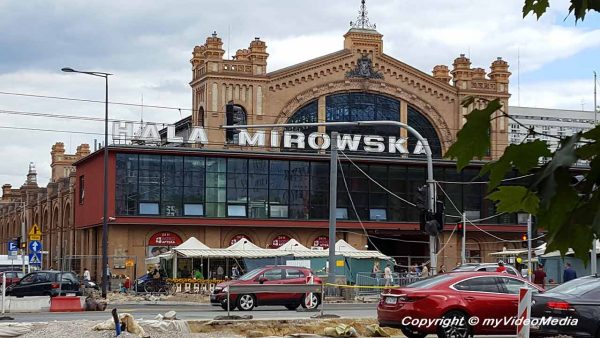
We cross the Jana Pawla II at the Mirowska market hall, which used to be a railway station.
Past the fire station and the Catholic Church of the parish of St. Andrew, we reach the most prominent point in Warsaw, reminiscent of the ghetto.
At the junction between Chlodna and Zelazna was a passage between the ghetto and the small ghetto.
A bridge over the road connected the two parts of the ghetto.

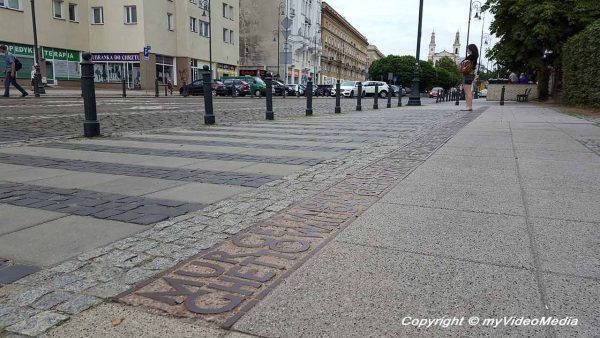
Today, only 4 vertical steel girders remind us of the location of the bridge. Red markings in the sidewalk remind us of the walls of the ghetto.
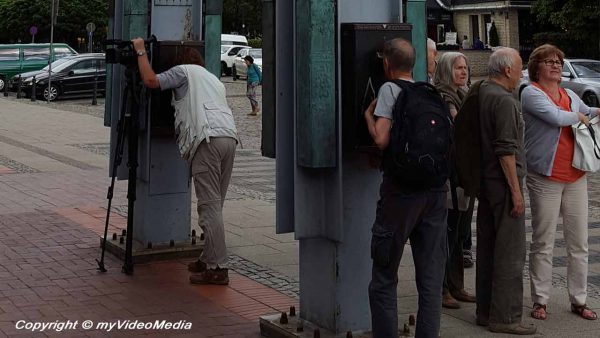
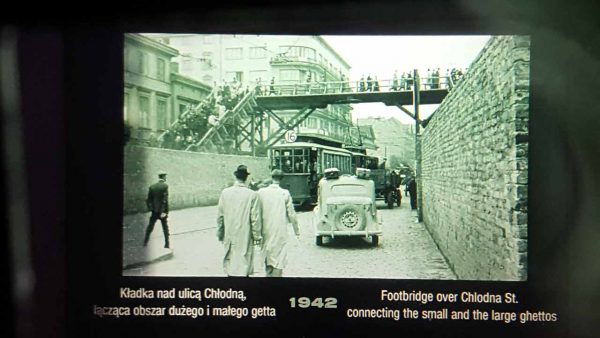
The slide projectors installed in the columns next to the bridge, show historical pictures of the pedestrian crossing.
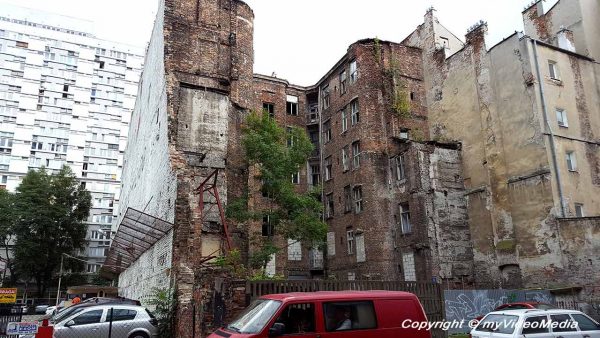
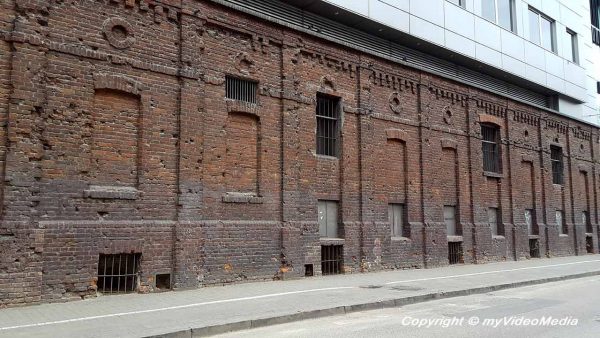
The best place to get an impression of the cramped conditions in the ghetto is Waliców Street 14. You still see two half dilapidated houses here. But we do not have much hope for their preservation, as the business centers are expanding more and more and faster.
On the opposite side of the street, one integrated the rest of the ghetto wall into the foundation of a modern office building.
Finally, we come to the Bersohn and Bauman Children’s Hospital, founded in 1878 for Jewish children. From 1940 the hospital was part of the ghetto. Starting September 11, 1942, one deported the patients and most of the hospital staff to the extermination camp Treblinka.
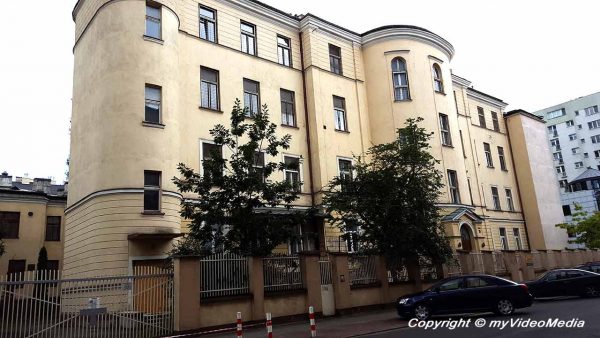
At the beginning of 1943, the hospital housed a children’s clinic again. It existed until the Warsaw Uprising. From August to October, the clinic was the only professional medical facility in the center of Warsaw. At the end of the 20th century, the buildings housed the State Hospital for Infectious Diseases.
In 2016 the operation was stopped and the building was offered for sale. In 2017, the Ministry of Culture and National Heritage asked the government to lease the former hospital and set up the Warsaw Ghetto Museum there.
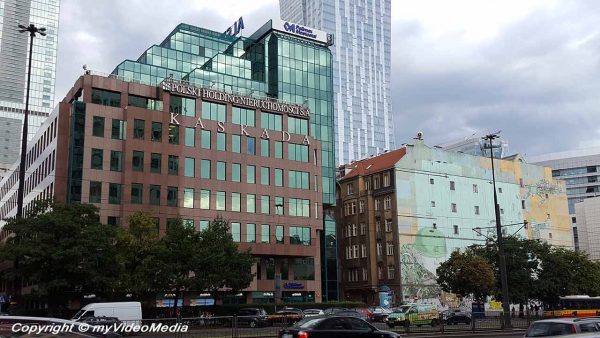
We reach the skyscrapers in the business district again, between is our accommodation. In the end, we are a little concerned to have seen so few testimonies of these immense human suffering. Presumably the last remnants will soon disappear forever as the office complexes advance.
Please read also > By train from Warsaw to Prague
Pin it for later
Soundtracks in video:
- Between Worlds (Instrumental) by Aussens@iter (c) copyright 2017
Licensed under a Creative Commons Attribution (3.0) license. http://dig.ccmixter.org/files/tobias_weber/56664 Ft: (Smiling Cynic) - Orc March Choir by copperhead (c) copyright 2014
Licensed under a Creative Commons Attribution (3.0) license. http://dig.ccmixter.org/files/copperhead/45110 Ft: Snowflake, Wolf Sebastian
The substance of the articles on this blog is truly impressive. The author covers a wide range of topics with a level of expertise that is both refreshing and informative.
Thank you very much for your positive feedback