Lloret de Mar is mainly known as a party place. The town administration is trying to counteract this goings vehemently today.
Parties on the beach are only allowed in a small area, otherwise alcohol is prohibited. Also noise and beach clothing in the town are pursued with severe penalties.
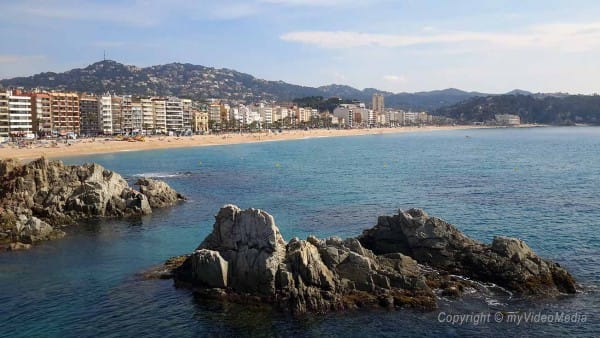
Nevertheless, the first impression seemed to confirm the image of the city, hotels as far as the eye can see, since one reaches Lloret from the inland. But the town has other faces.
Please watch the 4k UltraHD video
You are currently viewing a placeholder content from YouTube. To access the actual content, click the button below. Please note that doing so will share data with third-party providers.
More InformationThe center of the old town
Our first way leads into the pedestrian area. The beach tourists as well as other holiday-makers find everything their heart desires.
We discover the Església de Sant Romà in the center of the old town. It was once a fortified church, however, modified again and again in the course of the time.
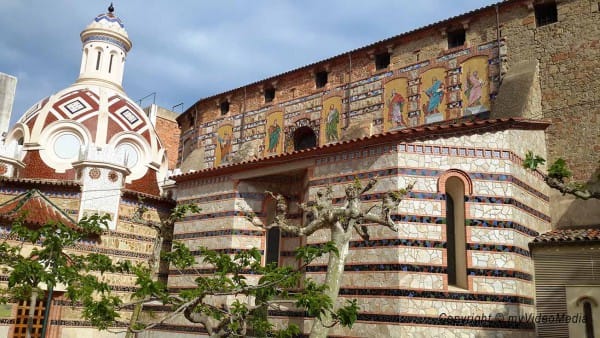
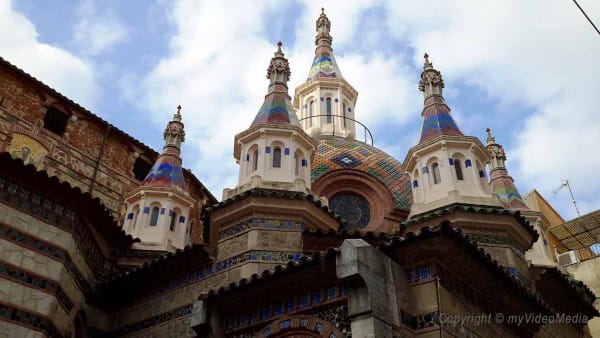
The church, built around 1520 has elements from Gothic, Renaissance and Art Nouveau. With its brightly colored tiles on the facade it presents a feast for the eyes, which you should not miss.
Everywhere in the town, we notice small altars in niches at the walls of houses.
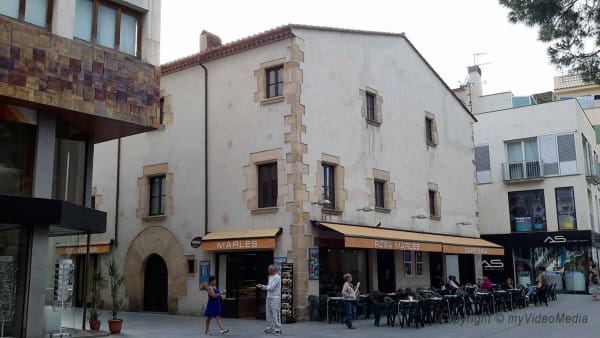
Opposite the church is an old Catalan town house, which rarely appear in the townscape.
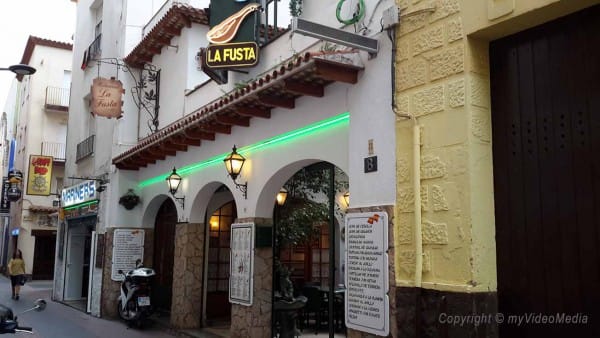
In the evening of the first day we go out to eat in the restaurant La Fusta. The host speaks perfect German, the waiter is German.
However, the restaurant is visited mainly by Spaniards. The food is excellent and reasonably priced.
The beach
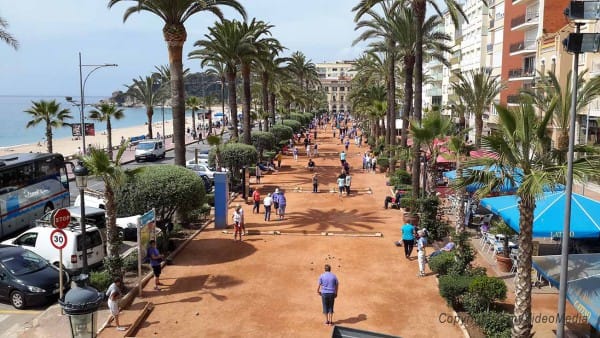
The next day we head to the beach. Boule players have a wide area to play and we watch their game for a while.
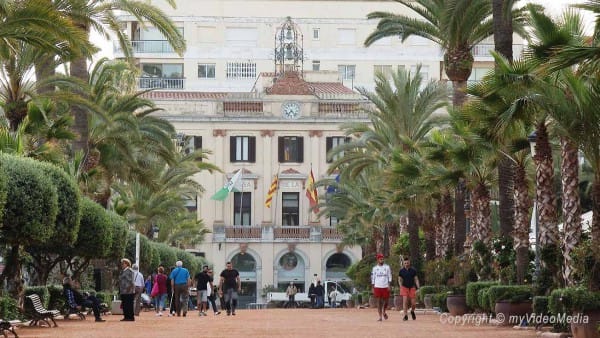
At the head end of the boule court is the Town Hall in neoclassical style. The terracotta decorations on the facade were made by the Lloret potter Pau Arpi.
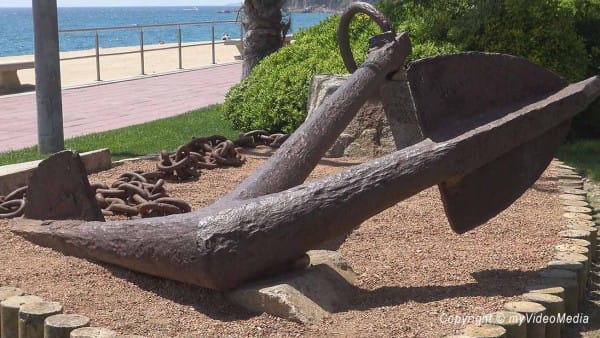
At the esplanade, a number of showpieces that emphasize the town’s history as a fishing village.
Anchors, winches and ships, or the representations thereof.
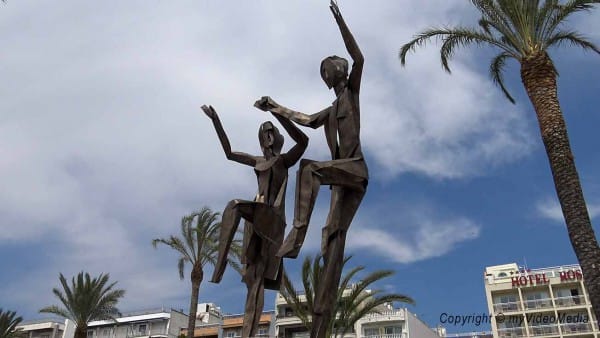
The monument with the two dancers was set up in honor of the Sardana, a Catalan dance.
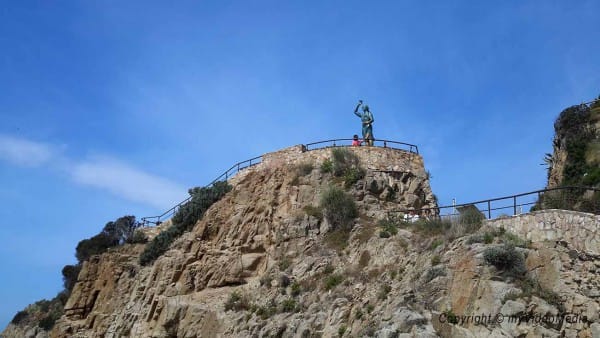
To the south the beach is delimited by the cliffs with the monument of sailors wife (Dona Marinera)
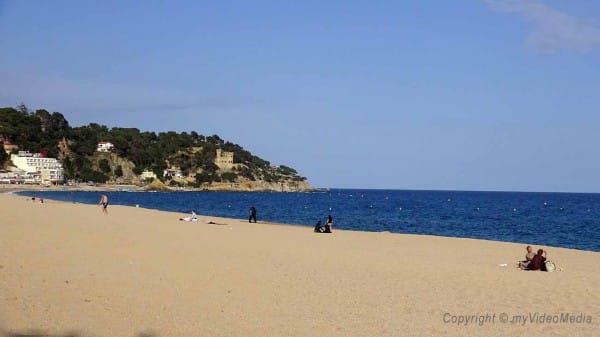
and to the north by the rocks with the castle of Plaja, a fortress house built in the 40s.
Es Tint
In earlier times every Catalan fishing village had a room where the nets of fishermen were tinted to prolong their service life.
One of the few that have been preserved is Es Tint, located in the northern part of the town, behind the beach.
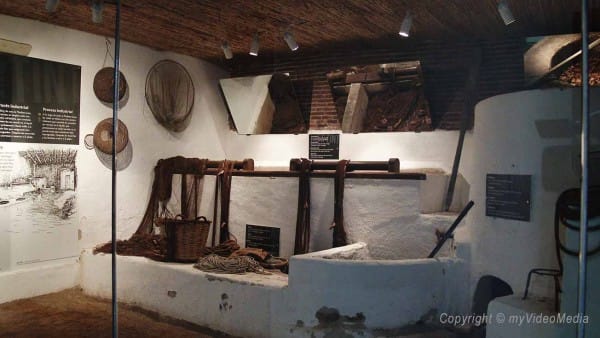
It became a small museum and displays nets as well as the cauldrons for tinting. Some old photographs show the original Lloret de Mar, at the time when fishing boats were allowed to land on the beach.
Sa Xara
In the evening we visit the Sa Xara, once local pub of the fishermen. It is a cozy restaurant with good Tapas.
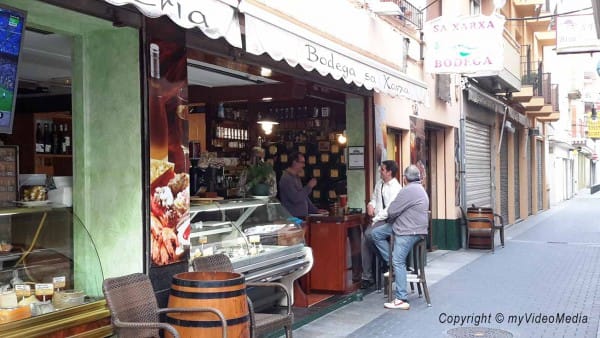
The day of our visit it is football time. FC Barcelona plays against the FC Getafe, a club from a city in the Madrid metropolitan area. Emotions were appropriately high in advance. Barcelona won, so the Catalan soul was calmed down.
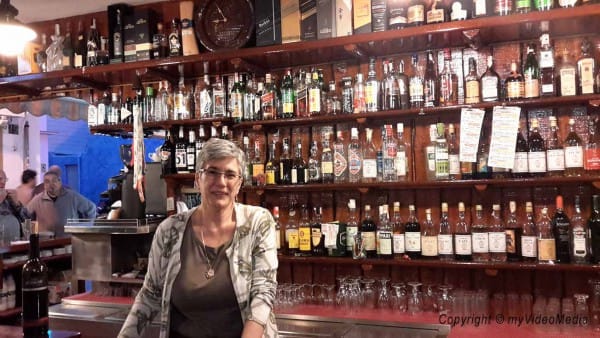
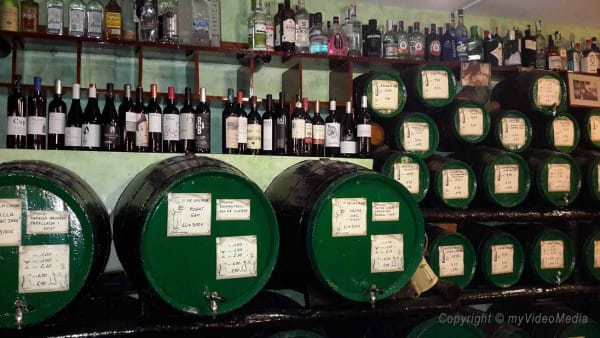
The pride of the restaurant owner and his wife are the wines; the eye immediately notices plenty of barrels.
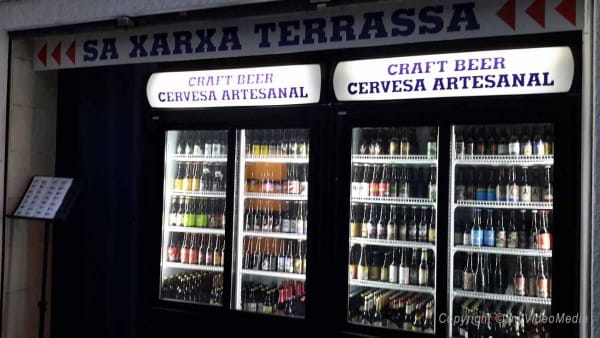
Also his beer offer should not be disregarded. You can choose between 100 of different kinds, most from small local artisan breweries.
Nightlife
In a limited area along the Av. Just Marles Vilarrodona you find discos, bars and amusement arcades.
With its neon lights they cannot to be overlooked.
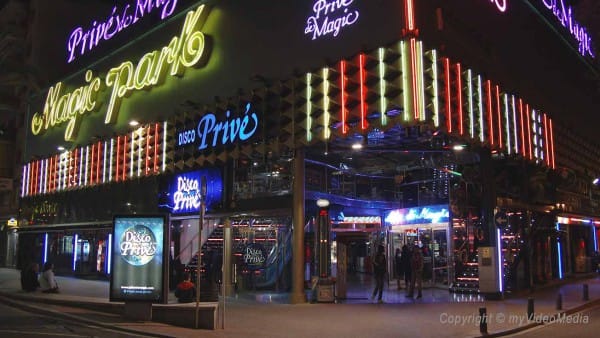
On the way to our hotel, we inevitably had to pass by, but this type of entertainment did not have any attraction for us.
Please read on > Jardines de Santa Clotilde
Text, photos and video: Copyright © myVideoMedia