Parets d’Emporda is a village in the municipality of Vilademuls on the right bank of the Fluvià. It belongs to the county of Pla de l’Estany in the province of Girona. The original character of the villages has remained unchanged in this area.
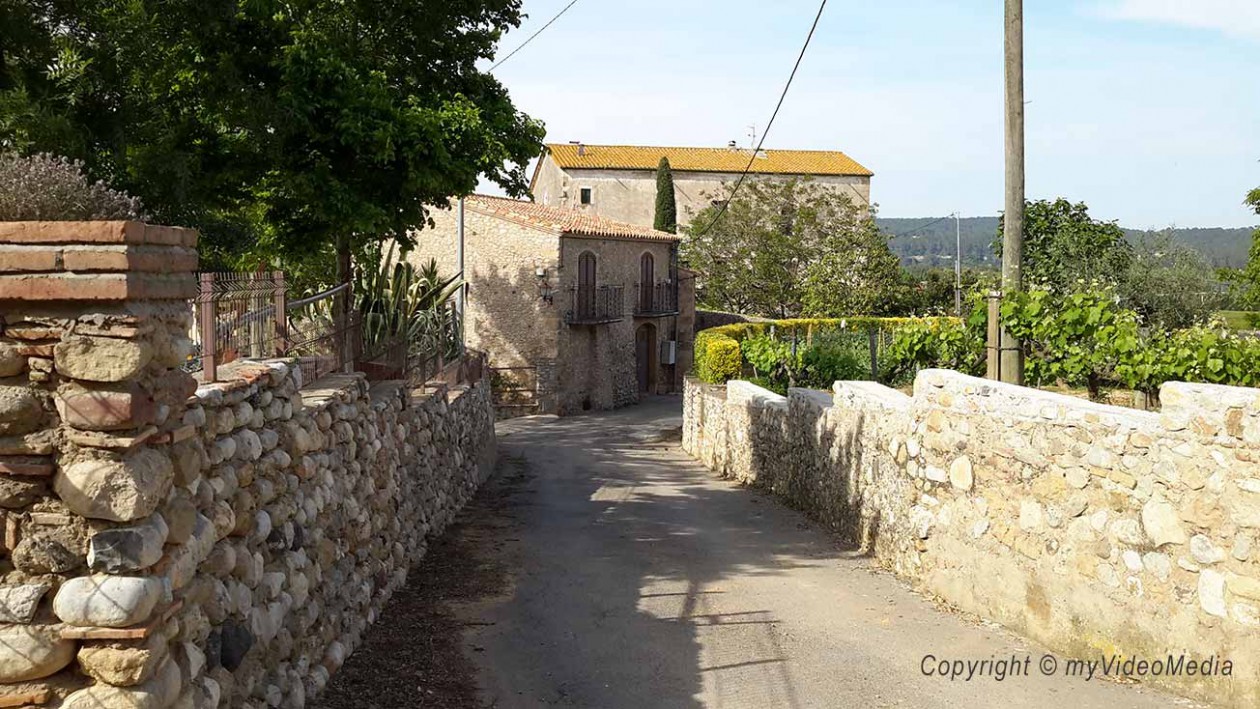
Winery Baronia de Vilademuls
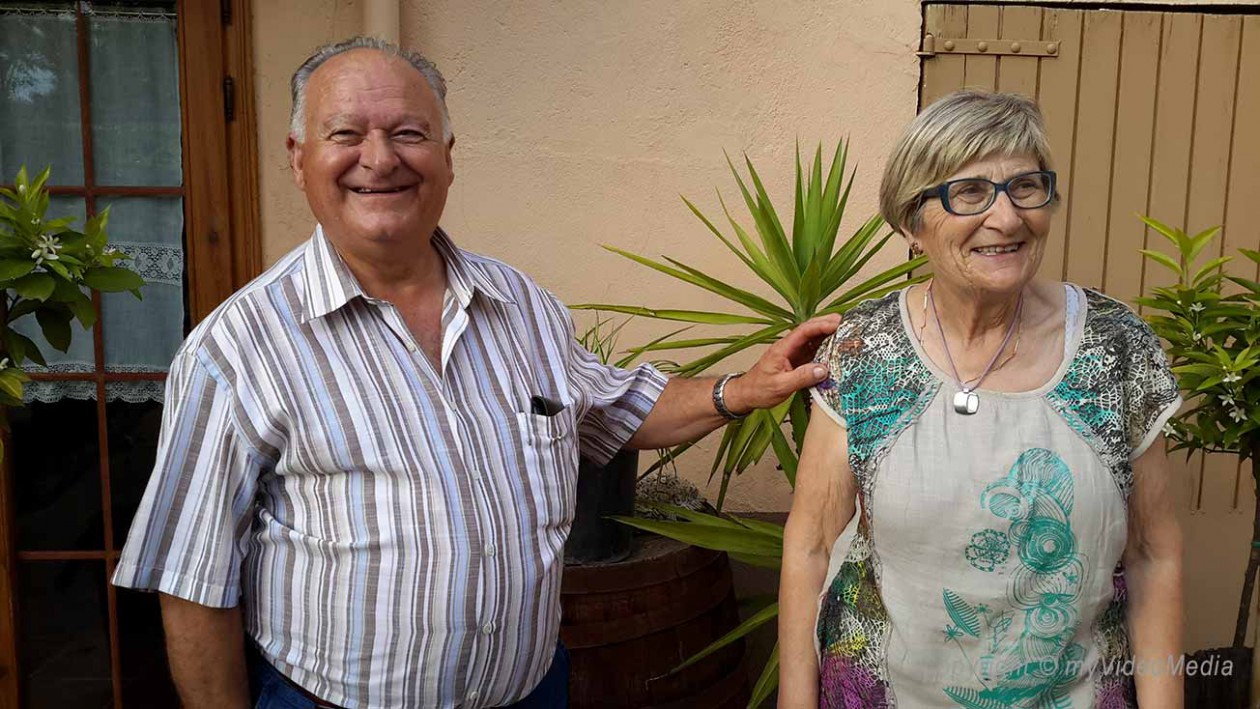
In Parets d’Emporda we visit the winery of Joaquim Reig and his wife Montserrat Torrens. Joaquim has been producing wine for 12 years. Initially it all began as a hobby after his retirement. “If I play tennis, I spend only money and have no wine to drink,” he says jokingly.

He cultivates about 2000 vines, of it are 40% Cabernet, 30% Tempranillo, 30% Grenache Noir with a yield of approximately 2200 l / year. In the year 2008, 1.200 bottles were produced, two years of late already 2300.
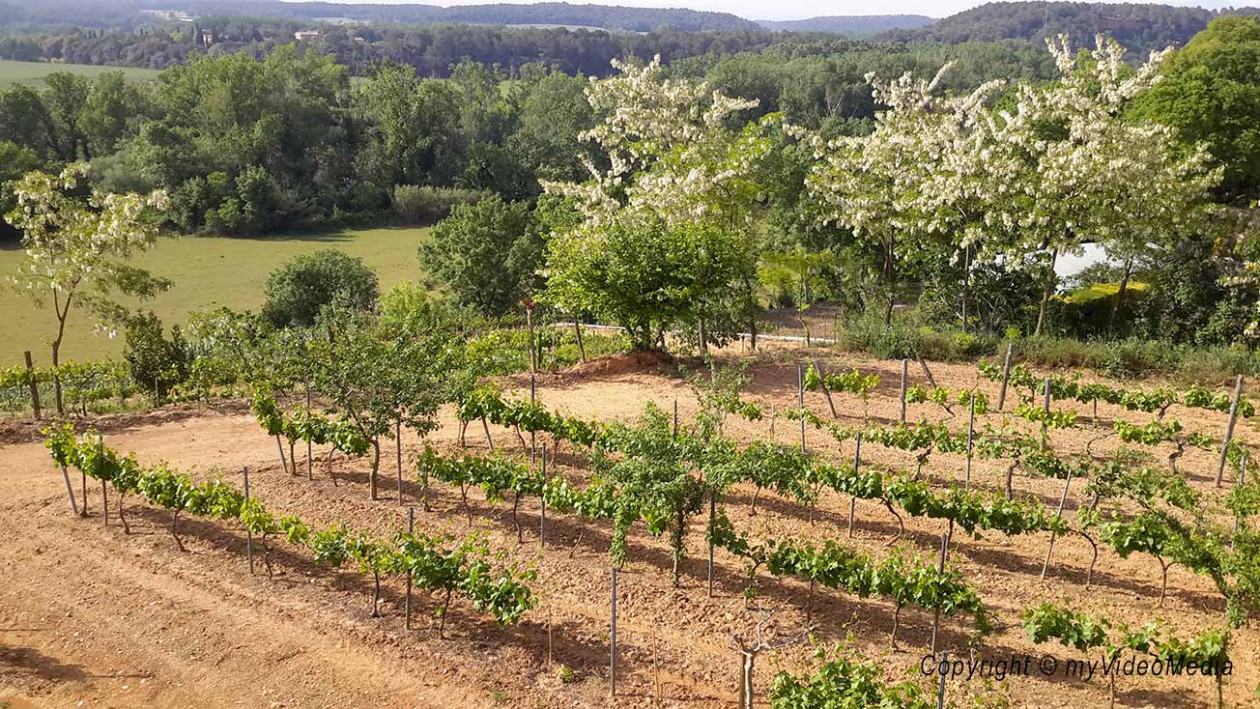
Parets d’Emporda lies 70 meters above sea level. The dry and cool winds, like the Tramontana from the mountains and the Marinada in summer from the sea, provide a pure air. So there are no problems with insects, mites or fungal attack in the vineyards. The clay soil ensures, that the plants get enough humidity without being watered.
Please watch the 4K UHD video here
You are currently viewing a placeholder content from YouTube. To access the actual content, click the button below. Please note that doing so will share data with third-party providers.
More InformationIn the wine cellar we learn more about the production of the Baronia de Vilademuls.
In September, the grapes are hand harvested and pressed. After 10 days of fermentation in aluminium tanks, it is put into oak barrels. In mid-March, the wine is drawn off the sediment; this always happens at full moon or new moon (Luna Vella). After at least 10 months in oak barrels, the wine rests for 2 years in the bottle. Also bottling, corking and labeling is done by the family. 4 people can complete about 500 bottles per hour.
At first Joaquim sold only to aquaintance. Today, one will find the wine in local gourmet restaurants, as well as in Belgium and the Netherlands. In 2012 started to commercialize his wines via D.O Catalunya.
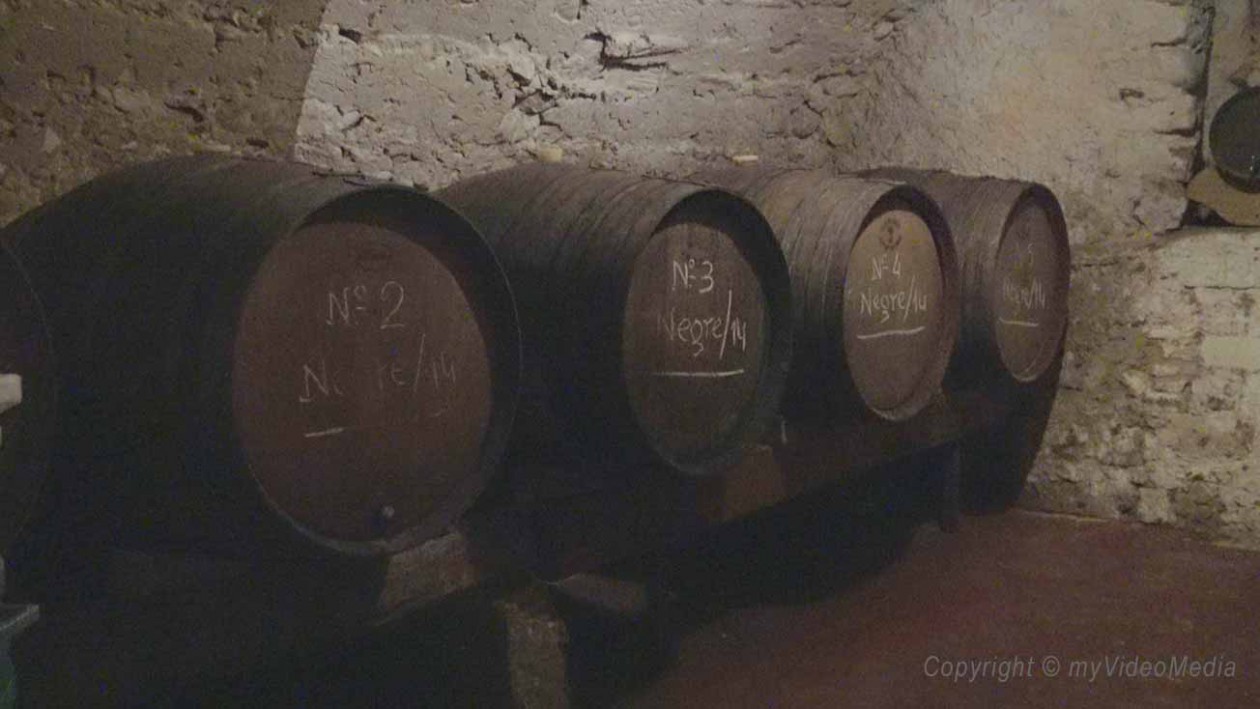
In his cellar, Joaquim shows proudly a barrel form his grandfather, dating from 1957. At expansion works they discovered a sealed cellar, a connection to the former castle. The history goes back to the 10th century. At that time the village was an ancient settlement, which was dominated by a castle. The location was convenient, because a ford in the river allowed to collect tolls.
The Vilademuls castle was built by the Count Wilfried of Besalú, in order to defend the borders of the county against the Counts of Barcelona. Wilfried was murdered by rebels in 957. The county Besalú was taken over by his brother Sunifred II. In revenge, he conquered the castle and seized all the goods of the rebels. His army covered the stones with salt to make them unusable for a reconstruction.
Tramontana and rain removed the salt. In the 13th century the village was rebuilt with the stones of the castle. Despite the dry climate the residents still complain about humidity in the houses today, which is probably owed to the salt.
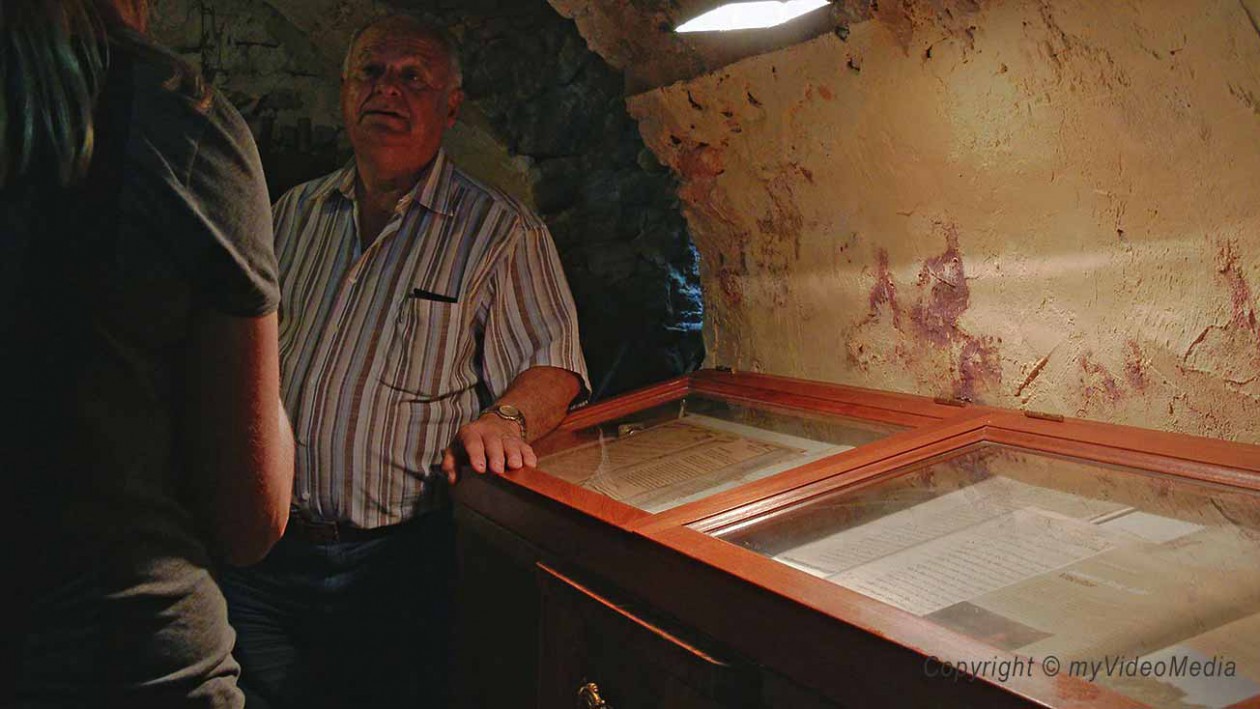
Since 1783 the house is owned by Joaquim ancestors. In his small museum he has exhibited all documents showing the history of the village.
In the video you can see an old car, dusty and half-covered with a tarp in the garage. It once belonged to Lluís Llach, a famous Catalan singer-songwriter, who was forced into exile during the Franco dictatorship.
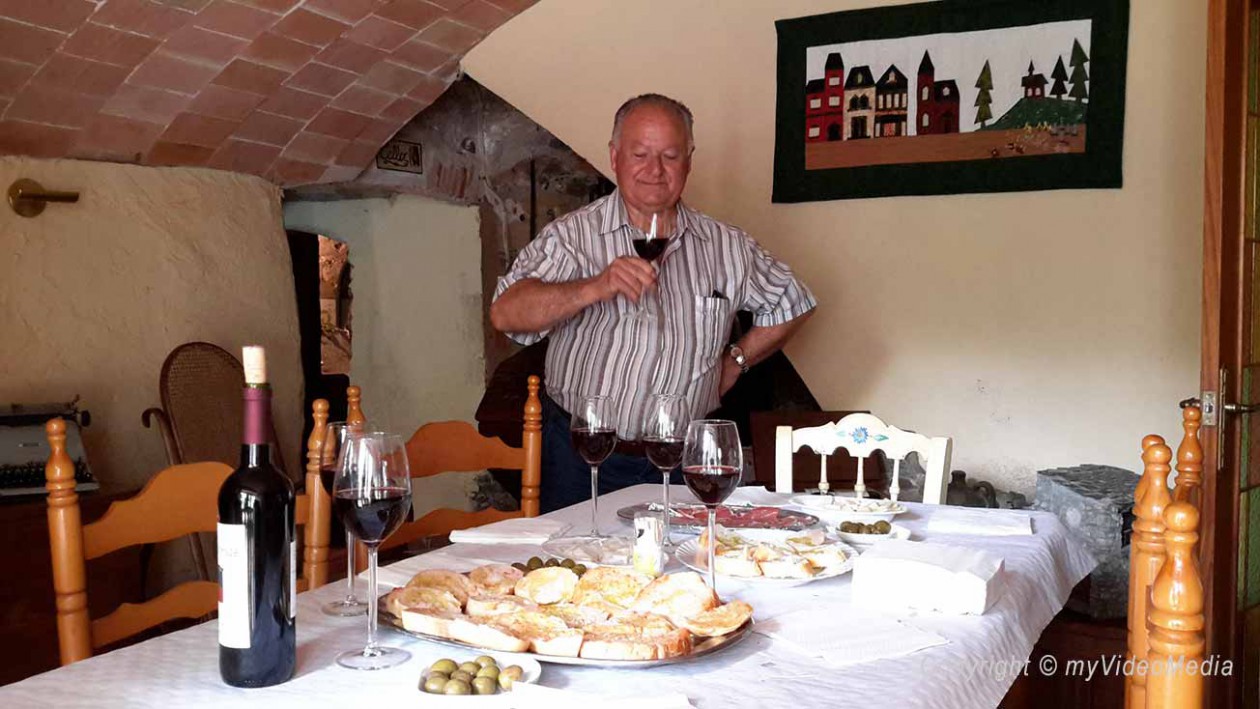
Of course we could also taste the wine. Through the cellar we reach a room with a barrel vault ceiling made of bricks and tiles. Here Joaquim proffered to us his good wine. His wife Montserrat spoils us with the typical tomato bread, a selection of sausage, ham, cheese and olives.
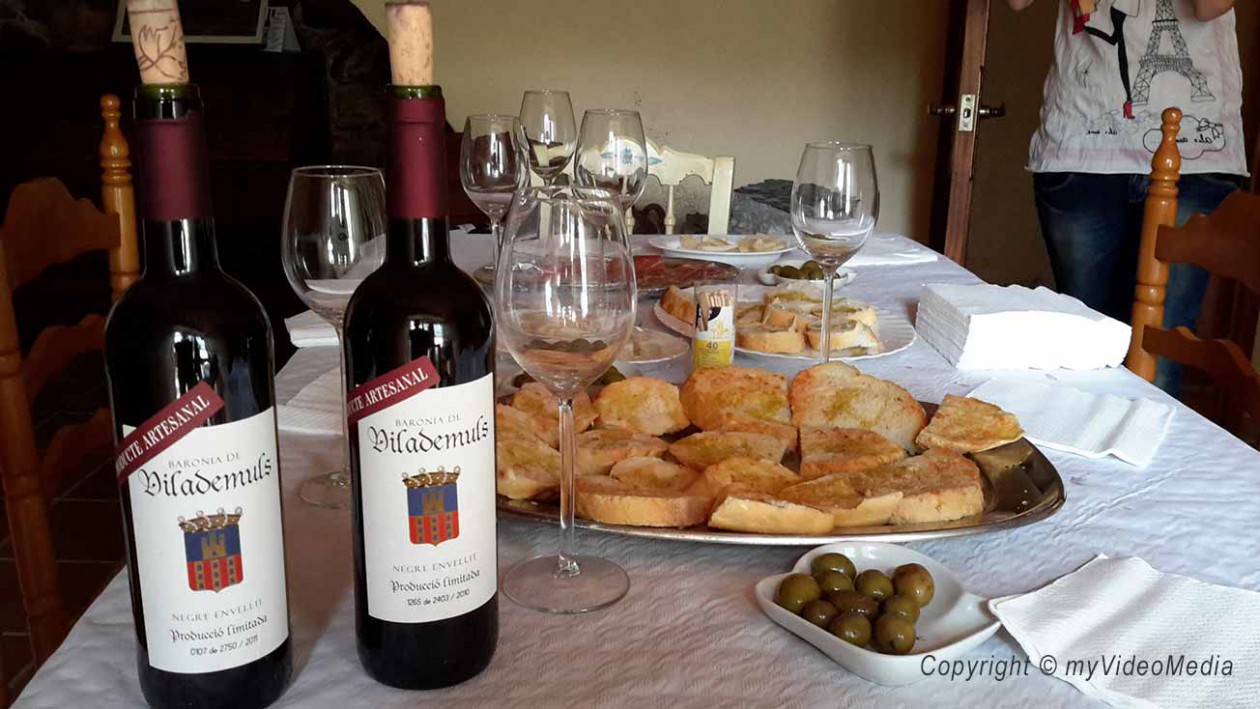
We thank Joaquim and Montserrat for the hospitality and the insight into their winery and continue our journey by bus to Banyoles.
Restaurant Can Xabanet – Banyoles
Subsequently, we were invited into the restaurant Can Xabanet. It specializes in Catalan food and is frequented by locals and foreigners alike.

When we arrived, Josep Cullell Renart, the owner, had some humorous words on the lips, which bounced off due to the lack of our language skills. But our guides took on the mood.
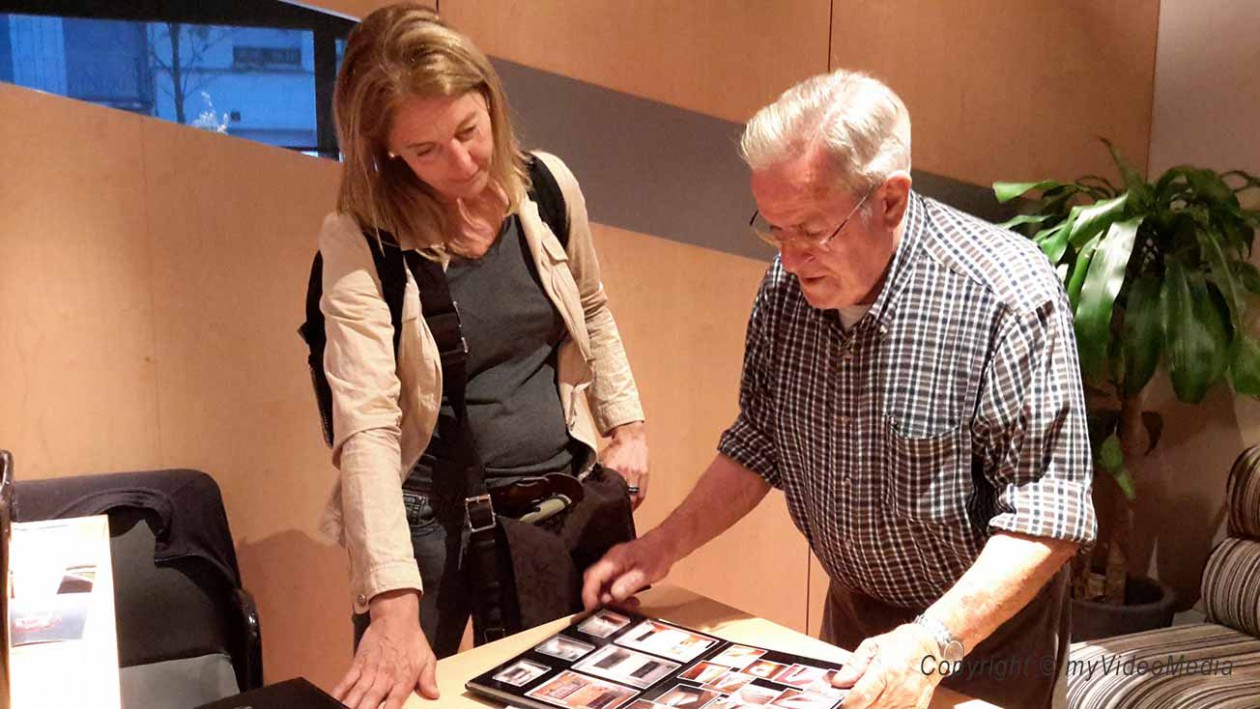
Josep Cullell Renart proudly showed our guide Vikki photos of the early days.
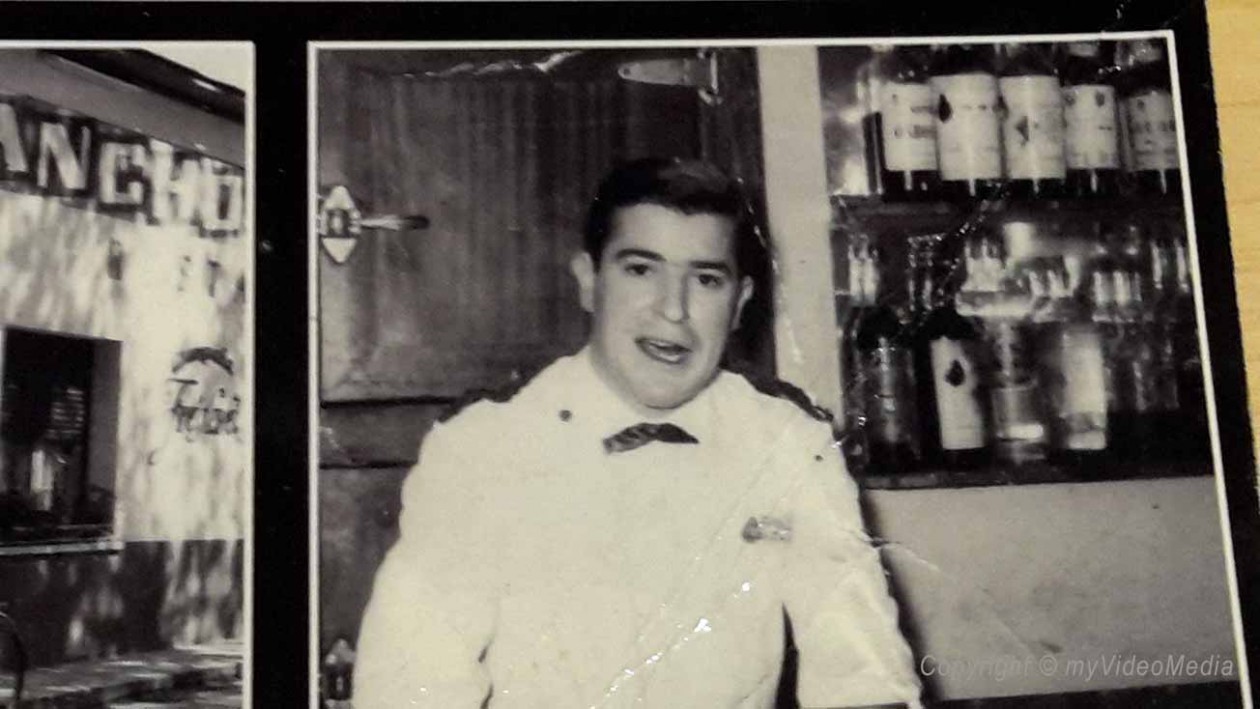
The waiter, with more than 40 years of professional experience and 15 years in the service of the house, provided us with more good humor, but above all with not only tasty, but also visually appealing meals. Also the modern ambiance pleased us very much.
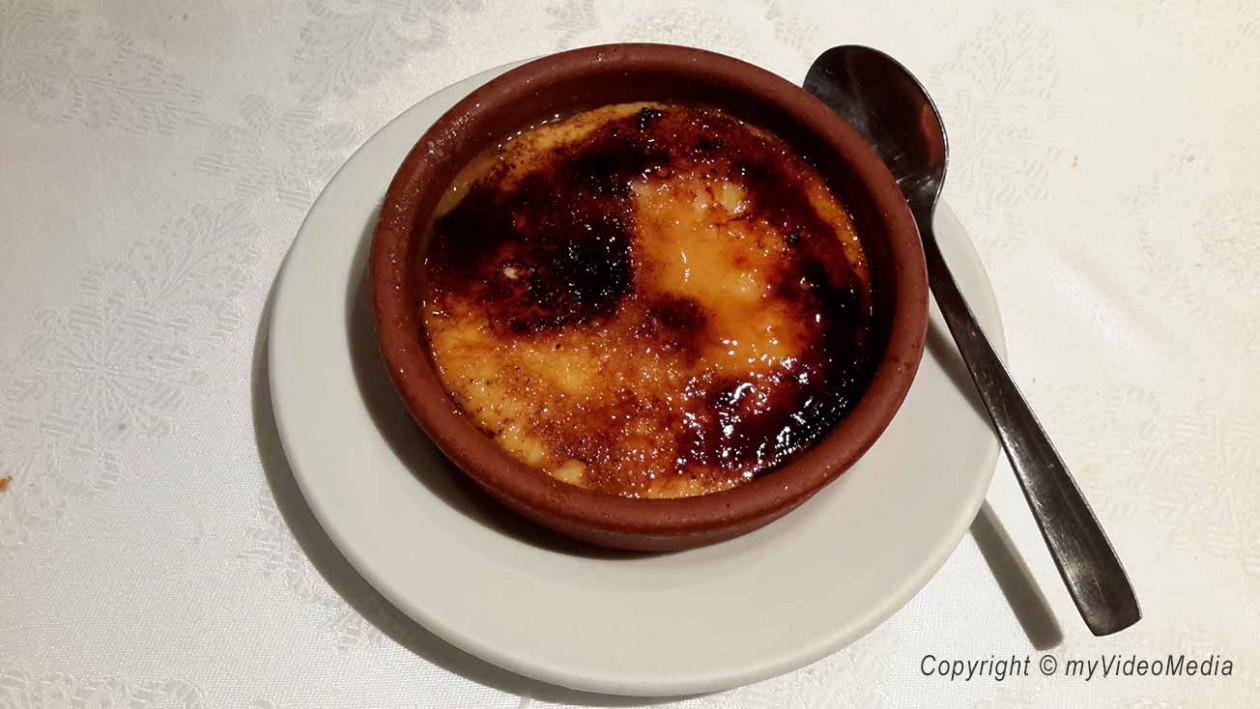
It was a pity that we could not really enjoy the food, due to the just carried out tasting. But we could not resist the famous Catalan cream and a local digestif.
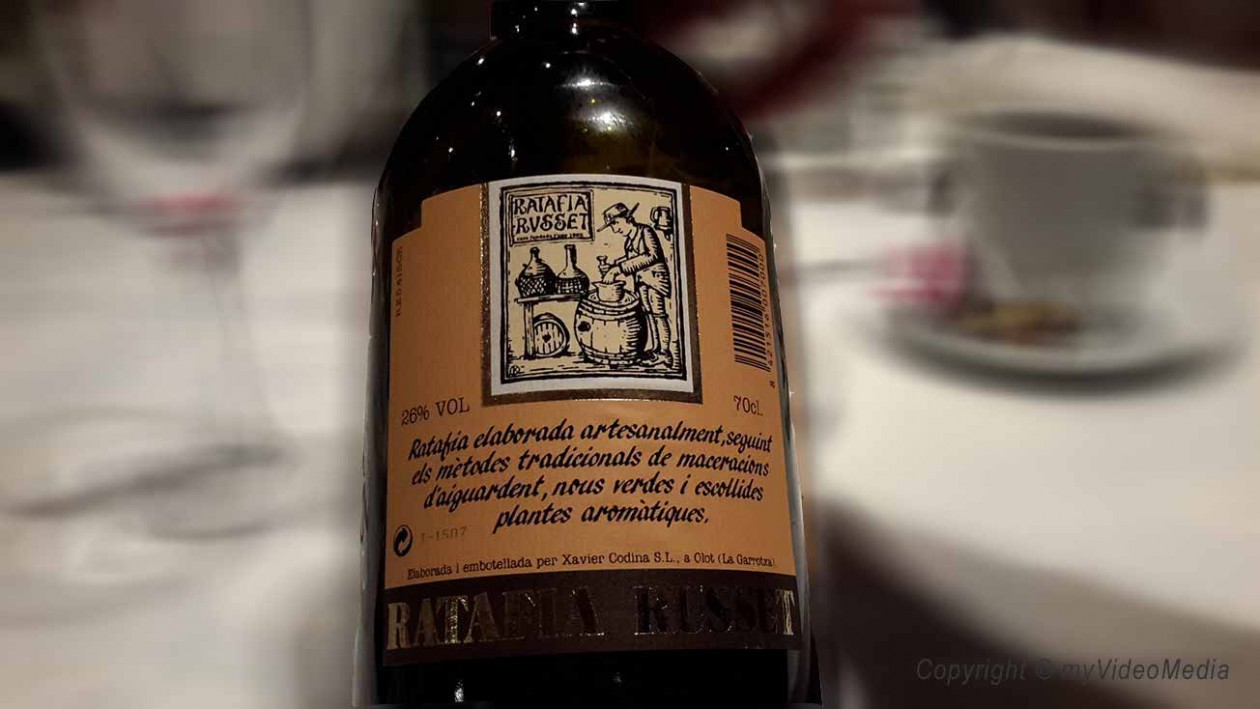
Nevertheless, the Can Xabanet can be recommended by us without any reservations.
This evening, we went to bed with the certainty that no guest in Catalonia has starved.
Please read on > Serinyà Prehistoric Cave Park
Disclosure : We thank the Tourism Board Costa Brava and Consell Comarcal Pla de l’Estany for the invitation. However, all views and opinions are our own!
Text, photos and video: Copyright © myVideoMedia