Spain’s cities are characterized by the fact that there are almost everywhere squares that invite people to linger and to communicate. As a rule you find shady trees and seating. Sometimes the squares are also used by local restaurants and bars.
Espacio Metropol Parasol
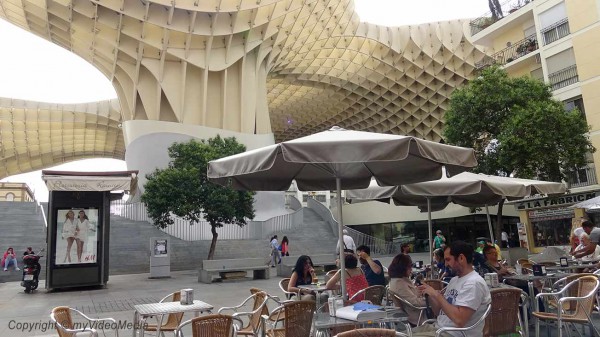
Our walk starts at the Espacio Metropol Parasol which we had already visited in the evenings. At daytime the beige desert like colors give the square a completely different character. In the basement, the market booths and bars are opened.
We indulge ourselves with a cool drink in the heat. At daytime, the former marketplace, designed by Jürgen Mayer, exerts a similar fascination as with the colored illumination in the evenings.
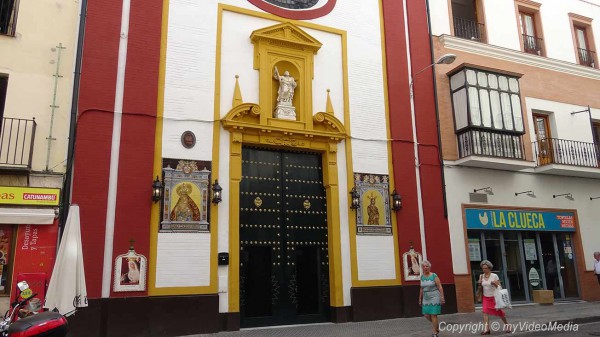
We dive back into the narrow picturesque streets of old town. Almost everywhere there is something to discover, like the facade of the Capilla de San Andres. The Capilla de San Andres is the seat of the Fraternity of Santa Marta and the Fraternity Gloria Nuestra Senora de Araceli.
A little further, along Calle Angostillo, we reach the Plaza de San Andres.
Plaza de San Andres
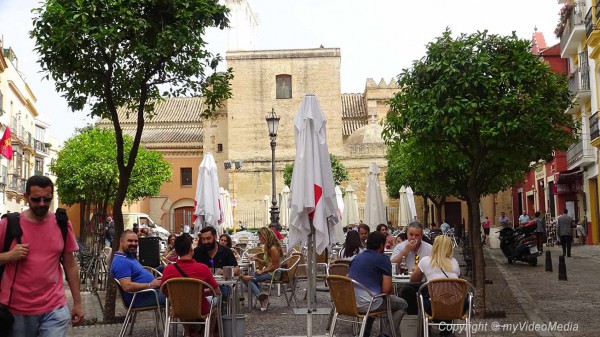
Here we find the Iglesia de San Andrés, a Catholic church built in the 14th century.
Through various streets and roads we reach the Calle Feria with the
Mercado de Abastos
Since the 18th century, the Mercado de Abastos supplied the northern part of Seville.
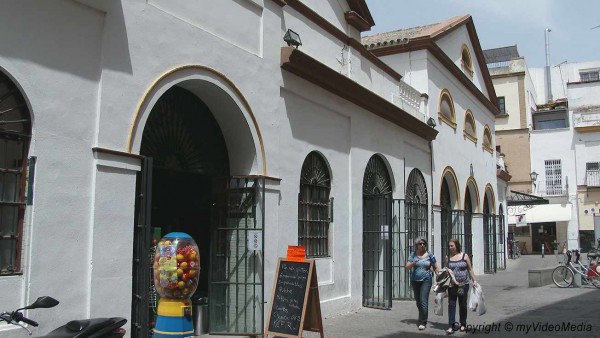
However, those who, like us, only comes around noon, can only see the remains of the fish.
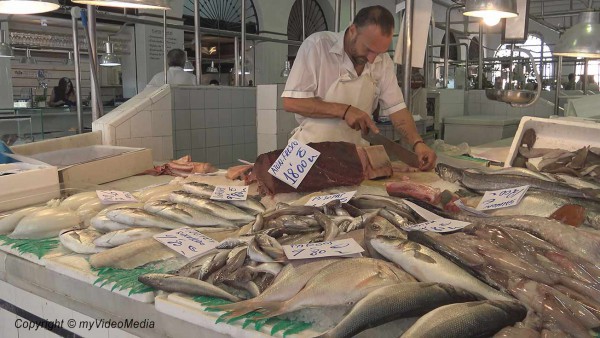
Nevertheless, we found the halls very appealing and the small square between the market and the Church seems to be a popular meeting place.
Please watch the 4k UHD video
You are currently viewing a placeholder content from YouTube. To access the actual content, click the button below. Please note that doing so will share data with third-party providers.
More InformationIglesia de Omnium Sanctorum ubicada
The Iglesia de Omnium Sanctorum was built in 1249. It is another good example of the Mudejar style, which brought the Arab and Gothic style in harmony.
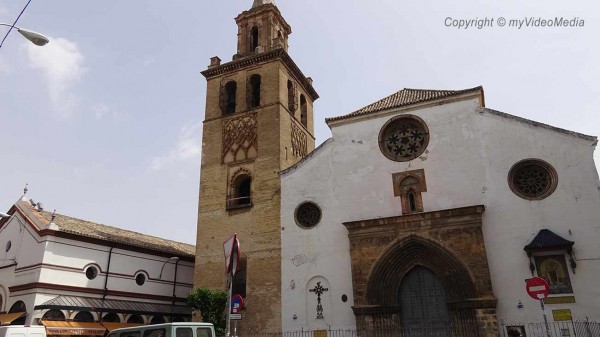
We reach the long-drawn square
Alameda de Hercules
with the high columns of the Hercules. The Alameda de Hercules is surrounded by tapas bars.
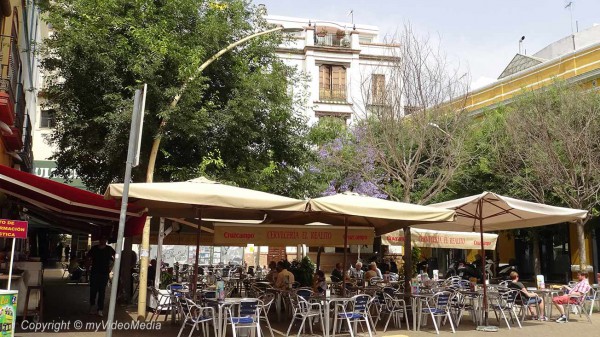
Especially in the evenings it is a popular meeting place for Spaniards, off the beaten tourist track.
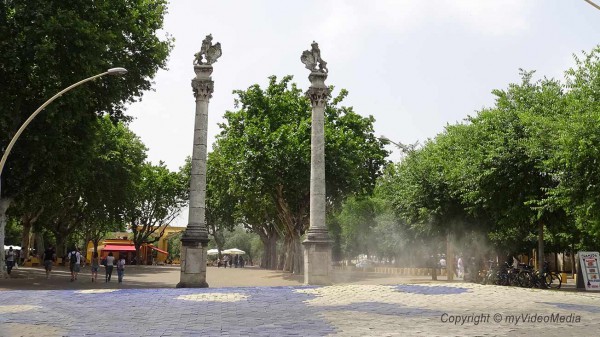
Walkable fountains sprinkle parts of the square, so that one get something to cool itself.
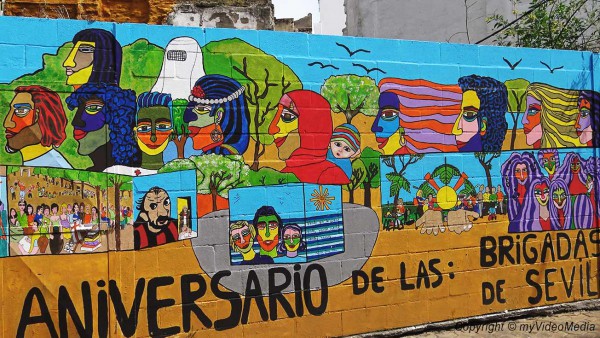
We really liked the
Plaza de San Lorenzo
The square was named after the Church of San Lorenzo, built in the 13th century.
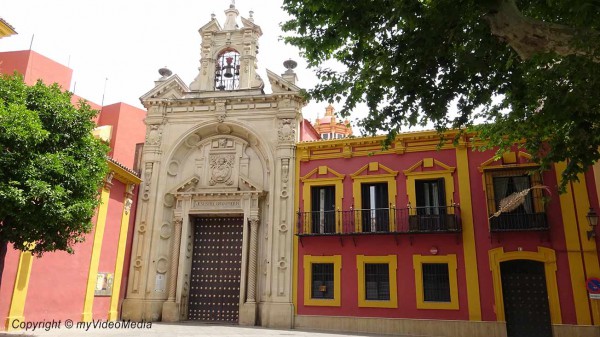
The so-called riots of the Green banner, caused by food shortages, began here in 1521.
Joselito “El Gallo”, a well-known bullfighter who is honored in the museum of the bullring died here at the age of 25 years in the infirmary. A bull has speared him a couple of days before.
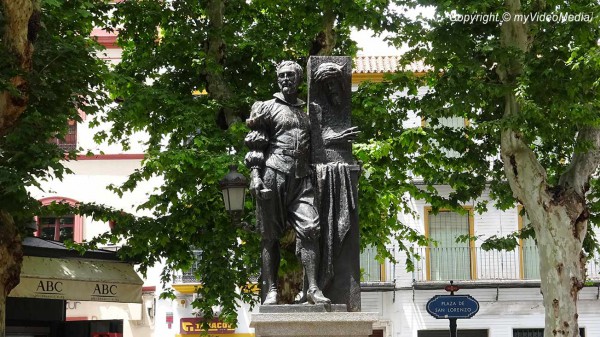
Today he square makes a quiet neat impression. Many trees provide shade.
We continue our way and reach the Monumento al General Jose de San Martin, on the shore of the Guadalquivir. It was donated by Argentina.
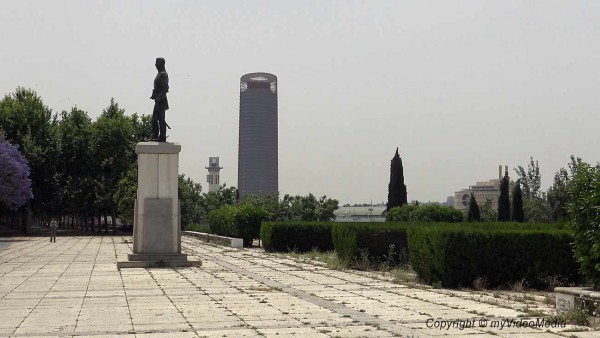
Born in Argentina as descendant of Spanish parents, Jose de San Martin grew up in Spain. He served 20 years in the Spanish army before he and Simon Bolivar stood up in South America for the liberation of the Spanish colonies.
Please read on > First Evening in Cordoba
Sevilla is one of those cities in the world which I like very much. I think I can also settled down here.
And I love the smell, the aroma of oranges there. 🙂
Thank you very much for your kind comment.
Yes, Seville is a wonderful city. I can image that it is a good place to settle down because it offers something for everyone